Tuesday, 28 October 2014

Johnnie Walker Double Black Whisky Review, and Blended Scotch Whisky Explained!

This being my first review of a blended whisky, with a couple more coming soon, let's go over some details about blended scotch before we get into the review of the Johnnie Walker Double Black.

The two types of what are considered to be blends, in the whisky world, are a) blended malt scotch, a.k.a. vatted malt, and b) blended scotch. These terms and their definitions are set by the Scotch Whisky Association in Scotland. 

A blended, or vatted, malt is a blend of multiple single malt whiskies from different distilleries, such as 'Big Peat', which is very good, produced by Douglas Llaing (an independent bottler). For example, if a bottler was to sell a whisky which contained 50% Ardbeg single malt, and 50% Glenfiddich single malt, it would be considered a blended, or vatted, malt scotch. These vatted malts can be great value, and are usually of good quality. 

A blended scotch whisky, on the other hand, contains both single malt whisky, and single grain whisky. For example, a bottle of Johnnie Walker red label (yuck!) contains a set amount of malt whisky (from different sources), and the remainder is grain whisky. For obvious reasons this type is, generally, considerably cheaper than a blended malt whisky. These whiskies are generally not as complex or 'interesting' as a single malt, and are usually chill-filtered and artificially-coloured. 
For the moment, we will focus on blended scotch whisky, as this is what I'm review today, with the Johnnie Walker Double Black. Interestingly, all currently available Johnnie Walker whiskies are blended scotch, containing grain whisky. Yes, even the ridiculously over-priced and over-hyped 'blue label' contains some (cheaper) grain whisky, although the exact proportions and sources are a closely guarded secret. There was a vatted malt Johnnie Walker, the Green Label, which sadly is now discontinued. It was, and still is, the best Johnnie Walker I've tasted. It even has/had the whisky sources listed on the box! If you come across a bottle of the green label, grab it. 

The JW double black is, as you can guess, based on the standard black label, which is good value for it's price, with surprising complexity. The double black is marketed as having "a rich, intense, smokier flavour". It certainly is smokier than the black label, probably due to some extra Caol Ila and/or Talisker being added to the blend. 
Johnnie Walker 'Double Black' blended whisky, 40%, Scotland.
NAS, chill filtered, artificial colouring added. Number or source of component spirits not stated. 

(tasted neat and with a tiny drop of water)
Colour: Copper (thanks to the added caramel colouring, no doubt)

Nose: Honey and caramel, some malted cereals, something a little acidic, like under-ripe grapes. A hint of smoke, but certainly not intense. 

Texture: Thin, clean. 

Taste: Big honey sweetness, some (talisker/caol ila) smoke but it fades quickly. Reminds me of a thinner Highland Park 12yo with a bit of extra smoke. Only a tiny bit of peat detectable, sadly. Found a strange bitter 'off' note in the middle which I found a bit off-putting. 

Finish: Short, that weird bitter note is still there, and a bit of heat on the tongue (surprising for only 40%), fades to a honey sweetness. 

Score: 2 out of 5 (blend score).

Notes: I had high hopes for this one, being based on the standard black label, but it has let me down. It's not overly unpleasant, especially for the relatively low price, but it just doesn't do anything for me. The complexity of the black label has been lost, I wonder if the double uses younger stock? A little disappointing, and not worth the extra over the standard black, which I prefer to this. It would make for some interesting mixed drinks or cocktails though, with that added smoke. If you'd like to try it, I'd suggest looking for it in a bar first rather than buying a bottle. 

I don't want to seem anti-blend, there are a massive amount of blends on the market, and I'm sure at least some are quite good! For a decent (and cheap) peaty/smoky blended whisky, head for 'Black Bottle', produced by Burn Stewart, but preferably in the older style pictured below. Look for a review shortly! 
Cheers. 

Sunday, 19 October 2014

Bruichladdich / Port Charlotte PC7 Whisky Review!

Until recently, I have looked at Bruichladdich's Port Charlotte range as a bit of an ugly duckling, compared to similar offerings from other distilleries, and especially compared to Bruichladdich's own Octomore range.

This was based on my tastings of 'The Peat Project', and it's replacement, 'Scottish Barley', the former is one of my least favourite peated single malts, and while the latter is a huge improvement, it still did not wow me like I had hoped it would. However, after tasting the Port Charlotte 10 year old (46% version), my opinion of the 'label' began to change. Clearly the NAS bottling's are not the best of the range, so I decided to dig into my own collection and pull out something special, to settle the matter once and for all. 
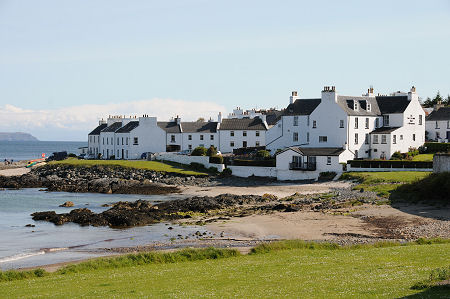
The Town of Port Charlotte, Islay, Scotland.

I have covered the basic history of the 'Port Charlotte' label here previously, so for this review I will focus on the 'PC_' cask strength bottling's, before reviewing what is still the only bottle of the 'PC_' range I have ever seen in the flesh, so to speak, the (spoiler alert!) wonderful PC7. I came across it by chance in a local bottle shop, a couple of years ago, having read about it in Jim Murray's 'Whisky Bible', piquing my curiosity. I spotted another (last) bottle of it in the same store a couple of weeks ago, and decided to open, taste and review my bottle that night. I then (another spoiler alert!) went back early the next day and bought that last bottle. 

The Port Charlotte cask strength range started with PC5, which was 5 years old, and like the rest of the range, peated to 40ppm, a level similar to standard bottlings from Lagavulin / Laphroaig / Ardbeg etc. Then came PC6, PC7 and so on, and the distillery is currently up to PC11. These are all rather rare whiskies, or at least they're not easily found outside of internet auctions. As stated above, the PC7's I have in my collection are the only bottles of the 'PC_' range I personally have ever actually seen. There were typically around 5000 bottles of each release sold, which may sound like a lot, but really is not considering the size of the market around the world, and the number of hardcore collectors out there, who quickly snap up these limited release bottles. 

The packaging on these bottles is quite interesting, as the outer tin's feature photos of selected people, either distillery staff, suppliers or other Islay locals, as Bruichladdich feel very strongly that 'whisky should be about people'. The bottling's also have Gaelic names, with the exception of PC5. The PC7 is named 'Sin An Doigh Ileach', which translates to 'It's the Islay way', referring to the relaxed attitudes of Bruichladdich's suppliers and contractors. Let's try some!

Port Charlotte 'PC7' (Bruichladdich), 61% cask strength, Islay, Scotland.
7 years old, mix of bourbon and sherry casks, 40ppm, non-chill filtered, no added colouring. 

(tasted neat and with a drop of water)
Colour: Gorgeous deep copper. Seductive!

Nose: Smokey, medicinal peat, salty and smoky, fruity sweetness, a little grassy / herbal. A bit of alcohol, but not bad for 61%! 

Texture: Clean & light, warming.

Taste: Pow! Fantastic. Big peat and smoke, slightly salty and a little medicinal (unusual for bruichladdich / port charlotte), balanced by dark caramel / molasses sweetness, and stone fruit. Water brings out extra fruit and smoke, and a little mild honey and malt. Very well balanced and beguiling.

Finish: Long and smoky, fading into malty, fruity sweetness, fading again into lovely warm, malty peat, which goes on for days...

Score: 4 out of 5. 

Notes: Excellent quality, really enjoyable and surprisingly easy drinking, even neat. Identifiable as port charlotte peat, but turned up to maximum. This bottle actually had sediment in the bottom when first opened, and you can't get less chill-filtered than that, I love it! Between this and the 10 year old I reviewed recently, my opinion of the port charlotte 'label' has changed for the better. I'm going to have to try and find some other versions of the 'PC_' cask strength range. If you do come across any of these, in a bar or at an auction, just do it. Despite the inevitably high price. It'll be worth it!

Cheers. 

Monday, 6 October 2014

Jim McEwan Whisky Tasting, & Port Charlotte 10yo Whisky Review!

Bruichladdich Master Distiller, Jim McEwan, is currently touring Australia, presenting whisky tasting events around the country, and I had the privilege of attending one of the events last weekend, at the United Services Club, in Spring Hill, Brisbane.

Our MC on the night, who I believe 'borrowed' his introduction from Andrew from the Australian SMWS, put it very well: "There are three people in the whisky industry you should move heaven & earth to see: Dr. Bill Lumsden, (Distiller for Glenmorangie and Ardbeg), Richard Patterson (Whyte & Mackay, master blender), and both of them would move heaven & earth to see this man: Jim McEwan!"


Having worked in the industry for over 50 years, in multiple roles with multiple distilleries, Jim is very well qualified to explain every facet of the whisky world, and being a native of Islay (the town of Bowmore, specifically), his incredible passion both for the island, and his distillery, Bruichladdich, is truly infectious. Islay itself is, in my opinion, the whisky Mecca of the world, with eight working distilleries on a relatively small island, all producing excellent whisky, to be shipped and sold around the world.

I had previously seen Bruichladdich's people-focused marketing strategy as just that, a marketing strategy, but after listening to Jim talk about his home, his people and his distillery, with such passion and reverence, this is definitely not the case. When they say their whisky is about people, they really mean it.

As the tour is still in progress as I write this, I won't go into minute detail, but I will say that Jim is a fantastic presenter, well-grounded and passionate, honest and relate-able. He had us in stitches throughout the evening, while also touching on subjects like chill filtration , artificial colouring, the production process (including whisky and gin), and the rebirth of Bruichladdich distillery, a fascinating story in itself. Both myself, and my less-whisky-obsessed friend, found the evening very enjoyable, educational, and inspiring. Jim, despite it being his life's work, does not take whisky too seriously, and has a typically Scottish approach to the marketing aspect of the whisky world. We also had the opportunity to buy a bottle of the whiskies we tasted, and have it signed by Jim himself. I also snuck in one of the tins from my whisky collection for him to sign, wasn't going to miss that opportunity!


I was not able to comprehensively analyse the whiskies we tasted, so again I won't go into minute detail, but the six whiskies we tasted on the night (and one gin!) were as follows:

-The Botanist gin, produced by Bruichladdich, was served with tonic on arrival, although we did not find this out until the presentation had begun. I have tried this before, neat, and it is the only gin I will drink (and only neat, or with soda). A very successful product, and Jim was very honest about it, explaining that it was done purely as a source of income, as it can be bottled and sold straight after distillation, rather than having to wait years for a whisky to mature, before seeing any return. In true McEwan / Bruichladdich style though, it is unique, and of fantastic quality. I recommend you try it if you haven't already, even if, like myself, you're not a fan of gin.

-Bruichladdich 'Laddie Classic', NAS, 46%. Explained by Jim to be bottled at around 7 years of age. Very light, honey sweet and tropical fruits, unpeated, but very easy-drinking, and great value for money.

-Bruichladdich 'Islay Barley', 2006, 50%. Again explained to be around 7 years of age, and distilled only from barley which was grown on Islay. More weight and complexity, an excellent mouth-feel, and with more cereal and fruit notes. Again, very easy drinking and enjoyable.

-Bruichladdich Black Art 3, 1989, 48.7% cask strength, which I have reviewed previously here . I was hoping to taste the fourth release of the Black Art range, but the third is still a very good whisky.

-Port Charlotte Scottish Barley, NAS, 46%, 40ppm. Used for the 'highland toast' at the end of the evening (while standing on top of the chairs and tables!), so no time for details, but nicely peaty with some cereal notes and nice texture. This replaced their 'The Peat Project' NAS bottling, which I was not particularly impressed with, reviewed here , and this is a massive improvement.

-Port Charlotte 10yo, 46%, 40ppm. Lovely complexity, warming and peaty, with some sherry sweetness and depth. Jim explained this 10yo bottling to be around 60% bourbon cask, and 40% oloroso sherry cask. Hadn't tried this one before, and was impressed, so had to buy one. See the review below! .

-Octomore 6.1, 5 years old, 'scottish barley', 57%, 167ppm. I'm still amazed by the complexity and balance of these very heavily peated Octomore bottlings, and this one was no exception. It is of course a very powerful spirit (especially when consumed in two gulps, and held in the mouth to feel the power, thanks to Jim's encouragement!), and there are some similar cereal flavours in both it and the Port Charlotte Scottish Barley. This Octomore was my other purchase on the night, to be reviewed at a later date.

So, if you ever have the opportunity to meet Jim, or attend one of his tasting events, definitely do it, don't hesitate! There are still some tickets available for the current tour in Australia, and I believe he is visiting Japan and Korea on this tour as well. To borrow Andrew's line again, you should move heaven & earth to attend! Thanks to Jim McEwan, Bruichladdich, and Southtrade for putting this tour together, we need more of these events in Australia, please keep 'em coming!

Now, let's review some whisky!
Port Charlotte 10yo, Bruichladdich distillery, 46%, Islay, Scotland.
10 years old, 60% ex-bourbon cask, 40% ex-oloroso sherry cask, 40ppm. Non-chill filtered, no added colouring.

(tasted neat)
Colour: Light bronze

Texture: Oily yet clean, Rich let light. Lovely.

Nose: Salty, a little smoke, sweet cereals, sweet sherry and raisins, smoked malted barley. Well balanced.

Taste: Salty sea air, over lovely warming peat. Not medicinal peat, slightly herbaceous. Sweet smoke, cereals and raisin / sherry sweetness. Easily identified as Bruichladdich, with the sweet malt and slightly salted cereals standing out. Delicious.

Finish: Very long finish despite being 46%. Lovely warming peat, smoky malt and cereals. Very, very long.

Score: 4 out of 5.

Notes: Excellent mouth-feel and texture, fantastic long finish. Love the sherry influences. Having tried the 'peat project' and 'scottish barley' offerings, I do prefer my port charlotte with a little sherry cask. Good value for money too, and so light, relaxed and easy drinking. I sometimes find it challenging to find a decent trace of the malted barley in heavily peated whisky, but this is not the case here.

Certainly holds it's own amongst Laphroaig quarter cask and triple wood, probably it's closest competition in my book. Would also make a good introduction into heavily peated whisky for the uninitiated. It was a bit hard to open a bottle signed by the master distiller himself, but it was worth it!

This expression is not as easily found as the NAS 'scottish barley', but it is worth searching for, with the extra warmth, complexity and balance. There is also a cask-strength version, released as part of Bruichladdich's 'PC_' range, known simply as PC10. Would absolutely love to get my hands on some of that stuff! But it is very hard to find, and very expensive as well. Maybe one day...

Cheers!

Friday, 26 September 2014

Caol Ila 29yo Duncan Taylor 1983 Whisky Review & Independent Bottling's Explained!

My first review of an independent bottling, and a very special one, this bottle of glorious whisky was my 29th birthday present last year, from my parents no less, albeit with a few subtle pointers from myself! At 29 years of age, like I was at the time, this just felt so right! This is still the oldest whisky I've tasted to date, and one of the more expensive as well. 

Distilled in 1983 at Caol Ila distillery, and bottled in 2012 at 29 years of age, this whisky is part of Duncan Taylor's 'Dimensions' range, and is non-chill filtered, bottled at cask strength and has no added colouring. For the serious whisky obsessives this is cask 3624, and bottle 191 of 362 from that cask. 

But before we dive into the review, let's have a quick look into the what, why and how of independent bottling's of Scotch whisky. 

For the what, essentially an independent bottling company, such as Signatory, Gordon & MacPhail, or Duncan Taylor, is an independent company (duh) which buys casks of whisky from distilleries, to market & sell themselves, usually as a single malt or single cask bottling. 

For the why, they do this for a number of reasons, but the main one is to offer something which one cannot buy from the distillery. For example, if a distillery always chill filters their whisky before bottling, an independent bottler may buy a cask from the distillery and bottle it without chill filtration, to off the consumer something they can't get in an original bottling from the distillery. The same goes for things like adding colouring/caramel, bottling at below cask strength, different ages of whisky, and different casks used for maturation. Another reason why, is because they can usually sell their bottling at a lower cost than the distillery would charge for an equivalent whisky. It doesn't always work this way, but the 29yo Caol Ila I'm reviewing here cost around $100 less than a 25yo distillery bottling, which would have been watered down to 43%, and with some chill filtration. 

As for the how, these companies will either approach a distillery to buy any casks they don't want, and that may be because the whisky hasn't matured as the distiller expected, or the flavour profile is too far from the norm to be blended into their standard offerings, or because they need/want a bit of extra income. The independent bottler may mature this whisky further themselves, or bottle it straight away. It is important to note here that independent bottling's vary wildly in terms of quality and flavour, and can be quite a risk come buying time. For this reason, I recommend sticking with the major companies, and if possible try before you buy. Failing that, research the bottling as much as you can before taking the plunge. 

There are also a few independent bottlers which do not name the distillery their whisky came from, usually because they have an agreement with that distillery that they will not disclose that information. There are also many, many independent bottlers out there selling blended whisky, and also do not state which distilleries their whisky came from, but I'm focusing more on the single malt and single cask bottler's here. Now, on to the review!

Caol Ila 29yo, by Duncan Taylor, 'Dimensions' Independent Bottling.
Distilled 1983, bottled 2012, 53.8% cask strength, non-chill filtered, no added colouring. 

(tasted neat and with a drop of water)
Colour: Dark bronze

Texture: Clean and refined, lightly oily.

Nose: Salty, fruity and peaty. A little reminiscent of Lagavulin initially, with less peat and smoke. A little ethanol and soap, furniture polish, not a lot of smoke at all. Sweet grapes, dry grass and herbs. Water brings out more grassy, herbal notes and fruit.

Taste: Sweet peat and smoke, dark fruits. A little heat, and salted, stewed stone fruit in the background. Water brings out a nice malty sweetness and caramel/toffee.  

Finish: Long and peaty, smoky, slightly burnt caramel, warming and drying. Even longer with water and a little more burnt caramel. 

Score: 4 out of 5. 

Notes: As expected, quite different from distillery versions of Caol Ila. Maybe a slight nod in the direction of their distiller's edition, but with more malt, less sweetness and more depth & body. A very interesting whisky, and pretty good value, compared to original bottling's. A little hard to find now, but SM Whisky still has a few samples, along with other independent bottling's, and there are a few bottles around in other online whisky shops. Happy hunting! Cheers.

Saturday, 20 September 2014

What Is Chill Filtration?

As a whisky drinker, you have probably heard the term 'chill filtered' or 'non-chill filtered' before (you certainly have if you've read any of my reviews!). But what does it mean exactly, and why should you care?

Well, this term refers to the type of filtration used to prepare a whisky for bottling where, as the name states, the whisky is chilled to a low temperature, usually around 0 degrees C, or lower, and forced through multiple micro filters under pressure. What this process does is remove naturally occurring particles from the whisky, namely fatty acids, proteins and esters, oils and sediment. But why? So the whisky does not go cloudy/hazy when it is chilled, and/or diluted to below 46% alcohol by volume (ABV), and this is seen as undesirable by some whisky drinkers (especially when they add a handful of ice cubes to their Johnnie Walker), so many distilleries take this extra step during the production of their whisky to prevent this happening. Yes, that's it. That's all it does. Shocking, I know.


In fact, you may have noticed, many non-chill filtered whiskies have a statement on the bottle to explain themselves and hopefully prevent complaints from the less discerning drinker. Generally something along the lines of  "this whisky is non-chill filtered, and may go cloudy with the addition of water or ice. This is normal and it is safe to consume". Regardless, some casual consumers will still find this weird or concerning, and it puts them off buying and drinking that particular whisky. Obviously, distilleries and their owners do not want that to happen.

Also known as 'scotch mist', this cloudiness occurs when the above mentioned particles bind themselves together (coming out of solution, technically) as a result of a temperature drop. This does not occur in spirits at above 46% ABV because the higher alcohol level stops the particles binding together (keeping them in solution), but if you add enough water to your cask-strength whisky to reduce the amount of alcohol in the glass to below 46%, it can and generally does still go cloudy. Another purpose of chill filtration is to remove any sediment from the whisky before bottling, which occurs during distillation, and also during maturation (coming from the cask). But this can be removed from the whisky using simple barrier filtration, without altering the temperature of the liquid, which retains most of the natural oils and compounds in the bottled whisky.

The chill filtering process is pretty interesting scientifically, at least to this layman, as the (apparently) unwelcome particles are filtered out using adsorption, rather than absorption. Basically this means the particles are collected as solids on the surface of the filter medium, rather than being absorbed or dissolved by it. Another interesting fact is this process actually adds to the production costs of the whisky! So come on Scotch (and other) whisky industries, why not save some money and stop this madness?

So how does all of this affect your whisky (or other spirit, for that matter)? This is bit of a contentious topic, as some parties (let's call them the 'yes' camp for added drama), both distilleries and consumers, claim chill filtration has no effect on the finished product, other than preventing the 'scotch mist' from occurring. On the other hand, those opposed to chill filtration in whisky (the 'no' camp), which I belong to, believe that the removal of these particles dampens, or more accurately strips out the natural mouth-feel and texture, and also even the flavour & body of the whisky. There have even been blind tastings where some experts cannot tell the difference between all tasted samples of whisky which has been chill filtered, and all samples of whisky which has not. But in this whisky enthusiast's opinion, chill filtration is evil!

Thanks to dramming.com for the image. Guess which sample has been chill filtered!

It is important to note that chill filtered whiskies do not advertise this fact on the label, or even on the distillery website. You won't find it mentioned anywhere. Likewise if a whisky does not state on the label that is has not been chill filtered, it's usually safe to assume it has been chill filtered to some extent. Not always though, since there are plenty of distilleries & companies that use generic labelling across their ranges, so a cask strength whisky that is non-chill filtered may not necessarily say so. It's also important to note that not all chill filtration is the same, there are lesser- and more evil versions, which are dictated by the temperature that the whisky is chilled to prior to filtering, plus the grade of filters that are used, how often they are changed, and how many times the whisky is forced through those filters prior to bottling.

There are not many examples of the same whisky being offered in both non-chill filtered and chill filtered forms, but one way where this is possible is to look for an independent bottling (such as those from Duncan Taylor, Gordon & MacPhail, etc.) of a normally chill-filtered whisky, which states clearly that it is non-chill filtered. You can also run your own experiment, by simply leaving out two glasses of whisky that are otherwise similar, but one is non-chill filtered and one that is chill filtered, and you'll clearly see the difference once the alcohol (ethanol) has begun to evaporate.

Lastly, I should point out that a whisky being chill filtered is not necessarily grounds to avoid it, it may still be a great whisky of excellent quality (looking at you, Lagavulin). The point is though, if it were non-chill filtered, it could be just that much better!

Cheers!

Monday, 15 September 2014

Glenlivet Nadurra 16YO Whisky Review

A slightly unusual whisky to review on a blog named 'Peated Perfection', being unpeated, but bear with me! I first tasted this whisky at Whisky Live a couple of months ago, and was very impressed. But, it's hard to judge a whisky when you've already had 'a few' others, so I thought I had better buy a bottle and do a proper review. Just for integrity's sake of course!

Before we delve into the details, let me drop a hint: 'Nadurra' means 'Natural' in Scots Gaelic. Which means, this whisky is bottled just as it comes out of the cask, in it's natural state. No added colouring, no evil chill filtration (a deeper explanation of this dastardly act is coming), and bottled at cask strength, not watered down. There is some variation between batches, mainly in the alcohol levels (ABV%), and a slight variation in the flavour as well. There are three variants in Glenlivet's Nadurra range, being Nadurra Oloroso, matured only in ex-sherry butts, Nadurra 48%, watered down from cask strength (don't know why they bothered with that one), and the Nadurra 16 year old cask strength, matured in ex-bourbon casks, which I'm reviewing here.

Glenlivet (or 'The' Glenlivet, to give it the full title) is one of the largest distilleries, in production terms, in the world, bottling over 6,000,000 bottles annually. It is the second highest selling single malt whisky, as a brand, in the world, and one of the oldest distilleries, working since 1824 with only a short break taken for world war II. You would think this would mean a lot of their whisky goes into blends (such as chivas regal, owned by the same company as Glenlivet), but no, the majority is sold as Glenlivet single malt. But the majority is unfortunately also chill filtered, bottled with colouring, and with added water.
Glenlivet Nadurra (Natural) 16YO, 54.8% cask strength, Speyside, Scotland. 
Ex-bourbon cask matured, bottled 03/2013, non-chill filtered, no added colouring. 

(tasted neat and with a drop of water)
Colour: Yellow gold

Texture: Beautiful, mouth-coating, creamy, slightly thick. Excellent mouth-feel. 

Nose: Honeyed pears and pear nectar, juicy grapes and sweet melon, just-ripe banana, a hint of oak and sweet wine, a tiny hint of spice. Water brings out more sweetness and oak.  

Taste: A lot of ripe pears, melon, honey, oak, clean and bright. A little mild heat from the high ABV%, but goes away quickly, and doesn't hurt anything. Water brings the sweetness to the front, and enhances the oak a little more.

Finish: Long, sweet and bright, more fruit, and sorry but I have to mention pears again! Water doesn't shorten the finish at all.

Score: 3 out of 5.

Notes: There isn't a great deal of complexity in this whisky, and I would like a little less sweetness and a little more spice. But the texture, body and mouth-feel (all terms for the same thing, really) are outstanding, and are the stars of the show for me. I honestly wish chill-filtering was banned by the Scotch Whisky Association, it just ruins the natural feel and flavour of our beloved spirit. But that is extremely unlikely to ever happen, simply because casual whisky drinkers panic when their drink goes cloudy after they add water (again, more details to follow shortly).

I congratulate Glenlivet distillery on this Nadurra range, it really is a huge step in the right direction for them, and is a massive improvement over the 12 and 18yo offerings. If I had my way it would be the only style of whisky they produced. They do not make any peated whisky either, unfortunately, but guys if you're reading, you should do it. And naturally, please keep it natural!

If you're interested, the Nadurra 16yo is fairly easy to find, Dan Murphy's have it here in Australia, but most whisky shops and major bottle shops should also. It's definitely worth trying.

Cheers!

Friday, 5 September 2014

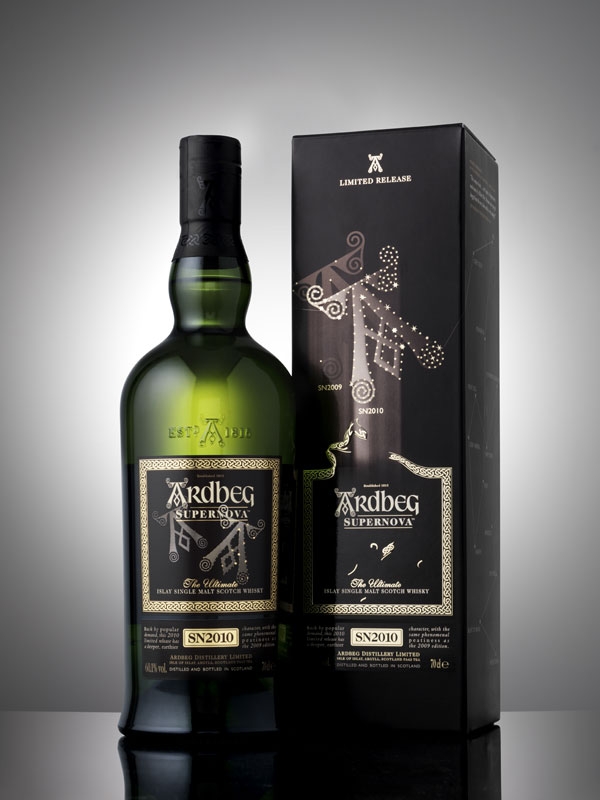
Ardbeg Supernova 2010 Whisky Review

There is a lot of anticipative energy in the Ardbeg 'community' at the moment, and with good reason: a new Supernova is coming! To mark the occasion, I thought I would review the last version released, SN2010.

For those of you not familiar with this Ardbeg expression, the first version of Supernova was released back in 2009, and was back then the world's peatiest whisky, at "well over 100ppm". It has since been dethroned by multiple versions of Bruichladdich's Octomore . Very peaty indeed, and it won Jim Murray's 'Scotch whisky of the year' back then as well.

The 2010 release I'm reviewing here didn't win Jim's award, but is still a big peaty beast of an Ardbeg. It was actually my second major whisky purchase, after the always-excellent Lagavulin 16yo. My bottle of SN2010 is getting a bit low now, but I won't be replacing it, as it is now selling for well over double what I paid, just those few years ago!

An NAS bottling, this young peat monster, it is thought to be 7-9 of age, to retain the maximum peatiness. As we know, peat levels recede with time during maturation. It is also bottled at a high 60.1%, and is very aggressive and eye-watering without water to calm it (very slightly).

Ardbeg Supernova 2010, NAS, 60.1%, Islay, Scotland. 
'Well over 100ppm', thought to be aged 7-9 years in ex-bourbon casks. Non-chill filtered, no added colouring.

(tasted with a few drops of water)
Colour: Light gold. 

Texture: Creamy, Oily.

Nose: Masses of peat & salt, some herbal, oaky sweetness. A little heat, even with water. More vanilla sweetness comes through with time in the glass. Not the most complex ardbeg nose, but makes a big impression.

Taste: Huge, creamy, herbal peat. Definitely a peaty Supernova explosion! Salty, sea air, some hot smoked fish, tarred ropes and old grease. Some herbal and vanilla sweetness from the oak towards the end, and a little heat reminding you how young & strong this stuff is. 

Finish: Goes on for miles! Miles of never-ending peat, that is. Some more herbs and vanilla, and a hint of thin honey right at the end. One of the peatiest, and longest, finishes I've experienced. Not for the faint of heart!

Score: 3.5 out of 5.

Notes: A little too young and aggressive, and while I haven't tried the 2009 version, I have heard it was quite different in this regard. Definitely a peat monster, and a very good quality whisky, but not on the same level as Ardbegs' Uigeadail and Corryvreckan, in terms of complexity and enjoyment. Certainly much more aggressive than Bruichladdich's Octomore releases that I've tasted, despite the extra couple of years' maturation time, but that's probably down to the different shaped stills. 

The new Supernova release, however, promises to be a show-stopper! Down to 55%, which either points to extra water, or extra maturation, or both. But -wait for it- some sherry cask maturation has been used! Could this be a peatier, meatier version of my all-time favourite Uigeadail? Time will tell, but I'm counting the days until it's release next week!

Also worthy of a mention is Ardbeg's space experiment, which is what the new Supernova release is commemorating. Back in 2011, they sent vials of compounds, called Terpenes (basically flavour compounds), and some charred oak, up to the International Space Station, for an experiment. The purpose was to study the differences between oak maturation on earth, and in space (a 'control' set of compounds & oak was kept at their warehouse on Islay). An interesting mission, although the benefits of this are beyond my understanding. This space-travelling Ardbeg experiment returns to earth next Friday, the 12th of September 2014, and the occasion will be marked by the release of this promising new Supernova. 

I can't wait to try it, and I'm told my favourite whisky bar, Cobbler, will have it available for purchase by the glass. So if you're in Brisbane and you're not sure about buying a bottle of this stuff, head to Cobbler to check it out!

Cheers!

Hellyers Road Richly Peated 9 Year Old Whisky Review!

A new heavily peated ex-bourbon cask release from Tasmania's Hellyers Road Distillery! Might as well take a quick look at the specifics ...