Wednesday, 12 November 2014

Knob Creek Bourbon & Rye Tasting & Review!

I recently had the privilege of attending the Australian launch of Knob Creek Rye Whiskey (yes, the Americans spell it with an E), along with a 3-course meal, and tastings of the aforementioned Knob Creek Straight Rye Whiskey,  9yo Straight Bourbon, and Single Barrel Straight Bourbon. Something a little different for me, and it's no mean feat to get me out of my own suburb mid-week, so this is definitely something worth writing about!

Presented by Dan Woolley, brand ambassador for Beam Suntory, the launch event & tasting was hosted by Papa Jack's, a relatively new cocktail bar & restaurant in Brisbane's Fortitude Valley, serving New Orleans / Creole / Southern style food and original cocktails, accompanied by live blues acts on Friday, Saturday and Sunday nights.

Completely new to me, this place won Queensland Bar of the Year in the Australian Bar Awards recently, so it is definitely popular, and I can see why. I'll be back! The relaxed, open, funky vibe, fantastic live blues act and delicious food (think Po Boy sandwiches, Gumbo, Slow roasted American BBQ, etc.)made for an excellent spot to sample some quality Straight Bourbon and Straight Rye American Whiskey.


Before we dive into the tastings, let's have a look at American Whiskey itself, as it's not a subject I've touched on before. While I've sampled other high-end bourbon previously, it has only been at Whisky shows, and when surrounded by so much Scotch Malt Whisky, I've found it hard to devote my full attention to anything else! So, time for a closer look.

Bourbon whiskey must be produced in the USA, must be distilled from grains with a minimum of 51% corn (the remainder usually being rye, wheat or barley), and must be aged in new white oak barrels (which are subsequently sold on, such as to a Scotch distillery), which must be charred inside (basically dunked over an open flame), although there is no minimum ageing period. Straight bourbon, on the other hand, must be aged for a minimum of 2 years, and cannot have anything added to it, such as colouring or flavouring, or neutral spirit. In a similar vein, straight rye whiskey must be aged for a minimum of 2 years, be distilled from grains with a minimum of 51% rye, and aged in new white oak barrels.

The Knob Creek range consists of the 9yo straight bourbon, the single barrel straight bourbon (also 9yo), the straight rye whiskey, and a smoked maple blended straight bourbon whiskey, termed blended because of the added flavouring (not sure about that one, although the smoked part sounds interesting). I haven't tasted the latter, and it likely has not been released in Australia, so we'll leave it out for the time being.
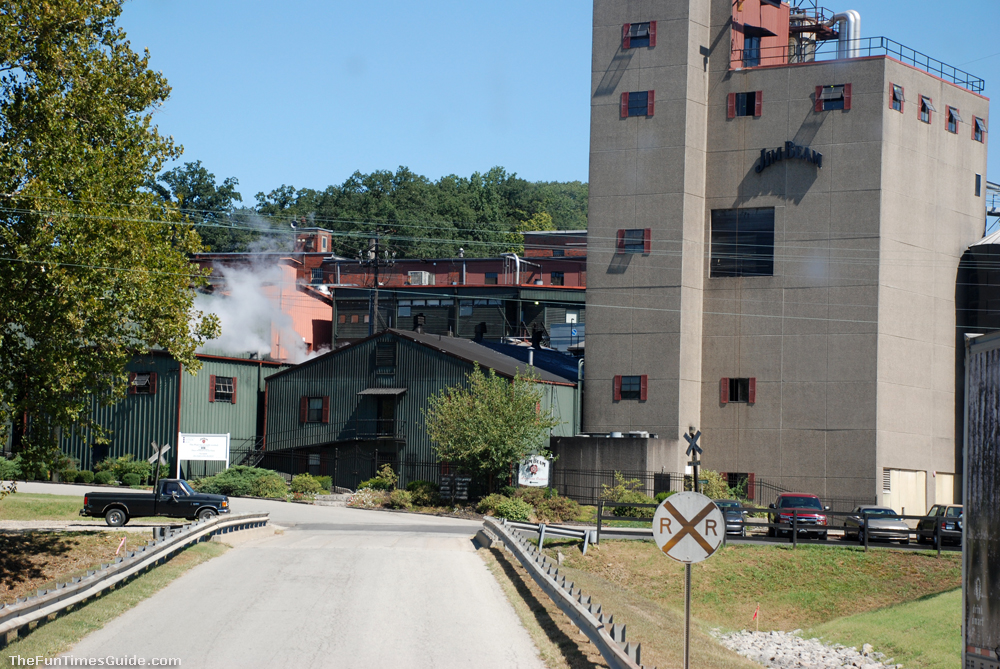

Produced at the Jim Beam distillery in Kentucky, USA, Knob Creek whiskey is part of Jim Beam's small batch range, distilled in a separate building to the more mainstream/mass-produced products. Bottled at higher than usual % ABV (50%, or 100 proof), aged for considerably longer than both (up to 9 years), and aged in heavily-charred barrels (the heaviest char used in whiskey production, termed a level 4 char), the brand is aimed at the high-end American Whiskey buyer. So, enough already, on with the review!

On arrival, guests were handed an original cocktail, crafted by the Papa Jack's crew, containing the Knob Creek Rye, Aperol, an Italian Aperitif, coconut falernum, a sweet syrup, and saline solution, essentially salt water. Although a little sweet for my tastes, this was a great precursor to the coming whiskey and creole food.
Next up was the Knob Creek Straight Rye Whiskey, which is bottled at 50%, and although it does not carry an age statement (the label only states it is aged 'patiently'), as we know from the above it must be aged to a minimum of 2 years.

Nose: Banana, wood, and considerable spice. A little youthful ethanol on the nose.
Taste: More spice and oak, not overly sweet, and easy drinking at 50%. Water brought out more wood and caramel, and dialled down the spicy notes a little.
Finish: Short and spicy, a little hot.
Score: 3 out of 5 (American whiskey score)

The Rye was matched with a smoked duck gumbo, essentially a creole-style savoury stew, with rice, smoked duck breast and sausage. The spicy flavours in the whiskey bought out more spice in the gumbo, and the sausage and duck were awesome in their own right.
Next we were presented with the Knob Creek 9yo Straight Bourbon, also bottled at 50%, and aged for 9 years in the heavily-charred oak barrels. This was considerably smoother and more complex than the rye, with a great texture and finish. The extra time in the barrel shows here. 

Nose: Caramel, spices, toasted nuts, a little fruity.
Taste: More toasted nuts, think walnut and hazelnut. Spiced caramel, sweet oak and grains.
Finish: The sweetness subsides early, leaving spicy wood and toffee. Long and mouth-watering.
Score: 4.5 out of 5 (American whiskey score)

This was paired with a lightly smoked beef brisket, with Knob Creek whiskey added to the brine, and corn served with a salted whiskey caramel. The brisket was truly delicious, with a nice light char around the outside, a delicate smoke flavour and was very tender. The corn with salted whiskey caramel was a little odd, perhaps a little too sweet with the sauce.
Our final tasting of the evening was the Knob Creek Single Barrel Reserve, bottled at 60%, and aged for 9 years in the same level-four charred barrels. This was a big beast of a bourbon, very strong and spirited. I was excited to try this one, as it is un-chill filtered, which is quite unusual for an American Whiskey, and indeed it did have a nice haze in the glass when watered down enough. 

Nose: Very closed initially, with considerable heat. Water brings out toasted nuts and marshmallow, some mild oak, and a wierd note of generic-flavoured bubblegum. 
Taste: Again needs water, brings out some stone fruit, more toasted nuts, and considerable heat.
Finish: Surprisingly short, a little woody caramel sweetness.  
Score: 2.5 out of 5

The Single Barrel was matched with a delectable, rich, sweet banoffee pie, with sticky caramel, whipped cream & marshmallow on a ginger biscuit base. The ginger and caramel worked well with the big strong bourbon, bringing out more complex flavours. 

As you can see, the standard 9yo was the star of the show for me, well balanced and complex, and easy drinking with a great texture. The new straight rye whiskey was the runner up, with nice wood and spice notes, although I feel it could benefit from a little longer in those heavily-charred barrels. The single barrel was just a little too hot and aggressive for me, perhaps held back by the higher ABV%, even with added water. Normally I would praise a higher-alcohol bottling, but in this case I preferred the standard version.
Our guide for the evening, Mr. Dan Woolley (who I've dubbed the Whisky Lord-aside from the obvious indicator above, he reportedly has one of the largest whisky collections in the country), was a great presenter, relaxed and approachable, preferring to give the thirsty hordes only the essential information, rather than rattling off scripted and rehearsed marketing verses, then opening the floor to keep the audience involved and engaged, while keeping the event moving at a comfortable pace. 

Overall the Knob Creek Rye launch & tasting was an excellent event, the venue and quality of meal were excellent, helping to keep the conversation, and the whiskey, free-flowing. It was a great opportunity to try some high-end American whiskey in an American-style environment, and I thoroughly enjoyed the experience, it certainly broadened my whisky horizons, which of course is the name of the game!

A quick thanks to Dan Woolley, Knob Creek American whiskey, and Papa Jack's, for putting it all together. I look forward to the next one! 

Cheers. 

Monday, 10 November 2014

Johnnie Walker Green Label Blended Whisky Review!

So, my final review in the blended scotch mini-series is here, and I have saved the best until last! Unfortunately it has been discontinued for quite some time now, and is selling at around $400 Australian (and up) on Ebay, which is insane! From memory I paid around $60-70 for the bottle a few years ago, which was great value at the time. This blend really could compete with, and trounce, similarly priced single malts.

The Green Label Johnnie Walker is a 'blended malt' or 'vatted malt' scotch whisky, which means it only contains single malt whisky, from different distilleries, and does not contain any grain whisky. There is no other blended malt in the Johnnie Walker line-up, their entire standard range now contains a varying proportion of grain whisky.

It is also unique in that it states clearly on the box where the 'key component' malts originate from. To my knowledge, it is the only Johnnie Walker whisky to do so, and not many blended malts can claim this either. These key components are listed as Caol Ila (from Islay), Talisker (The Isle of Skye), Cragganmore (Speyside) and Linkwood (Speyside).

It is also quite unique in that it is (was) bottled at 43%, rather than the standard 40% of the other standard Johnnie Walker expressions. It also carries an age statement, with each malt being at least 15 years old. This really is a well presented malt for the whisky enthusiast, and it's a shame it has now all but disappeared. But, for the sake of reminiscing, let's have a closer look at Green Label.
Johnnie Walker Green Label, blended malt whisky, 43%, 15yo, Scotland.
Chill filtered and Artificially coloured, containing Caol Ila, Talisker, Cragganmore, and Linkwood malts.

(tasted neat)
Colour: Yellow gold

Nose: Sweet honeyed malt, a little smoke and some floral notes. Some oaky sweetness, pepper and a veil of smoke. 

Texture: Silky and clean, easy drinking.

Taste: More malt & honey from the nose, a little floral sweetness, some nice woody smoke and black pepper (Caol Ila and Talisker saying "hi"). Well balanced with very little heat. 

Finish: Honey and pepper, lovely and malty. Could be longer, but not bad!

Score: 4 out of 5 (blend score)

Notes: Definitely my favourite Johnnie Walker whisky, it was great value and very enjoyable. My bottle of Green Label is nearly empty now, but I won't be paying $400+ to replace it! It has become a collector's special at those prices. It was replaced by the 'platinum' 18yo and 'gold label reserve' NAS blended scotches, and while the platinum is quite enjoyable, at a significant jump in price, even it cannot match the complexity and balance of the dearly departed Green Label. 

If you do happen across a bottle of this, and it's at a reasonable price, grab it. You can always sell it on for a massive profit, to someone who will likely never open it. 

Cheers!

P.S. Stay tuned in the next couple of days, I have something very different and very interesting in the pipeline! Watch this space... 

Wednesday, 5 November 2014

Black Bottle Blended Whisky Review!

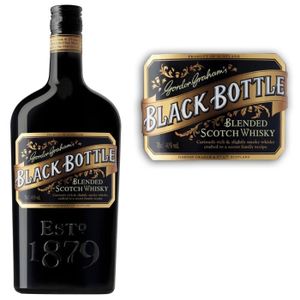
For part 2 of my (short) 3-part series of blended whisky reviews, I chose something a little less well-known, and certainly less-marketed. Black Bottle blended Scotch whisky has been around since the late 1800's, but has existed in many different styles, and with different components. The version I'm reviewing here has recently been replaced as well, from all reports with an inferior blend (refer to the below photo for clarification).
OLD (reviewed here)
   NEW                                
Produced by Burn Stewart distillers, who own Bunnahabhain distillery, among others, this version of Black Bottle (so named because older versions were in black glass, or black plastic-coated glass) contains, as stated on the bottle, "A blend of Islay single malts with highland, lowland, and speyside malt and grain whisky". It certainly contains a good amount of Bunnahabhain single malt, but the specifics of the other components are a bit of a mystery. While it is a Non-Age Statement bottling, it is believed to contain 7 year old whisky. There have, in the past been, 10 and 15 year old versions, but these are now discontinued.

As we discussed in the previous review, Black Bottle is a blended scotch whisky, as it contains a portion of single malt whisky blended with grain whisky. On to the review!
Black Bottle blended whisky, 40%, NAS, Scotland.
Believed 7 years old, added caramel colouring, chill filtered. Unknown components.

(tasted neat)
Colour: Pale gold. Some added caramel though.

Nose: Salty, very maritime-y and briny. Medicinal peat and a little iodine.

Texture: A little thin, but clean and warming. Not bad for a 40% blended scotch.

Taste: Peaty and medicinal, tar, a little smoke, a little bitterness. 

Finish: Short and peaty, a hint of ash, then mild honey sweetness. 

Score: 3 out of 5 (blend score)

Notes: A decent blend, certainly one of the best peated blended scotch whiskies (containing grain whisky) I've tried. It would be a good introduction to peaty, medicinal, 'Islay-style' whisky, and at a good price (around $50 here in Australia). As with most blends though, it would be massively improved by increasing the percentage of malt whisky content, higher ABV %, and losing the chill filtration. I haven't tasted the new version personally, but I hear it has gone backwards and lost some peat, which is unfortunate. If you come across this version (first choice and vintage cellars usually have it in Australia, but probably not for long), and are after a cheap and cheerful peat fix, grab it. 

Cheers!

Tuesday, 28 October 2014

Johnnie Walker Double Black Whisky Review, and Blended Scotch Whisky Explained!

This being my first review of a blended whisky, with a couple more coming soon, let's go over some details about blended scotch before we get into the review of the Johnnie Walker Double Black.

The two types of what are considered to be blends, in the whisky world, are a) blended malt scotch, a.k.a. vatted malt, and b) blended scotch. These terms and their definitions are set by the Scotch Whisky Association in Scotland. 

A blended, or vatted, malt is a blend of multiple single malt whiskies from different distilleries, such as 'Big Peat', which is very good, produced by Douglas Llaing (an independent bottler). For example, if a bottler was to sell a whisky which contained 50% Ardbeg single malt, and 50% Glenfiddich single malt, it would be considered a blended, or vatted, malt scotch. These vatted malts can be great value, and are usually of good quality. 

A blended scotch whisky, on the other hand, contains both single malt whisky, and single grain whisky. For example, a bottle of Johnnie Walker red label (yuck!) contains a set amount of malt whisky (from different sources), and the remainder is grain whisky. For obvious reasons this type is, generally, considerably cheaper than a blended malt whisky. These whiskies are generally not as complex or 'interesting' as a single malt, and are usually chill-filtered and artificially-coloured. 
For the moment, we will focus on blended scotch whisky, as this is what I'm review today, with the Johnnie Walker Double Black. Interestingly, all currently available Johnnie Walker whiskies are blended scotch, containing grain whisky. Yes, even the ridiculously over-priced and over-hyped 'blue label' contains some (cheaper) grain whisky, although the exact proportions and sources are a closely guarded secret. There was a vatted malt Johnnie Walker, the Green Label, which sadly is now discontinued. It was, and still is, the best Johnnie Walker I've tasted. It even has/had the whisky sources listed on the box! If you come across a bottle of the green label, grab it. 

The JW double black is, as you can guess, based on the standard black label, which is good value for it's price, with surprising complexity. The double black is marketed as having "a rich, intense, smokier flavour". It certainly is smokier than the black label, probably due to some extra Caol Ila and/or Talisker being added to the blend. 
Johnnie Walker 'Double Black' blended whisky, 40%, Scotland.
NAS, chill filtered, artificial colouring added. Number or source of component spirits not stated. 

(tasted neat and with a tiny drop of water)
Colour: Copper (thanks to the added caramel colouring, no doubt)

Nose: Honey and caramel, some malted cereals, something a little acidic, like under-ripe grapes. A hint of smoke, but certainly not intense. 

Texture: Thin, clean. 

Taste: Big honey sweetness, some (talisker/caol ila) smoke but it fades quickly. Reminds me of a thinner Highland Park 12yo with a bit of extra smoke. Only a tiny bit of peat detectable, sadly. Found a strange bitter 'off' note in the middle which I found a bit off-putting. 

Finish: Short, that weird bitter note is still there, and a bit of heat on the tongue (surprising for only 40%), fades to a honey sweetness. 

Score: 2 out of 5 (blend score).

Notes: I had high hopes for this one, being based on the standard black label, but it has let me down. It's not overly unpleasant, especially for the relatively low price, but it just doesn't do anything for me. The complexity of the black label has been lost, I wonder if the double uses younger stock? A little disappointing, and not worth the extra over the standard black, which I prefer to this. It would make for some interesting mixed drinks or cocktails though, with that added smoke. If you'd like to try it, I'd suggest looking for it in a bar first rather than buying a bottle. 

I don't want to seem anti-blend, there are a massive amount of blends on the market, and I'm sure at least some are quite good! For a decent (and cheap) peaty/smoky blended whisky, head for 'Black Bottle', produced by Burn Stewart, but preferably in the older style pictured below. Look for a review shortly! 
Cheers. 

Sunday, 19 October 2014

Bruichladdich / Port Charlotte PC7 Whisky Review!

Until recently, I have looked at Bruichladdich's Port Charlotte range as a bit of an ugly duckling, compared to similar offerings from other distilleries, and especially compared to Bruichladdich's own Octomore range.

This was based on my tastings of 'The Peat Project', and it's replacement, 'Scottish Barley', the former is one of my least favourite peated single malts, and while the latter is a huge improvement, it still did not wow me like I had hoped it would. However, after tasting the Port Charlotte 10 year old (46% version), my opinion of the 'label' began to change. Clearly the NAS bottling's are not the best of the range, so I decided to dig into my own collection and pull out something special, to settle the matter once and for all. 
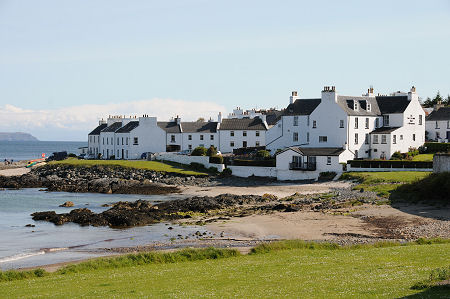
The Town of Port Charlotte, Islay, Scotland.

I have covered the basic history of the 'Port Charlotte' label here previously, so for this review I will focus on the 'PC_' cask strength bottling's, before reviewing what is still the only bottle of the 'PC_' range I have ever seen in the flesh, so to speak, the (spoiler alert!) wonderful PC7. I came across it by chance in a local bottle shop, a couple of years ago, having read about it in Jim Murray's 'Whisky Bible', piquing my curiosity. I spotted another (last) bottle of it in the same store a couple of weeks ago, and decided to open, taste and review my bottle that night. I then (another spoiler alert!) went back early the next day and bought that last bottle. 

The Port Charlotte cask strength range started with PC5, which was 5 years old, and like the rest of the range, peated to 40ppm, a level similar to standard bottlings from Lagavulin / Laphroaig / Ardbeg etc. Then came PC6, PC7 and so on, and the distillery is currently up to PC11. These are all rather rare whiskies, or at least they're not easily found outside of internet auctions. As stated above, the PC7's I have in my collection are the only bottles of the 'PC_' range I personally have ever actually seen. There were typically around 5000 bottles of each release sold, which may sound like a lot, but really is not considering the size of the market around the world, and the number of hardcore collectors out there, who quickly snap up these limited release bottles. 

The packaging on these bottles is quite interesting, as the outer tin's feature photos of selected people, either distillery staff, suppliers or other Islay locals, as Bruichladdich feel very strongly that 'whisky should be about people'. The bottling's also have Gaelic names, with the exception of PC5. The PC7 is named 'Sin An Doigh Ileach', which translates to 'It's the Islay way', referring to the relaxed attitudes of Bruichladdich's suppliers and contractors. Let's try some!

Port Charlotte 'PC7' (Bruichladdich), 61% cask strength, Islay, Scotland.
7 years old, mix of bourbon and sherry casks, 40ppm, non-chill filtered, no added colouring. 

(tasted neat and with a drop of water)
Colour: Gorgeous deep copper. Seductive!

Nose: Smokey, medicinal peat, salty and smoky, fruity sweetness, a little grassy / herbal. A bit of alcohol, but not bad for 61%! 

Texture: Clean & light, warming.

Taste: Pow! Fantastic. Big peat and smoke, slightly salty and a little medicinal (unusual for bruichladdich / port charlotte), balanced by dark caramel / molasses sweetness, and stone fruit. Water brings out extra fruit and smoke, and a little mild honey and malt. Very well balanced and beguiling.

Finish: Long and smoky, fading into malty, fruity sweetness, fading again into lovely warm, malty peat, which goes on for days...

Score: 4 out of 5. 

Notes: Excellent quality, really enjoyable and surprisingly easy drinking, even neat. Identifiable as port charlotte peat, but turned up to maximum. This bottle actually had sediment in the bottom when first opened, and you can't get less chill-filtered than that, I love it! Between this and the 10 year old I reviewed recently, my opinion of the port charlotte 'label' has changed for the better. I'm going to have to try and find some other versions of the 'PC_' cask strength range. If you do come across any of these, in a bar or at an auction, just do it. Despite the inevitably high price. It'll be worth it!

Cheers. 

Monday, 6 October 2014

Jim McEwan Whisky Tasting, & Port Charlotte 10yo Whisky Review!

Bruichladdich Master Distiller, Jim McEwan, is currently touring Australia, presenting whisky tasting events around the country, and I had the privilege of attending one of the events last weekend, at the United Services Club, in Spring Hill, Brisbane.

Our MC on the night, who I believe 'borrowed' his introduction from Andrew from the Australian SMWS, put it very well: "There are three people in the whisky industry you should move heaven & earth to see: Dr. Bill Lumsden, (Distiller for Glenmorangie and Ardbeg), Richard Patterson (Whyte & Mackay, master blender), and both of them would move heaven & earth to see this man: Jim McEwan!"


Having worked in the industry for over 50 years, in multiple roles with multiple distilleries, Jim is very well qualified to explain every facet of the whisky world, and being a native of Islay (the town of Bowmore, specifically), his incredible passion both for the island, and his distillery, Bruichladdich, is truly infectious. Islay itself is, in my opinion, the whisky Mecca of the world, with eight working distilleries on a relatively small island, all producing excellent whisky, to be shipped and sold around the world.

I had previously seen Bruichladdich's people-focused marketing strategy as just that, a marketing strategy, but after listening to Jim talk about his home, his people and his distillery, with such passion and reverence, this is definitely not the case. When they say their whisky is about people, they really mean it.

As the tour is still in progress as I write this, I won't go into minute detail, but I will say that Jim is a fantastic presenter, well-grounded and passionate, honest and relate-able. He had us in stitches throughout the evening, while also touching on subjects like chill filtration , artificial colouring, the production process (including whisky and gin), and the rebirth of Bruichladdich distillery, a fascinating story in itself. Both myself, and my less-whisky-obsessed friend, found the evening very enjoyable, educational, and inspiring. Jim, despite it being his life's work, does not take whisky too seriously, and has a typically Scottish approach to the marketing aspect of the whisky world. We also had the opportunity to buy a bottle of the whiskies we tasted, and have it signed by Jim himself. I also snuck in one of the tins from my whisky collection for him to sign, wasn't going to miss that opportunity!


I was not able to comprehensively analyse the whiskies we tasted, so again I won't go into minute detail, but the six whiskies we tasted on the night (and one gin!) were as follows:

-The Botanist gin, produced by Bruichladdich, was served with tonic on arrival, although we did not find this out until the presentation had begun. I have tried this before, neat, and it is the only gin I will drink (and only neat, or with soda). A very successful product, and Jim was very honest about it, explaining that it was done purely as a source of income, as it can be bottled and sold straight after distillation, rather than having to wait years for a whisky to mature, before seeing any return. In true McEwan / Bruichladdich style though, it is unique, and of fantastic quality. I recommend you try it if you haven't already, even if, like myself, you're not a fan of gin.

-Bruichladdich 'Laddie Classic', NAS, 46%. Explained by Jim to be bottled at around 7 years of age. Very light, honey sweet and tropical fruits, unpeated, but very easy-drinking, and great value for money.

-Bruichladdich 'Islay Barley', 2006, 50%. Again explained to be around 7 years of age, and distilled only from barley which was grown on Islay. More weight and complexity, an excellent mouth-feel, and with more cereal and fruit notes. Again, very easy drinking and enjoyable.

-Bruichladdich Black Art 3, 1989, 48.7% cask strength, which I have reviewed previously here . I was hoping to taste the fourth release of the Black Art range, but the third is still a very good whisky.

-Port Charlotte Scottish Barley, NAS, 46%, 40ppm. Used for the 'highland toast' at the end of the evening (while standing on top of the chairs and tables!), so no time for details, but nicely peaty with some cereal notes and nice texture. This replaced their 'The Peat Project' NAS bottling, which I was not particularly impressed with, reviewed here , and this is a massive improvement.

-Port Charlotte 10yo, 46%, 40ppm. Lovely complexity, warming and peaty, with some sherry sweetness and depth. Jim explained this 10yo bottling to be around 60% bourbon cask, and 40% oloroso sherry cask. Hadn't tried this one before, and was impressed, so had to buy one. See the review below! .

-Octomore 6.1, 5 years old, 'scottish barley', 57%, 167ppm. I'm still amazed by the complexity and balance of these very heavily peated Octomore bottlings, and this one was no exception. It is of course a very powerful spirit (especially when consumed in two gulps, and held in the mouth to feel the power, thanks to Jim's encouragement!), and there are some similar cereal flavours in both it and the Port Charlotte Scottish Barley. This Octomore was my other purchase on the night, to be reviewed at a later date.

So, if you ever have the opportunity to meet Jim, or attend one of his tasting events, definitely do it, don't hesitate! There are still some tickets available for the current tour in Australia, and I believe he is visiting Japan and Korea on this tour as well. To borrow Andrew's line again, you should move heaven & earth to attend! Thanks to Jim McEwan, Bruichladdich, and Southtrade for putting this tour together, we need more of these events in Australia, please keep 'em coming!

Now, let's review some whisky!
Port Charlotte 10yo, Bruichladdich distillery, 46%, Islay, Scotland.
10 years old, 60% ex-bourbon cask, 40% ex-oloroso sherry cask, 40ppm. Non-chill filtered, no added colouring.

(tasted neat)
Colour: Light bronze

Texture: Oily yet clean, Rich let light. Lovely.

Nose: Salty, a little smoke, sweet cereals, sweet sherry and raisins, smoked malted barley. Well balanced.

Taste: Salty sea air, over lovely warming peat. Not medicinal peat, slightly herbaceous. Sweet smoke, cereals and raisin / sherry sweetness. Easily identified as Bruichladdich, with the sweet malt and slightly salted cereals standing out. Delicious.

Finish: Very long finish despite being 46%. Lovely warming peat, smoky malt and cereals. Very, very long.

Score: 4 out of 5.

Notes: Excellent mouth-feel and texture, fantastic long finish. Love the sherry influences. Having tried the 'peat project' and 'scottish barley' offerings, I do prefer my port charlotte with a little sherry cask. Good value for money too, and so light, relaxed and easy drinking. I sometimes find it challenging to find a decent trace of the malted barley in heavily peated whisky, but this is not the case here.

Certainly holds it's own amongst Laphroaig quarter cask and triple wood, probably it's closest competition in my book. Would also make a good introduction into heavily peated whisky for the uninitiated. It was a bit hard to open a bottle signed by the master distiller himself, but it was worth it!

This expression is not as easily found as the NAS 'scottish barley', but it is worth searching for, with the extra warmth, complexity and balance. There is also a cask-strength version, released as part of Bruichladdich's 'PC_' range, known simply as PC10. Would absolutely love to get my hands on some of that stuff! But it is very hard to find, and very expensive as well. Maybe one day...

Cheers!

Friday, 26 September 2014

Caol Ila 29yo Duncan Taylor 1983 Whisky Review & Independent Bottling's Explained!

My first review of an independent bottling, and a very special one, this bottle of glorious whisky was my 29th birthday present last year, from my parents no less, albeit with a few subtle pointers from myself! At 29 years of age, like I was at the time, this just felt so right! This is still the oldest whisky I've tasted to date, and one of the more expensive as well. 

Distilled in 1983 at Caol Ila distillery, and bottled in 2012 at 29 years of age, this whisky is part of Duncan Taylor's 'Dimensions' range, and is non-chill filtered, bottled at cask strength and has no added colouring. For the serious whisky obsessives this is cask 3624, and bottle 191 of 362 from that cask. 

But before we dive into the review, let's have a quick look into the what, why and how of independent bottling's of Scotch whisky. 

For the what, essentially an independent bottling company, such as Signatory, Gordon & MacPhail, or Duncan Taylor, is an independent company (duh) which buys casks of whisky from distilleries, to market & sell themselves, usually as a single malt or single cask bottling. 

For the why, they do this for a number of reasons, but the main one is to offer something which one cannot buy from the distillery. For example, if a distillery always chill filters their whisky before bottling, an independent bottler may buy a cask from the distillery and bottle it without chill filtration, to off the consumer something they can't get in an original bottling from the distillery. The same goes for things like adding colouring/caramel, bottling at below cask strength, different ages of whisky, and different casks used for maturation. Another reason why, is because they can usually sell their bottling at a lower cost than the distillery would charge for an equivalent whisky. It doesn't always work this way, but the 29yo Caol Ila I'm reviewing here cost around $100 less than a 25yo distillery bottling, which would have been watered down to 43%, and with some chill filtration. 

As for the how, these companies will either approach a distillery to buy any casks they don't want, and that may be because the whisky hasn't matured as the distiller expected, or the flavour profile is too far from the norm to be blended into their standard offerings, or because they need/want a bit of extra income. The independent bottler may mature this whisky further themselves, or bottle it straight away. It is important to note here that independent bottling's vary wildly in terms of quality and flavour, and can be quite a risk come buying time. For this reason, I recommend sticking with the major companies, and if possible try before you buy. Failing that, research the bottling as much as you can before taking the plunge. 

There are also a few independent bottlers which do not name the distillery their whisky came from, usually because they have an agreement with that distillery that they will not disclose that information. There are also many, many independent bottlers out there selling blended whisky, and also do not state which distilleries their whisky came from, but I'm focusing more on the single malt and single cask bottler's here. Now, on to the review!

Caol Ila 29yo, by Duncan Taylor, 'Dimensions' Independent Bottling.
Distilled 1983, bottled 2012, 53.8% cask strength, non-chill filtered, no added colouring. 

(tasted neat and with a drop of water)
Colour: Dark bronze

Texture: Clean and refined, lightly oily.

Nose: Salty, fruity and peaty. A little reminiscent of Lagavulin initially, with less peat and smoke. A little ethanol and soap, furniture polish, not a lot of smoke at all. Sweet grapes, dry grass and herbs. Water brings out more grassy, herbal notes and fruit.

Taste: Sweet peat and smoke, dark fruits. A little heat, and salted, stewed stone fruit in the background. Water brings out a nice malty sweetness and caramel/toffee.  

Finish: Long and peaty, smoky, slightly burnt caramel, warming and drying. Even longer with water and a little more burnt caramel. 

Score: 4 out of 5. 

Notes: As expected, quite different from distillery versions of Caol Ila. Maybe a slight nod in the direction of their distiller's edition, but with more malt, less sweetness and more depth & body. A very interesting whisky, and pretty good value, compared to original bottling's. A little hard to find now, but SM Whisky still has a few samples, along with other independent bottling's, and there are a few bottles around in other online whisky shops. Happy hunting! Cheers.

Hellyers Road Richly Peated 9 Year Old Whisky Review!

A new heavily peated ex-bourbon cask release from Tasmania's Hellyers Road Distillery! Might as well take a quick look at the specifics ...