Tuesday, 30 December 2014

Whisky Price vs. Whisky Value - How much is too much?

The Search for 'bang-for-your-buck'!

While travelling abroad recently, I could not help but notice the overwhelming majority of whiskies available in duty free / travel retail, whether single malts or blends, and whether Scotch or world whiskies, were Non-Age Statement (NAS) bottlings. And, perhaps not surprisingly, the overwhelming majority of these whiskies were very expensive, and simply overpriced.


This is not a 'Travel Retail Exclusive' (see what I did there) issue either, with many domestic shops demanding truly insane prices for some whisky. And with NAS whiskies in particular, it is quite difficult to determine what you're actually paying for, whether it's good whisky, or good marketing, or both.

Obviously how much we're willing to spend depends on our personal circumstances, but most of us would like to know we're getting reasonable value for our hard-earned dollars. So how do we find the balance between the cost, and value for money, or 'bang-for-your-buck', in the whisky world?

The key factors which dictate if a whisky is reasonable value, in my own order of importance, are:

  • The ABV % the whisky has been bottled at. If it has been bottled at (or watered down to) 40%, which the majority is, I would expect it to be relatively cheap, as you're getting less whisky/spirit, and more water, in the bottle. If not, I don't see that as being good 'bang-for-your-buck'. 
  • If the whisky has an age statement. This is very important in determining what you're getting in the bottle. If the whisky does not have a clear age statement, and this includes a single vintage statement such as 'distilled in 1985' or '1985 release', there is no way of knowing how long the spirit has been matured for prior to bottling, or what you're paying for.
  • If the whisky is 'craft presented', i.e. if it has not been chill filtered, and if it has not had colouring added. This is a good indicator of the natural quality of the whisky.
  • If there have been any unreasonable price increases in recent history, without obvious justification (e.g. increase in bottling strength), and:
  • How the whisky is priced compared to similar bottles from the same, or similar, distilleries. 
On that last point, for example, is an Ardbeg Supernova 2014, at 55% and NAS, worth $50-80 (AUD) more than a Bruichladdich Octomore, at 5+yo and higher ABV%? Likewise, is that same Supernova worth the price of two bottles of Ardbeg Uigeadail? Maybe, depending on your brand or flavour preferences and personal circumstances, but not necessarily!

It is important to note that I am referring to the retail consumer (in the literal sense) market here. The secondary / auction / collectors / investors market is different, as many collectors and investors will not drink their collection, and have plenty of money to spend on it. Leaving them looking a little more like this:


We cannot blame the producers, distributors and bottle shops for wanting to sell their product for as much as possible, but there is a line between normal business practices and pure greed. 

Some older whisky is also insanely expensive, for example Balvenie 50yo may be old whisky, but is it worth the $40,000-45,000 (AUD) asking price? Why is a Glenfiddich 50yo $15,000 cheaper at $30,000? And then why is a 40yo Glenfiddich then a relative bargain at only $3,300? Is that extra decade really worth another $27,000? No, it is not. 


These old whiskies can sometimes also include 'bespoke' packaging, and things like free distillery tours (or a free trip to Scotland in some cases), in an attempt to justify the price. But is a bottle of whisky, even a 50 year old one, worth the same as a brand new sports car? Or a size-able house deposit? Surely not, regardless of your personal net worth. I would love to know how many of these mega-expensive whiskies are actually sold, although I'm sure the answer will shock me. What this means is whisky drinkers are priced out of the 'ultra-premium' market, as the collectors and investors move in. 

So, enough ranting for now. To sum up, here are my bang-for-your-buck whisky buying guidelines. Look for at least 46% alcohol (looking at you Lagavulin 16!), look for an age statement, look for no chill filtration, and look at the prices of similar bottles. And, definitely shop around!

The actual prices you pay obviously depend on many factors, especially local taxes. Suffice to say, whisky drinkers in the EU and US are far better off than other parts of the world. But personally, my picks for the best value heavily-peated, single malt, Scotch whiskies are: Ardbeg 10, Lagavulin 16, and Laphroaig Quarter Cask. 

Happy hunting!

Sunday, 28 December 2014

Bunnahabhain 18 Whisky Review!

Having previously covered the basics of Bunnahabhain distillery here , I won't delve into the details, but as a refresher, the distillery mainly produces un-peated or very-lightly peated whisky, with the exception of a few limited releases (such as the 'toiteach' , which I like. Very much).

The 18 year old is one of their un-peated standard expressions, and was re-introduced in a 'craft presentation' a few year's back, meaning they upped the ABV to 46.3%, and dropped the chill filtration and added colouring. They have applied a similar treatment to all their whisky, which is an excellent move! I just wish other distilleries would follow suit.


Bunnahabhain 18, 18yo, 46.3%, Islay, Scotland.
Matured in a mix of ex-bourbon and ex-Oloroso casks, proportions unknown. No added colouring, non-chill filtered. 

(tasted neat)
Colour: Nice deep, dark bronze. This should definitely be bottled in clear glass, to show off that natural colour. Lose the brown bottle please! 

Nose: Honey sweetness, dried fruits and light salt. Toasted nuts and sherry, a little dusty.

Texture: Thick & Oily, very nice.

Taste: Tiny hint of smoke, and a little salt, fades quickly into juicy apples & pears, light oak and boozy raisins (sherry). Surprisingly spirited and assertive for it's age, and very different from the 12yo, much less salt and malt, and more sherry and fruit.

Finish: Sweet & lightly salted nuts, sherry comes through to the end. 

Score: 3 out of 5.

Notes: The mouth feel on this one is great, thick and viscous, thanks to the higher ABV% and lack of chill filtration. Big, bold flavours too, although I can't help but wish there was more substantial peat & smoke in there. Initially reminds me of Bruichladdich's black art 3 to some degree, but with much less complexity, balance and finesse, albeit at a much lower price. 

I may be a little biased, given the name of this blog, but I can't help but wish for more peat and smoke in the standard Bunnahabhain's I've tasted so far. They needn't follow their neighbours and go the heavily-peated route, but a little smoke and peat adds an extra element of complexity to any whisky, which I can't help but feel may be needed here. 

This is still a great malt though, and well worth trying if you care to visit the 'lighter side of Islay'. Check it out here at a very reasonable price. Cheers!

Monday, 15 December 2014

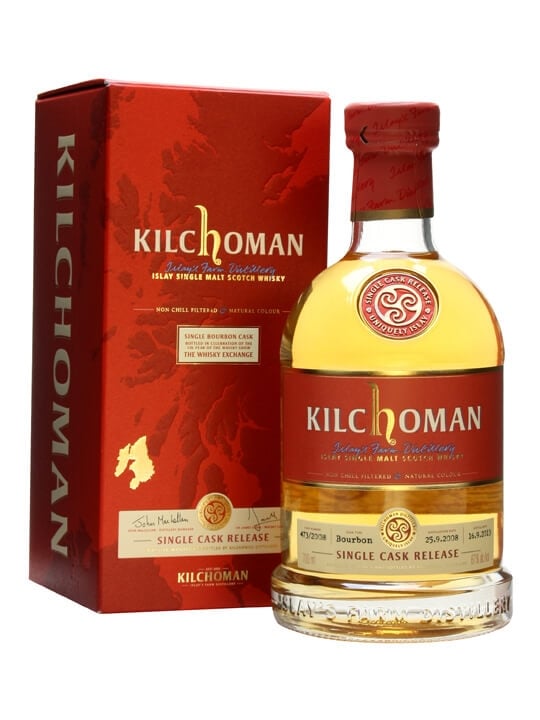
Kilchoman Small Batch Whisky Review!

Kilchoman is the youngest distillery on Islay (by around 120 years!), having started production in 2005, and it already has a huge cult following. They're currently producing young whiskies, for obvious reasons, but the whisky is of excellent quality regardless.

They grow and malt their own barley, used to produce around a third of their annual spirit production, with the remainder coming from Port Ellen Malting's on Islay. Their own malted barley is peated to around 20-25ppm, while the sourced barley is thought to be around 40-50ppm. Kilchoman also mature and bottle their whisky on site, at Rockside farm, on the western coast of Islay. They also do not chill filter or add colouring. Outstanding!

The 'small batch' releases are generally bottled at cask strength, and are matured in a combination of ex-bourbon and ex-Oloroso sherry casks. They also state clearly when they were distilled, and when they were bottled. The 2008 release we're looking at here is no exception, having been bottled in 2013 at 5 years of age. 
Kilchoman Small Batch 2008, 5yo, 58.2% cask strength, Islay, Scotland. 
Distilled 2008, bottled 2013, matured in first fill bourbon casks, finished in first-fill Oloroso sherry casks. Non-chill filtered, no added colouring.

(tasted neat)
Colour: Yellow gold

Nose: Salty, peaty, medicinal and coastal. Initially big, bold notes of medicinal peat, drying seaweed and sea spray, then some salted caramel, charcoal BBQ'd meats, lightly charred banana's add sweetness. Comparable to a big Ardbeg with a bit of a steroid problem! But distinctly different and complex.  

Texture: Oily, mouth-coating, viscous. 

Taste: Sweet, warming peat, some light smoke then builds to a crescendo. So drinkable for 58.2% and only 5 years old! Shows the quality of the spirit, and the quality of the casks. Hints of smoked raisins, salt and oak. Lovely.

Finish: Big smoke playing around with toasted nuts and sweetness. Drying and mouth-watering, herbaceous peat. 

Score: 4 out of 5.

Notes: Kilchoman might be the 'new kid on the block' on Islay, but they really know how to handle themselves! I would line this up against Octomore's and Supernova's without hesitation. I missed out on a bottle of this while passing through Dubai thanks to the transiting / carry-on rules, now I'm kicking myself for not trying harder! It really is excellent. 

I've also tried Kilchoman's standard expression, 'Machir Bay', and it is also of excellent quality at such a young age. I'm looking forward to trying their 'Loch Gorm' bottling as well, which is fully matured in ex-Sherry casks at a higher peating level. With plans to release older expressions as stock becomes available, this distillery is certainly one to watch. If you haven't tried their whisky yet, get your hands on some, and do it quickly! Click here to see a few of their bottling's.

Cheers!

Saturday, 6 December 2014

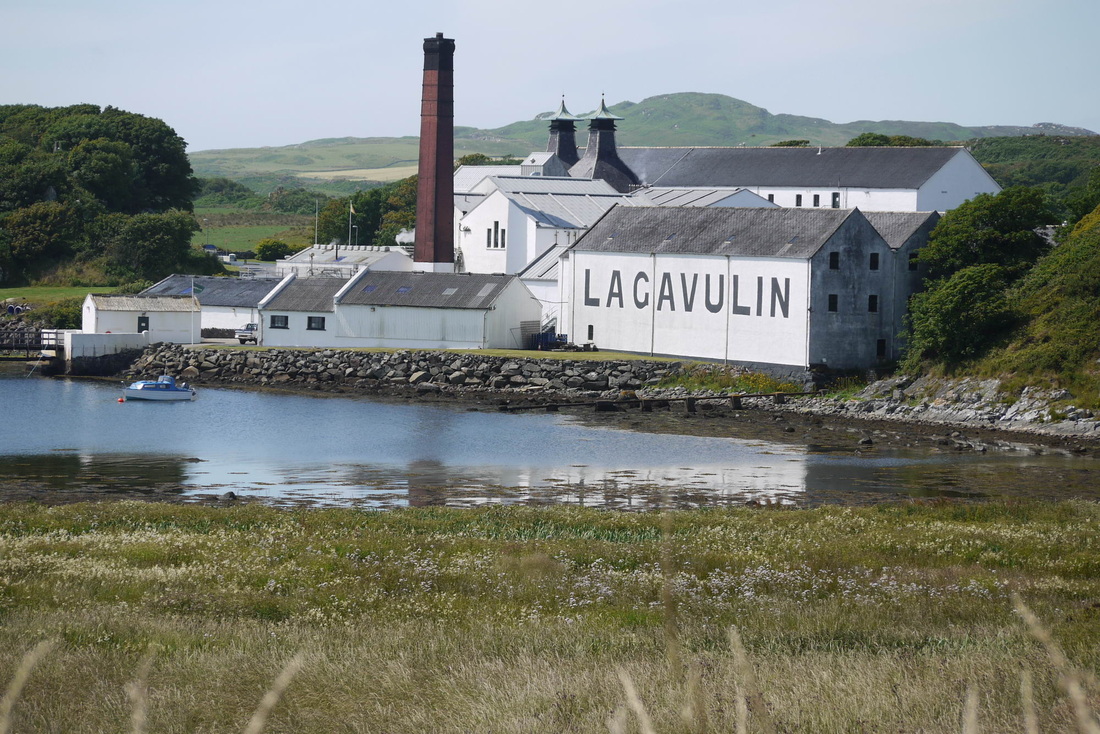
Lagavulin Distillery Profile


Ah, Lagavulin. It's marketing activities are surprisingly quiet, despite being owned by Diageo, and even their packaging and presentation is quite subdued and understated. They don't have dozens of different expressions, they don't experiment with unusual cask maturation, and they don't have a particularly strong presence on-line. Ron Swanson is doing his best to change this though!

Despite all this, Lagavulin produces some extraordinary whisky. Their standard expression, the 16yo, is, in my opinion, one of the greatest value-for-money / bang-for-buck single malts available, and is increasing in popularity and reputation. Shop around though if you're looking to buy, some larger stores have jacked up prices over the last year or so, it can still be found for around $90 AUD. Despite being bottled at 43%, and likely using some chill-filtration and added colouring, it's balance, complexity and smoothness are fantastic. It is, in fact, the single malt that got this writer into whisky. I had dabbled with Glenfiddich's, Glenlivet's and Talisker's prior to this, but Lagavulin 16yo was the siren which lured me in to the depths.

They also regularly release a 12yo cask strength bottling (the 'youngest' whisky they produce), and a distiller's edition bottling with an extra maturation/finishing in PX sherry casks. There is significant variation in these releases though, so try before you buy if possible. 

There are also a few older (25+ years) bottlings, which of course are hugely expensive, and like most Islay distilleries they release a 'Feis Ile' (Islay festival) special bottling each year. I have tasted their 2013 Feis Ile bottling, and it was absolutely mind blowing. Near impossible to find now, without paying collector's prices, but it was definitely one of my all-time favourites. 

Distillery Location: Lagavulin bay, near Port Ellen, Islay, Scotland.

Owner: Diageo

Producing since: 1816

General Whisky Style: Smoky, peaty and fruity, balanced and complex.

My only wish with Lagavulin, like many other distilleries, is that they would release a bottling which is not chill filtered, and without added colouring, and then clearly state that on the label. I don't believe they excessively chill filter their whisky at the moment, but it would be nice to know for certain. Come on Diageo, let's do it!

Thursday, 4 December 2014

Glen Moray 25 yo Whisky Review!

Following a short hiatus, due to a holiday in Egypt and a nasty head cold, I thought I would 'get back in the saddle' by reviewing something new and unfamiliar, at least to me.

This whisky was part of a sample pack purchased from Nippy Sweetie Whiskies. Samples are a fantastic way to try multiple whiskies, without the cost of buying whole bottles. Nippy Sweetie have a huge range of samples available, so if there's something you've been wanting to try, but either can't find or can't afford, have a look at their website or send them an email.

Glen Moray is a Speyside distillery, located near the town of Elgin. Generally producing milder, sweeter, lighter whiskies, but their 25yo bottling is a little different in that it is finished in Port casks, following the traditional maturation in ex-bourbon casks. It is also bottled at 43% rather than the normal 40% of the range.

This practice is becoming more commonplace in the Scotch Whisky world, and aside from the added flavours, it can give the whisky a enticing red or pink hue. Still nowhere near as common as the ex-bourbon and sherry cask maturation, though.

This is not the case with the Glen Moray 25 though, which leads me to assume that either it was a short finish in the Port casks, or the casks employed may have been well-used (i.e. they had already held other whisky or other spirits), known as being fourth or fifth fill, for example, as opposed to first or second fill. Obviously, each time the cask is used, a lower level of the original contents remains, and therefore the cask has less influence on the whisky. This is not necessarily a bad thing, mind you, but is simply a decision made by the distillery in order to achieve the intended outcome.

Glen Moray 25 yo, 43%, Speyside, Scotland.
Distilled 1986, ex-Bourbon cask matured, Port cask finished. No mention of chill filtration or added colourant on the label, so we must assume both practices have been used.

(tasted neat)
Colour: Bronze, slightly orange. 

Nose: Sweet toffee, some Christmas cake & boozy raisins from the port finishing, then stone fruit and slightly spicy oak.

Texture: Clean and light.

Taste: Fruity, mild golden syrup/brown sugar sweetness which fades quickly, then oak and spices, and some red wine / grape tannins. 

Finish: Quite short and thin, some mouth-watering dryness, but then a very odd sulphur/mineral note which out lasts all other flavours, like nasty tap water. Off-putting for me, but some may enjoy, certainly unexpected.

Score: 2.5 out of 5.

Notes: Started off well, nicely balanced, but that mineral and sulphur on the finish spoiled the show, for me at least. Being from a small sample bottle, it is possible that the whisky oxidised faster than it would have if left in the bottle, but these sample bottles are all filled to the neck, and properly sealed, so I don't think this is the case. Might have to re-taste later on to see if that nasty note is still there at the end.  

Having said that, I still much prefer this 25yo bottling to the other expressions of Glen Moray I've tasted, the balance, depth of flavour and mouth-feel are much improved. But, this comes at a price- around AUD$250 a bottle, which I simply could not justify for this whisky. There is some major competition at that price point, even at a younger age, which has this whisky beat. By a long way. 

I'm having peat withdrawals now, so next up will be a rather special heavily peated whisky. See you then.

Cheers.

Wednesday, 12 November 2014

Knob Creek Bourbon & Rye Tasting & Review!

I recently had the privilege of attending the Australian launch of Knob Creek Rye Whiskey (yes, the Americans spell it with an E), along with a 3-course meal, and tastings of the aforementioned Knob Creek Straight Rye Whiskey,  9yo Straight Bourbon, and Single Barrel Straight Bourbon. Something a little different for me, and it's no mean feat to get me out of my own suburb mid-week, so this is definitely something worth writing about!

Presented by Dan Woolley, brand ambassador for Beam Suntory, the launch event & tasting was hosted by Papa Jack's, a relatively new cocktail bar & restaurant in Brisbane's Fortitude Valley, serving New Orleans / Creole / Southern style food and original cocktails, accompanied by live blues acts on Friday, Saturday and Sunday nights.

Completely new to me, this place won Queensland Bar of the Year in the Australian Bar Awards recently, so it is definitely popular, and I can see why. I'll be back! The relaxed, open, funky vibe, fantastic live blues act and delicious food (think Po Boy sandwiches, Gumbo, Slow roasted American BBQ, etc.)made for an excellent spot to sample some quality Straight Bourbon and Straight Rye American Whiskey.


Before we dive into the tastings, let's have a look at American Whiskey itself, as it's not a subject I've touched on before. While I've sampled other high-end bourbon previously, it has only been at Whisky shows, and when surrounded by so much Scotch Malt Whisky, I've found it hard to devote my full attention to anything else! So, time for a closer look.

Bourbon whiskey must be produced in the USA, must be distilled from grains with a minimum of 51% corn (the remainder usually being rye, wheat or barley), and must be aged in new white oak barrels (which are subsequently sold on, such as to a Scotch distillery), which must be charred inside (basically dunked over an open flame), although there is no minimum ageing period. Straight bourbon, on the other hand, must be aged for a minimum of 2 years, and cannot have anything added to it, such as colouring or flavouring, or neutral spirit. In a similar vein, straight rye whiskey must be aged for a minimum of 2 years, be distilled from grains with a minimum of 51% rye, and aged in new white oak barrels.

The Knob Creek range consists of the 9yo straight bourbon, the single barrel straight bourbon (also 9yo), the straight rye whiskey, and a smoked maple blended straight bourbon whiskey, termed blended because of the added flavouring (not sure about that one, although the smoked part sounds interesting). I haven't tasted the latter, and it likely has not been released in Australia, so we'll leave it out for the time being.


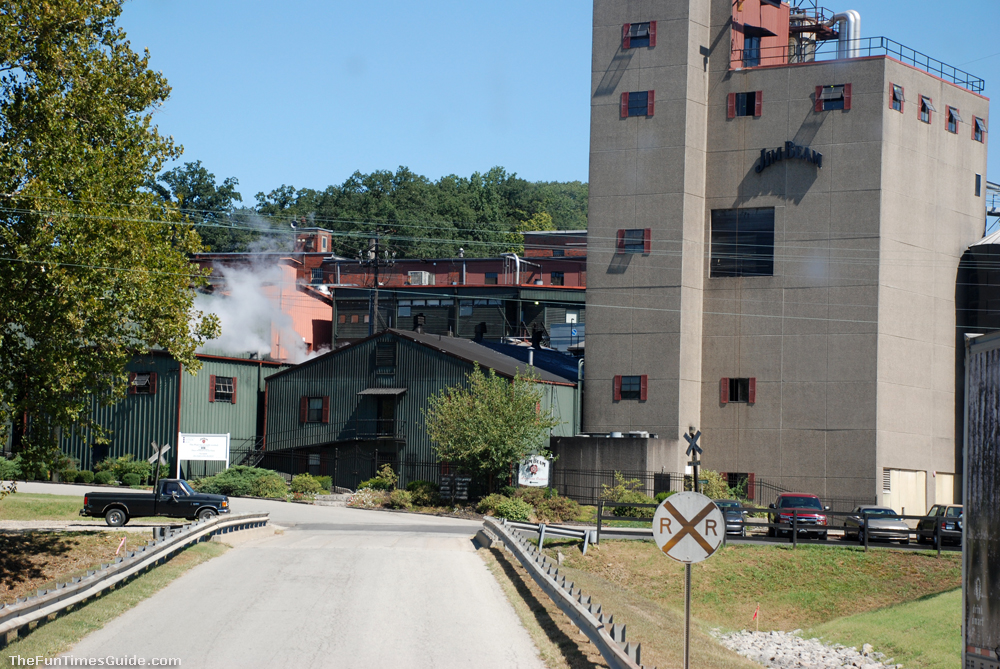
Produced at the Jim Beam distillery in Kentucky, USA, Knob Creek whiskey is part of Jim Beam's small batch range, distilled in a separate building to the more mainstream/mass-produced products. Bottled at higher than usual % ABV (50%, or 100 proof), aged for considerably longer than both (up to 9 years), and aged in heavily-charred barrels (the heaviest char used in whiskey production, termed a level 4 char), the brand is aimed at the high-end American Whiskey buyer. So, enough already, on with the review!

On arrival, guests were handed an original cocktail, crafted by the Papa Jack's crew, containing the Knob Creek Rye, Aperol, an Italian Aperitif, coconut falernum, a sweet syrup, and saline solution, essentially salt water. Although a little sweet for my tastes, this was a great precursor to the coming whiskey and creole food.
Next up was the Knob Creek Straight Rye Whiskey, which is bottled at 50%, and although it does not carry an age statement (the label only states it is aged 'patiently'), as we know from the above it must be aged to a minimum of 2 years.

Nose: Banana, wood, and considerable spice. A little youthful ethanol on the nose.
Taste: More spice and oak, not overly sweet, and easy drinking at 50%. Water brought out more wood and caramel, and dialled down the spicy notes a little.
Finish: Short and spicy, a little hot.
Score: 3 out of 5 (American whiskey score)

The Rye was matched with a smoked duck gumbo, essentially a creole-style savoury stew, with rice, smoked duck breast and sausage. The spicy flavours in the whiskey bought out more spice in the gumbo, and the sausage and duck were awesome in their own right.
Next we were presented with the Knob Creek 9yo Straight Bourbon, also bottled at 50%, and aged for 9 years in the heavily-charred oak barrels. This was considerably smoother and more complex than the rye, with a great texture and finish. The extra time in the barrel shows here. 

Nose: Caramel, spices, toasted nuts, a little fruity.
Taste: More toasted nuts, think walnut and hazelnut. Spiced caramel, sweet oak and grains.
Finish: The sweetness subsides early, leaving spicy wood and toffee. Long and mouth-watering.
Score: 4.5 out of 5 (American whiskey score)

This was paired with a lightly smoked beef brisket, with Knob Creek whiskey added to the brine, and corn served with a salted whiskey caramel. The brisket was truly delicious, with a nice light char around the outside, a delicate smoke flavour and was very tender. The corn with salted whiskey caramel was a little odd, perhaps a little too sweet with the sauce.
Our final tasting of the evening was the Knob Creek Single Barrel Reserve, bottled at 60%, and aged for 9 years in the same level-four charred barrels. This was a big beast of a bourbon, very strong and spirited. I was excited to try this one, as it is un-chill filtered, which is quite unusual for an American Whiskey, and indeed it did have a nice haze in the glass when watered down enough. 

Nose: Very closed initially, with considerable heat. Water brings out toasted nuts and marshmallow, some mild oak, and a wierd note of generic-flavoured bubblegum. 
Taste: Again needs water, brings out some stone fruit, more toasted nuts, and considerable heat.
Finish: Surprisingly short, a little woody caramel sweetness.  
Score: 2.5 out of 5

The Single Barrel was matched with a delectable, rich, sweet banoffee pie, with sticky caramel, whipped cream & marshmallow on a ginger biscuit base. The ginger and caramel worked well with the big strong bourbon, bringing out more complex flavours. 

As you can see, the standard 9yo was the star of the show for me, well balanced and complex, and easy drinking with a great texture. The new straight rye whiskey was the runner up, with nice wood and spice notes, although I feel it could benefit from a little longer in those heavily-charred barrels. The single barrel was just a little too hot and aggressive for me, perhaps held back by the higher ABV%, even with added water. Normally I would praise a higher-alcohol bottling, but in this case I preferred the standard version.
Our guide for the evening, Mr. Dan Woolley (who I've dubbed the Whisky Lord-aside from the obvious indicator above, he reportedly has one of the largest whisky collections in the country), was a great presenter, relaxed and approachable, preferring to give the thirsty hordes only the essential information, rather than rattling off scripted and rehearsed marketing verses, then opening the floor to keep the audience involved and engaged, while keeping the event moving at a comfortable pace. 

Overall the Knob Creek Rye launch & tasting was an excellent event, the venue and quality of meal were excellent, helping to keep the conversation, and the whiskey, free-flowing. It was a great opportunity to try some high-end American whiskey in an American-style environment, and I thoroughly enjoyed the experience, it certainly broadened my whisky horizons, which of course is the name of the game!

A quick thanks to Dan Woolley, Knob Creek American whiskey, and Papa Jack's, for putting it all together. I look forward to the next one! 

Cheers. 

Monday, 10 November 2014

Johnnie Walker Green Label Blended Whisky Review!

So, my final review in the blended scotch mini-series is here, and I have saved the best until last! Unfortunately it has been discontinued for quite some time now, and is selling at around $400 Australian (and up) on Ebay, which is insane! From memory I paid around $60-70 for the bottle a few years ago, which was great value at the time. This blend really could compete with, and trounce, similarly priced single malts.

The Green Label Johnnie Walker is a 'blended malt' or 'vatted malt' scotch whisky, which means it only contains single malt whisky, from different distilleries, and does not contain any grain whisky. There is no other blended malt in the Johnnie Walker line-up, their entire standard range now contains a varying proportion of grain whisky.

It is also unique in that it states clearly on the box where the 'key component' malts originate from. To my knowledge, it is the only Johnnie Walker whisky to do so, and not many blended malts can claim this either. These key components are listed as Caol Ila (from Islay), Talisker (The Isle of Skye), Cragganmore (Speyside) and Linkwood (Speyside).

It is also quite unique in that it is (was) bottled at 43%, rather than the standard 40% of the other standard Johnnie Walker expressions. It also carries an age statement, with each malt being at least 15 years old. This really is a well presented malt for the whisky enthusiast, and it's a shame it has now all but disappeared. But, for the sake of reminiscing, let's have a closer look at Green Label.
Johnnie Walker Green Label, blended malt whisky, 43%, 15yo, Scotland.
Chill filtered and Artificially coloured, containing Caol Ila, Talisker, Cragganmore, and Linkwood malts.

(tasted neat)
Colour: Yellow gold

Nose: Sweet honeyed malt, a little smoke and some floral notes. Some oaky sweetness, pepper and a veil of smoke. 

Texture: Silky and clean, easy drinking.

Taste: More malt & honey from the nose, a little floral sweetness, some nice woody smoke and black pepper (Caol Ila and Talisker saying "hi"). Well balanced with very little heat. 

Finish: Honey and pepper, lovely and malty. Could be longer, but not bad!

Score: 4 out of 5 (blend score)

Notes: Definitely my favourite Johnnie Walker whisky, it was great value and very enjoyable. My bottle of Green Label is nearly empty now, but I won't be paying $400+ to replace it! It has become a collector's special at those prices. It was replaced by the 'platinum' 18yo and 'gold label reserve' NAS blended scotches, and while the platinum is quite enjoyable, at a significant jump in price, even it cannot match the complexity and balance of the dearly departed Green Label. 

If you do happen across a bottle of this, and it's at a reasonable price, grab it. You can always sell it on for a massive profit, to someone who will likely never open it. 

Cheers!

P.S. Stay tuned in the next couple of days, I have something very different and very interesting in the pipeline! Watch this space... 

Hellyers Road Richly Peated 9 Year Old Whisky Review!

A new heavily peated ex-bourbon cask release from Tasmania's Hellyers Road Distillery! Might as well take a quick look at the specifics ...