Sunday, 25 September 2016

Bakery Hill Peated Cask Strength Whisky Review!

This stuff would probably be my favourite official bottling (i.e. not a Heartwood) of Australian whisky. Cask strength, single cask, peated, non-chill filtered and natural colour, and good value for money. Great stuff.

Situated in Bayswater, Victoria on the outskirts of Melbourne, Bakery Hill Distillery has been operating since the late 90's, and first released their whisky in 2004. Proprietor David Baker, a food scientist by trade, has taken a fastidious, technical and traditional approach to production, using a UK-designed and built copper pot still and spirit safe, and bottling at natural colour and without chill filtration. The distillery is a bit of an underdog these days, with Starward / New World taking the spotlight in Melbourne, and Tasmania dominating the Australian whisky scene, so Bakery Hill is relatively quiet in comparison and largely flies under the radar. But it shouldn't, the whisky is good and is deserving of its place on the shelves.

Bakery Hill currently produce five expressions, being 'Classic Malt', 'Double Wood', and 'Peated Malt', which are all bottled at 46%, plus cask strength versions of the Classic and Peated. They use Australian malted barley for all un-peated expressions, but unfortunately the environmental laws in the state of Victoria prohibit the burning of peat, or rather the release of peat smoke into the atmosphere. David also had trouble sourcing peated Australian malt in the relatively small quantities required, so the peated malt is imported from commercial maltsters in New Zealand.

All expressions are matured in re-sized ex-Jack Daniels American oak casks, with the Double Wood receiving an extra finishing in French oak. The fresh casks are sent to a local cooperage for re-sizing down to 100-litres, which David believes to be the ideal size for maturing whisky as efficiently as possible in Melbourne's unpredictable climate, widely known for it's dramatic mood swings. While none of the expressions carry an age statement, thanks to that indecisive climate the whisky matures considerably faster than it would in Scotland, so in this case an age statement would largely be irrelevant anyway.

I'm yet to try any of the other Bakery Hill expressions, but I've tasted this Peated Cask Strength a few times, and it's truly world-class in my opinion. There is some variation between releases of course, being single cask releases, but all are around 60% ABV, and as stated above are matured in those re-sized Jack Daniels casks. It's also relatively well-priced, selling for around $160-170 domestically, for a 500ml bottle. That may sound expensive compared to your favourite Scotch, but compared to the prices commanded by other Australian whiskies at similar strengths it's very reasonable.

Bakery Hill Peated Cask Strength, NAS, 59.9%. Melbourne, Australia.
Matured in re-sized 100-litre Jack Daniels cask. Non-chill filtered, natural colour.

Colour: Yellow gold.

Nose: Fresh & zesty, lots of barley character and sweet tropical fruit. Almost Bruichladdich-esque, which is a pretty big compliment I'd say! The peat is very light, lurking in the background, just a slight hint adding depth. Creamy vanilla frosting on a lightly burnt sponge cake. Some peppery oak and cola syrup.

Texture: Medium weight, nice oily, creamy feel. No heat either.

Taste: There's the peat. Thick & chunky charred peat, some slightly bitter oak, more creamy vanilla. A lot of bourbon influence here, sweet caramel, peppery toasted oak.

Finish: Surprisingly short, but it does fade in and out for a little while. Burnt caramel and pepper, wood embers. Dries out leaving some oaky bourbon and malted barley.

Score: 3 out of 5.

Notes: Really enjoyed the nose on this one, found it surprisingly complex and very enjoyable. Nice on the palate as well, but fell off a little on the finish. I'm not a big fan of bitterness or even of bourbon really so that's probably down to personal taste. But then, isn't everything!

This bottling wasn't as peaty as I remember from my previous encounters with this whisky, but that could be my memory as well as batch variation, so it's hard to say if there have been changes, or if it's just the natural variance between each cask. The beauty of single cask releases there, no two are ever identical!

All that aside, this is still one very impressive Aussie underdog of a whisky. Highly deserving of a bigger following in my opinion, and of a higher place on the world whisky stage. If you haven't yet sampled Bakery Hill's wares, go for it!

Cheers.     

Big thanks to Craig from The Whisky Company (formerly Nippy Sweetie Whiskies) for the sample!

Sunday, 18 September 2016

Glenfarclas 30 Year Old Whisky Review!

A seriously old and now very expensive sherried whisky which recently had a massive price increase in Australia. It's way outside of my price range these days, but I was lucky enough to receive a sample from a generous mate who picked up a bottle for an absolute steal (and prior to the increase).

Actually, I should clarify that even after the recent price increase, this is still not unreasonably priced for a 30-year old single malt when compared to similarly-aged official bottlings from the competition. Both of the Glenfarclas whiskies I've previously reviewed, the '105' and the Whisky & Wisdom single cask bottling, were quite young and were bottled at cask strength. So this one is basically the polar opposite, at 30 years of age and 43% ABV.

Glenfarclas is now somewhat of an enigma for me. I really enjoyed the previously mentioned Whisky & Wisdom bottling, in fact it really redeemed the distillery for me, but that was an exclusive single cask personally selected by Whisky & Wisdom, so it can't really be used as a reference point for the distillery's normal offerings, and we'll leave it out of today's proceedings. And thus far, the other official bottlings that I've tried have disappointed me. I like the distillery on paper, I like that they're still family owned, that all of their stills are direct-fired, that they mature in traditional dunnage warehouses, and that they don't add any colouring. But the whiskies I've tried so far just haven't lived up to my personal expectations, particularly when compared to competing sherried whiskies from other distilleries. So far, anyway!

We know Glenfarclas mature their regular official bottlings in sherry casks, either ex-Oloroso or ex-Fino sherry, and either in 500-litre sherry butts or 250-litre hogsheads. But the 'core' bottlings very rarely tell you which type of cask was used, or whether they were first-fill or refill casks. But being a 30-year old whisky it's highly unlikely that any first-fill casks were involved, as they would likely have overwhelmed the spirit completely over those three decades of maturation. As mentioned above Glenfarclas don't add any artificial colouring to their whiskies, but unfortunately I can't find any mention of chill filtration, so we'll have to assume it has been chill filtered given the bottling strength. Regardless, this is one of the oldest whiskies I've had the privilege of tasting, which is pretty special. So let's get to it!
Glenfarclas 30-year old, 43%. Speyside, Scotland.
Matured in sherry casks, either ex-Oloroso or ex-Fino sherry. Chill filtered, natural colour. 

Colour: Bronze

Nose: Soft and quite complex. Strong furniture polish, nutty oak, stewed stone fruit & musty berries. Sweetened strawberry sauce, some resin. Some beef stock and fresh mushrooms. All good so far!

Texture: Light & quite clean. Definitely chill filtered, in my opinion, and it suffers for it.  

Taste: Hmm. More beef stock & mushroom, light caramel. Slightly bitter oak & tannins. Some raw spirit with a little prune juice, and something resembling struck matches. Thinking this is probably sulphur, I'm not normally sensitive to it at all but I'm finding it quite prominent here. 

Finish: Short-medium length. Big handful of pepper, and something vegetal. Root vegetables that have started to go bad. More struck matches, and some spirit-y heat, which is surprising for the age and strength. 

Score: 2.5 out of 5.

Notes: A bit of a disappointment really. I really enjoyed the nose, it had great promise, but it was let down by the palate and finish. There were some notes in there which I found very off-putting, which didn't appear on the nose but were quite strong on the palate. Naturally there will be batch variation with these older bottlings, and I don't have a batch code for this sample, but there's no way this one is worth the current asking prices. Which by the way are a massive $750 AUD at the time of writing. Ouch,  

Luckily the mate who generously provided this sample didn't have to pay anywhere near that, or I suspect he would've been seriously disappointed. But to be honest even at the discounted price I'm not sure it's worth it. For something so old and so expensive it just hasn't lived up to its end of the deal, and it's another mark in the negatives for Glenfarclas from me. But like I said, there will be batch variation, and I have seen some favourable reviews of this one, so there's still hope. 

Cheers!

Sunday, 11 September 2016

Heartwood Beagle 3 Whisky Review!

Another one that almost got away! An older release from the king of Tasmanian whisky, and I was lucky enough to finally get my hands on a bottle long after it had sold out.

I first tasted this glorious liquid over a year ago, sitting in Mr. Heartwood's Hobart office on a cold & windy Tuesday morning. Beagle 3 was one of the stand-outs of the incredible line-up, but my wife had her heart set on another expression (Convict Resurrection - reviewed here, along with more information about Heartwood), and I just couldn't leave without a bottle of The Revelation. I should've tried harder back then to stretch the budget and grab a Beagle 3 as well, but I talked myself out of it. That was a mistake, because it had made a dinosaur-sized impression on me, and left a dinosaur-shaped hole in my heart!

Back to the present, and my wife managed to find a bottle of Beagle 3 at an online whisky store late last year, for a reasonable price, and bought it for me as a birthday present. I was very tempted to open it immediately and devour the contents (responsibly, of course!), but held off instead under the notion of it being irreplaceable. That was true at the time, and it's now true again, but in the meantime Mr. Heartwood made the (probably very difficult) decision to part with a few 'archived' bottles that he didn't have the space for. And luckily, after another stupid moment of hesitation from myself (are you beginning to sense a theme here?), I was able to procure a second bottle of Beagle 3. And this one did not stay sealed for long!

Beagle 3 was the third expression in Heartwood's Beagle series of vatted / blended malt whiskies (a blend of different single malts, no grain whisky), named after the HMS Beagle which carried naturalist and revolutionary-evolutionary Charles Darwin. The first Beagle release arrived in August 2013, with the second following a year later, and both were blended from seven different casks of Tasmanian Single Malt. Beagle 3 came along in May 2015, and was blended from nine different casks: 4 from Tasmania Distillery (Sullivan's Cove) and 5 from Lark distillery, including ex-bourbon, ex-port, ex-sherry, and ex-pinot noir casks, and peated whisky (from Lark) made up 18% of the recipe.

As is always the case with Heartwood (but unusually for a blended / vatted malt) it was bottled at cask strength, a brontosaurus-like 68.4% in this case. And as always there's no added colouring or nasty chill filtration to be found. 220 bottles were released, and that was over 15 months ago, so it's basically impossible to find these days. To force himself to be different each time, Mr. Duckett actually destroys the recipes for the Beagles after they've been bottled. So there really won't be another like this again. And this probably goes without saying, but (spoiler alert) if you're lucky enough to come across a bottle and you're a Heartwood fan, I suggest you grab it immediately!


Heartwood Beagle 3, NAS, 68.4%. Tasmania, Australia. 
Blended / Vatted Malt from 9 different casks, 4 from Tasmania Distillery (Sullivan's Cove) and 5 from Lark Distillery. Non-chill filtered, natural colour. 220 bottles released May 2015.

Colour: Deep, dark polished copper.

Nose: Rich & intense. Thick fruit syrup. Boozy raisins, buttery heavily-toasted oak, mint, orange-scented furniture polish, slightly dusty cream-caramel chews and wood spices. Golden syrup over baked stone fruit. I could nose this beauty for days! 

Texture: Um, it's a Heartwood! Massive & intense, mountains of flavour. There's a little initial heat of course, but it's not a rough burning heat, and it passes quickly. 

Taste: Massive again. Spicy & charred oak with extra spice. More rich fruit syrup and raisins, some burnt caramel and warm orange oil. Spiced milk chocolate, and some leather. 

Finish: Medium length. Lightly torched juicy raisins. Some dried chilli flakes, a little mint and buttered almost-burnt fried bread. Becomes soft quite quickly, and the stone fruit comes back, but it's dried now.

Score: 4.5 out of 5. 

Notes: Just awesome. Massive amounts of flavour. Big, powerful and boisterous. But also very complex and dynamic, it's constantly changing, and it's just delicious! It takes me straight back to Tim's office on that cold Tuesday morning in Hobart. And it didn't seem as cold afterwards, funny that...

I'd say this is probably my favourite Heartwood from those I've tried so far, which also makes it my favourite Australian whisky so far. These certainly aren't beginner's whiskies, but with a little time, small sips and experience, they pay off in spades. And I was very lucky to be able to grab that second bottle. After all, only 220 bottles were ever released, and it was released 18 months ago, so this is one rare whisky!  

There is a Beagle 4 release in the works, but it's sounding like it won't be ready for quite some time, and it won't be bottled until it's ready. Naturally it'll be quite different to all that have come before it, and no doubt it'll be well worth the wait. Viva la Heartwood, viva!    

Cheers!

Sunday, 4 September 2016

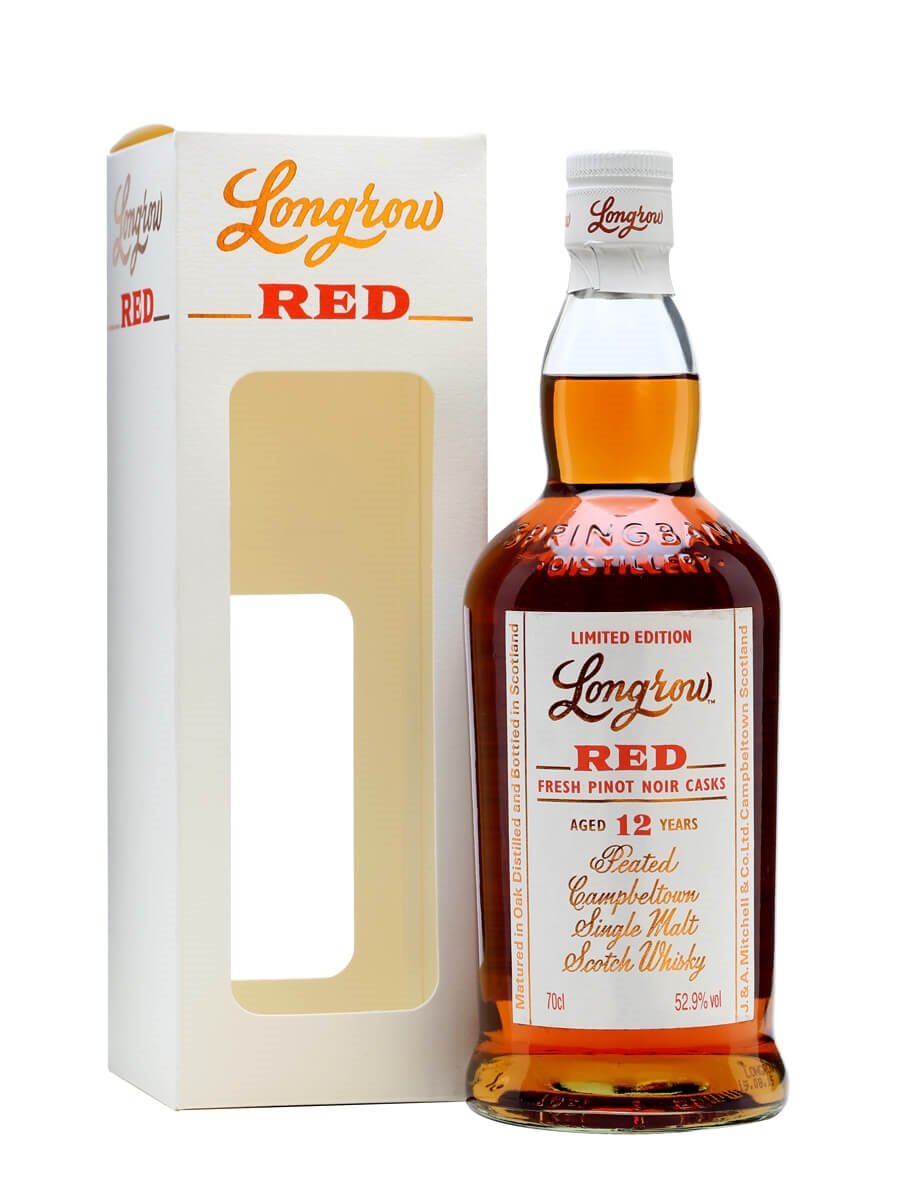
Longrow Red Pinot Noir Cask Whisky Review!

I've had the pleasure of tasting two of the four expressions in Longrow's 'Red' series, and they've been excellent. Thanks to a sample swap, this will be my third. But will it follow suit?

Longrow is the double-distilled, heavily peated spirit produced at Springbank distillery. Their 'Red' series is/was a line of whiskies which were either finished or fully matured in red wine casks. All are around 11 years old, bottled at cask strength, non-chill filtered and naturally coloured. The two I've tasted were finished in Australian Shiraz and Cabernet Sauvignon casks respectively, while the third expression was fully matured in a Port cask, which I'm yet to try but apparently is excellent. 

This fourth and apparently final release in the series has been matured for 11 years in ex-bourbon casks, and finished for another year in first-fill ex-Pinot Noir casks, sourced from New Zealand. Which means this one a is a year older than the previous releases, and also means it has spent the least amount of time in wine casks. It was bottled at a cask strength of 52.9%, and like all Springbank whiskies is non-chill filtered and naturally coloured.

On a slightly sour note, I wish Springbank would put a little more effort into some of their packaging. I know they're an independent distillery and they probably aren't overly concerned with such things, but less expensive Springbank expressions have fully enclosed boxes, so why shouldn't these? You may think I'm just being shallow, and that it doesn't matter, but I'm not talking about aesthetics here. When you have a box with a big hole in the front (which is also pretty flimsy as a result), and the bottle inside is exposed and is made from clear glass, there's absolutely no protection from sunlight, which can adversely affect the whisky itself over time, as well as the label. And quite a few bottlings from Springbank use this same box design / style. Yes whisky should be stored out of direct sunlight anyway, but this isn't always possible, so I'd rather a fully-enclosed box. Anyway, end rant. 

Personally, I've had a couple of red wine-finished whiskies which I've really enjoyed and a few which I haven't; at least not to the same extent. I'm not a big red wine fan in general, which probably has something to do with it. But seeing as this one has had a relatively short finish in the pinot casks, and is heavily peated, and based on my experiences with the previous Longrow Reds, I'm not too worried. Let's give it a shot...
Longrow 'Red' Pinot Noir Cask Finish, 12 years old, 52.9%. Campbeltown, Scotland.
Matured for 11 years in ex-bourbon casks, finished for 1 year in first-fill ex-pinot noir casks, sourced from New Zealand. Non-chill filtered, natural colour, cask strength. 9000 bottles, released 2015.

Colour: Amber.

Nose: Surprisingly malty, plus red fruits and spice, as you'd expect. Strawberry and red apple, some malty golden syrup, hint of that trademark Longrow peat, earthy & dirty. Sweet and musty red grapes, a little acetone. 

Texture: Medium-weight, bold and warming. Not harsh or rough though. 

Taste: More red apple and red berry sauce, spicy oak, buttery pastry, like Danish pastries. Still surprisingly malty, plus a big pinch of pepper and a little of that acetone. Not getting any peat here really, maybe a little burnt matches. 

Finish: Falls over a little here, unfortunately. Decent medium-length, but quite soft. The pepper and acetone sticks around for a little while, along with more of the red apple, and strawberries, but served in custard this time. The earthy peat does return down the track, and hangs on 'til the end. 

Score: 3 out of 5.

Notes: Not unpleasant, but not really doing it for me. Not on the level of the Cab Sauv release in my opinion, and I'd assume not as good as the Port cask either, judging by other reviews, so a little disappointing. Nonetheless, it's definitely something different, something a little unusual and quite interesting, as you'd expect from Springbank, those wonderful folks in Campbeltown aren't at all afraid of being different. More power to them!  

To date, my favourite Longrow is definitely the Rundlets & Kilderkins, which was matured in the namesake smaller casks and was seriously good. Plenty of that earthy, dirty peat in that one, which was toned down considerably in this Pinot Noir finished expression. What I would've loved to see in the 'Red' series is a fully Oloroso sherry-matured Longrow, or perhaps even a PX finish. But hey, every release in the series sold out in short order, so who am I to make that call. 

Cheers! 

Sunday, 28 August 2016

Westland American Single Malt Explored & Tasted!

The 'world whisky' scene is certainly growing, with single malt whisky distilleries popping up in many countries all over the world. But if you were to ask a few people to list those countries, I doubt a single one would name the USA. American Whiskey (note the 'e') is most commonly associated with Bourbon or rye whiskey, perhaps even corn or wheat whiskey. But single malt, made from 100% malted barley? Not yet. But that looks set to change!


Westland Distillery is a relatively small 'craft' distillery housed in a 100-year old former crane factory in Seattle, Washington, in the North West of the United States, only a couple of hours drive South from the Canadian border. The cool and relatively stable climate in Seattle presents a bit of a challenge for the distillery, as unlike many 'new world' distilleries, they can't take advantage of natural heat and humidity to help speed up maturation.

They seem to have risen to that challenge though, as all Westland whiskies currently available are only matured for slightly over two years, with two years being the minimum age for American whiskey. This shouldn't scare you off though, plenty of whiskies are aged for similar periods of time which are delicious and certainly aren't under-matured (Starward, Kavalan and some Kilchomans come to mind), and Westland's spirit is helped along by the use of virgin oak casks. The majority of Westland's whisky is matured a few hours away from the distillery on the Western coast of the US, in a small town named Hoquiam, which for a touch of serendipity is located near the city of Aberdeen, Washington!

Westland's Master Distiller, Matthew Hofmann, is certainly not afraid to do things differently. The distillery is currently using five different styles of malted barley in their whiskies, with the majority being the local 'Washington Select Pale Malt', and they're also importing peated malt from Scotland for their peated expression. Yes, that's right, a peated American whiskey! Still a very rare thing, and this'll certainly be my first. There are quite a few smoked American whiskies out there, but the majority are using wood smoke, rather than peat or imported peated malt. The distillery plans to swap the imported Scottish barley with local barley in the future, dried over American peat sourced from the distillery's home state.

Speaking of expressions, the distillery offers three different 'core' whiskies as part of their regular range. All are bottled at 46%, are non-chill filtered and naturally coloured, and are aged for at least two years. The flagship expression, 'American oak', is matured in virgin American oak, and first-fill ex-bourbon American oak casks. The next, 'Sherry wood', features the same virgin American oak casks, but substitutes the ex-bourbon casks for ex-sherry casks, of both the Oloroso and Pedro Ximinez (PX) varieties. And the third, simply named 'Peated', goes back to the virgin American oak and first-fill ex. bourbon casks, but adds some Scottish 55ppm peated malt into the mix, courtesy of Bairds maltings in Inverness, Scotland. For now, at least. Enough talk, let's try 'em out!

Westland 'American Oak', 46%, non-chill filtered, natural colour. Ex-bourbon and virgin American Oak casks. 
Sweet & fresh on the nose, with cotton candy / candy floss, pot purri (perfumed dried flowers), lemon zest, juicy barley and a little pepper. The palate is unique and seriously delicious, with roasted coffee grounds, dark chocolate, dark burnt caramel and buttered popcorn. Definitely tasting the effects of those five barley varieties!

The nose didn't quite blow me away, and I was worried it would be too sweet, but that's not the case at all. Those dark roasted malts have really made a big difference here and really shine through. Signet who?


Westland 'Sherry Wood', 46%, non-chill filtered, natural colour. Virgin American Oak and Ex-Oloroso and PX sherry casks. 
Richer and fruitier. The nose is syrupy, with stewed fruits and molasses, plus a little spicy oak and some popcorn. The palate still has the coffee grounds and dark chocolate notes, but they're more towards the back of the palate now, up front is fruit syrup and some treacle. A little of that pot purri as well.

Still has that Westland point of difference from the barley, but the sherry casks have added more depth & richness without overpowering anything. Very nicely balanced.


Westland 'Peated', 46%, non-chill filtered, natural colour. Ex-bourbon and virgin American Oak casks. 
More familiar of course, but in a comforting and refreshing way! A lovely fresh & zesty peaty-ness, and it's a sweet and earthy peat. It's not overwhelming though, there's still plenty of character - tropical fruit in syrup, particularly charred pineapple and some juicy peach, some roasted under-ripe banana and roasted nuts. The same warming peaty-ness is there on the palate, plus a hint of that dark roasted malt and a pinch of pepper.

Definitely my favourite of the three expressions, with a good balance of that comforting peat and that unique Westland malt profile. Seriously impressive stuff, and I look forward to trying their locally-peated version when it becomes available!

Overall, all three of these American whiskies have really impressed. Especially considering they're only around two years of age! At no point do they seem rough or under-matured, they're all very drinkable and well balanced. The flagship 'American Oak' really surprised me on the palate, I don't think I've tasted anything like it before, and it's delicious! Westland clearly know what they're doing, and they're definitely a distillery to watch!

Westland American Single Malts are on their way to Australia courtesy of Alba Whisky, the Australian importers and distributors for Amrut, Benromach and Port Askaig, among others, and the Westland range should be available through Australian specialty bottle shops and online stores by late September. While pricing hasn't been confirmed just yet, the RRP is expected to be around $150. I highly recommend trying all three expressions if you can, they're all unique and rather different in their own right, and surprisingly complex & engaging for their age. Great stuff.

Thanks to Alba Whisky for the samples!

Cheers!

Sunday, 21 August 2016

Octomore 7.4 Whisky Review!

Another peated whisky that spent some time in virgin oak casks! Seems to be becoming more common (and it seems to work brilliantly). But this is the first I've tried from the kings of all things experimental, Bruichladdich (pronounced 'Brook-laddy'). And, well, it's an Octomore!

I'm a massive fan of Bruichladdich's 'super-heavily peated' Octomore series, with the 6.3 Islay Barley expression still being one of my favourite whiskies of all time. Although those famous ppm numbers have calmed a little since then, these are still some of the peatiest whiskies you can buy. And the numbers aside, these bottlings are usually remarkably balanced, complex and approachable for their age (5 years, with one exception) and strength.

This one is a little different though. It's older than previous expressions (with the exception of the 10yo), and has also had a slightly more complicated maturation regimen. Once again Bruichladdich have gone where no-one has gone before, taking a little Ardbeg-style separate maturation and marrying, and a little Amrut-style 'intermediate' maturation, and combining the two with the super-heavily peated Octomore spirit. This is certainly not just a straight-forward cask finish!

What we have here is a seven year old whisky, with 25% undergoing virgin French oak maturation for the full seven years, and the remaining 75% being matured in first-fill ex-bourbon casks for three years, followed by two years in virgin French oak, followed by another two years back in first-fill bourbon. The ABV hasn't suffered through all of this either, coming in at 61.2% when all was said and done, and it was peated to 167 ppm on the malt (prior to distillation and maturation), which is considerably lower than the other recent versions. And considering the extra age and the types of casks employed, I'm not expecting a massive peat blast in this one. But I'm sure it'll still be there!

Only 12,000 bottles were released in early 2016, and while all Octomore releases are expensive, this 7.4 expression isn't an extremely massive jump in price from the .2 travel-exclusive releases, despite the extra age and no doubt very costly maturation. A very small quantity of those bottles is just starting to appear in Australia, and while the RRP is apparently $260, unfortunately they seem to mostly be priced around the $300 mark. Regardless, I don't imagine stocks will last very long!


Bruichladdich Octomore 7.4 Virgin Oak, NAS (but see below), 61.2%. Islay, Scotland.
167 ppm. 25% matured in virgin French oak casks for 7 years, 75% matured in first-fill ex-bourbon casks for 3 years, then virgin French oak for 2 years, then back to first-fill ex-bourbon for 2 years. Non-chill filtered, natural colour. 12,000 bottles.

Colour: Glistening bronze. Beautiful. The power of virgin oak!

Nose: Oooh, this is different. Sweet fruit & lots of spicy, nutty oak. Salt and a little white pepper, soft hints of peat on the edges. Baked sweet stone fruit and some banana with warm caramel sauce. Chocolate-coated dried orange, furniture polish and vanilla pods.

Texture: Medium-heavy weight. Gorgeous. The legs on the glass are near-permanent. Rich and spicy.

Taste: Spice explosion! There's more peat here than on the nose, but it's certainly been beaten down by the casks (as expected). Oak-y vanilla, big handfuls of wood spices & pepper. Dry & earthy peat, a little chilli salt and some soot.

Finish: Medium-length, sweet & spicy initially. Some hot ginger, then the oak comes in to start drying it all out. Vanilla syrup, charred hot wood chips.

Score: 4 out of 5.

Notes: Very good, and undeniably very, very different as we should've expected from Bruichladdich. The massive oak influence and loads of spices may put off some Octomore fans, particularly with the massively dialled-down peat and smoke. Personally I was expecting an Alligator-like experience, but it's not in that camp either, this one stands apart from any Islay I've tasted so far. In fact this one gave my oak-influence envelope a good push! Highly recommend trying this one folks, I don't think we're likely to see another quite like it.

This was quite an expensive release, but that's understandable considering the extra age and mega-expensive new French oak casks, which have certainly worked hard for their money. It is also quite rare now, basically all of those 12,000 bottles seem to have been snapped up, and once again I missed out (most of my budget - plus a bit more - has been sent in Heartwood's direction lately!) on a rather unique Octomore. So a big thanks to the generous fellow-whisky geek who parted with this sample, much obliged mate!

Cheers!

Sunday, 14 August 2016

SMWS 33.133 'Whipped With Happiness' (Ardbeg) Whisky Review!

A rather different single cask independent bottling of Ardbeg from the Scotch Malt Whisky Society (SMWS). I'm not quite sure about the 'Whipped With Happiness' thing, but this is definitely one incredible whisky!

The SMWS was officially syndicated in 1983 in Edinburgh, Scotland, after the founder had toured the distilleries of the Scottish Highlands a few years prior, and convinced a few friends to split the cost of a cask of Glenfarclas. These days the Society has over 26,000 members and has branches in 19 different countries, offers paid yearly subscriptions which enables the member to purchase Society bottlings, grants access to members-only rooms around the world (such as 'The Vaults' in Edinburgh), and to discounted tickets for Society tastings and events. Members also receive a 'starter pack' which includes three samples of bottlings, a notebook and membership card, and a subscription to the Society's quarterly magazine, 'Unfiltered'.


The Society was purchased by the Glenmorangie Company in 2004, who then sold it to private investors in 2015. Since then, a number of positive changes have taken place, one of which is the 'partner bar' program, which as of yesterday (13/08/16) has hit close to home, with the launch of Brisbane's SMWS partner bar in The Gresham in the CBD. Even without the partnership this is one outstanding whisky bar, with very reasonable pricing, great friendly and knowledgeable staff, and a great range including some very rare and unusual malt, rye and bourbon whiskies. With this partnership with the SMWS, The Gresham now has a diverse and very unique range of their bottlings available for purchase by the dram, so Society members (who receive a discount) and non-members alike can try the bottlings before buying or before joining up.

The SMWS bottles single cask, cask strength, naturally presented spirits only after they have passed through stringent blind tastings by a panel of 22 independent judges. While single malt Scotch is still the mainstay of the group, they have more recently also bottled casks of Cognac, Bourbon, single grain whisky and Japanese single malt. The bottlings are often matured in unusual casks, and aside from the very quirky titles and tasting notes on the labels, you'll find an age statement, cask information, number of bottles and the date the spirit was distilled.

You may also notice something missing from the labels: the distillery name! Instead you'll find the distillery's unique identifying number, and the Society's cask number from that distillery. For example, in this case the bottle code is 33.133, where '33' is the Society's code for Ardbeg distillery, and '133' denotes that this is the 133rd cask of Ardbeg the Society has released. The reason for this secrecy was originally contractual, where the distilleries did not want their name printed on the labels (and this is still the case with some companies), and it is also because the single cask bottling may not reflect the distillery's typical taste profile (which is a big benefit of independent bottlings). There is a way around this though: to find out which code corresponds to which distillery, just have a read of this list on The Whisky Portal website.

The back bar at The Gresham. So many whiskies, so little time!

Currently at The Gresham you'll find over a dozen SMWS bottlings to choose from, ranging from a 2-year old Bourbon, to a 10-year old Miltonduff matured in a white wine cask (named 'Burnt Spotted Dick'. Right...), to a 22-year old ex. Bourbon cask Glenfarclas, and plenty more, and there's still more to come! But you'd better hurry, because being single cask limited releases, once these bottles are gone, they're gone!

Which brings us to today's little beauty. Sorry to disappoint you so soon, but at the official launch of the partner bar program at The Gresham yesterday, this bottle lasted less than 6 hours. It's all gone! But I was lucky enough to get a small sample for the purposes of this review (I also bought a dram to try at the launch - and then a second!). I'm sure bar manager Ryan is going to try his utmost to procure a second bottle of this already very-rare beast, and other amazing releases, but in the meantime you're just going to have to live vicariously through me.

What we have here is an 8-year old Ardbeg, which has been fully-matured in a second-fill ex. Oloroso sherry butt. Cask number 33.133 had an 'out-turn' of 654 bottles, at a cask strength of 60.5%, and like all Society bottlings is non-chill filtered and naturally coloured. Fans of the distillery will recall that Uigeadail contains a portion of ex. Oloroso sherry-matured whisky, thought to comprise around 20% of the total volume, but that's about as close as us mere mortals can get to sherry-matured Ardbeg, as far as official bottlings go. Enter the SMWS to save the day, because this 100% sherry-matured Ardbeg is here to show us exactly how magical that can be!


SMWS 33.133 (Ardbeg), 8 years old, 60.5%. Islay, Scotland.
Single cask, matured in second-fill ex. Oloroso sherry butt. Distilled May 2007. Non-chill filtered, natural colour. 654 bottles worldwide, released early 2016. 

Colour: Rusty red copper.

Nose: Lovely! Plenty of Ardbeggian notes straight away. Coastal with salty sea air, brine and warm sand. Rich stewed fruits in thick syrup. Bacon grease, milk chocolate, and soft dirty, ashy peat underneath.

Texture: Medium-weight, luscious. It's a beastie, but you'd never guess the age and strength. 

Taste: Boom! Peaty and ashy, sweet and savoury. Thick caramel, dried fruit, black pepper, milk chocolate with smoked salt. 

Finish: Medium-long length. Thick ashy smoke, fruity & slightly musty dry sherry, some vanilla & spicy oak, and soft, earthy peat. 

Score: 4.5 out of 5. 

Notes: Seriously, seriously good. Rich, sweet, savoury and peaty, and it's all working together. There's plenty going on, you could spend an entire evening nosing and savouring this beauty. There's a good balance of distillery character and cask influence as well, you'd pick it as an Ardbeg straight away, but with a different edge to it. This is what I dreamt 100% sherried Ardbeg would be, and it's from a second-fill cask! 

I'd put it slightly above the 55% Dark Cove committee release OB, and well beyond the 46.5% version. Brilliant stuff. Hats off to the SMWS tasting panel, they really had a hit with this one! If only there were more of it. As great as this one is, I can't help but wonder why Ardbeg haven't released a 100% sherried expression themselves, it's really a missed opportunity if you ask me. As this independent bottling proves, it doesn't need to be old, it doesn't need to be first-fill, and it doesn't need any fancy marketing. And all of that should help keep the price down. And Ardbeg-heads (like myself) would be all over it. Pretty please!

So, while this outstanding SMWS bottling may be all gone, there are plenty of others on the bar at The Gresham to cut your teeth on. And when those are all gone, more will take their place! So get along and dive right in. If you're unsure of what you're looking at or looking for, ask the staff for a recommendation or just start at the left and work your way through. See you there!

Cheers!

Hellyers Road Richly Peated 9 Year Old Whisky Review!

A new heavily peated ex-bourbon cask release from Tasmania's Hellyers Road Distillery! Might as well take a quick look at the specifics ...