Sunday, 28 May 2017

Ardbeg for Days - 5 Year's Worth of Days Reviewed!

Ardbeg Day is finally around the corner, along with the arrival of the 'standard version' of this year's commemorative bottling, named Kelpie. Australia was lucky enough to receive an allocation of the extra-special 'committee release' earlier this year, so this seems like as good a time as any to take a look back at the last 4 year's worth of 'Day' releases, before finishing up with this year's bottling. Why not!


Unfortunately I couldn't get my hands on any of the first 'Day' release from 2012, simply named 'Ardbeg Day', since it's now very hard to find and of course is very, very expensive. I have tasted it before though, around 4-5 years ago when I was just starting to get into whisky, and I still remember it being delicious! So we'll just have to make do with 2013's Ardbog, 2014's Auriverdes, the standard version of Perpetuum from 2015, the Dark Cove committee release from 2016, and this year's Kelpie committee release! Not a terrible way to see out the weekend, hey?

What am I talking about with standard versions and committee releases? Well in the last few years there have been two different versions of the Ardbeg Day commemorative bottlings, where the committee release is bottled at a higher strength, is more basically labelled and presented and sells without a box, while the standard version (released on Ardbeg Day itself) is bottled at a lower strength, with more recognisable Ardbeg presentation and a matching outer box. Obviously the standard versions are also much more numerous, and are much easier to get a hold of, but they're not always cheaper when you're comparing the initial retail prices when first released.

For the 2012, 2013 and 2014 bottlings there was only the one version released, while for the 2015 the (only slightly) higher strength version was labelled as 'distillery release' and was ostensibly only sold from the distillery's own shop, while for the 2016 and 2017 bottlings there have been significant differences between the two versions. The committee release of last year's Dark Cove was bottled at 55%, while the standard version weighed in at a much-lower 46.5%. This year's Kelpie committee release was bottled at 51.7%, while the standard version is down to 46%, which is the equal lowest strength of any recently released Ardbeg, and the lowest strength of the 'Day' bottlings so far. Not that 46% isn't enough of course, it's basically the new standard for quality single malts (which is great to see), but previous special release bottlings from Ardbeg were a little more generous.

Australia has been lucky enough to get an allocation of the last two committee releases (plus the 2014 and 2015 Supernovae), sold directly from Moet-Hennessy Australia, and pricing has actually been very reasonable (cheaper than the standard versions!) despite the inevitable high demand. I really hope that this continues, since in the past finding these extra-special Ardbegs in Australia was nearly impossible, unless you resorted to importing them yourself from Europe, which put them out of the reach of your average whisky geek. So keep your fingers crossed people!

Now, on to the fun part! I'll give a brief run-down on each bottling in question, plus tasting notes and a score, and finally some more details on this year's 'Kelpie' release since this is the first time I've reviewed it. And I'll declare a winner at the end, because why not! In the interests of fairness I visited these whiskies over three separate nights, with an ample break & plenty of water between each dram. To my knowledge all are non-chill filtered and naturally coloured, although not all have this clearly stated on the packaging.
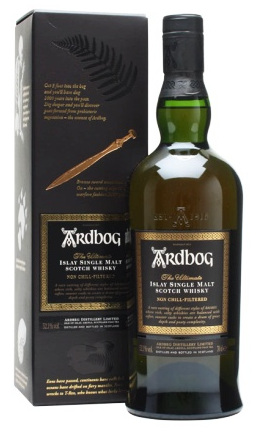
Ardbeg 'Ardbog', 52.1%, 'at least 10 years old', released 2013. The only 'Day' commemorative release to have an age statement! You won't find a big number in prime position on the label though, it's in the fine print on the back. This alone doesn't necessarily make it better of course, but it's always nice to know. Ardbog was a marriage of spirit fully-matured (not finished) in ex-bourbon casks, and spirit fully-matured (not finished) in ex-manzanilla sherry casks, all aged at least 10 years. So that's essentially a 10-year old age statement. The name and packaging details were a tribute to Islay's venerable peat bogs.

My bottle of Ardbog has been open for around 3 years now, and while I've been using wine save (argon gas preserver) for most of that time, it's obviously still going to have an effect.

Colour: Polished bronze.
Nose: Lovely. Rich, sweet and salty, with stewed fruits in sweet syrup, some dark, rich toffee and a little cocoa powder. Earthy & salty peat, slightly nutty - roasted walnuts? And some slightly creamy vanilla.

Texture: Medium weight, buttery, with a dab of heat. Still quite rich despite being open for that long.
Taste: Quite rich with a deep peaty-ness, it's definitely oxidised but it's not going out without a fight. Spicy with salty earthy peat, hint of that cocoa, and more sweet stewed stone fruit. It is starting to go a little flat unfortunately. Stupid oxygen, what did you ever do for us anyway!?!

Finish: Medium length, spicy & peaty fading into mild coastal salt, fruit syrup and dusty, ashy peat. Some more creamy vanilla and little hints of citrus alongside the slowly ebbing peat.

Score: 3.5 out of 5.
Notes: I'd love to taste a fresh one again, I think this bottle is approaching its final sunset. It's lost some of it's sparkle and is getting a little flat. Very glad I split some into smaller sample bottles a while back. Still very enjoyable though and there's plenty of 'Ardbeg-ness', just less of that intensity of flavour that I remember it having. Regardless, definitely a very good one.

Ardbeg 'Auriverdes', 49.9%, NAS, released 2014. A marriage of Ardbeg matured in ex-bourbon casks, apparently mostly second-fill, with specially-toasted virgin American oak barrel ends / lids, and 'traditional' ex-bourbon cask matured Ardbeg. The name is the Portuguese translation for 'green & gold', meant as both a tribute to the 2014 soccer world cup that was held in Brazil (who's flag is green & gold, and Auriverdes is their team's nickname), and as a tribute to Ardbeg's green bottle and the golden contents.

There was also a promotional version of Auriverdes in a gold-coloured bottle that was used for PR events and the like, but the whisky inside was identical to the normal green-bottled version. I wasn't a fan of Auriverdes at the time of release, so let's see if time has healed this wound...

Colour: Yellow gold.
Nose: Much lighter, with far less peat and salt, and a little less sweetness. There's ripe tropical fruit, particularly papaya and banana, maybe some red apple. Citrus as well, plus some lightly salted butter and a mild earthy-ness. Hint of coconut and a little vanilla & dry toasted oak.

Texture: Medium weight again, a little spicy heat, fresher (duh) and still rich but much lighter in character.
Taste: Sweet & fruity, and a little salty citrus tang. More ripe tropical fruit and some vanilla sponge cake. Mildly spiced milk chocolate, and a slight earthy-ness again.

Finish: Short-to-medium length. Lightly toasted caramelised oak, slightly salty tropical fruit, slight hint of coffee grounds.

Score: 2.5 out of 5.
Notes: Nice and fresh and clean, but it's still not a true Ardbeg if you ask me. Barely detectable peat or smoke, and a much lighter and more tropical dram. I suspect it's younger than Ardbog, although peat does tend to mask youth a little, but there's slightly more heat in this one despite the 5% drop in ABV. It's not unpleasant though, and it's still decent quality, it just doesn't do it for me. I still think that Ardbeg were going for a lighter, tamer dram here to appease the non-Islay drinkers, and in that regard I think they succeeded.


Ardbeg 'Perpetuum' standard release, 47.4%, NAS, released 2015. There was very little information given about this bottling, in fact the official details were that it was a mix of "old and young Ardbeg, from ex-bourbon and ex-sherry casks". So that tells us basically nothing. Perpetuum was also the commemorative bottling for Ardbeg's 200th anniversary, and the name basically means 'never ending' or 'going on forever' (as in perpetual motion).

This was the first year that Ardbeg also released an 'extra special' version of their special release for Ardbeg day, although the white labelled 'Distillery Release' version of Perpetuum was only slightly higher in strength, at 49.2%. It's reportedly also notably better than the standard version, despite apparently being the same whisky at a slightly different strength.

Colour: Pale gold.
Nose: Fresh & bright. Sea spray, milk chocolate, sweet frozen (not fresh) strawberries. An earthy, damp peat, mild chilli salt, creamy vanilla. Slight dried herbs & floral note.

Texture: Light-medium weight, fresh & creamy, no spirit-y heat at all.
Taste: Fresh & quite peaty, a nice deep earthy peat, a little of that chilli salt again, slightly powdery milk chocolate. Creamy vanilla and more dried herbs.

Finish: Medium length, nice soft peat, some ash. Some spice as well, then slightly grassy dried herbs.

Score: 3.5 out of 5.
Notes: Well balanced and flavoursome, with plenty of peat. A few interesting notes, but it's not a big departure from the standard / core range Ardbegs, with a little of each showing itself at various points. Which is basically what it says on the tin anyway. It's a pleasant peaty easy drinker, but it doesn't quite hold up compared with the mighty Uigeadail, or even the 10 year old for that matter, particularly with pricing factored in.


Ardbeg 'Dark Cove' committee release, 55%, NAS, released 2016. Once again there wasn't a great deal of information given about this one, other than stating that its "heart" has been matured in "dark sherry" casks, which is a little ambiguous and could mean either Oloroso or Pedro Ximinez. As most suspected at the time, this turned out to be ex-PX sherry casks, and I wish they'd just printed that on the damn label.

Speaking of the label, this one proudly claimed to be "the darkest Ardbeg ever", which simply wasn't accurate, especially in the case of the considerably lighter 46.5% 'standard' version, which I previously reviewed here. Both versions of Dark Cove were a marriage of ex-PX sherry casks and 'traditional' ex-bourbon cask Ardbeg, and we don't know the proportions of each. Again both versions are the same whisky bottled at different strengths.

Colour: Bronze.
Nose: Sweet & fruity to start with, rich but not overtly peaty. Sweet juicy raisins, dried fruit (blackberry?), some treacle, spent coffee grounds. A little salty sea spray, some new rope, a little spicy wood smoke.

Texture: Medium weight, rich & powerful.
Taste: There's the peat! A spicy, dry peat with a little ash and wood smoke. Rich spicy sherry, some burnt caramel, but far less sweet than the nose.

Finish: Medium length, quite spicy, ginger. Then comes back to that sweetness, chocolate, rich sherry & dried fruit, and a fleeting floral note. Hints of sea spray, treacle and a little tar.

Score: 4 out of 5.
Notes: Very good stuff. It's lost quite a bit of peat compared to what I remember, having been open for around a year (with winesave), and has become seriously sweet. Still very nice though, and a nice different take on the typical Ardbeg style. While quite sweet, it's not in the usual Ardbeg ex-bourbon creamy vanilla way, more of a rich fruity style of sweetness. Definitely the second favourite so far (and no it's not just the ABV talking), but how is the new one going to stack up?


Ardbeg 'Kelpie' committee release, 51.7%, NAS, released 2017. This latest release is a marriage of traditional ex-bourbon cask-matured Ardbeg, and Ardbeg that has been fully matured in virgin oak casks. The oak used for these casks was sourced from the Adyghe Republic in Russia's south-west, near the Black Sea, which is extremely unusual, so kudos to Ardbeg and Dr. Lumsden for once again trying something new. Ardbeg Corryvreckan is very popular, and is partly-matured in virgin French oak, and the partly-virgin American oak matured Ardbeg Alligator was a huge hit, but that bottling used virgin American oak that had been heavily charred, so this is a totally different story really.

The name Kelpie refers to a shape-shifting water spirit from Scottish mythology, which obviously has nothing to do with Ardbeg really, but a 19th century poet wrote about a Kelpie that lived in the gulf of Corryvreckan (does that name should sound familiar), which is off the Northern coast of the isle of Jura, Islay's northern neighbour. There is going to be a standard version of Kelpie released to coincide with Ardbeg day this year, which will be bottled at 46%. As I've mentioned above, that's the lowest strength for a 'day' release so far...

Colour: Gold. Slightly paler than the partly-virgin French oak matured Corryvreckan, which you'd think would be the closest comparison.

Nose: Fresh, sweet and spicy. Pretty damn spicy actually - not alcohol sharpness mind you, but actual cooking spices. Ginger, clove and maybe cumin? The sweetness fades with time, becoming drier and also slightly herbal. Soft caramel and spiced baked apples, a hint of vanilla custard and a little citrus (orange?) zest.

Texture: Medium weight, with a little alcohol heat behind the spice.

Taste: Soft initially, then quickly becoming hot & spicy. Some dry, ashy wood smoke but not a great deal of it. Definitely cumin now, some menthol, and a little ginger. Cloudy apple juice. Not very Ardbeg-like, it's pretty different and quite unique actually!

Finish: Medium length, Still loads of spices initially. More cumin again and some cinnamon powder, and a little nutmeg. A little soft, earthy peat underneath, and more of that apple juice. Some bitter high-cocoa dark chocolate as well that hangs around until the end.

Score: 3 out of 5.

Notes: Very interesting! Not your typical Ardbeg by any means, in fact I'm not sure what I would guess this to be if I was tasting it blind. Very spicy, a spice bomb in fact, which dries everything out and takes away most of that signature Ardbeg sweetness. The peat and smoke is quite subdued as well, hidden under those spices. Pushing my spice boundaries actually! It's pleasant though and fairly easy drinking, although I do miss the intense peat & sweet combination that we all love. But it's refreshing to see Ardbeg come up with something distinctly different for this special release. Russian / Black Sea oak was always going to be different, but I never expected to be quite this unusual! It has definitely improved and relaxed a bit in the week-and-a-half or so since I first opened it, and the spices have been amplified and the peat quietened since the first second introductory drams. It'll probably keep changing too, so I'll be sure to check in with it regularly over the next few weeks. For science, of course...

As for a winner, well It'd have to be a tie between Ardbog and the Dark Cove committee release. Both are excellent, and are very different in their own rights, although I suspect if my bottle of Ardbog was fresh it would have won outright. As we can expect from Ardbeg though, all five whiskies are distinctly different and are great quality whiskies. It's a tough gig when the 'core' range of Ardbeg, being the 10-year old, Uigeadail and Corryvreckan, are so damn good to begin with, so let's hope they keep pushing those boundaries and keeping things fresh & exciting. I'm sure they'll do just that.

It'll be very interesting to see how the 46% 'standard' version of Kelpie goes compared to this one. Will the spice be dialled back a bit, and will the peat come out of hiding? Time will tell, and as always I'll be lining up with the other Ardbeg-heads to find out on the 'day'. See you there folks!

Cheers!

Sunday, 21 May 2017

Springbank 2001 Vintage Whisky Review!

It's been quite a while since I reviewed a Springbank. Far too long, in fact! But thanks to a sample from a generous donor, the time has come...

Since it's been so long between mentions, let's do a quick recap on the merits of this much-loved Campbeltown distillery. Springbank have a well-deserved cult following in the whisky world, largely thanks to the fact that they do everything properly, in the traditional way, and it all happens on location at the distillery. They're actually the only distillery in Scotland where every step in production, from the floor-malting of the barley, through to the distillation and maturation, and finally bottling is carried out on-site, and they're also the only distillery in Scotland that floor-malts 100% of its barley requirements.

Aside from all of that, there are a lot of interesting little quirks about the distillery, such as their wash still being direct-fired (heated with a direct external flame rather than internal steam coils), and one of their two spirit stills using a worm tub condenser for cooling, and their namesake Springbank whisky being distilled '2.5' times where (basically) a portion of the low wines ends up being distilled a third time. The distillery also produces three distinctly different whiskies, catering for all tastes: the triple-distilled un-peated Hazelburn, the 2.5-times distilled lightly-peated Springbank, and the twice-distilled heavily-peated Longrow. It also helps that the distillery is still privately and family owned, and in fact the current owner is the great, great grandson of the original founder, Archibald Mitchell, who founded the distillery in 1828. No changes of ownership over nearly 190 years, no buy-outs by big conglomerates, just one single family ownership since the distillery was founded. That's a pretty amazing thing when you think about it!

This particular Springbank I'm looking at today is quite an interesting one. It's quite young at only 8 years of age, was distilled in 2001 (hence the 2001 Vintage) and it was bottled 8 years ago in 2009. There isn't a lot of information available on its contents, although there are rumours that it was matured in smaller casks than usual, possibly quarter casks or octaves, and most likely of the ex-bourbon variety. But those are only educated guesses from the interweb, I can't find any official confirmation. This one was bottled at a cask strength of 55.3%, and of course, like all Springbank whiskies, is non-chill filtered and naturally coloured. This bottling seems to have taken quite some time to sell in Australia, and is actually still available from a couple of lesser known online stores for around $140 AUD, which is pretty good for a limited release vintage Springbank at cask strength. But then it's only a small step up to the 12 year old cask strength series, which are always excellent, so this one may be a bit of an underdog...
Springbank 2001 Vintage, 8 years old, 55.3%. Campbeltown, Scotland.
Distilled 2001, bottled 2009. Possibly matured in smaller (quarter / octave) casks. Cask strength, non-chill filtered, naturally coloured. 

Colour: Gold.

Nose: Seems quite closed and uptight initially, takes a lot of breathing time to settle down. Lemon icing, some vanilla custard, A little salty zing. Dusty malt, some sweet buttery pastry (shortcrust), strong red apples, and fresh powdered ginger. 

Texture: Light-medium weight, quite hot though. Not sure about the small cask ageing rumours so far. 

Taste: Hot ginger, dusty red apples and more of that buttered pastry. Quite a lot of tongue-tingling raw spirit-y heat, seems to overshadow the more subtle notes.

Finish: Medium length, still quite hot & spirit-y, lots of ginger and a little aniseed. A little damp hay, more red apples but they're dried now. Welcome hints of the classic Springbank oily-ness and soft, earthy peat towards the end. 

Score: 3 out of 5.

Notes: Not a bad drop overall, but it's miles away from my favourite Springbank. Probably closer to my least favourite Springbank, actually. The nose is enjoyable, although perhaps a little straight-forward, but the palate is a real let-down for me. Seems a little hot & harsh at times, and while it is still young I'm finding it much more 'raw' in character than other young Springbanks I've tasted. And the fact that the heat doesn't dissipate with time and oxidisation seems to confirm that. That classic Springbank 'funk' that we all love only shows up in the later stages of the finish, and they're a very welcome addition by then. Maybe this fact points to the rumoured smaller cask maturation, but I definitely wouldn't have expected that heat & raw-ness if that was the case. 

Seeing as this one was bottled 8 years ago, it's possible that it suffered a little in the bottle, although this sample bottle had a generous air gap, and it's been sitting on the shelf for over a month, so you'd think it would have had plenty of time to relax and open up. I'm not sure really, I expected better and remember enjoying it more immediately after the was opened, although it certainly still seemed uptight at the time. In any case, at this price level I'd be skipping it and going straight for the 12 year old cask strength Springbank. There is always some batch variation in those, but I haven't had a bad one yet (So I doubt there is such a thing), and they always offer excellent value for money. 

Cheers!

Sunday, 14 May 2017

Port Charlotte CC01 2007 Whisky Review!

Yes it's another travel-exclusive, but this is a little different to the last couple of 'duty-free exclusive' bottlings that I've reviewed - it's absolutely delicious!

It's been some time since I last reviewed a Port Charlotte, so let's re-cover the story behind the 'brand'. Port Charlotte is the heavily peated, but not super-heavily peated, range from one of my favourite Islay distilleries, Bruichladdich. The name pays homage to the Loch Indaal Distillery that permanently closed in 1929, which was located in the village of Port Charlotte, down the road from Bruichladdich. The first Port Charlotte bottling, the 5-year old cask strength PC5, was released in 2006, and the yearly cask strength releases have so far continued each year, up until the most recent PC12, although unfortunately both it and PC11 were 'travel-exclusive', meaning that they could only be officially purchased from duty-free stores. There have also been a few lower strength non-age statement (NAS) bottlings, including an Islay Barley expression, and two 10-year old releases, the first matured in ex-bourbon and ex-sherry casks, with the recent second edition also adding some wine casks into the mix.

Port Charlotte is peated to 40 ppm, which puts it slightly above modern Lagavulin and Caol Ila, and slightly below Laphroaig and Ardbeg, and far below Bruichladdich's own super-heavily peated Octomore range. The numbers don't tell the whole story of course, and Bruichladdich's tall stills and intentionally slow & steady production methods mean that you generally don't get the massive peat explosion that those digits might imply, even when they're well into the hundreds. Having said that, the Port Charlotte bottlings still pack a nice peaty & smoky punch, particularly when they're bottled relatively young and at cask strength, such as the brilliant and now quite rare PC7 bottling reviewed here.

This particular Port Charlotte bottling I'm looking at today is a slightly different take on the make. For a start it carries a vintage rather than a simple age statement, but you'll also find an age statement of eight years in the fine print on the bottle and packaging. It was also fully-matured, not merely finished (or ACE'd - additional cask enhanced, in Bruichladdich speak), in French oak ex-cognac casks, which is quite a rare thing in the whisky world. This is where the rather obscure name becomes a little clearer: Port Charlotte Cognac Cask 01 (first release), 2007 vintage. Cognac is essentially a type of Brandy (aged grape spirit) that must be produced in the Cognac region of western France (much like sherry must be produced in Jerez, Spain), and must be aged for at least two years in French oak to legally carry the name cognac. Port Charlotte CC01 was bottled at a cask strength of 57.8%, and like all whiskies from our beloved Bruichladdich it's non-chill filtered and naturally coloured. So we have a vintage and an age statement, plus the full cask details and a totally natural presentation, at cask strength, and it's quite reasonably priced as well. Outstanding!


Port Charlotte (Bruichladdich) CC01 2007, 57.8%. Islay, Scotland.
8 years old, distilled 2007. Fully-matured (not finished) in French oak ex-cognac casks. Cask strength, non-chill filtered, naturally coloured. Travel retail / duty-free exclusive. 

Colour: Gold.

Nose: Fresh, bright and zesty. A little soft earthy, herbal peat, dusty oranges, salted potato chips (crisps). Some oily filler putty and candied citrus peel. Brine and some musty stone fruit, and a little peppery oak. 

Texture: Gorgeous. Medium weight, intense yet soft. No heat at all, despite the youth and high strength.

Taste: Much peatier than the nose suggested, but still quite well balanced. An earthy, dry peat with plenty of salt and thick, dry wood smoke alongside. Builds in intensity to a peaty crescendo, but still quite vibrant and herbal, with the candied citrus and some stone fruit (mostly apricot) jam, and a little ginger. More time in the glass brings out a thick creamy orange-y caramel, and some trademark Bruichladdich lactic 'funk'. Delicious. 

Finish: Long and quite complex. Traces of that Laddie DNA with the sour lactic notes (definitely in a good way) intermingled with the coastal salt, stone fruit jam and subtle wood smoke. Then some fresh spicy, gingery, slightly bitter oak (again in a good way), then citrus zest with that earthy, dry, salty peat. 

Score: 4 out of 5. 

Notes: An absolutely beautiful dram! Very nearly gave it a 4.5 score actually. Very complex and engaging, particularly considering the youth, and there's still plenty of peat to be found, and plenty of 'funk' as well. Bruichladdich has never shied away from bottling relatively young whiskies, and being honest about it, and with bottlings like this I can certainly see why! The finish in particular is excellent, it alternates between Bruichladdich's lactic trademark funk, and oak & fruit, all with that lovely & soft earthy peat underneath. Markedly different to the usual bourbon and/or sherry cask Port Charlotte as well, in a really interesting way. What a winner! Bruichladdich are quickly gaining ground on my current favourite distillery, with such a massive variety of whisky coming from under the one roof, and with consistent quality and complexity. I just can't wait to finally visit them in September. Love your work ladies & gents!

This really is a (or possibly the) shining star in the current duty free / travel exclusive line-up if you ask me. It's also exceptional value for money; for a cask strength, heavily peated single malt that was fully-matured not finished or ACE'd) in first-fill exotic French oak casks, $136 AUD is an absolute steal. I had to do a double-take when I saw that price. Yes it's relatively young, and it's a 700ml bottle rather than the duty-free 1-litre bottles, but it really just does not matter. Another distillery may have deleted the age statement from the packaging and doubled the price, and it probably still would have sold, but not Bruichladdich. They've 'kept it real', and I and many others love them for it. My only complaint, and I'm nitpicking here, would be the name - '2007 CC01' is a little confusing for your average punter, so perhaps spelling it out as 'Cognac Cask 01' would've worked a little better. But for those who take a closer look and read the fine print, you'll be very well rewarded. So next time you're travelling or if you have a whisky mule coming soon, do yourself a favour and grab one of these! 

Cheers!

Sunday, 7 May 2017

Heartwood Calm Before the Storm Whisky Review!

It's been far too long since I last reviewed a Heartwood! In fact the last one was tacked onto the end of this write-up of one incredible morning spent at Tim's bond store near Hobart. That was an amazing day, I learnt a heap and sampled a few mind-boggling casks, and I'm already hankering for another trip to the apple isle.

According to the man himself this latest bottling is his most complete whisky yet, and possibly also his best! Considering some of the monumental whiskies that have come before it, that's a big claim, but who could possibly argue with the man who made it! Named 'Calm Before the Storm', it's a 7-year old single malt from Lark Distillery, distilled from 100% peated malt (as in, only peated malt was used, no un-peated malt was mixed in) in November 2009. It was matured in a first-fill ex-Oloroso sherry cask, number LD588, before it was bottled at a Heartwood-esque cask strength of 66.4% in November 2016. The cask gave up a modest 292 500ml bottles, and as with most Heartwood releases, Calm Before the Storm was completely sold out within days.

Being from Lark Distillery, the peat involved here will have come from Lark's peat fields in the Tasmanian Highlands. Since it's already malted & dried before Lark receive it, the malted barley is lightly re-wet and dried in the peat smoker, and it does not absorb as much peat influence as it would have if it was actually dried using peat smoke during the malting process, so it weighs in at around 8 ppm, giving "just a touch" of peat influence, as the great Bill Lark would say. Quick digression, but Lark have recently released their first heavily peated whisky as one of their special release single cask bottlings. It's a single ex-bourbon cask (LD670) and is bottled at only 43%, and certainly isn't cheap, but it is still something of a first for a Tasmanian whisky made with local peat and local barley. Well, at least until the heavily peated Belgrove I reviewed here is finally released. Exciting times for Tassie whisky!

Calm Before the Storm is the latest in a recent series of 100% peated and 100% sherry-cask matured bottlings from Heartwood, with previous entries Mediocrity Be Damned and Dare to be Different being very popular, and the upcoming Heart of Darkness release promising to be more of the same (it sounds bloody delicious already). Although younger than the older 'first generation' Heartwoods, some of which were the oldest Australian whiskies around at the time, there's no drop in quality to be found here. And like all Heartwood releases they're only bottled when they're ready, and are often tortured with the "hot box" and are quite literally beaten into submission before the man himself is happy with the final result. As much as I loved the old port cask-matured bottlings, these recent sherry cask-matured releases are every bit as good, and they're definitely still Heartwoods!

Heartwood Calm Before the Storm, 66.4% cask strength, 7-years old. Tasmania, Australia.
Lark Distillery. Distilled November 2009, bottled November 2016. Matured in a single ex-Oloroso sherry cask, LD588. 292 bottles. Non-chill filtered, natural colour.

Colour: Rust red.

Nose: Whoa! Very rich and very sherried, and quite spicy. Is this Heartwood's take an Aberlour A'Bunadh? Stewed red fruits and stone fruit, buttered popcorn, some powdered ginger and mild aniseed. Furniture polish, lovely rich buttery oak, mocha coffee and a little soft leather.

Texture: Massive of course! Medium weight though, with some heat, but not 66.4% worth.

Taste: Big & spicy Lots of ginger and clove, still some stewed fruits, but the spice is king here. Meaty as well, plus some dark chocolate and burnt caramel.

Finish: Medium length, still quite hot & drying. Sultanas in syrup, hot ginger and aniseed again, and some burnt toffee.

Score: 3.5 out of 5.

Notes: Very nice as always from 'Mr. H'. Quite different to the previous sherry cask bottlings though, somehow less 'out there' and less crazy, but still big & powerful. Also much more spicy (just to be clear - spice notes, not spirit-y heat) than I remember the others being, and I also found less of that mild earthy Tasmanian peat influence in this one. The nose is absolutely gorgeous though, and you'd never suspect it was 66.4% ABV. Well, until you taste it that is! I must admit I preferred the previous sherry releases (Mediocrity be Damned and Dare to be Different) to this one, the spice on the palate in the Calm Before the Storm was just a little too much for my personal tastes. But that nose is just beautiful!

Personally I wouldn't say it was the best Heartwood yet, that award would have to go to Beagle 3 in my book, but that's purely subjective of course. The main point here is that we have yet another high quality whisky from our favourite independent bottler / slightly mad alchemist, and yet again it's totally different to those that came before it. Tim really is a genius, and we should all thank him for his hard work, and for staying grounded through his never-ending surge in popularity. I can't wait to try what he comes up with next!

Cheers!

Sunday, 30 April 2017

Bunnahabhain Eirigh Na Greine Whisky Review!

A relatively new (to Australia) release from Bunnahabhain, which is also now available from Australian duty free stores for an absolute bargain price. So is it worth that small investment, or is it another NAS 'travel exclusive' that is best avoided?

To be fair, this release seems to have been available for longer internationally, but only appeared in Australian duty free / travel retail stores, along with some other Bunnahabhain bottlings, earlier this year. And while all of those bottlings are priced pretty reasonably in those duty free stores, two in particular are absolute bargains. The two I'm referring to are the 1-litre bottlings, one heavily peated and bottled at 50% ABV under the name 'Cruach Mhona' (Gaelic for 'Peat Stack'), and the bottling I'm looking at today, the (basically) un-peated 'Eirigh Na Greine', which is Gaelic for 'Morning Sky'. which sells for a pretty amazing $65 AUD in its 1-litre bottle. And as with all the modern Bunnahabhain bottlings, it's bottled at 46.3%, non-chill filtered and naturally coloured. Seems like an absolute bargain, doesn't it?

I'm a big fan of Bunnahabhain's heavily-peated offerings, in particular the Ceobanach (yes, they do love their unpronounceable names). Being the 'other' Islay distillery that is mainly producing un-peated whisky, although still high in quality, the 'standard' Bunnahabhain releases (peated to a featherweight 3-5 ppm) haven't quite ticked my boxes. So far, anyway. This Eirigh Na Greine (pronounced "Airy-nah-gray-nuh") is a little different to the norm though, with "a significant proportion of high-quality ex-red wine" casks involved, and apparently they were a mix of French & Italian red wine. But that's where the information stops unfortunately, so we can safely assume that the majority of the vatting is still from ex-bourbon casks, and there's also no age statement, so we can safely assume the majority of the contents is on the younger side. It's apparently 'travel retail exclusive' (boo!), but it can be purchased from a couple of regular online stores in Australia, albeit for a significantly higher price. Let's give it a whirl.
Bunnahabhain Eirigh Na Greine, NAS, 46.3%. Islay, Scotland.
A "significant proportion" matured in ex-red wine casks. Remainder unknown. Non-chill filtered, natural colour.

Colour: Copper.

Nose: Fresh & sweet, pleasant. Quite nutty think roasted nuts with a little salt, and malty as well. Some furniture polish, and a candy-like boiled lolly sweetness. 

Texture: Light-medium weight, warming with a slight touch of spirit-y heat. 

Taste: Nutty & malty again, some hints of the wine influence now too. Light sweet red berries and some grapes, and a slight hint of wine tannins. A little citrus zest, and some more furniture polish.  

Finish: Short-medium length. A little honey sweetness and some vanilla cream. Mild baking spices as well. 

Score: 3 out of 5. 

Notes: Pleasant and very drinkable, but not overly complex or challenging, or particularly exciting really. There's no "wow!" moment, but it's nice & easy dramming. Considering the duty free / travel retail price it's not a bad showing at all, there are many worse choices available on those shelves. Having said that, it wouldn't be my choice if I was specifically looking for a red wine-matured whisky, but then again my choices in that category would be at least double the price of this Bunna', and in a 700ml bottle no less, so perhaps that's not a fair statement. 

The obvious comparison would be the standard Bunnahabhain 12-year old, and while they're very different whiskies, I'd have to give the win to the 12. The Eirigh Na Greine just doesn't have that interesting island twist, that unique 'funk' as it's also known. But if you're not a fan of 'funky' whiskies, this might be the one for you. Although definitely not at the local retail prices, if you ask me. It's quite rare for a whisky to actually be significantly cheaper in travel retail these days, especially in Australia, but in this case there's a surprising difference in price that just can't be ignored. And the duty free price is definitely the one to go for here. 

Cheers!

Monday, 24 April 2017

Glenrothes 25 Year Old (Signatory Vintage) Whisky Review!

Glenrothes' whiskies usually fly under my radar a little, mostly due to their official bottlings being very gentle and approachable, by design. But there have been a few independent bottlings of Glenrothes making their way to Australia lately, often bottled at cask strength, which offer a different take on the distillery's style. This 25 year old cask strength bottling from Signatory Vintage should be a perfect example!

Glenrothes (pronounced 'Glen-roth-is') was built in 1878 in the heart of Speyside, near the town of Rothes. It's actually quite a large distillery, with an annual production capacity of over 5 million litres coming from their 5 pairs of very tall stills, although the majority of production goes into blends, mainly Famous Grouse and Cutty Sark. Their malted barley is sourced from nearby Tamdhu Distillery, which has quite a large commercial-style malting facility on-site, with 10 Saladin boxes capable of holding 22 tonnes of barley each, rather than the more traditional and much smaller-scale floor maltings that you will find at a select few distilleries.

Glenrothes' official bottlings do not carry any age statements, with their 'Reserve' releases having no age statement or vintage, while the 'Vintage' releases state the year of distillation, and often the year of bottling. These are not single cask bottlings mind you, they're still vattings or marriages of different casks that were filled in the same year. And confusingly there is also a 'Vintage Reserve' bottling which does not carry an age statement or vintage. The official releases are all bottled at 40 or 43% and are of course chill filtered. The bottlings that I've tried so far have all been pleasant, but very much the gentle, light and crowd-pleasing Speyside style bottling which normally isn't my most preferred style of dram.

This whisky we're looking at here doesn't follow any of those suits, as it's a 25-year old single cask independent bottling from Signatory Vintage's Cask Strength Collection. It was distilled in 1990, and matured in an ex-bourbon hogshead (250-litre cask) for just over 25 years, before being bottled without chill filtration or added colouring at a cask strength of 52.7%. Like many of these older Signatory bottlings, it was also a bit of a bargain at around $220, and although it seems to have sold out everywhere there is a more recent bottling currently available for $210 from Signatory's Australian importer The Whisky Company, who kindly provided this sample for review, which is practically a steal for a 25-year old cask strength single malt.


Glenrothes 25-year old (Signatory Vintage), 52.7%. Speyside, Scotland.
Cask 19014, ex-bourbon hogshead, distilled 9/1990, bottled 1/2016. Natural colour, non-chill filtered. 221 bottles.

Colour: Pale gold. Hardly anything for a whisky that was aged for a quarter of a century. 

Nose: Dusty, slightly waxy sweet fruit - green apples, some citrus and banana, and slightly bitter and meaty old oak. Honeyed cereals, and some raw spirit / solvent notes. 

Texture: Medium weight, sweet but also quite raw and spirit-y.

Taste: Sweet, lots of honey and waxy sweet tropical fruit. Some citrus again, then a raw spirit kick that lasts well into the finish. 

Finish: Short. Still plenty of raw spirit, when it eventually fades we're left with some dusty pear drops, a little banana, and some of that musty & slightly meaty old oak. 

Score: 2 out of 5. 

Notes: There's no way in hell I'd have picked this as a 25-year old whisky. In fact this could almost have passed for new make spirit if not for that musty old oak note. I've had whiskies that were bottled at higher strength and a small fraction of the age that had far more character, finesse and maturity than this one did. This must have been one very tired old cask, or at the very least it just didn't have the strength to tame this spirit. A shame that this one didn't do much to redeem Glenrothes for me, I thought it had all the boxes ticked - considerably older, natural colour, non-chill filtered and cask strength. But it wasn't to be, the sum of the parts just didn't add up. Although the price is very reasonable for the age of this bottling, you're not getting quite what you might expect for a whisky of that age. 

This is honestly the only disappointment I've come across from Signatory's Cask Strength Collection so far, the rest have all been very enjoyable. In fact I'd have to say I prefer the standard official bottlings of Glenrothes to this one, despite the low strength and chill filtration. And I really didn't expect to say that going into this review. For my money, you'd be far better off saving yourself a few dollars and grabbing this one from Signatory (I've reviewed the previous version of it here). It doesn't have the same impressive age statement, but it does have quality and complexity in spades, with a healthy dose of both peat & sherry influence. A truly excellent dram that one. Then again, perhaps that more recent bottling of the Glenrothes mentioned above (which is the currently available one anyway) was more of a success than this one.  

Cheers! 

Monday, 17 April 2017

Springbank 21 Year Old (Hart Brothers) Whisky Review!

Yes, an independent bottling of Springbank. Not an easy thing to come by! And it gets even better, because this is a 21-year old, first-fill sherry cask, cask strength independent bottling of Springbank. How good is that!

Never heard of Hart Brothers? Well they're an independently-owned whisky blender & bottler based in East Kilbride, near Glasgow in Scotland, and have been around in the current form since 1964. They are of course a little more obscure than your big name independent bottlers, but for some reason they are, or at least were, quite easy to come across in Australia. That said, their bottlings receive very mixed reviews, with some being well regarded, and some being despised. There is certainly a bit of risk involved when buying a bottle from a more obscure bottler, particularly when there are no reviews or further information available online. But it seems that taking a chance does pay off every now & then!

There aren't many independent bottlings of Springbank out there, at least in Australia, probably since the vast majority of spirit produced at the distillery is bottled and sold as one of their own single malt, although Springbank do produce their own blended whisky under the name Campbeltown Loch. There are occasional bottlings from Cadenhead's, since they're also owned by Springbank's owners, and the SMWS seem to get their hands on a few casks, but that's pretty much it. But then when the distillery in question is already independently owned, only bottles at 46% and above, non-chill filtered and naturally coloured, does their fair share of experimentation and single cask bottling, and is usually priced pretty fairly, then there isn't really as much need for independent versions in the marketplace.

Unfortunately there's very little information out there on this particular Hart Brothers bottling, other than what is printed on the label. It was distilled in June of 1993, and bottled in October of 2014 at a cask strength of 52% ABV, and was matured in first-fill sherry butts. So we don't know what type of sherry cask was used, and 21 years in a first-fill cask is a long time, so this one is very interesting. At least we do know that all Hart Brothers bottlings are naturally coloured and non-chill filtered, which is good news. Unfortunately there's no mention of whether this is a single cask bottling or not, and there's no cask number/s or number of bottles stated, so I'd assume it wasn't from a single cask. Not that it really matters, of course. Let's get to it!


Springbank 21 year old, Hart Brothers, 52%. Campbeltown, Scotland.
Matured in a first-fill sherry butt. Non-chill filtered, natural colour. 

Colour: Amber.

Nose: Very waxy! Can't say I've found that in a Springbank before. Certainly not to this level. There's loads of orange as well, orange rind specifically, and some light wood spices. Slightly dusty & meaty as well. A little spearmint toothpaste, and some milk chocolate orange (think Terry's choc orange). The orange note becomes more of a sweet orange juice with more time, while the wax subsides a little, and a cherry note appears. Quite a complex nose on this one! 

Texture: Medium-to-heavy weight, a slight touch of heat. 

Taste: Meaty & spicy, more chocolate, and a light dusty earthy-ness. Some malt in the background too. The orange is still there but it's more of a bitter orange now, and it's much less prominent than on the nose. Still quite waxy, and a little more fruity. 

Finish: Medium length. Quite a hot minty-ness now, and more of that dusty earthy note, plus the milk chocolate and orange. Possibly a hint of sulphur here as well, but not in an unpleasant way, at least not to my palate. 

Score: 3.5 out of 5.

Notes: Very interesting! Not like any other Springbank I've ever tasted, but then it's also the oldest Springbank I've tasted. The strong wax and orange notes in particular were very interesting, this is probably the strongest notes that I've experienced of those flavours, particularly since they're both there simultaneously. Very enjoyable though, not unpleasant by any means, just interesting and quite surprising. This is where independent bottlings really shine if you ask me, giving us a totally different and new take on a familiar distillery, and forcing our minds to be a little more open with each sip. Great stuff.

Not at all what I expected from this Hart Brothers, and it's changed my impression of their bottlings for the better, despite there being plenty of negative experience out there. I would recommend trying this one, but to be honest I don't really like your chances of finding a bottle! A big thanks to the generous anonymous donor for the sample of this one. 

Cheers!

Hellyers Road Richly Peated 9 Year Old Whisky Review!

A new heavily peated ex-bourbon cask release from Tasmania's Hellyers Road Distillery! Might as well take a quick look at the specifics ...