Sunday, 8 October 2017

My Pilgrimage to Scotland, Part 1: Getting to Islay (via London)!

For whisky lovers, the island of Islay is basically Mecca. In my humble opinion, it's also very close to being heaven on earth. With eight brilliant whisky distilleries (so far), an abundance of natural beauty and wildlife, and extremely friendly and helpful (and lucky!) locals to boot, it was worth every second of the long air, train, bus & ferry travel that it took to finally get there on my recent trip (pilgrimage). I knew as soon as I left the island, which was a very difficult thing to do, that I really should have left Islay until last, because I didn't see how it could get much better. And as amazing as Edinburgh, Inverness and Speyside were, I was right.

I had to include just one photo of England...

The idea behind these posts is to give my personal take on the island, it's distilleries and other features, and to provide a bit of a whisky lover's travel guide, in the hope that I'll be able to pass something on that you haven't heard elsewhere or haven't experienced yourselves. Failing that, it's also a great chance for me to reminisce! I'm going to keep the distillery pieces short-ish, since I've already covered most of the particulars in past reviews and write-ups, so this time I'll focus more on the experience of actually visiting the distilleries, and any pieces of wisdom that I can provide that may help you plan your own pilgrimage to Islay.

Firstly, here are a few tips on getting to Islay in the first place, mixed in with a little narrative on the early stages of my trip. While this is a massive journey for those of us in South-East Asia, you're all on your own for that part, and it's fairly self-explanatory anyway, so I'm going to focus on what happened and what I've learnt after landing in England. Obviously if you're not interested in England you can either fly straight into Glasgow or get on a connecting flight from Heathrow, which is probably what I'll be doing next time. I'm also going to add my main tips in bullet points at the end (no skipping though) so they don't get lost in the text. This post will also cover a little of what to get sorted before you get to Islay, such as car hire, taxi or tour hire, and where to stay on the island.
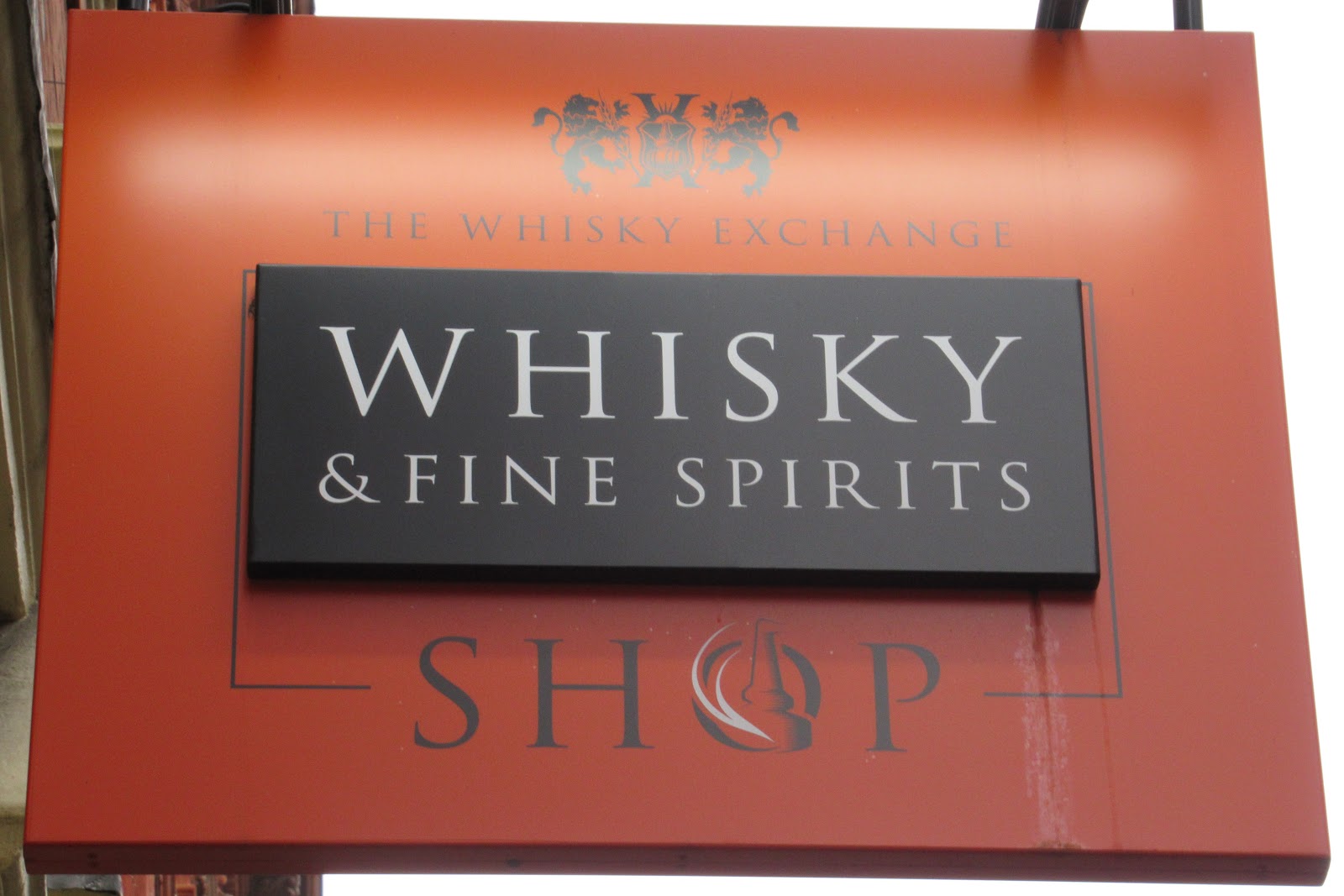
Almost like an orange beacon for whisky lovers!

My first stop was London, spending a few days with the family and seeing the sights. London is of course huge, a giant, crowded, busy city that is also steeped in history and is also quite friendly and restrained, much more so than some other giant cities that I've visited. It's also reasonably easy to get around thanks to both uber and the underground railway, "the tube", as long as there aren't any track closures or other obstructions. But this is a whisky blog, and I'm sure we've all seen photos of Big Ben anyway, so I'll skip over that part of the trip, with three notable exceptions.

Firstly, The Whisky Exchange. The name will already be familiar to most whisky nerds, it was at the top of my list of things to do in London, and it far exceeded my expectations. The range and scope of this store is absolutely insane, like nothing I've ever seen in the southern hemisphere, and you're going to need to allow a fair whack of time here, even if you're just looking. Personally I could have spent hours here (and I probably did over the three visits I made!) just admiring the mind-blowing range of whisky available, everything from 1940's Macallan and single cask Ardbegs, through to the latest shop exclusive bottlings, and their own blended malts, hand-filled straight from the casks. The store itself is only a 10 minute walk from either Charing Cross or Leicester Square stations, but is tucked away in a little side street, so make sure you look out for the sign above or you may miss it. And remember if you're travelling outside of the European Union, and probably also if you're not if Brexit as it's way in the future, you can get a refund on the 15% VAT (value-added tax) at the airport. It's a long and painful process once you're there, and I'll cover that a bit more closely later on, but the part that happens at the retailer is nice and easy.

Seen in the background is around 2% of the open bottles available!

The other exceptions are the two brilliant whisky bars that I found my way to in London, and while I'm sure there are more, these two were outstanding, and were more than enough for me. Firstly, Milroy's of Soho. While it's a fairly small bar at first glance, there's also a much bigger hidden basement section, which is explored by going downstairs through a bookcase at the rear of the bar. The whisky range here (upstairs) is very extensive and varied, the staff & service are brilliant, and they also have a huge range of bottles available for retail sale at very reasonable prices. The second bar I visited is actually a private member's club that I was lucky enough to get an invite to, so it may not be available to most, but if you can join or find a member to sponsor you, do it. The establishment in question is Soho Whisky Club, located above a hidden gem of a retail bottle shop in Soho, and while joining is a little pricey, what you get in return will blow you away. The range of whiskies available by the dram is almost unbelievable, and while I didn't count the bottles I'd guess there to be somewhere near a thousand. We're talking the entire Glenfarclas family cask range, some very rare Ardbegs, and an absolute plethora of other unusual and old whiskies from all over Scotland, and the prices are extremely reasonable. Actually they're downright cheap! I was very much like a kid in a candy store, and if I was ever going to call London home, I'd be joining up here on day one.

Now, getting to Islay! I chose to go by train and then bus to get to the ferry, mainly because I was not hiring a car, and so did not need to worry about the need to drive interfering with my whisky drinking. The train from London to Glasgow is over five hours, with not a great deal to look at, and it wasn't much cheaper than flying, although it was much easier to get to Euston train station than it is to Heathrow or Gatwick. There's also no worrying about baggage size or weight restrictions this way, since these smaller domestic flights will usually have a lower limit than your international flight home will. Both methods can be quite cheap if you book ahead early on, and Glasgow is the obvious destination if you're going on to Islay, since it saves you around 90 minutes over leaving from Edinburgh. Speaking of Glasgow, make sure you check out The Pot Still whisky bar, which is absolutely incredible!

Also a couple of quick sides note here about travelling to Scotland in general: firstly, the midges. I had read some real horror stories about these little biting insects, about people being covered in painful bites and walking through clouds of the things. Now apparently they tend to be worse in the summer months, and in the north-west of Scotland. I was there at the beginning of autumn (September), and didn't go to the north-west (think Oban, Skye, etc.), but I didn't find them to be much of an issue at all. Yes they're there, and yes you'll have to walk through clouds of them if you're unlucky (just keep moving!), but if you're used to mosquitoes and biting flies and that sort of thing, particularly if you're coming from a temperate or tropical region, e.g. Australia with our massive man-eating "mozzies", you basically have no need to worry. You'll likely be wearing long sleeves & trousers anyway given the weather, but even if they do manage to bite you it's a very minor itchy spot that doesn't seem to last for more than a day anyway (even with a freshly shaved head), and I'm normally a mosquito magnet, and I didn't feel them biting at any point, in fact they only bothered me on two occasions over the two weeks of the trip. So if you're especially worried you could use a mild repellent, particularly if you're near fresh water and it's overcast or has been raining, but they're really not a cause for concern if you ask me.

Secondly, the weather. It almost goes without saying, but you're going to need a raincoat, long trousers and weatherproof shoes. Even then, two pairs of weatherproof shoes is a good idea. The weather can change 20 times a day, and is very unpredictable, so having a light jacket or jumper plus the raincoat that you can take with you for the day would be the best way to go. It wasn't hideously cold while I was there, since it was essentially the end of summer, so just a regular jumper & rain jacket was all I needed, but the wind chill factor, particularly on Islay of course, can get nasty and bitey. It will be grey and overcast, so it may not be the best photo-worthy weather at times, but you're just going to have to put up with that. It's not like you can just wait until next week after all, unless you're one of those lucky sods that can!

The view from the rest stop at Inverary.

The bus from Glasgow to Kennacraig ferry terminal (the main departure & arrival point for the Islay ferries) is around 3 hours, and is the Glasgow to Campbeltown service, so it's the same bus as you'd get if you're lucky enough to squeeze Springbank into your trip. I didn't this time unfortunately, but it's at the top of the list for the next trip. Now while the bus timetables are coordinated with the ferry timetables, it seems the journey can be a little unpredictable! On my very early outbound trip to Kennacraig we were slowed by just about everything imaginable, except for a road closure, including picking up 40 school kids who were stranded on the side of the road with a broken down bus, and then dropping them at school. Luckily the driver was able to tell the ferry terminal we were coming and were going to be a little late, or we would have missed the ferry. Then on the trip back from Kennacraig to Glasgow we were slowed by that previously missing road closure due to an accident, which is apparently a fairly common thing, so the bus had to take the long way around which added around an hour to the trip. There's really nothing like the fear of missing a ferry or connecting bus to keep the heart rate up! So if you're even more unlucky than I was, it may be worth having a backup plan in case you miss the ferry you were hoping to catch. The bus to Kennacraig (or Campbeltown) also stops at the very pretty town / village of Inverary for around 10 minutes, which gives you just enough time to run up the road to Loch Fyne Whiskies and back!

Once you (hopefully) arrive at Kennacraig terminal, and there's absolutely nothing there other than the ferry terminal, it's time to get on the ferry to Islay! You can do two things from this point, either get a ferry across to Port Askaig which is at the north-eastern side of the island, or you can get a ferry to the village of Port Ellen, on the south-western side. While the ferries to Port Askaig are more frequent and it's a shorter trip, you then need to get from Port Askaig to wherever you're staying or visiting, and it's around 40 minutes drive to Bowmore from there. Whereas if you're staying or visiting in Port Ellen, the ferry terminal is basically in the village itself.

All that remains of the long-lost distillery. 

Where you want to stay on Islay will depend on a few things, mainly if you will have access to a car or are on an organised guided tour. The three southern distilleries are of course more easily accessed from Port Ellen, with Ardbeg being the furthest away, and that's roughly 75 minutes of easy walking if you stop for the odd photo opportunity (which you will!). Personally, having easy access to these three distilleries was my main criteria, so Port Ellen was my haven of choice. Port Ellen has all of the basics you might need, with two pubs (both with an incredible selection of whisky), a co-op grocery store (miniature supermarket with a surprising range & reasonable prices), a restaurant & takeaway named Sea Salt, and some beautiful views. As you can guess from the name, it's also home to Port Ellen maltings, and what remains of Port Ellen distillery, which is a few warehouses (no longer housing any Port Ellen whisky), and the old kilns which have been converted to a mechanic's sheds, but thankfully still look the part from a distance.

Bowmore's famous round church, at the end of the main street.

Bowmore is obviously bigger, with more facilities (including the only public laundry on the island, which is literally a single machine and dryer located inside the swimming centre), more pubs and restaurants, a larger co-op grocery store, and some lightly tourist-y gift shops. It's also roughly the halfway point between the southern distilleries and the northern ones, plus Bruichladdich on the other side of Loch Indaal, so if you're hiring a car and have a designated driver, Bowmore would be the easier place to stay. There's also more accommodation available here. Speaking of which, most accommodation is bed & breakfast style, which is typically just that - a bedroom, hopefully with an en suite bathroom, and a hearty Scottish breakfast in the morning. There are a couple of choices that are more hotel-style and some self-catering apartments, but all are on the small side, and all offer a snapshot of actual life on the island. There's no Hilton or Comfort Inn to be found, which is great! I recommend Islay Info for the accommodation listings, and a bit of other useful information too. Pricing is a little on the expensive side, mostly due to supply & demand, but it's just part of the pilgrimage. There are also the villages of Bruichladdich, Port Charlotte, Bridgend or Portnahaven to hang your hat in, but again you'd want to have a car in those cases since they're a little more remote. Also don't worry too much about where your chosen accommodation is within the village or town of choice, they're almost all a few minutes walk, at most, from the main street, so there's no real disadvantage there. If you're staying outside of the villages though, you're definitely going to need a car and/or designated driver. Speaking of costs, it's pretty much the same as what we Australians are used to (except the whisky is massively cheaper), so it may be an adjustment for those travelling from America or some parts of Asia. You'd want to budget around 10 pounds per takeaway dinner or dine-in breakfast, while lunch can be had for around 5 pounds, or less if you buy from the Co-op grocery store. For point of reference, a can of soft drink will cost around a pound here, and around 2-3 pounds from a convenience or takeaway store. Dinner at a restaurant or pub on the island will set you back around 20 pounds on average.

Without a car, the island's buses are very useful, but there are only two for the whole island, and they cover different routes, so even Bowmore or Port Ellen will only have around four or five pick-ups a day, not all going to the same destinations. Not having a car meant I could only spend a few minutes at Caol Ila, which is around 10 minutes walk from the bus stop, and more importantly is at the bottom of a huge hill which you'll then need to walk back up to get back to the bus. Luckily I had mentioned to the driver that I'd be getting back on the bus on his return journey, or I would have missed it (and subsequently missed my Ardbeg tour), because he actually came about 500 metres up the road and picked me up! This is a great example of how friendly and helpful the Ileachs (Islay residents) are, and I can't explain how much I appreciated it! The sight of that bus coming up the road was a massive relief! This is also an example of why you'll have absolutely no trouble if you're travelling alone, regardless of gender or age, the locals will be very friendly and helpful. Hitch-hiking is a common thing, and you can expect to be offered lifts quite frequently as well. Having said all that, I will be hiring a car for just a day or two on the next trip...

The start of the distillery walk from Port Ellen. Laphroaig is around 30 mins walk from here.

Unfortunately not having a car meant that I missed out on Bunnahabhain completely, which is a 6 mile walk from the bus stop, and the Kildalton cross, which is around 90 minutes walk further on from Ardbeg. So quite a few of the sights are quite hard to get to without a tour, taxi or rental care, even if you use the island's buses, and next time I'll be hiring a car for at least a day or two of the time on Islay. Having a car will also give you more freedom to explore the outer reaches of the island, such as Machir Bay, Kilchoman beach and the villages of Port Charlotte and Portnahaven, all of which look beautiful! Speaking of taxis, which was also the only option for both Bruichladdich (thanks to the early start) and Kilchoman, which is also not reachable without a vehicle, they can be quite expensive, similar to what we're used to in Australia. Having said that, not needing to worry about drinking & driving was definitely a huge advantage once I did get to the distilleries! While most will either give or sell you sample bottles to take away if you're on a tasting or tour, it's just not the same as savouring it in it's place of origin! There are a few different taxi businesses on the island, but most have only a couple of cars at the most, so you'll need to book in advance or you may be disappointed. If you're travelling in a group then splitting the cost of a taxi for the day, or a guided tour, will be more economical and well worth it.

Whichever destination you choose, remember to book ahead (like months ahead) if you're taking a car with you on the ferry, or you may be turned away. If you're walking on there's nothing to worry about, you just buy your ticket at the terminal. Both offer stunning views if the unpredictable Scottish weather is in a good mood, but the Port Ellen ferry also has one big advantage: it sails past Ardbeg, Lagavulin and Laphroaig on the south coast of Islay. To be honest, I'd recommend sailing to Port Ellen regardless of where you're staying. Seeing the three southern distilleries from the water on my way to Islay was a very emotional and almost spiritual (and I basically never use that word) experience, particularly as Laphroaig is sheltered from view until you get a little closer, and the distillery reveals itself one letter at a time: L... A... P... H... R... O... A... I... G! This is where the already emotional experience becomes even more so, and then if you're lucky like I was, you'll also see the peat smoke rising from the pagodas, and you may just have to wipe away a few tears!

That's actually Jura, but you get the idea!

So in summary, here are my tips for Part 1:
  • If travelling via London, make sure you visit The Whisky Exchange and Milroy's of Soho, and get VAT refund forms for any purchases at the point of sale.
  • Also if travelling via London, make sure you book the connecting flight, train and bus ahead, and shop around online for a cheaper fare. And take a book with you, there are no entertainment screens. 
  • If travelling by bus to Kennacraig, check out Loch Fyne whiskies in Inverary during the short rest stop, and have a contingency plan in case you're delayed and miss the ferry.
  • Don't worry about the midges, just wear long sleeves & trousers / pants, and don't stand still if you're near swarms of them, just charge on through - with your mouth shut!
  • If you're planning on visiting Caol Ila, Bunnahabhain or Kilchoman, and a lot of the other sights, you'll definitely need a rental car (and preferably a designated driver), a taxi or an organised guided tour. 
  • Access to the three southern distilleries is easiest from Port Ellen, Ardbeg is the furthest away at around 75 minutes walk from the village. It also has most facilities you'd need, but in small doses.
  • Bowmore is a larger town with more facilities, and is roughly the halfway point between the southern distilleries and the rest, so if hiring a car or taxi, or using a guided tour service, this would be the easier place to stay. 
  • It can mostly be done without a car if you have the time, and/or if you're willing to miss out on a few things (Bunnahabhain, Kilchoman and the Kildalton cross, for example). Bicycle hire is available too.
  • But I'd recommend hiring a car, or getting a taxi or guided tour for at least a day or two so you don't miss out on the above!
  • Generally things can be quite expensive, especially if you're eating out for every meal, but it's not too different to other parts of the western world. Although the whisky is very cheap by Australian standards. 
One more point before we get onto the juicier, meatier stuff in part two: how long to stay on Islay. I had five nights, and it wasn't enough, although it probably would have been (just) with a rental car for one or two of those days. Most travellers seem to only allow three days, which I don't think is enough personally, although I guess it depends on how much you love Islay whisky (so I'll need a month next time!). I wanted to take my time, do more of the bigger tours, relax and get a proper feel for the place, to smell the peat smoke and the sea air (didn't see any roses), and not rush around. You could do two distilleries in a day quite comfortably, but one of those may need to be just the standard tour, or just a stop-in etc. depending on the distillery in question and their tour schedule. I chose to do one or two distilleries a day, plus a few extra stops at some. I ended up visiting Bowmore and Ardbeg twice, Lagavulin and Laphroaig three times, and if I'd had that damn car I would've gone back to Bruichladdich and Kilchoman a second time. The island may look small on the map, but nothing happens in a hurry and it's hard to move on, so you'll want to double the time you think you'll need to get everywhere, and the time you think you'd need once you get there. I'd allow at least four days if you can, even with a car, so you can take your time and let the island work it's magic!


Which brings us up to Part two, Islay itself, and its incredible distilleries, coming soon!

Monday, 2 October 2017

Laphroaig 10 Cask Strength Batch 006 & Batch 009 Whisky Review!

I'm back, and oh what a trip that was! London, Islay, Edinburgh, and Speyside via Inverness. To have actually visited these places that I've dreamt of for years was very, very special. And so was being able to finally get my own photos for your viewing pleasure! There are quite a few write-ups in the works at the moment of course, but I thought I'd ease back into it by reviewing two massive peat monsters from my favourite Islay distillery. Enjoy!

As whisky geeks, we always want what we can't have. It's human nature really. Old bottlings, discontinued bottlings, closed distilleries, and then also lower prices, more (or sometimes fewer) bottles, and lower taxes... the list goes on. This is not helped by the internet, where us Australians for example are constantly exposed to how much luckier those in Europe or the US often are compared to us. Not only do they get far cheaper pricing, but they also pay less tax and much less duty, and they don't usually need to wait 3-12 months before they finally see the latest bottling. But I could let all of that slide, as if there was a choice anyway, if we could just get one thing that the Europeans and particularly the Americans do: Laphroaig 10 Cask Strength.


Yes, unfortunately the amped-up cask strength version of this Islay staple is not officially imported into Australia, and has not been for many years, if it ever was. I'm sure there are many of you out there who have never tried this magnificent nectar of the gods, and there are probably many who have never even seen the subtle red-striped label in reality. Those people might be thinking "well it's just a stronger version of the 10 year old, who cares?" or something along those lines. Believe me when I tell you folks, and I'm sure those who have had the pleasure will back me up here, you are unequivocally mistaken. To add insult to our injury, if we had access to this wonderful liquid at pricing similar to the US or UK market, and even with our increased shipping costs factored in, it would easily be the best value for money peated whisky available. They may not be the absolute most perfect whiskies money can buy, but for the sort of money they're asking overseas, I don't think there's much that can beat them. For example, in the 'States a bottle of Laphroaig 10-year old Cask Strength sells for around $65 USD, which is just unbelievable value. For the lucky Americans reading this, us Australians are being charged $90-100 AUD (that's around $67 USD at today's exchange rate) for the standard Laphroaig 10-year old, and that's bottled at 40%, not the that's-more-like-it 43% version that you also enjoy. Oh, and that's also in a 700ml bottle, not 750ml. It's just not fair!!!

Yes I realise we are a much smaller market, and we have a lot of shipping costs being on the other side of the world, plus we have a ridiculous amount of taxes and duty to cover, but the price you lucky buggers pay for the annual limited release of the cask strength 10 is just not fair to the rest of us. And a quick google will show masses of stock just sitting on the shelves of your bottle shops (sorry, liquor stores), which also just isn't fair. This leads me to think that many of you don't even realise how lucky you are, and it upsets me to think of all those homeless and unloved bottles sitting on the shelves collecting dust. I encourage those of you lucky enough to have the access to get out there and fix this injustice pronto, or failing that, just ship the stuff to Australia, we'll happily look after it for you.

The cask strength 10-year old is released from the distillery annually in unique batches, and it tends to sell out from the distillery itself very quickly. Which is probably because it's downright cheap, at 49 pounds including the 15% VAT, which is absolutely amazing value, and frankly is just too cheap! That really is enough to make you re-evaluate what you previously considered to be good value for money in the whisky world, and it certainly has done that for me. And yes, I did buy a bottle on my recent maiden voyage to Islay (luckily they had found some stock hidden away somewhere). As mentioned above, that price is around the same, or even less, than we Australians pay for the regular Laphroaig 10 year old at 40% ABV, so how could I possibly walk away from that deal!


With a bottling strength generally in the range of 55-59%, and being devoid of the added colouring and (much more crucially if you ask me) chill filtration that the standard 10 year old is lumped with, these limited release bottlings are a huge step up from the 'normal' watered-down 10 that we all know. They're on a completely different level. Intensity of flavour, masses of sweetness, peat and smoke, and they're still extremely drinkable for the strength, and mature for the age. Remember also that aside from the very limited and understandably very expensive occasional special release (e.g. the recent 30-year old) and the annual Cairdeas bottlings, which are often also not officially imported into Australia, this stuff is the only way to find official bottlings of Laphroaig at over 48% ABV.

Currently up to Batch 9, although there were also some earlier batches that weren't numbered, the cask strength 10 can very occasionally be found in Australia as a parallel or private import (as in, bypassing the official importer and buying direct from an overseas supplier) in extremely limited quantities. The cost of this practice, plus the extreme scarcity of these bottles in Australia, mean that they usually sell for $250 a bottle or even higher. At this price level they obviously don't offer anywhere near the incredible value for money that they do overseas, and they also have some serious competition from other brands at that figure. But given the scarcity, and inherent quality that you're getting in that beautiful green bottle, they can be hard to resist for some die hard 'phroaig fans, even at that sort of price.

Anyway, enough whingeing, and onto the matter at hand. Not one, but two Laphroaig 10 Cask Strengths to review! Oh happy days! The samples I'm reviewing today came from two different sources, with the batch 6 (a.k.a 006) being a sample swap with a fellow Laphroaig lover, and bottled in February 2014 at a cask strength of 58.0%. The batch 9 (a.k.a 009) came from Beam Suntory's Australian national brand ambassador and all-round legend, Mr. Dan Woolley, who brought a couple of bottles back with him from Islay after a quick sojourn earlier this year. It was bottled in February 2017 at a cask strength of 58.1%, and it also sold out from Laphroaig's online store in a couple of days, although I'm sure the lucky American market will have their unfair abundance of stock lying around! As mentioned above, both of these bottlings are completely non-chill filtered, and I believe the E150a caramel colourant that is added to the standard 10, ostensibly for consistency purposes, is either skipped altogether or at least is dialled down in these cask strength releases. Awesome stuff. So let's get to it before I start weeping into my Laphroaig Glencairn...

Laphroaig 10-year old Cask Strength, Batch 006, 58.0%. Islay, Scotland.
Bottled February 2014. Non-chill filtered, assumed natural colour.

Colour: Yellow gold.

Nose: Ooh yummy! Initially quite spicy, with powdered ginger and aniseed. Then sweetened grapefruit juice, crisp salty sea air, a little smoked fish and fresh seaweed. Cough drops, burnt herbs and some charred driftwood. Buttered toast spread with vanilla paste. Sounds weird I know, but it works!

Texture: Boom, flavour explosion! More of a dry, spicy dram, but also quite complex. Medium weight, and no alcohol heat at all.

Taste: Initially sweet & fruity, but a second later the peat & salt arrive. A massive dirty, chunky, spicy, warming peat with a smoky charred crust to it. Lots of sea salt flakes, a little dried chilli and ginger spice.

Finish: Long. The sweet fruit & vanilla returns, although the peat is still there in a big way. More of that spicy charred edge to it now, then a little bitter oak and toasted aniseed. Smoked fish on lightly buttered burnt toast. The grapefruit is still there too, but it's less sweet and more sour and slightly bitter now. Lovely.

Score: 4.5 out of 5. Just fantastic!

Notes: Oh man, what a whisky! Very, very Islay if you ask me. The peat, smoke and salt are big, but so are the spice and coastal notes. Definitely more savoury, dry and spicy than some may like, but for my tastes this is just delicious.

Laphroaig 10-year old Cask Strength, Batch 009, 58.1%. Islay, Scotland.
Bottled February 2017. Non-chill filtered, assumed natural colour.

Colour: Amber. Noticeably darker than batch 6.

Nose: Totally different. A little shyer than the former, with more dried citrus notes - grapefruit and lemon, sweet and relatively (yes relatively!) light on the nose. More of a dry, dusty, powdered peat here, with a little ash to it. Some strong tea, sweet vanilla cream, fresh herbs, and light wood spices. Burning charcoal briquettes and wood embers, and a little drying kelp, then a little sweet malt showing through!

Texture: Lighter & brighter in flavour, but still a very flavoursome whisky. Medium weight, and no alcohol heat again.

Taste: More dried candied citrus, and a subtle dried floral sweetness alongside a thick buttered caramel and some crumbly vanilla tablet (hard Scottish fudge). A good pinch of dry & spicy ash. Less salty, less peaty and seaside-y, but still a peaty dram of course.

Finish: Medium-long length, but again a little quieter than batch 6. Chilli salt and a dry wood spice, slightly bitter burnt toffee, and hot wood ash. More of that lovely semi-dried citrus, like a grapefruit concentrate and some lemon drops. A little sweet licorice, and sweet & smoky malt at the end.

Score: 4 out of 5.

Notes: Definitely a brighter and lighter (for a cask strength Laphroaig!) take, those lovely sweet citrus notes are very enjoyable. The peat is dialled back, as is the salt and spice, while the sweetness and ash is brought forward. Very nice!

Both of these are fantastic drams, and are almost surprisingly different, although both are still very Laphroaig-y, as you'd expect. These 10 year old cask strength Laphroaigs are like Islay concentrate if you ask me, and to an Islay fan they're just bloody delicious. We have two different styles of peaty whisky here really, batch 6 is definitely more aggressive, more dry, peaty and spicy, while batch 9 is a little more subtle and gentle (for a young-ish cask strength Laphroaig!) and less shout-y, more sweet and fruity, and still very, very good. I just wish these beasts were easier to get our (my) hands on...

I've also had the pleasure of trying batch 007 and 008, and both are/were very good, with batch 7 being my favourite up until tonight (now I'll have to arrange a side-by-side with 6 & 7!). Although it was slightly down in strength, it made up for it with loads of sweetness, and coastal salt & peat. I'd have no hesitation at all in lining any of these 'phroaig beasties up with any cask strength Islay whisky, including even the mighty Octomore. Needless to say if you're a peat-head and you come across a bottle of the cask strength Laphroaig 10 year old, grab it immediately and don't let go. Just do it!

If you're reading this Mr. or Mrs. Beam Suntory Australia / CCA, then please, please, please put an end to this cruelty, and bring some of this beautiful stuff to the thirsty hordes of Australian peat lovers! I promise we'll love you for it. I know I will.

Cheers!

Sunday, 27 August 2017

Laphroaig 25 Year Old 2016 Whisky Review + bonus single cask!

Yes it's a two-for-one deal, and they're two very different and very delicious whiskies from what I have to come believe is the greatest distillery in the world. Long live Laphroaig!

For our main course this evening, we have the 2016 official bottling of Laphroaig 25-year old. This one has been matured in a combination of American oak ex-bourbon casks and second-fill European oak ex-Oloroso sherry casks, and bottled at a cask strength of 48.6% without chill filtration. This will be my first time trying the 2016 bottling of the 25-year old, I don't believe it's even arrived in Australia yet, but I've had the privilege of tasting the 2013 bottling of the 25-year old a few times now, and it was exceptional. Very soft and fruity, with a floral sweetness and a little spice as well. I still believe that if you have the coin and you're after an old whisky, a 25-year old cask strength Laphroaig is the one to go for. It's expensive of course, the 2013 bottling retails for around $600 AUD, and while this may sound like a bit of an oxymoron, I do think that actually gives you pretty good value for your money. That's just the level of enjoyment we're talking about with a 2.5-decade old Laphroaig!

For the 2016 bottling, the distillery has ditched the beautiful black labelling and black leather-wrapped outer box, and has gone with a more typical white label and white wooden box. It's still pretty of course, but the former black packaging was really something special! It'll probably be more expensive than the older bottling if / when it does arrive here, but crucially it's also increased in strength. Although both bottlings are at their natural cask strength, this one is up from 45.1% in the 2013 to 48.6%. So I'd wager we can expect a bit more punch and possibly a bit more peat in this version, and it may be a little closer to the typical Laphroaig profile. Let's just hurry up & find out, shall we?

Laphroaig 25-year old, 2016 bottling, 48.6%. Islay, Scotland.
Matured in both second-fill European oak ex-Oloroso sherry casks and American oak ex-bourbon casks. Non-chill filtered, bottled at cask strength, suspected natural colour. 

Colour: Medium gold. 

Nose: Soft & sweet. Dried fruit and a dried floral sweetness, with a nice layer of sea salt underneath. Some dried red apples, and a light wet rock-like minerality. Tiny wisp of sweet wood smoke with more time in the glass. 

Texture: Light-medium weight, very, very soft, fruity & sweet. No heat at all, in fact no sign of any alcohol whatsoever. Extremely easy to drink, soft and inviting.  

Taste: Lovely and soft, almost like a fruit juice on first contact. Fantastic wisps of smoke and earthy peat, and that wet stone-like minerality along with the dried fruit and floral sweetness. There's also some lovely dried & sweetened grapefruit, and a little vanilla bean. 

Finish: Medium length, warming and gentle. More soft earthy peat, and that mineral note again, with more of the dried sweet grapefruit. Then the peat becomes the main plater, but it's still very soft and gentle. It's drier now too. 

Score: 4 out of 5. 

Notes: What a drop! Almost a complete reversal of what most people would think of when they hear the word "Laphroaig". So soft & gentle, but still nicely complex with plenty going on. You'd never guess it was alcoholic, let alone that it was over 48%! It still has that lovely floral sweetness that I remember from the 2013 release, but this one has the volume turned up a little, with a little more "Laphroaig-ness" to it. Very, very nice. I still think that if you're looking for an old peated whisky, and have the necessary financial capacity, then this is the one to go for. Excellent stuff.


And for our dessert this evening, we have something very special and very rare. A single cask Laphroaig, hand-bottled at the distillery and offered as part of the 'Distiller's Wares' and 'Water to Whisky' distillery tours, where the lucky punters get to taste 3 different whiskies straight from the cask in one of the warehouses, and get to choose one to take home with them in a 250ml hand-filled bottle. And as luck would have it, I'll be doing this very thing myself on Islay in a couple of week's time! Fingers crossed for a sherry cask...

This sample is from cask number 3799, a 14-15 year old Maker's Mark ex-bourbon cask, distilled in 2002 and fully-matured in Laphroaig's no. 7 dunnage warehouse. It was then bottled at 56.9%, and is of course non-chill filtered and naturally coloured. Obviously these are very special whiskies that you essentially won't find for sale anywhere. How the hell did I get a hold of it, you ask? Well I didn't, but I was lucky enough to be given a sample by a certain Australian national brand ambassador for Beam Suntory. Once again, another whisky I'd never have tasted without Mr. Woolley's generosity. I had expected a higher-strength version of the standard 15-year old here, which is soft, sweet and lightly peaty, but after sneaking in a quick sniff prior to this review, that's not the case with this dram. Not at all. I don't have a photo to use for this one unfortunately, so here's a photo of one of Laphroaig's dunnage warehouses to set the mood!


Laphroaig hand-filled single cask, no. 3799. 56.9%, 14-15 years old. Islay, Scotland.
Matured in no. 7 dunnage warehouse in a single Maker's Mark ex-bourbon cask. Distillery tour exclusive bottling. Non-chill filtered, natural colour. 

Colour: Yellow gold, with a tiny little piece of charred barrel sinking to the bottom. How awesome is that!  

Nose: Much thicker, richer, sweeter and more overt, but still very soft for the strength. Lovely herbal honey and creamy vanilla, a nice damp, earthy, musty peat, and some salty brine. Sweeter citrus here, like a lemon icing, and slightly meaty and sweet tropical fruit. 

Texture: Medium weight again, warming and juicy. And again, no heat at all. 

Taste: Lovely. Sweet, soft earthy peat, creamy vanilla, candied citrus zest, a little black pepper, and a big pinch of sea salt. Slightly musty and juicy honeyed fruit. Gets more briny and fruity with more time & warmth. Lovely. 

Finish: Long. Lovely and briny, some sweet stewed tropical fruits, almost like a breakfast juice! More black pepper and creamed honey, then very fruity, with more tropical fruit and a little citrus, and a little dry, ashy smoke behind. 

Score: 4 out of 5.

Notes: Wow. So different, so fruity and briny, and just gorgeous. Very nearly a 4.5 score in fact. Again, not your typical Laphroaig, and very, very different to the official bottlings that I've tasted. And so it should be, that's exactly what you want when you visit the distillery on Islay and bottle your own Laphroaig! That concentrated and amplified fruit, the citrus notes and of course that lovely peat, although it's quite subdued in this bottling, are just lovely. This one just goes to show that no two casks are exactly alike, there are so many factors at play that have a marked effect on the liquid itself, and that any consistency in whisky mainly comes from the master blenders doing their thing. I can't wait to get over there and bottle one of these beauties myself! 

And on that high note, I'll be taking a hiatus from the reviews for a few weeks, while I'm touring Scotland on holiday! This has been a dream of mine for years, it's finally here and I cannot bloody wait. I'm starting in London, then up to Islay via Glasgow, then across to Edinburgh, then up to Inverness with a few day trips to Speyside and the Highlands. Rest assured there'll be plenty of new posts coming when I return, and feel free to follow me on twitter @TimJG84 (Peated Perfection) for updates in the mean time! 

Cheers!

Sunday, 20 August 2017

Starward Tenth Anniversary Whisky Review!

I know I've said it before, but I still think Starward is the best value Australian whisky you'll find. Easy drinking, very reasonably priced and still with more than enough flavour and character to satisfy the whisky enthusiast, it's a winner.

I've covered the history behind Starward / New World Distillery in more detail here, but for a quick recap, the distillery opened in 2007 in a hanger at Essendon airport in Melbourne. The goal from the outset was to produce a more affordable Australian whisky that was also more readily available and more accessible than most, and we can safely say that David & his team have reached that goal. To help achieve this they've moved away from tradition where necessary, using modern equipment and innovative techniques, and taking full advantage of the local climate & conditions, plus fresh Australian wine casks, to help the whisky mature more quickly. They're not resting on their laurels either, with a steady flow of experimental bottlings being released under the 'New World Projects' brand, perhaps the most famous of which is the ginger beer cask finish, now on its third batch, which at least from my outside perspective has been very successful.

While the New World Projects releases are developing their own cult following, the regular / core bottlings under the Starward label are very successful in their own right, and for good reason. Both the standard Apera (Australian sherry) cask-matured bottling and the Australian red wine cask-matured 'wine cask' are very consistent products, which is most likely a result of their solera vatting system used for these bottlings, as well as the skill of the distillery's production team of course. At around $90-100 AUD a pop here in Australia, they may not be "cheap" by Scotch whisky standards, but when compared to most other Australian single malts (with a couple of exceptions), they offer excellent value for money, and they do drink beyond their young ages. The distillery recently re-located to a new larger site in Port Melbourne, closer to the Melbourne CBD, and has added a beautiful-looking bar and some larger equipment to keep up with the anticipated demands of the future.

What I'm looking at today is a first for Starward. Released this year as a commemorative bottling to celebrate the distillery's tenth anniversary, and once again priced very reasonably, it's a vatting of 28 casks of different ages, selected from the eight different types that the distillery has used since they began distilling. The only complaint I've heard about the standard Starwards is the relatively low bottling strength, being 43% for the standard version and 41% for the wine cask version. And this is the case for obvious reasons, since it helps to keep the pricing at a reasonable level, yields more bottles per cask, and keeps the whisky accessible & perhaps more enjoyable for the novice. But the distillery has addressed that complaint with this anniversary bottling, which weighs in at a very nice 52% ABV. As I've mentioned, despite being a limited release anniversary bottling, this one was priced very reasonably (which is certainly bucking the current trend!) at $190 AUD... for TWO full-sized bottles! Yes, this commemorative and limited whisky was only officially sold as a twin-pack, with one marked 'One to Drink' and the other marked 'One to Keep'. Which makes this Australian single malt an absolute bargain!

(image borrowed from Starward's IG)
Starward Tenth Anniversary bottling, NAS, 52%. Melbourne, Australia.
Matured in 28 casks of different ages and 8 different types, apparently mostly first-fill Australian wine barrels. Non-chill filtered and naturally coloured. 

Colour: Dark amber. 

Nose: Ooh, this is fantastic! Lightly buttered toast with rich burnt citrus marmalade. Quite a thick, bold, warm & inviting nose with plenty going on. Very, very nice. Golden sultanas, thick & slightly burnt butter toffee, slightly nutty toasted oak, plum & apricot jams, a little vanilla paste. 

Texture: Medium weight, voluptuous! Very flavourful, and no heat. Yummy. 

Taste: Lovely rich stone fruit, hint of dark berries, more slightly burnt buttered toffee, some warm ground spices, cinnamon & black pepper, maybe even a bush pepper? Delicious toasted & caramelised oak, some more citrus, but more bitter & zesty now. Very slight hint of Starward's bananas, but far less sweet and not the banana lollies that I find in the regular expressions, and it's only a slight hint. A little vanilla paste as well. 

Finish: Medium-to-long length, comes and goes in waves. Some dark cocoa, more golden sultanas, the same lightly bitter citrus zest, more lovely toasted oak. Some red grape tannins, stone fruit jams again, and that warm buttery oak 'til the end.  

Score: 4 out of 5. 

Notes: Absolutely delicious! What a dram. And what a nose! So weighty and expressive, but also balanced & complex, there's a real winning nose on this one. Lovely texture as well, and again very complex & balanced on the palate. A seriously excellent whisky from Starward / New World which, like all of their whiskies, belies its age and hides its youth extremely well. This one is definitely more mature in character though, with more dark fruit, citrus and lovely warm oak, and that higher strength gives it a beautiful weight both on the nose and palate, with no spirit-y heat at all. This is definitely my favourite Starward to date. 

Now I'm really regretting not buying a set myself (it was just bad timing for me), so well done all you lucky folk that did! This really showcases what the distillery can do without going too far from their character, which is exactly what an anniversary or commemorative bottling should do if you ask me. Such an expressive and delicious Australian whisky, and as usual from these guys, an absolute bargain for the price. Well done David & team, and happy anniversary Starward!

Cheers!

Sunday, 13 August 2017

Armorik Millesime Whisky Review!

My first French whisky review! I've been pretty impressed with Armorik / Warenghem Distillery's whiskies so far, they're nice easy drinking drams with a little point of difference from their distant cousins across the channel. And this particular bottling is pretty special!

Warenghem Distillery, the producer of Armorik, is located in the town of Lannion, in the north of the Brittany region of France. Their whisky proudly wears the label "Whisky Breton", which is the term for the Brittany region and its people, and the name Armorik refers to the region's name under Roman occupation, in what was then known as Gaul. After the Roman empire's withdrawal and subsequent collapse, the region received a number of British settlers, and became known as Brittany. Said to be more closely related to Scotland, Wales and Ireland than southern France, the region also has its own language, derived from Celtic and bought to the region by those British emigrants. France would probably not be high on most people's list when thinking about whisky. More well known for their wine, brandy, cognac and champagne, you might be surprised to learn that France is actually the world's largest consumer of whisky per capita... (Jeremy Clarkson pause) in the world!

While Warenghem Distillery has been in operation for over 85 years, they only started making whisky in 1983. Initially they only produced blended whiskies, but progressed to single malts in 1998 with the introduction of Armorik single malt, which then launched in 2009. Production levels are quite low, with only around 100,000 litres of single malt produced per year, which puts them more in line with Tasmanian distilleries or the tiny-est of the Scotch equivalents. Armorik is produced from 100% French malted barley, double-distilled in Scottish-built copper pot stills, and matured in either ex-bourbon, ex-sherry or Breton virgin oak casks (I can't say if this is actually a different species to 'normal' French oak), or double-matured / finished in a combination of cask types. Aside from a couple of entry-level expressions that are mainly available domestically, the remainder of their single malt is bottled at 46% ABV and above, without chill filtration or added colouring.

Armorik single malt, along with the distillery's excellent "Roof" rye whiskey, is distributed by Monsieur Jeremy Daunay, a.k.a. Le Baron De Spirits (he's French, in case all of that didn't give it away!), a very nice & very knowledgeable and hard-working gent based in Sydney. He was also responsible for an Australian exclusive single cask bottling that was released last year, which was fully-matured in a French Sauternes sweet wine cask. He kindly donated the sample for this review from one of the last available examples of this particular bottling, and I believe it's now completely sold out. In fact only 48 bottles ever made it to Australia, so I'm pretty lucky to be tasting this one at all!

Armorik's Millesime (French for "vintage") label refers to their single cask bottlings, and was first released in 2012 as a celebration of the distillery's first 10-year old bottling. The release I'm reviewing today is from cask number 3309, which was distilled in November 2002, and was fully-matured in an ex-Oloroso sherry cask before being bottled in June 2016, with a yield of 731 bottles. I've seen a few websites stating that this is a 14 year old whisky, but unless I've missed something, or my maths has failed me, it's actually around 13.5 years of age. It's bottled at a cask strength of 56.3% ABV, and is non-chill filtered and naturally coloured. Original retail pricing was quite reasonable for a cask strength & exclusive single cask whisky, at around $275 AUD. Let's get to it!


Armorik Millesime 2002, single cask, 56.3%. Brittany, France.
Matured in a single ex-Oloroso sherry cask, distilled 11/2002, bottled 6/2016 at cask strength. Cask number 3309, 731 bottles. Non-chill filtered, natural colour. 

Colour: Full amber / bronze. 

Nose: Lovely light & sweet fruits, slightly waxy, and slightly chalky & mineral-y. Rich fruity sherry, a little citrus marmalade, stewed red apples & red berries. Hint of coffee grounds and spicy, warm, slightly bitter oak. With more time, the apple & berry become sweeter and stronger. 

Texture: Medium weight, quite a bit of heat & spice. Warming. 

Taste: Considerably dryer than I expected from the nose. More of that slightly chalky minerality, and quite of lot of assertive hot spices - cinnamon, ginger, ground chilli. More red apples and slightly bitter oak, stewed stone fruits & citrus rind. 

Finish: Hot and drying initially, and the now aggressive spice hangs around for quite a while before settling down a bit. Medium-to-long length, but there's not too much left around once that heat & spice subsides. The fruit has turned slightly bitter, the red apple returns, and there's a little more coffee grounds and lightly spicy oak. 

Score: 3 out of 5. 

Notes: An interesting one! I really liked the nose with that lovely rich sherry and fruit, and the initial hit on the palate was a good one, but that heat and spice killed the latter palate and the finish for me. I even tried adding water towards the end of the dram, which I never usually do when reviewing, and it didn't make much of a difference at all. It really attacked the roof of the mouth, and the last whisky I had, almost 24 hours ago, was over 69% which gives a frame of reference. Nonetheless, it's still pleasantly drinkable, and is a flavoursome drop with plenty of character, and if you like your drams to be very spicy and slightly aggressive then this one will be up your alley. It's important to note though that this was a single cask release which is now sold out, so if you see an Armorik Millesime on the shelves, chances are it's not this particular bottling. 

I'm still a fan of Armorik's work, and had the chance to try a little of the newest limited release, the 4-year old virgin oak matured "Dervenn" (Breton for "oak"), which was very impressive, especially for the age. I look forward to what they come up with next! Thanks to Monsieur Daunay from Le Baron De Spirits for the sample.

Cheers!    

Sunday, 6 August 2017

Ballechin 10 Year Old Whisky Review!

This one's a bit of an underdog and is a little obscure (for now), but it certainly holds its own, even when matched against the big boys from Islay.

Ballechin is the peated whisky produced by Edradour Distillery in the Scottish Highlands. Located around 1.5 hours drive north of Edinburgh near the town of Pitlochry, Edradour (pronounced "Ed-ri-dowa")is also home to independent bottler Signatory Vintage, who have owned the distillery since 2002, and store their casks on-site alongside Edradour's own whisky. Established in 1825, one of contemporary Edradour's claims to fame was that it was the smallest distillery in Scotland, and while this is no longer the case (I believe Strathearn Distillery now has that title, along with a few other contenders), the distillery is still relatively tiny. With a single pair of worm tub condenser-equipped small pot stills, that are of the minimum legal size permitted for a commercial Scotch distillery, and a permanent staff of only two, the annual production capacity is only around 100,000 litres. The distillery is still housed in the original farm buildings, with all production equipment housed in a single room, although for obvious reasons larger warehouses were added after the acquisition by Signatory.

The name Ballechin (pronounced "Bell-eck-in") is a homage to a nearby farm distillery of the same name, which produced a peated whisky, which closed in 1927. I like this apparent tradition of naming your distilleries' different brands after closed distilleries, I think it's a nice reminiscent touch, and it also prevents your customers getting confused by tasting vastly different whiskies labelled under the same brand. Modern Ballechin whisky, which was first distilled in 2003, is peated to a minimum level of 50 ppm on the malted barley. Which is quite substantial for a mainland Scotch whisky, only beaten by Benriach's 55 ppm and Benromach's 67 ppm that is found in their Peat Smoke expression. So we can expect a nice smoky punch, but presumably without the salty, maritime and medicinal flavours that you'd expect from the islands.

There have been quite a few unusual wine cask-matured bottlings of Ballechin released, although until recently they were unheard of in Australia. Whiskies that were fully matured in Madeira or Sauternes wine casks for example, and more recently even single cask bottlings that were matured in various uncommon cask types, very Kilchoman-esque!. What has recently changed in Australia is that the The Whisky Company has become the official importer for Signatory Vintage and Edradour (among others), and Craig has been working hard to get the name out there in the marketplace, and to bring us new and unusual expressions. And his efforts are certainly working, because both Signatory and Edradour have been gaining serious ground lately, and at quite reasonable prices. Craig also kindly donated the sample for this review, so thanks Craig!

This 10 year old bottling is the first core / regular age-stated Ballechin expression, and like almost all Edradour whisky (the entry level 40% ABV Edradour 10 year old is the only exception) it's non-chill filtered and naturally coloured. It's mainly been matured in both first- and second-fill ex-bourbon casks, with a few ex-Oloroso sherry casks also thrown in. It's quite reasonably priced at $99 here, which puts it in-line with other peated mainlanders like Benriach 10 Curiositas and the aforementioned Benromach Peat Smoke, along with the heavyweights from the islands. So let's get to it!


Ballechin 10 year old, 46%. Pitlochry, Scotland. 
Heavily peated (50 ppm) whisky produced by Edradour Distillery. Matured mainly in ex-bourbon casks with a few ex-Oloroso sherry casks, both first-fill & re-fill. Non-chill filtered, natural colour.

Colour: Amber.

Nose: Nice! Very much like an islander actually. A hint of salt, a fresh, lightly vegetal peat, some musty old wooden furniture, a little shoe polish. A touch of wood smoke, and a sweet vanilla custard underneath. Hint of musty honeyed stone fruit comes out with time, as does a light floral soap note.

Texture: Medium weight, nice punchy intense peat influence, and no alcohol heat at all.

Taste: Lovely powerful, fresh, vegetal, crumbly peat. Lovely! Hint of salt again, some thick, dry, slightly ashy & herbal wood smoke, a bit of chilli & black pepper spice. More creamy vanilla underneath, and a slight floral note again.

Finish: Long! Still quite peaty to start with, then more creamy vanilla, and the crumbly, vegetal peat taking a step back but sticking around. Then that ashy dry smoke returns, along with a slightly bitter vegetal note and more black pepper. Slight honeyed fruit note towards the end, along with the peat.

Score: 3.5 out of 5.

Notes: Well colour me impressed! Lovely characterful & really quite intensely peaty dram. If I tasted this one blind I'd probably guess it was a Ledaig, maybe with a touch of Lagavulin or Port Charlotte mixed in to kill off the medicinal notes in the Ledaig. Which is pretty high praise in my book! It's not overly complex or challenging, but it's seriously peaty and very entertaining if you're into that sort of thing. Which I just happen to be!

Ballechin 10 is considerably more peaty than I remember the above mentioned Benriach & Benromach being, and it's certainly not a dram for the peat novice! A great alternative to the Hebridean beasts though, still with that familiar DNA, it's a lovely straight-forward and in-your-face peat monster. Highly recommended if that's your preferred tipple. If not, try before you buy if possible, as it may be too much for you!

Thanks to Craig from The Whisky Company for the sample, I think you're onto a winner here mate!

Cheers!     

Sunday, 30 July 2017

Mannochmore 18 Whisky Review!

A new distillery to tick off the list! And quite an obscure one as well. This particular bottling has been described by the generous sample donor as "the best sherried whisky I've tasted". So there's a bit of anticipation here!

Mannochmore Distillery is located south of Elgin in Speyside, and is a relatively young distillery having 'only' opened in 1971. It's currently owned by Diageo, and shares its site and water source with Glenlossie Distillery, and for a time the two distilleries were operated by the same staff on a 6-monthly alternating roster. Mannochmore is quite a large distillery though, with a current annual capacity of over four million litres via its four pairs of stills, and warehouse space for over 200,000 casks on-site (which also store whisky from other Diageo distilleries), and since 2008 has had its own separate staff. Like many distilleries at the time the distillery was 'mothballed' in the 1980s for five or so years, and again in the mid-1990s for a couple more.

Like many of the obscure distilleries the vast majority of its production has gone into blended whiskies, most notably Haig and Dimple, although I'm sure some finds its way into some of the Johnnie Walker range. There have only been a select few bottlings of Mannochmore single malt, particularly in the case of official bottlings, since the first release in 1992. The most notable of those have been part of Diageo's Flora & Fauna range, and more recently as a sporadically-appearing part of their annual Special Release bottlings. The distillery is also responsible for one particularly infamous and apparently truly horrible whisky, which now of course is a collector's item and is ridiculously expensive for what it is: Loch Dhu, 'The Black Whisky'. Loaded to the hilt with artificial colouring, although apparently "double charring" of the casks also attributed, this whisky was almost black in colour, as you might guess from the name. It's now achieved near-cult status, particularly amongst European collectors with an eye for the oddball & unusual.

This particular bottling though is nowhere near as well known, or as widely disliked. An official bottling from Diageo's 2009 batch of special releases, it's an 18-year old cask strength bottling that was matured in a mix of both re-charred refill ex-bourbon American oak & ex-sherry European oak casks, and first-fill ex-sherry American oak casks. 3210 bottles were released at a cask strength of 54.9%, with an original retail price of 105 pounds, all those eight years ago. These days of course it's quite a bit more expensive, and is mostly only found in online auctions. Unfortunately it's most likely chill filtered, but they may have eased up a bit since it's part of Diageo's special releases (looking at Lagavulin 12 as a fine example!), but I don't believe there's any added colouring here. Anyway, time to pop my Mannochmore cherry!

Mannochmore 18-year old, 54.9%. Speyside, Scotland.
Distilled 1990, bottled 2009. Diageo Special Release. Matured in refill American oak ex-bourbon & refill European ex-sherry casks, and first-fill American oak ex-sherry casks. Suspect at least lightly chill filtered, but I don't believe it's been artificially coloured.

Colour: Dark amber.

Nose: Interesting! Quite dry to start with, and very mineral-y in character. Some lovely meaty, rich, dry Oloroso sherry, a little savoury honey & vanilla, and that almost Island whisky-like minerality that I'd more expect from a Tobermory or Bunnahabhain. Like a cold stone or volcanic rock. A little yeasty too, and quite well balanced overall. 

Texture: Medium weight, warm & silky. Does have a little heat to it, but it's only light. 

Taste: Nice meaty, dry sherry again, warm baking spices, and more of that stone-like minerality. Slightly salty too, hint of ground coffee and a little raw spirit-y tingle. 

Finish: Medium length. Semi-dark chocolate, stewed stone fruits, slight hint of something nutty. More baking spices too, and a little bitter marmalade. 

Score: 3.5 out of 5. 

Notes: A very nice sherried dram from what seems to be quite an unusual distillery! That slightly salty mineral character in particular is very intriguing, like I said above it's something I'd more expect to find in an Island-whisky like a Tobermory for example. So it makes for a great point of difference in this Speysider! Considering the original retail price in 2009, and the fact that it's an 18-year old, cask strength sherried whisky with a relatively small release (even more so nearly 10 years later), this one can still be had for almost-reasonable money on the auction circuit, which I'd say is partly down to it being such an obscure distillery. So it's well worth the hunt if you're into this sort of thing. 

Certainly a very enjoyable dram, although when drinking sherried Speysiders it's hard to resist comparing them to the sherry-bomb masters like Glendronach, Aberlour etc., but this is a different kettle of fish really. It has enough going on underneath & alongside the sherry, plus that unexpected but not unpleasant minerality, and I can't say I've tried anything quite like it. Which is all part of the fun of exploring new whiskies!

Cheers!

Hellyers Road Richly Peated 9 Year Old Whisky Review!

A new heavily peated ex-bourbon cask release from Tasmania's Hellyers Road Distillery! Might as well take a quick look at the specifics ...