Springbank distillery is not very well-known in the whisky world, but they should be! They are very passionate about what they do, and they uphold as many traditional production methods as they can. They do not chill filter (and never have!), they do not add caramel colouring, they bottle at a minimum of 46%, and they do not shy away from experiments. Campbeltown, where the distillery is located, is actually recognised as it's own whisky region, and once was home to over 30 whisky distilleries. There is now only three, and Springbank own two of those in their namesake distillery, and Glengyle Distillery (producing Kilkerran whisky).
They are also one of the few distilleries in Scotland to do everything in-house. That means they malt their own barley, while most distilleries buy their barley in from external malting operations, and the whisky does not leave the distillery grounds until it is bottled, while some distilleries send their whisky to central off-site warehouses to mature and be bottled. Great stuff Springbank!
Springbank Distillery produce three distinct 'styles' of their whisky: Hazelburn, which is triple-distilled and un-peated, Springbank, which is '2.5 times' distilled and lightly peated, and Longrow, which is double distilled and heavily peated. All three of these labels have multiple expressions as well. I'm starting with what is probably their most widely available, Springbank 10 year old.
Springbank 10 year old, 46%, Campbeltown, Scotland.
'2.5 times distilled', primarily matured in bourbon casks, but some sherry as well. Lightly peated, non-chill filtered, and no added colouring. Excellent!
(tasted neat)
Colour: Yellow gold.
Texture: Gorgeous, not too oily or too thin, instantly obvious quality.
Nose: Very interesting, initially sweet & sour, opens slowly, giving salt and sea air, dry sherry, green apples and a slight hint of peat. Disclaimer: it's unusually cold here tonight, and while I did try and warm the whisky as much as possible, it is usually more complex, so it may still have been a little 'uncomfortable'.
Taste: The hint of peat from the nose is joined by some light smoke, before giving way to salty, dry sherry, some dry spices and brine. Some salted caramel and tart fruit adds a tiny amount of sweetness, but savoury notes are the leaders here.
Finish: Medium, drying (saliva-inducing!). Earthy peat, salt and dry sherry remain until the end, leaving with wisps of smoke and subtle wood.
Score: 3.5 out of 5.
Comments: Excellent quality, but perhaps not suitable for a beginner whisky drinker, the dry and sometimes sour notes may be off-putting. Personally, I find them intriguing and very enjoyable. I have tried the Longrow version (Longrow CV) from Springbank distillery, and although it's more noticeably peated, I do prefer the Springbank at this stage. I would love to give the Springbank 12yo cask strength bottling a go, I think it would be amazing. Springbank in general are producing outstanding quality whisky, with true 'craft presentation' (no colouring or chill-filtering, and bottling at 46%) and traditional production methods adding to their reputation. Keep it up please Springbank!
Being a little more low-profile than some brands, it can be more difficult to find, but can usually be found on online whisky shops such as this one, or in specialist whisky bars retailers. If you see it, give it a go! Cheers.
Monday, 30 June 2014
Friday, 20 June 2014
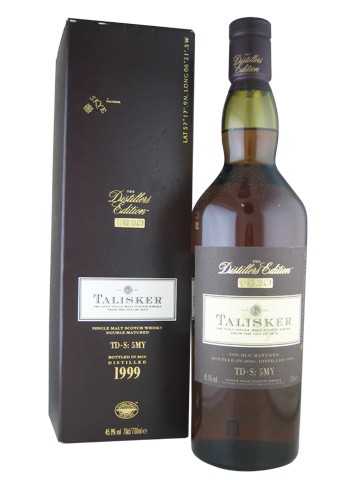
Talisker Distiller's Edition 1999 Whisky Review
Considered to be an 'entry level' peated whisky, Talisker is a very popular and well-known distillery, and is probably the easiest single-malt Scotch to find in a bar or pub, in Australia at least. It is also a controversial distillery, in that most of their expression's are chill filtered and have colouring added, Talisker is very approachable and easily enjoyed by the less experienced whisky drinker. But, their whisky is still enjoyable for the enthusiast, particularly the 18 year (and older if you're pockets are deep enough), '57 degrees north' (which is bottled at 57% abv), and the distiller's edition bottlings.
While it is the only distillery on the Isle of Skye (a rugged island off the west coast of Scotland, north of Islay), a fact they are rightly very proud of, their whisky is aged / matured off-site, on the Scottish mainland. They are also, perhaps unfortunately, starting to incorporate a few No Age Statement (NAS) bottlings into their line-up without corresponding price decreases, but they're hardly alone there. And as per owner Diageo's status quo, they use E150 caramel artificial colouring, and they chill filter their whiskies before bottling. Personally though, I find Talisker to be of good quality, and very consistent, although the newer bottlings are vastly different to the older.
Talisker Distiller's Edition, 45.8%, distilled 1999, bottled 2010, Isle of Skye.
'Double matured' (finished) in Jerez (pronounced h'reth) Amoroso sherry casks, after the standard ageing process for the 10 year old bottling. Chill filtered, and caramel colouring added.
(tasted neat)
Colour: Dark bronze, almost brown (definitely artificial).
Texture: Clean and light, but with nice legs.
Nose: Initially quite closed, but still not overly complex once it's opened up. Drying sherry notes of booze-soaked raisins, juicy stone fruit, and distant mild sea spray with a hint of earthy, dry peat.
Taste: Juicy, sweet stone fruit, raisins and newly-ripe banana, drying with mild earthy peat and bitter-sweet dark chocolate. Some very distant salt with caramel, and a burst of pepper.
Finish: Relatively short, clean, still some stone fruit and pepper, drying.
Score: 3 out of 5.
Comments: Really held back by the chill filtration, in my opinion, particularly in the mouth feel and the finish. The sherry finish has overpowered the trademark Talisker sea spray and pepper, it is still there but subdued, deep in the shadows. Still interesting and rewarding in this expression, but vastly different from the standard bottlings which Talisker is known for.
Having also tried the earlier 1996 distiller's edition bottling (bottled in 2008), I do prefer the older bottling. Having also tried their 'storm' and 'dark storm' NAS bottlings, I would like to see one of those finished in a sherry cask (and preferably with an age statement!), I think it would be very interesting.
If you are a big fan of big, fruity whiskies this is a fresh take and is well worth trying, although the earlier bottlings are getting hard to find. Have a look here for a more recent version at SM Whisky Australia. They also have a fantastic Talisker 'gift set', which includes 3 x 200ml bottles, the standard 10yo, the distiller's edition, and the excellent 18yo. Also great value at only slightly more than a 700ml bottle of the 10 year old, it'd be a good tasting / comparison experience for Talisker amateurs and enthusiasts alike. Tell them peated perfection sent you! Cheers 'til next time.
While it is the only distillery on the Isle of Skye (a rugged island off the west coast of Scotland, north of Islay), a fact they are rightly very proud of, their whisky is aged / matured off-site, on the Scottish mainland. They are also, perhaps unfortunately, starting to incorporate a few No Age Statement (NAS) bottlings into their line-up without corresponding price decreases, but they're hardly alone there. And as per owner Diageo's status quo, they use E150 caramel artificial colouring, and they chill filter their whiskies before bottling. Personally though, I find Talisker to be of good quality, and very consistent, although the newer bottlings are vastly different to the older.
'Double matured' (finished) in Jerez (pronounced h'reth) Amoroso sherry casks, after the standard ageing process for the 10 year old bottling. Chill filtered, and caramel colouring added.
(tasted neat)
Colour: Dark bronze, almost brown (definitely artificial).
Texture: Clean and light, but with nice legs.
Nose: Initially quite closed, but still not overly complex once it's opened up. Drying sherry notes of booze-soaked raisins, juicy stone fruit, and distant mild sea spray with a hint of earthy, dry peat.
Taste: Juicy, sweet stone fruit, raisins and newly-ripe banana, drying with mild earthy peat and bitter-sweet dark chocolate. Some very distant salt with caramel, and a burst of pepper.
Finish: Relatively short, clean, still some stone fruit and pepper, drying.
Score: 3 out of 5.
Comments: Really held back by the chill filtration, in my opinion, particularly in the mouth feel and the finish. The sherry finish has overpowered the trademark Talisker sea spray and pepper, it is still there but subdued, deep in the shadows. Still interesting and rewarding in this expression, but vastly different from the standard bottlings which Talisker is known for.
Having also tried the earlier 1996 distiller's edition bottling (bottled in 2008), I do prefer the older bottling. Having also tried their 'storm' and 'dark storm' NAS bottlings, I would like to see one of those finished in a sherry cask (and preferably with an age statement!), I think it would be very interesting.
If you are a big fan of big, fruity whiskies this is a fresh take and is well worth trying, although the earlier bottlings are getting hard to find. Have a look here for a more recent version at SM Whisky Australia. They also have a fantastic Talisker 'gift set', which includes 3 x 200ml bottles, the standard 10yo, the distiller's edition, and the excellent 18yo. Also great value at only slightly more than a 700ml bottle of the 10 year old, it'd be a good tasting / comparison experience for Talisker amateurs and enthusiasts alike. Tell them peated perfection sent you! Cheers 'til next time.
Monday, 16 June 2014
Does Age Really Matter? The Age Old Question!
Age before beauty? Or beauty before age?
The age of a whisky, specifically the amount of time a whisky spends in a cask after distilling - a.k.a maturation - has a huge effect on whisky, but does that magic number dictate the quality of the end product? No, it does not. It certainly drives the price up, and is extremely effective marketing. This is due to the general perception out there in the world, that if a whisky is old, it must be good. But this is definitely not the case, and in reality there is no magic number.
How does age affect a whisky?
This is a bit of a 'how long is a piece of string?' question, as alluded to above. In general terms, maturation in casks will gradually mellow the 'new-make spirit' (malt spirit fresh out of the stills which can't yet be called whisky), integrating and balancing the flavours, imparting flavours through both the oak wood (in the case of Scotch whisky), and also the remnants of whatever was in the cask previously, such as sherry or bourbon. So it stands to reason that more time in the cask will give more flavour to the whisky. This is basically true, but it is not that simple.
The flavours given by the cask can overpower or cancel out others, for example a whisky can become overly-oaky, particularly if the cask used was a first fill (has not previously been used to mature whisky) cask, or if it spends too much time in the cask. An over-aged / too-old whisky can become fragile, it loses some of it's inherent flavours and quality, does not hold up to temperature variations or time in the glass, or water being added, as well as it could have when it was in its prime, and it becomes less complex and less interesting than it could have been. And, probably the biggest effect of a whisky being aged/matured for too long, is that it generally loses alcohol content (and whisky content in general) through evaporation, known as the angel's share, each and every year it is maturing. Although this can vary depending on local climate and specifically humidity, in some cases the water will evaporate faster than the ethanol, which means that the alcohol percentage actually increases!
At the other end of the scale, a whisky which has not had enough time to mature in the cask / is too young, will often be 'hot', in terms of alcohol, which will give you that trade mark 'burn' in the throat, make your tongue go numb, and will singe your nasal hairs when you nose the glass. The flavours will be not be balanced, and the whisky will be aggressive and disjointed.
The cask itself is also extremely important. The size of the cask, the previous contents, how many times it has been used, the process used to 'season' (dry) the wood before coopering, and natural or man-made imperfections in the wood or construction of the cask can be a huge difference to how effective or active that particular cask is. There are many 20- or 25-year old whiskies with age statements that taste far younger than the age suggests, and the reverse is also true.
It is important to note that the Scotch Whisky Association (SWA) requires a minimum of 3 years maturation in oak casks for the spirit to be called Scotch Whisky. There is no limit to how many different casks can be used, what the previous contents was (as long as they're considering to be "traditional"), or the style of cask/s used, provided they're under 700-litres in capacity, for that maturation period. There is of course no maximum maturation period, either, but that's usually dictated by the aforementioned angel's share (or leaky casks) when the ABV drops below the minimum 40% required for the spirit to be called Scotch Whisky.
There are many different size casks available to a whisky distillery, and many different 'previous owners' to choose from, as in what liquid the cask held previously, and a cask can (and usually is) re-used or recycled again after use. All of these factors and many more have a huge effect on the finished product. But these are subjects for another day.
What about the peat?
One more major effect of cask maturation on peated whisky specifically is that the peaty, smoky flavours diminish over time, lost to evaporation (called the 'angel's share'), wood contact and general mellowing. So, in my opinion, be wary of any peated or heavily-peated whisky which is over 18 years of age. It may still be a great whisky, but the level of peat & smoke flavour present may not be what you were hoping for.
As an example, Bruichladdich Octomore, the most heavily peated whisky in the world, is usually aged for only 5 years, allowing the whisky to mature while still retaining the maximum peaty, smoky kick. At the other end of the scale, they have recently released a 10-year old version, which is still bottled at high strength, but is considerably lower in alcohol strength, peaty-ness and smoky-ness. It's still good, but different, and much more expensive at around twice the price of the other expressions.
To combat this effect of maturation, distilleries will often bottle their older whiskies at higher alcoholic strength or proof, and also to give better value to the customer, justifying the increase in price (in some cases). So all is not lost, but this is also a subject for another day.
The No Age Statement 'NAS' uprising
As the popularity of whisky increases, so does the pressure on the distilleries to get the stuff out the door and on the shelves as quickly as possible. If it isn't there, they can't sell it. So, rather than having a lot of stock sitting in their warehouses maturing peacefully, many distillers will blend (still a single malt though, remember, because it's made at one distillery) some younger casks with some older ones, and either state the age of the youngest contents (as required by the SWA rules), or simply leave that part out and not tell you how old the whisky is, because they don't want this to influence your purchasing decision. This is known as a No Age Statement, or NAS, bottling.
This does not make it a good or bad whisky, you simply do not know how old the contents of the bottle are. This is not a very popular thing in the whisky world, as you can't form an opinion based on the age of the product, and also cannot use that to gauge the value for money you are / are not getting with your purchase, which makes it more difficult to make an informed decision come buying time. Naturally the assumption is that if they're not telling you how old it is, some or all of it must be young. And to be fair, this is often correct!
A good example of this is Talisker's current line-up (not to pick on them, most distilleries are doing this, they just came to mind first). Their standard bottling is, and has been for a long time, 10 years old. Reasonably priced and of decent quality, it is widely popular and is quite a good first step into peated whisky if you haven't ventured that way before, as it is only lightly peated. They also offer (or have offered in the past) 18, 25, 30 and 40 year old bottlings, at various ABV % levels. In those cases they had casks sitting in their warehouse for 18-40+ years before they saw a return on their investment, so to speak.
They have since released Talisker 'Skye', '57 Degrees North', 'Storm' and the travel-exclusive 'Dark Storm' and 'Neist Point', none of which have an age statement. The Skye, Storm and Dark Storm are bottled at the same strength as the standard 10 year old (45.8%), and are at a similar price as well. So naturally one would assume they are a younger product than the 10yo bottling, or at least contain some younger whisky. This one fact does not make them better or worse than the 10yo, but depending on your perspective, does perhaps give you less value for money since you are getting at least some less mature whisky for the same amount of money, often at the same (or lower) alcohol percentage.
So what's the golden rule, then?
Well, there isn't one, sorry! While age / maturation has a big effect on the whisky, it is only one of many, many factors which the distiller and their customer must take into account. That number on the label should not be the deciding factor in your purchasing decision, because there are many other factors of equal importance.
Likewise if there is no number on the label, that should not turn you away on it's own. Some of my favourite whiskies do not have and never have had an age statement printed on the label (looking at you, Ardbeg Uigeadail). Likewise some old (20+ years) whiskies I have tasted do not live up to the promise of quality their age might imply. So, I say beauty before age!
If you can't try before you buy, then read reviews online, ask your friends or independent experts, and make as informed a decision as you can. Happy hunting!
The age of a whisky, specifically the amount of time a whisky spends in a cask after distilling - a.k.a maturation - has a huge effect on whisky, but does that magic number dictate the quality of the end product? No, it does not. It certainly drives the price up, and is extremely effective marketing. This is due to the general perception out there in the world, that if a whisky is old, it must be good. But this is definitely not the case, and in reality there is no magic number.
How does age affect a whisky?
This is a bit of a 'how long is a piece of string?' question, as alluded to above. In general terms, maturation in casks will gradually mellow the 'new-make spirit' (malt spirit fresh out of the stills which can't yet be called whisky), integrating and balancing the flavours, imparting flavours through both the oak wood (in the case of Scotch whisky), and also the remnants of whatever was in the cask previously, such as sherry or bourbon. So it stands to reason that more time in the cask will give more flavour to the whisky. This is basically true, but it is not that simple.
The flavours given by the cask can overpower or cancel out others, for example a whisky can become overly-oaky, particularly if the cask used was a first fill (has not previously been used to mature whisky) cask, or if it spends too much time in the cask. An over-aged / too-old whisky can become fragile, it loses some of it's inherent flavours and quality, does not hold up to temperature variations or time in the glass, or water being added, as well as it could have when it was in its prime, and it becomes less complex and less interesting than it could have been. And, probably the biggest effect of a whisky being aged/matured for too long, is that it generally loses alcohol content (and whisky content in general) through evaporation, known as the angel's share, each and every year it is maturing. Although this can vary depending on local climate and specifically humidity, in some cases the water will evaporate faster than the ethanol, which means that the alcohol percentage actually increases!
At the other end of the scale, a whisky which has not had enough time to mature in the cask / is too young, will often be 'hot', in terms of alcohol, which will give you that trade mark 'burn' in the throat, make your tongue go numb, and will singe your nasal hairs when you nose the glass. The flavours will be not be balanced, and the whisky will be aggressive and disjointed.
The cask itself is also extremely important. The size of the cask, the previous contents, how many times it has been used, the process used to 'season' (dry) the wood before coopering, and natural or man-made imperfections in the wood or construction of the cask can be a huge difference to how effective or active that particular cask is. There are many 20- or 25-year old whiskies with age statements that taste far younger than the age suggests, and the reverse is also true.
It is important to note that the Scotch Whisky Association (SWA) requires a minimum of 3 years maturation in oak casks for the spirit to be called Scotch Whisky. There is no limit to how many different casks can be used, what the previous contents was (as long as they're considering to be "traditional"), or the style of cask/s used, provided they're under 700-litres in capacity, for that maturation period. There is of course no maximum maturation period, either, but that's usually dictated by the aforementioned angel's share (or leaky casks) when the ABV drops below the minimum 40% required for the spirit to be called Scotch Whisky.
There are many different size casks available to a whisky distillery, and many different 'previous owners' to choose from, as in what liquid the cask held previously, and a cask can (and usually is) re-used or recycled again after use. All of these factors and many more have a huge effect on the finished product. But these are subjects for another day.
One more major effect of cask maturation on peated whisky specifically is that the peaty, smoky flavours diminish over time, lost to evaporation (called the 'angel's share'), wood contact and general mellowing. So, in my opinion, be wary of any peated or heavily-peated whisky which is over 18 years of age. It may still be a great whisky, but the level of peat & smoke flavour present may not be what you were hoping for.
As an example, Bruichladdich Octomore, the most heavily peated whisky in the world, is usually aged for only 5 years, allowing the whisky to mature while still retaining the maximum peaty, smoky kick. At the other end of the scale, they have recently released a 10-year old version, which is still bottled at high strength, but is considerably lower in alcohol strength, peaty-ness and smoky-ness. It's still good, but different, and much more expensive at around twice the price of the other expressions.
To combat this effect of maturation, distilleries will often bottle their older whiskies at higher alcoholic strength or proof, and also to give better value to the customer, justifying the increase in price (in some cases). So all is not lost, but this is also a subject for another day.
The No Age Statement 'NAS' uprising
As the popularity of whisky increases, so does the pressure on the distilleries to get the stuff out the door and on the shelves as quickly as possible. If it isn't there, they can't sell it. So, rather than having a lot of stock sitting in their warehouses maturing peacefully, many distillers will blend (still a single malt though, remember, because it's made at one distillery) some younger casks with some older ones, and either state the age of the youngest contents (as required by the SWA rules), or simply leave that part out and not tell you how old the whisky is, because they don't want this to influence your purchasing decision. This is known as a No Age Statement, or NAS, bottling.
This does not make it a good or bad whisky, you simply do not know how old the contents of the bottle are. This is not a very popular thing in the whisky world, as you can't form an opinion based on the age of the product, and also cannot use that to gauge the value for money you are / are not getting with your purchase, which makes it more difficult to make an informed decision come buying time. Naturally the assumption is that if they're not telling you how old it is, some or all of it must be young. And to be fair, this is often correct!
They have since released Talisker 'Skye', '57 Degrees North', 'Storm' and the travel-exclusive 'Dark Storm' and 'Neist Point', none of which have an age statement. The Skye, Storm and Dark Storm are bottled at the same strength as the standard 10 year old (45.8%), and are at a similar price as well. So naturally one would assume they are a younger product than the 10yo bottling, or at least contain some younger whisky. This one fact does not make them better or worse than the 10yo, but depending on your perspective, does perhaps give you less value for money since you are getting at least some less mature whisky for the same amount of money, often at the same (or lower) alcohol percentage.
So what's the golden rule, then?
Well, there isn't one, sorry! While age / maturation has a big effect on the whisky, it is only one of many, many factors which the distiller and their customer must take into account. That number on the label should not be the deciding factor in your purchasing decision, because there are many other factors of equal importance.
If you can't try before you buy, then read reviews online, ask your friends or independent experts, and make as informed a decision as you can. Happy hunting!
Saturday, 7 June 2014
Ardbeg Auriverdes Whisky Review
So, after receiving my bottle of Ardbeg Auriverdes the other day (with some extra goodies, thanks Cru Bar!), I had been undecided on whether or not I would even open it, at least in the short term. Why? Well, the first tasting was quite disappointing to be honest, and with the eventual and inevitable 'collectability' of these annual Ardbeg day releases, it could potentially be worth some money one day. But, whether I will ever actually sell it is doubtful.
But wanting to do a review and not being entirely satisfied with the last taste, I would not let this question go unanswered. Our solution was to head to Cobbler, my favourite whisky bar in West End (check out my bar review here ), and try it there. Cobbler held a tasting and event on Ardbeg day, so I knew they would have had their bottle open for at least a week, giving the whisky a good chance to open up. But would that make a significant difference and change my opinion of the Auriverdes? We'll see.
Ardbeg Auriverdes, 49.9%, No Age Statement (NAS)
Not chill-filtered, aged in bourbon casks with toasted cask lids. No mention of whether this is bottled at cask strength, I would guess it is not.
(tasted neat)
Colour: Pale gold
Texture: Quite thin, clean and light.
Nose: Salty sea air, roasted coffee beans, hint of peat and old leather, bananas soaked in vanilla.
Taste: Salty, black coffee, vanilla pod sweetness. Considerably hot for the relatively low strength. Smoked bacon and mild, subtle, medicinal peat. Only a hint of smoke. Not the signature Ardbeg on the palate, and not instantly recognisable as Ardbeg. I would describe it as lightly peated Ardbeg, inspired by Laphroaig.
Finish: Still salty, slightly bitter dark chocolate and black coffee, a hint of spice. Quite a long finish though, with medicinal and sea spray notes at the end.
Score: 2.5 out of 5.
Comments: So yes, it has definitely improved and opened up considerably with some oxygen contact, but it is still not the big hitter I was hoping for. Would probably benefit even further from a proper decanting, as it might lose some of that heat and calm down a bit.
I tried to taste this without comparing to the other Ardbeg bottlings, which is quite easy considering how different it is from all of those. It has been compared to the un-peated Ardbeg Blasda by other tasters, but I haven't tried the Blasda, as I see Ardbeg without peat and smoke to be like a muscle car with a tiny econo-box engine.
If you manage to judge the Auriverdes on it's own merits, it does hold its own, with an approachable palate and familiar Islay character. But I do wish it had higher levels of peat and smoke, I feel it is being held back slightly to make it more appealing to the non-Islay whisky fan. Certainly it doesn't hold a candle to 'Ardbog' (see here for that review) and the 'Ardbeg Day' releases, for me at least. It is just not risky enough, not adventurous enough. It's too mild and conservative.
In my opinion, it is also not the best value at it's $190 price point. This is the price level the phenomenal Supernova bottlings were released at, and is 50% more expensive than the perfection-in-a-glass Uigeadail (review coming soon, don't worry!), which is much better than the Auriverdes in every single way.
So, still a little disappointing, but far improved since the initial tasting and a decent example of a more conservative, approachable Islay whisky. Cheers!
Saturday, 31 May 2014
Ardbeg day dramas!
So, after waiting a whole year for the new Ardbeg release, I have finally tried the stuff, but didn't walk away with a bottle, and am yet to do a proper tasting :-(
Visiting my local Ardbeg embassy, Cru bar, in Fortitude Valley, Brisbane, at 2pm today, found at least 15-20 people hanging around waiting to try the new release. This is a good sign, as last year it was just me and my wife when we were there, so I get the impression both Ardbeg and peated whisky is still increasing in popularity. Although, last year it was a bit earlier in the day so it may have been coincidental.
Anyway, we were given our samples to try, but I overheard one of the Cru bar staff saying their stock had been held up at customs, and they only had 3 bottles! Two of which they had to open for the tasting, as the LVMH (owners of Ardbeg) rep had not arrived yet with their 3-litre embassy tasting bottle. So, while I pondered how many bottles to buy, the third was snapped up by a lucky collector. I ended up ordering one bottle, which to the credit of the Cru bar team will be delivered ASAP once they get their stock, and at no extra charge. Also scored some lovely Ardbeg shot glasses which was a great bonus, and helped a little with the disappointment, so thanks for that guys!
After this we headed to Cobbler, my favourite whisky bar in the world, in West End, with the hope of getting there at opening (3pm),and having some more time with the new addition to the Ardbeg family. Only to find they were not opening the new bottling until 4.30pm, so with the wife & I fading fast after a long day, we decided to give up and just wait for my bottle to be delivered. Boo!
As for the Auriverdes itself, we were first to try it from the freshly opened bottle at Cru bar, so it had had hardly any oxygen contact, our palettes were tainted by the iced coffees we had sipped while watching the clock, and we were a little rushed (our own fault, nothing to do with our hosts). My initial impression was mixed, it is definitely lower on peat and much lower on smoke than the usual Ardbeg offerings, although I had expected this from some online gossip. There was a nice salty maritime presence there though, some medicinal and light coffee notes, a lot of vanilla and a hint of spice.
I will not form a concrete opinion on this puppy until I've had more time with it, but at this stage I don't believe it's close to the level of the last two years' 'day' bottlings, 'Ardbog' (see previous post), and 'Ardbeg Day' respectively. It is much more gentle and less 'confronting' to the amateur palate, although still identifiable as Ardbeg. It has also increased in price by $10 over last years 'Ardbog' release, and to be honest I think it's starting to push the boundaries of reasonable value for money, with no increase in age, strength or quality. The previous releases have been quite different and special enough to justify the jump in price, but I'm not sure the Auriverdes fits that bill. Let's hope next year's release stays at this price or even comes down a bit. Or maybe the disappointment of walking away empty handed, however temporarily, is clouding my judgement!
More details to come though, I will do a proper tasting and review as soon as I get my hands on some more of the Auriverdes, and some more time to dedicate to it. Stay tuned!
Visiting my local Ardbeg embassy, Cru bar, in Fortitude Valley, Brisbane, at 2pm today, found at least 15-20 people hanging around waiting to try the new release. This is a good sign, as last year it was just me and my wife when we were there, so I get the impression both Ardbeg and peated whisky is still increasing in popularity. Although, last year it was a bit earlier in the day so it may have been coincidental.
Anyway, we were given our samples to try, but I overheard one of the Cru bar staff saying their stock had been held up at customs, and they only had 3 bottles! Two of which they had to open for the tasting, as the LVMH (owners of Ardbeg) rep had not arrived yet with their 3-litre embassy tasting bottle. So, while I pondered how many bottles to buy, the third was snapped up by a lucky collector. I ended up ordering one bottle, which to the credit of the Cru bar team will be delivered ASAP once they get their stock, and at no extra charge. Also scored some lovely Ardbeg shot glasses which was a great bonus, and helped a little with the disappointment, so thanks for that guys!
After this we headed to Cobbler, my favourite whisky bar in the world, in West End, with the hope of getting there at opening (3pm),and having some more time with the new addition to the Ardbeg family. Only to find they were not opening the new bottling until 4.30pm, so with the wife & I fading fast after a long day, we decided to give up and just wait for my bottle to be delivered. Boo!
As for the Auriverdes itself, we were first to try it from the freshly opened bottle at Cru bar, so it had had hardly any oxygen contact, our palettes were tainted by the iced coffees we had sipped while watching the clock, and we were a little rushed (our own fault, nothing to do with our hosts). My initial impression was mixed, it is definitely lower on peat and much lower on smoke than the usual Ardbeg offerings, although I had expected this from some online gossip. There was a nice salty maritime presence there though, some medicinal and light coffee notes, a lot of vanilla and a hint of spice.
I will not form a concrete opinion on this puppy until I've had more time with it, but at this stage I don't believe it's close to the level of the last two years' 'day' bottlings, 'Ardbog' (see previous post), and 'Ardbeg Day' respectively. It is much more gentle and less 'confronting' to the amateur palate, although still identifiable as Ardbeg. It has also increased in price by $10 over last years 'Ardbog' release, and to be honest I think it's starting to push the boundaries of reasonable value for money, with no increase in age, strength or quality. The previous releases have been quite different and special enough to justify the jump in price, but I'm not sure the Auriverdes fits that bill. Let's hope next year's release stays at this price or even comes down a bit. Or maybe the disappointment of walking away empty handed, however temporarily, is clouding my judgement!
More details to come though, I will do a proper tasting and review as soon as I get my hands on some more of the Auriverdes, and some more time to dedicate to it. Stay tuned!
Tuesday, 27 May 2014
Ardbeg Ardbog Whisky Review
In anticipation of Ardbeg Day 2014 (May 31st), I'm reviewing last year's Ardbeg Day release, named Ardbog (as in peat bog).
Ardbeg Day is the annual celebration of all things Ardbeg, occuring the Islay festival (Feis Ile), when most distilleries have an open day of sorts, hosting various events at the distilleries, and also usually releasing a special bottling.
Ardbeg have taken this a step further, incorporating their worldwide 'Ardbeg embassies' by having them host tastings and special events, so you can get in to the celebration without flying to Scotland. You can also buy their festival bottling online, which is unusual for these special releases, normally being sold from the distillery only. Fantastic news for those of us who can't get to Islay each year!
While some see all of this activity as marketing hype and collector-baiting, I see it as a way of keeping excitement and freshness in the distillery, there can be no argument that each release is very different from the last, with the distillery trying something new & different basically every release. This one definitely fits that bill, since it's been partly-matured in Manzanilla sherry casks, which is a pale, light and dry fortified wine that typically has a fresh, dry and yeasty saline flavour. The remainder and majority of the vatting is your more typical ex-bourbon cask Ardbeg. It also carries an age statement in the text on the back label, which says that both components are at least ten years of age. The name Ardbog of course is a nod to the peat bogs that make up a good chunk of Islay's landscape.
Ardbeg Day is the annual celebration of all things Ardbeg, occuring the Islay festival (Feis Ile), when most distilleries have an open day of sorts, hosting various events at the distilleries, and also usually releasing a special bottling.
Ardbeg have taken this a step further, incorporating their worldwide 'Ardbeg embassies' by having them host tastings and special events, so you can get in to the celebration without flying to Scotland. You can also buy their festival bottling online, which is unusual for these special releases, normally being sold from the distillery only. Fantastic news for those of us who can't get to Islay each year!
While some see all of this activity as marketing hype and collector-baiting, I see it as a way of keeping excitement and freshness in the distillery, there can be no argument that each release is very different from the last, with the distillery trying something new & different basically every release. This one definitely fits that bill, since it's been partly-matured in Manzanilla sherry casks, which is a pale, light and dry fortified wine that typically has a fresh, dry and yeasty saline flavour. The remainder and majority of the vatting is your more typical ex-bourbon cask Ardbeg. It also carries an age statement in the text on the back label, which says that both components are at least ten years of age. The name Ardbog of course is a nod to the peat bogs that make up a good chunk of Islay's landscape.
Ardbeg Ardbog, 52.1% cask strength, 'at least 10 years' aged, Islay.
Un-chill-filtered, a blend of various 'standard' Ardbeg whisky aged in Bourbon casks, and Ardbeg aged in Manzanilla (dry, salty) sherry casks, all aged for at least 10 years.
(tasted neat)
Colour: Beautiful deep, dark bronze. How the sword on the box (found in a peat bog) probably looked in it's heyday. I know colour shouldn't be a major factor, but this stuff looks fantastic.
Texture: Oily, buttery, nice legs with slow movement.
Nose: Sea spray, dry sherry, smoky oak, peat, a bag of salted potato chips (crisps).
Taste: Extra salty sea spray, peat, hint of toffee, drying. Quite smooth for the ABV%, buttery & oily, salty dry sherry, smoke, hint of oak. Much less sweetness than other bottlings, more dry, but still well balanced and enjoyable, very more-ish.
Finish: Sea spray and salt remain clear, warming and long finish. Smoky oak & peat.
Score: 4.5 out of 5.
Comments: While easily recognisable as Ardbeg, it does have less of the vanilla sweetness, and more salt & maritime flavours than most Ardbeg's I'm familiar with. Although it wouldn't be your first choice if you prefer your whisky sweet, it is very well balanced and thoroughly delicious.
Having tried the 2012 Ardbeg Day whisky (named simply 'Ardbeg Day'), and being yet to try the upcoming release (Auriverdes), this is my pick of the two, and indeed my second favourite Ardbeg whisky tasted to date. As you can probably guess, I had to get two of these bottles, one for drinking, and one for keeping. And yes, I'm thinking the Auriverdes will warrant the same thing.
Interesting how different it is to the Bunnahabhain Toiteach I reviewed recently, given that they are both aged in Manzanilla sherry casks. The Ardbog is definitely more complex and balanced than the Bunna, with less smoke, and more dry, salty sherry influence. Fantastic stuff.
Ardbog can still be found in online whisky specialist shops, and for a reasonable price, I don't think it will stay that way for long. For example, the 'Ardbeg Day' bottling from 2012 is now near-impossible to find, and is selling at ridiculous prices (think at least three or four times what it sold for on release), if you can find it.
So, if you like this Ardbog bottling, or just have to have it, get it now! It's currently on special HERE at SM Whisky Australia, for around the same as the release price, and with free shipping as well.
Wednesday, 21 May 2014
Laphroaig Triple Wood Whisky Review
My first review of one of the 'heavy hitters' of Islay, Laphroaig's Triple Wood is a relatively mild bottling from this distillery, known for it's heavy peat and love/hate medicinal / iodine notes. Non-age-statement, but rumoured to be the same age as the Quarter cask expression (approx. 8 years)
Laphroaig also have a 'friends of Laphroaig' program which is an excellent bonus, with your bottle purchase you receive the opportunity to claim a lifetime lease on one square foot of land on Islay, and when you visit the distillery you may collect your rent, a dram of Laphroaig! They also give you a nice certificate of ownership to hang on the wall.
Laphroaig Triple Wood, 48%, No Age Statement, Islay.
Un-chill-filtered, some colouring added (likely just for consistency between batches), aged in bourbon casks, then quarter casks (smaller casks, giving more wood contact), finished in Oloroso sherry casks.
(tasted neat)
Colour: Light gold
Texture: Surprisingly light and clean, average legs.
Nose: Salty sea air, sweet wood smoke & oak, light smoke, medicinal, slight iodine, musty / dusty note, like an old leather bound book.
Palate: Smoke, light medicinal/iodine (much less than 10yo), smooth with mild salted caramel, musty / dusty note from the nose, nutty oaky sweetness fades early leaving smoke and peat behind.
Finish: Surprisingly short and clean, drying peat, sea spray, slight oaky vanilla.
Score: 3 out of 5.
Comments: Honestly my least favourite Laphroaig bottling (up until recently, see below!), the sherry finish seems to take away from the experience rather than add to it. Still a decent drop and identifiable as Laphroaig, but loses the complexity and depth of the quarter cask (surprising since it shares the same ageing with an extra step), and the punch of the aggressive 10yo. In my opinion, not worth the extra cost over the quarter cask, which is the pick of the bunch, short of the fantastic PX cask, and wonderful but expensive 18yo.
On to a slightly sour note, as I am one of the Friends of Laphroaig, I received a marketing email recently from the distillery unveiling their new release, 'Select Cask' (possibly called 'Select' in other countries). It started off well, with a new ageing technique including white oak, and the email exclaimed they have not added any colouring as the friends requested, but then it is all ruined.
It is bottled at only 40% ABV! What a shame, I cannot understand why they would water this down lower than all their other expressions. Hardly a 'craft presentation', maybe they're trying to get to the non-peat-head customers? Having tried this at a recent whisky festival, I was truly disappointed with how thin & weak the mouth feel was, losing practically all of it's texture and punch, I imagine with any extra water it would not hold up at all. This might have been a winner at 48% in line with most of their bottlings, and it's priced above the standard 10yo expression, which is also bottled at 40%, but with no age statement. Won't be buying this one I'm afraid.
Click HERE for Laphroaig Triple wood at SM Whisky Australia, at a great price, and with free shipping!
-Coming next week is my review of Ardbeg Ardbog, last year's Ardbeg Day release, in time for Ardbeg Day on the 31st!-
Laphroaig also have a 'friends of Laphroaig' program which is an excellent bonus, with your bottle purchase you receive the opportunity to claim a lifetime lease on one square foot of land on Islay, and when you visit the distillery you may collect your rent, a dram of Laphroaig! They also give you a nice certificate of ownership to hang on the wall.
Un-chill-filtered, some colouring added (likely just for consistency between batches), aged in bourbon casks, then quarter casks (smaller casks, giving more wood contact), finished in Oloroso sherry casks.
(tasted neat)
Colour: Light gold
Texture: Surprisingly light and clean, average legs.
Nose: Salty sea air, sweet wood smoke & oak, light smoke, medicinal, slight iodine, musty / dusty note, like an old leather bound book.
Palate: Smoke, light medicinal/iodine (much less than 10yo), smooth with mild salted caramel, musty / dusty note from the nose, nutty oaky sweetness fades early leaving smoke and peat behind.
Finish: Surprisingly short and clean, drying peat, sea spray, slight oaky vanilla.
Score: 3 out of 5.
Comments: Honestly my least favourite Laphroaig bottling (up until recently, see below!), the sherry finish seems to take away from the experience rather than add to it. Still a decent drop and identifiable as Laphroaig, but loses the complexity and depth of the quarter cask (surprising since it shares the same ageing with an extra step), and the punch of the aggressive 10yo. In my opinion, not worth the extra cost over the quarter cask, which is the pick of the bunch, short of the fantastic PX cask, and wonderful but expensive 18yo.
On to a slightly sour note, as I am one of the Friends of Laphroaig, I received a marketing email recently from the distillery unveiling their new release, 'Select Cask' (possibly called 'Select' in other countries). It started off well, with a new ageing technique including white oak, and the email exclaimed they have not added any colouring as the friends requested, but then it is all ruined.
It is bottled at only 40% ABV! What a shame, I cannot understand why they would water this down lower than all their other expressions. Hardly a 'craft presentation', maybe they're trying to get to the non-peat-head customers? Having tried this at a recent whisky festival, I was truly disappointed with how thin & weak the mouth feel was, losing practically all of it's texture and punch, I imagine with any extra water it would not hold up at all. This might have been a winner at 48% in line with most of their bottlings, and it's priced above the standard 10yo expression, which is also bottled at 40%, but with no age statement. Won't be buying this one I'm afraid.
Click HERE for Laphroaig Triple wood at SM Whisky Australia, at a great price, and with free shipping!
-Coming next week is my review of Ardbeg Ardbog, last year's Ardbeg Day release, in time for Ardbeg Day on the 31st!-
Subscribe to:
Posts (Atom)
MacBeth Ben Nevis 28-Year Old "Ross" Whisky Review!
The first of Elixir Distillers' MacBeth series of independent bottlings that I've tried, a 28-Year Old Ben Nevis distilled in 1993. ...
-
A liquid souvenir from the trip to Japan last year, which included a visit to Yamazaki! Peated, 48% ABV and non-chill filtered, and a reason...
-
A reasonably priced & accessible cask strength single malt from Campbeltown's middle child; Glen Scotia. The distillery's follow...
-
A travel-exclusive Bunnahabhain with a difference - Cruach Mhona in Gaelic translates to 'Peat Stack' in English. Yes, as you've...