Sunday, 24 August 2014

The Highlights of Whisky Live! Speed Whisky Reviews

So, Whisky Live has wrapped up (the second session just finished actually), and it was a fantastic event. Having attended last year as well, I can say there was a definite improvement this time around. Whereas last year was hot and over-crowded, this year was far more comfortable (spread over the two days, rather than crammed into the one session). As always some punters got a little messy towards the end, and the food was essentially gone within the first hour, but really, if you were seriously worried about that, you seriously were there for the wrong reasons!
The range of whiskies on offer was about the same as last year, but with a few notable exceptions. Bruichladdich for example was setting up at the start but suddenly packed up and disappeared, taking their whisky with them. No idea what happened there, and was really looking forward to tasting their Port Charlotte Scottish Barley and Octomore 6.1 Scottish Barley again, but it wasn't to be. They may have been in attendance for the second session, I can't say.

There was again no representation for Ardbeg or Glenmorangie (in fact I have not seem them at any whisky event I've attended), which I find very odd, with Ardbeg's ever-increasing popularity here and everywhere, they would be a huge draw card to an event like this. On the other end of the scale it would be great to see a lesser-known Islay distillery present, such as Kilchoman or Bunnahabhain, or even Caol Ila, which is not very widely-known for it's single malt in Australia. Yet.

On the other hand there was a good cross-section of the whisky world present and accounted for, with Glenlivet (Speyside), Nikka (Japan), Talisker (Skye), Laphroaig (Islay), Amrut (India), Teeling (Ireland), Woodford Reserve (USA) and many, many more distilleries and companies well represented. A few tables also had samples of their malted barley (used to produce the whisky) out for tasting, which gave a very interesting angle when it came time to taste the end product. This stuff would make for a great snack on it's own, particularly the slightly smoky Laphroaig version.  

Laphroaig had a great selection out for tasting, with Dan Woolley the whisky lord, (officially the brand ambassador for Beam Suntory, but whisky lord sounds much better!) and team presenting their entire 'core' range including the 10 year old, Select Cask, Quarter Cask and Triple Wood bottlings, plus something very special hidden out of sight, but more on that later. If you're not sure why I'm calling Dan the whisky lord, refer to the below image:
See? I told you so. 

Talisker also had a good showing, offering their usual 10 year old and 'Storm' NAS bottlings, but also their relatively new 'Port Ruighe' NAS port-finished whisky, and a 2002 bottling of their Distiller's Edition. However both of those were disappointing, unfortunately, the Distiller's Edition in particular had absolutely nothing on the older versions I've tried. 

But, in a very deft move by Whisky Live, the star of the show was their 'Rare & Old' whisky bar. Not included in the ticket price, this little gem had a very impressive range of some very impressive whisky. Manned by Nathan from the Dram Full Whisky Club , who really knows his stuff, there was a nice range of old to very old whisky available for purchase, which also netted you an etched Copita tasting glass. The two gems I was interested in, however, were amazing. Refer to the below reviews for more details, I've left them 'til last to let the anticipation build! But here's a teaser shot (apologies for the zoomed in potato phone image). 

Without further ado, these are my highlights from the show, which I managed to get a few quick notes about: 


-Hakushu Distiller's Reserve, NAS, 43%. A blend of >18 year, <10 year, and a younger peated Hakushu. Sweet, fruity and light, like all Hakushu, but with a nice edge of soft peat. Decent. 
-Nikka Yoichi 15yo, 45%. Again, sweet and light, fruity and with a tiny, tiny bit of peat at the end. Jim Murray raved about this stuff, I don't really see it, but it's not bad. Easy drinking for sure.
-Amrut Fusion, 50%, NAS. Distilled from a mix of Indian and Scottish barley. Very good stuff, markedly different with it's own style, despite the use of some Scottish ingredients. Some very interesting spices, a little bit of peat, excellent quality with no heat despite the NAS and higher ABV. Very impressive.
-Glenlivet Nadurra, 16yo, cask strength 54.2%, non-chill filtered. Such an incredible mouth feel and texture, I cannot believe that Glenlivet have not stoped chill filtering their whisky altogether. This stuff was one of the highlights for me, really exquisite, even despite it being un-peated! Smooth and syrupy, almost thick. Not too sweet, a little spice and vanilla from the oak, nicely fruity and well balanced. 

So impressed with this, I think it will be my next purchase! Hard to believe it comes from the same distillery as their other offerings, this is a must have. There's a lesson in there - ban chill filtration! I'd have to give this a 3.5 out of 5, or even a 4. I better get my hands on it to figure that out!
-Teeling 'Poitin', un-aged, Irish spirit. Something a little left-field, this isn't actually whisky, it's basically moonshine or 'new-make spirit', over 61%, distilled from a mix of barley and potatoes, and only double-distilled unlike most Irish spirits. Smelt like nail polish remover and methylated spirits, but actually tasted interesting. Obviously is very strong and a bit rough, but has a surprising sweetness and berry-like flavour. Worth a try just to satisfy your curiosity, but try and have it after the whiskies!
-Laphroaig 25 year old, 2013 release, cask strength 45.1%, a mix of Oloroso sherry cask and Bourbon cask. Something special! Not cheap, at over $550 a bottle (although good value compared to the other 25yo listed below), but the extra age has really worked. Warming and gentle, some sherry sweetness and peat, but not medicinal or even saline like the Laphroaig you'd expect. It's grown calm and refined with age, gained some extra complexity and charm. Very nice, and beautifully presented too in it's leather box.
-Port Ellen, 4th release, 56.2%, aged 25 years, bottled in 2004. Only around 5000 bottles produced, and currently selling at over $2000 AUD per bottle (usually at auction). This Islay distillery closed in the early 1980's, and Diageo (owners) release a bottle every year, increasing in price each time. The old site is now Port Ellen Maltings, which supplies peated malted barley to most of the Islay distilleries. 

As you may have guessed, this was a purchase from the 'Rare & Old' bar, and wasn't cheap at $99 a half-nip, but this was truly a once-in-a-lifetime opportunity for this mere mortal. Serious collector fodder, it saddens me to think that most Port Ellen whisky is purchased without the intention to open and enjoy, but rather as an investment. I will likely never see, let alone taste, another Port Ellen in my life. 

And, I have to admit, I was a little disappointed, although probably because I tasted the next whisky in my list before this. It is very good, don't get me wrong, it stands apart from 90% of peated malts out there, but it's not overly complex, and definitely doesn't deserve the insane collector/investor-aimed pricing. A little dusty, but lovely warm peat, not medicinal, a little salty but not overly so, well balanced with a long finish. Certainly no traces of other Islay distillery styles, this stands on it's own merits. 

Some other releases may be better, I will probably never know, but this one would score around a 4 out of 5 for me. Yes, that's a good score, but not at this sort of price point. No way. Diageo is really driving the Port Ellen prices up here every year, and fair enough, that's why they're in business, but does the whisky justify the pricing? I don't think so. 
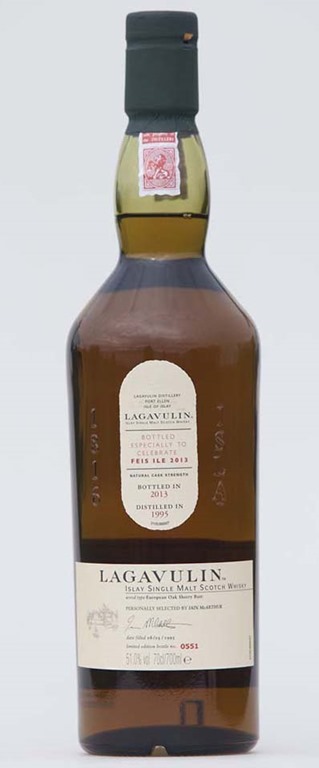
-Lagavulin Feis Ile 2013, 18 year old, sherry butt matured, 51%. For those not familiar with the term, 'Feis Ile' is the Islay festival, an annual music and whisky festival on the Island, which sees most distilleries release a special bottling to commemorate the event. These can only be purchased from the distillery itself, or sometimes online if you're quick enough. Ardbeg go all out with their release, selling it all over the world for their 'Ardbeg day' celebration, but the other distilleries' releases are much harder to come by.

This makes them quite rare, in fact Lagavulin only released 3000 bottles of this 2013 version, considerably less than the 5000 bottles of the Port Ellen 4th release reviewed above, despite Lagavulin being an operating distillery. It is also considerably cheaper (at auction) than the Port Ellen as it is not as desirable among the collectors. Yet.

Now, let me start by saying that tasting this single whisky made my night at Whisky Live. My only regret was leaving it too late to have a second! Naturally it was for sale at the 'Rare & Old' bar, but was a relative bargain at $39 per half-nip, under half the price of the Port Ellen. I tasted this within the first 20 minutes of the show, which turned out to be a good idea, I wouldn't have wanted any other tastings getting in the way here.

The nose on this whisky was truly stunning. Beautiful rich sherry, that fantastic Lagavulin smoke, richer and slightly sweeter than the standard 16yo bottlings. Very well balanced, with the gorgeous salty peaty smoky notes happily married to the rich fruity sherry. I cannot find any information as to what style of sherry cask was used, it could be a mix of a few, but wow has it worked. Honestly the best nose on a peated sherry matured whisky I've ever experienced. 

In the glass there is absolutely no movement here, even once finished there were solid legs on the glass (I managed to resist sticking my finger in there), and even now two days later there's still a hint of this amazing whisky on the nose in the glass. Outstanding texture and mouth feel here.

Taste wise it is similar to the nose, beautifully balanced, rich and fruity, smoky and peaty. No detectable heat at all, even at (presumably) cask strength, absolutely exquisite quality whisky. The finish was medium length, smoky and sweet, not as long and weighty as I would have expected, but amazing nonetheless. Based on this quick tasting, in a less than ideal environment, I would give it a rough 4.5 out of 5. With more time, and a better tasting environment, I could give it my full attention, and work through the subtle complexities of this magnificent whisky. Hopefully I will get that chance one day.


So, if you've been undecided about attending whisky live in the past, hopefully you've now realised the error of your ways! With the Rare & Old bar, the event now appeals to the hardcore connoisseur and collector, as well as the punter. See you there next year!

Thursday, 21 August 2014

How to survive (and enjoy) a whisky show!

One of the best ways to get into tasting an enjoying whisky, is to get to a whisky show / festival / expo / tasting. And with 'Whisky Live' in Brisbane tomorrow night (pumped!), I decided to do a quick article on what these shows are about, and how to approach them.


Generally there is a reasonable entry fee / ticket price,and there is a host of distilleries, brands and brand ambassadors in attendance, offering you a taste of their wares. The price often includes a tasting glass and finger food as well. The advantage of these events is that they allow you to try a multitude of different whiskies, including multiple bottlings / versions from the same distillery, giving you a good idea of what you like, and what you don't. Some of the larger shows have over a hundred different whiskies / bourbons out for tasting, so there is no lack of variety!

A bonus is because you have paid that entry fee / purchased that ticket already, the wallet generally doesn't need to enter in to the equation. You can therefore try some high quality whiskies (and other spirits usually) which you would not buy, due to the relatively high price, without tasting them first. Understandably, we don't want to spend $100+ on a bottle of spirits we don't like or haven't heard of.

These shows can be quite daunting for an amateur as well, they may not know what to expect, or if they are "going to get their money's worth". Likewise for the experienced whisky 'enthusiast' they can be a little off-putting, but more on that later. With these things in mind, here are a few tips to help you get the most out of an event like this. Let's call them the 'three BP's' because that kind of happened anyway.

Be prepared
Most of these events will have a list of which whiskies, or at least which distilleries, will be presenting on the night / day, so peruse the list, and make our own list of which whiskies you have been wanting to try, any you are unsure of or are not aware of, and any you're not particularly interested in, for one reason or another (while trying to keep an open mind). Armed with this mental or physical list, you can plan which tables to visit straight away, which to visit if they catch your eye or if you have extra time, and which not to bother with. Also, have a good meal before attending, drink plenty of water (a black coffee is also great for cleansing the palate too) and dress comfortably, you'll be standing around for at least a few hours.

Be patient
With the growing popularity of whisky, shows and tasting events like these can be very busy, even over-crowded. Be prepared to have 10+ people gathered around a particular brand's table, with everyone reaching over each other with their hands or tasting glasses thrust towards the ambassador/representative. This is why the previous rule is the most important, as you can spend a good deal of time tasting and enjoying the whiskies you were most looking forward to, without needing to rush and hustle through them.

Be polite:
Spare a few thoughts for the attendants, brand ambassadors, distillery managers or owners who are standing behind a table for a few hours, repeating themselves many times, and unfortunately dealing with those who have had too much, too quickly. Engage them in conversation, and talk to them about their products, but also let them do their job, don't crowd the table and talk for 20 minutes about that time you went to Scotland. On the same note, spare a few thoughts for the people waiting patiently behind you, and let them have their turn!


Based on those three golden nuggets (Yeah OK, they're just common sense), here are a few other points to consider (they don't start with B or P, so I'm afraid they don't belong) :

  • Don't get plastered (intoxicated)! Take your time, and have some food & water between tastings. Obviously everyone is drinking spirits, you will get a buzz going, but don't let it go too far. If you can't tell the difference between the whiskies, it's time to take a break, or stop! 
  • Taste the best first! By this I mean, the whiskies you are most looking forward to. Make a bee-line straight for them, early in the night, to make sure you don't miss out on something you really don't want to miss out on. The older and more expensive whiskies are usually the first to go. 
  • Keep an open mind! You may think that you don't like peated whiskies, or that you don't like a certain distillery, but you may be pleasantly surprised. What do you have to lose? Don't turn your nose up based solely on a style or brand of whisky. 
  • Have a whisky conversation! There is perhaps no better place to meet your fellow enthusiasts, and have a good discussion about this fantastic drink. Don't be afraid to ask for advice and / or share some knowledge either. 
  • Remember to enjoy yourself! Don't take it too seriously, you're there to try some new whiskies, broaden your horizons and have a good time. Take notes to help your memory if you like, and don't be afraid to go back to a table for seconds later on. 
There are many different whisky events all over the world all the time, and there is no better way to further your whisky experience in one go, so have a look online, or ask your local whisky clubs / bars, to find out when the whisky train is coming to your town!

See you there!

Thursday, 14 August 2014

Bruichladdich Octomore 4.2 'Comus' Whisky Review

In the spirit (pun intended) of the 'Whisky Live' whisky show in Brisbane, which is only a week away (22 & 23 August 2014), and their 'Rare & Old' bar, I thought I would pull something special out of hibernation for this review. If you don't have a ticket yet, and can attend, head here. I'll wait! There are heaps of whiskies (over 100 apparently) available to taste, and not just Scotch. I don't receive any kickbacks, it is just an excellent opportunity to expand your horizons, and have a great night doing so.

So, Bruichladdich Octomore 4.2 'Comus', and indeed the entire Octomore range, has gained a cult following in the whisky world, and for good reason. Bruichladdich's Octomore range is widely accepted as being the most heavily peated single malt in the world, by ppm phenols (see here for explanation). The current record holder is the 5.1 bottling, which weighed in at a whopping 169 ppm. In comparison, Ardbeg and Laphroaig 10 year olds are around 40-55 ppm. So this is very peaty and smoky stuff, but there is also much more to the story.

Expertly distilled and matured, albeit only for 5 years, with the exception of the super-expensive 10 year old, the Octomore whiskies are nowhere near as aggressive and confronting as you might expect from the numbers on the label. Mostly bottled at or around cask strength, and with very high ppm, they are surprisingly approachable and even tame, more of a friendly giant rather than a nasty one. Note that if the version you are looking at is a '_.1', it has been matured only in bourbon casks, whereas if it is a '_.2' it has undergone an additional maturation, or finish, in a different cask of some sort such as the wine casks in this case.

The 4.2 'Comus' (named after a play about a demigod, apparently), has been finished in a Chateau d'Yquem (pronounced "de-kem") Sauternes cask, which is a highly regarded, and very expensive, sweet french wine. But has it worked?

Bruichladdich Octomore 4.2 'Comus', 5 years old, 61%, Islay, Scotland. 
Cask strength, 167ppm, aged 5 years, finished in Sauternes wine cask. No colouring or chill-filtering.

(tasted with a drop of water)
Colour: Beautiful, bright yellow gold

Texture: Oily, syrupy, the legs are near-permanent! No movement at all. 

Nose: Mouth watering! Peaty & smoky with salty sea spray, then big sweet fruit. Ripe, juicy pears and grapes. The peat makes itself known but is not too aggressive, the fruit syrup is the main player here. Likewise not a great deal of alcohol heat for the young age and high ABV, definitely good quality spirit and casks. A little floral as well, would make a great aftershave! (Bruichladdich please make out royalty cheques to Peated Perfection, thanks.)

Taste: Big peat and smoke, salty, but a light floral sweetness, more sweet ripe pears and botrytis white grapes (a natural fungus which sweetens and concentrates the juice of the grapes). Very well balanced, some mild oak and more fruit syrup, with the peat present the whole way through.

Finish:  Sweet, oaky wine. A little residual heat gives way to sea breezes, and lovely sweet peaty magic. 

Score: 3.5 out of 5. 

Notes: Yes, it has worked. This is very good stuff. But having tried a few now, it's not my pick of the Octomore range. That prize goes to the mighty 5.1 heavyweight champion. 

Also it's very expensive for such a young whisky, but is of unquestionable quality, and probably not a bad long-term investment for the collector. If you enjoy sweet wine, but wish it had some peat smoke and some more strength, this is the stuff for you. A little hard to find these days, but Dan Murphy's still has some, and it probably won't last long.    

As an interesting little tidbit, have a go at Jim McEwan's, (Bruichladdich's head distiller) party piece. Stick your finger tip in the top of the whisky in the glass, then hold it above the glass. With most good quality, non-chill filtered, higher strength whiskies, the liquid won't drip or move from your finger tip. But, if you put your finger in to the bottom of the glass and do the same, it may drip. This apparently is due to the natural oils in the spirit and cask being retained through distillation and maturation, but hey it just looks pretty darn cool. Try it next time for a conversation starter. Cheers!

Thursday, 7 August 2014

Connemara 'Turf Mor' Whisky Review (Cooley distillery)

So, after a run of Islay peated whiskies, I thought it was time to review something different. If you haven't heard of Connemara, that could be because it isn't Scotch! Connemara is Irish whiskey (they spell it with an 'e' over there), and it is the only peated single malt Irish whiskey (that feels weird!). It is produced at Cooley distillery, located on the Northern Irish peninsula, a short swim across the Atlantic from Islay.

Most of their whiskey is bottled at a young age, around 3-5 years, and the distillery itself is relatively young, having only started production in the late 1980s. Interestingly, the barley used is 50-ish ppm peated malted barley, and is sourced from Port Ellen maltings on Islay, Scotland. This is essentially the same malted barley used by the Islay peat kings such as Ardbeg, Laphroaig and Lagavulin. The reason for this is that Ireland does not produce any peated malt of it's own.

Not wanting to produce such a heavily peated whiskey, Cooley distillery then blend the Islay barley with local un-peated barley, producing a whiskey which is considered to be lightly peated, at around 20ppm phenols (Ardbeg is normally around 50-55 ppm for reference).

The exception is the 'Turf Mor' (meaning 'big peat') expression that I'm reviewing today, for which they use only the Islay barley, peated to around 50-60 ppm. Although it does not have a printed age statement, it is believed to be matured for only 3 years.

Connemara Turf Mor, NAS, 58.2%, Cooley, Ireland
Cask strength, heavily peated 50-60 ppm Irish whiskey. Aged 3 years, in ex-bourbon barrels.

(tasted neat and with water)
Colour: Very light gold.

Nose: Big medicinal peat, very similar to Laphroaig but with only a little smoke. Some dry grass & farmyard-y notes, apples and honey sweetness. Not a lot of heat for such a young whiskey at ask strength.

Texture: Light yet boisterous.

Taste: Big hit of that medicinal Islay peat, again not as much alcohol heat as expected, suggesting good quality spirit and casks. Big, sweet smoke with some honey sweetness, and some decomposing vegetal notes. The peat fire dominates all in the mouth, keeping any other flavours slightly hidden from view, cowering in the shadows.  

Finish: Light and clean, very warming, and peaty until the end.

Score: 3 out of 5.

Notes: Not a great deal of complexity in there, I think it would benefit hugely from a few more years of maturation, even if it meant losing some of the peat influence. Having tried the standard Connemara bottling, I actually prefer it, despite the considerably lower peat content. It stands further apart from it's Scottish mates. At this age, strength and peating level the phenolic portion of the Turf Mor is, I feel, too similar to those flavours found in some of it's Islay cousins.

Still an interesting peaty beast though, and worth trying for something a little different. Would love to try their Cask Strength and the 12yo  versions of the standard Connemara, I think they would both be a further step in the right direction. But if you do spot a Connemara out there in the wild, be sure to try some!

Sunday, 27 July 2014

Laphroaig 18 VS. Ardbeg Corryvreckan, Reviewed & Compared! Whisky Fight!

So, I had a bit of a conundrum recently. Having an opportunity to purchase a whisky duty free with a family member coming over from New Zealand, there was a difficult question to answer: Which one do I get? I had a few criteria to meet, mainly that it was from Islay, that it was heavily peated, and preferably that it was something I didn't already have in the working collection.

After a quick browse of what the duty free store in question had available, I settled on a couple of bottles which I had not tasted in a long time, and had never owned myself. Laphroaig 18 year old, and Ardbeg Corryvreckan. But how was I going to choose between them? That's easy, I just went to Cobbler and had them fight each other!


            Laphroaig 18 year old                             VS.                           Ardbeg Corryvreckan
These are two rather different whiskies, with the Laphroaig being 18 years old, watered down to 48% and a mix of bourbon and sherry casks, and the Ardbeg being Non-Age Statement (NAS), and bourbon cask only. They are both non-chill filtered, but the Laphroaig has a little caramel colouring added, and the Ardbeg does not. But, being from perhaps the two most well-known and well-respected distilleries on Islay, being heavily-peated, and selling at a similar price, I thought they made for a good match-up for this heavy weight bout. ARE YOU READY TO RUMBLE!?!

Fighter's Stats!
Laphroaig 18yo: 48%, 18 years old, first fill bourbon, non-chill filtered, no colouring. The ageing veteran.
Ardbeg Corryvreckan: 57.1%, NAS, bourbon casks, non-chill filtered, no colouring added. The big, scary-looking 'young up & comer'. 

(both tasted neat)
Colour: Laphroaig 18: Medium gold.  Corryvreckan: Polished bronze.

Texture: Laphroaig: Thick & creamy, buttery.  Corryvreckan: Light & clean, deceptive! 

Round 1: Nose:
Laphroaig: Inviting, but surprising heat. Laphroaig medicinal peat and iodine/disinfectant, salty, a little smoky, and some sweetness. Instantly recognisable, but nothing stands apart from the 'house style'.
Ardbeg: Wow! Big and bold, but little heat for high ABV%. Salty maritime aromas, sea spray, tarred rope, supple, worn leather. Some sour fruit, and vanilla-soaked bananas. 

Round 2: Taste:
Laphroaig: Signature Laphroaig, sweet medicinal peat, substantial smoke & salt, iodine and disinfectant. A little heat, giving way to buttered peat and some sweet smoke, very light sherry sweetness.
Ardbeg: Big peat and smoke, a little heat and 'prickle' but not much considering the ABV%. Could probably take some water, but still awesome without. Some vanilla sweetness, but fantastic salt and maritime flavours. Keeps with the Ardbeg style but ramps up the intensity and depth. Very, very good. 

Round 3: Finish:
Laphroaig: Buttery & oily, a bit of nutty sweetness, smoky. Long and warming. 
Ardbeg: Peat, tarred ropes, pepper and leather. Some oak sweetness but mostly dry and mouth-watering. Clean, medium-length finish, very more-ish.

The Judge's Scorecards!
Round 1 (nose): Ardbeg. Round 2 (taste): Ardbeg. Round 3 (finish): Laphroaig. Total Scores:
Laphroaig: 3 out of 5.
Ardbeg: 4 out of 5.

Ardbeg Corryvreckan takes the win by split decision! 

Notes: The younger, bolder Corryvreckan simply out-classed the veteran Laphroaig 18 year old early on, but the veteran came back late in the third round, regaining some dignity. 

The 18 year old Laphroaig is certainly a good whisky, but I don't feel the value for money, or quality for age, is there. It strikes me as a more mature Quarter Cask, but the maturity does not make it better or worse, but rather more reserved. Perhaps with some sherry cask influence it would have gained more complexity, although the finish is very good, the star of the show in this bottling. As a whole, not very close to my favourite 'phroaig, the PX. 

Ardbeg Corryvreckan, meanwhile, is still expensive, and lacking an age statement, but the quality is there in spades! Deep, mysterious aromas & flavours, much like those of the Scottish whirlpool it is named after! Intense and powerful, but manageable and very, very pleasant. As the distillery says, not for the faint hearted! The clear winner in this fight. But is it better than my lovely mistress the Ardbeg Uigedail? Not for me, no. Look for a review of that one in the future, it's worth the wait!

Full disclosure: In the interests of blogger-integrity, I must disclose that neither of these whiskies was chosen as my order for the duty free shopping opportunity. Rather, after much consideration, I went for a second bottle of Laphroaig PX. Why? Because it can only be bought from duty free stores, and is great value for money ($40-60AUD less than the two in this fight), so I could not pass up the chance to grab another bottle. Both the Laphroaig 18 and Corryvreckan are readily available, and are not likely to go away soon, so the sense of urgency was not there for me. But rest assured they are both worthy of your consideration, though the Ardbeg has won itself a decisive victory tonight. Cheers!

Sunday, 20 July 2014

Caol Ila Distillery Profile


Another of the lesser-known Distilleries on Islay, Caol Ila (Gaelic for 'Sound of Islay', and pronounced 'cull-eel-a) distillery is also one of the largest whisky producers by volume. They produce in a week what some smaller distilleries produce in a year, but around 90% of their whisky goes into blends, such as Chivas Regal and Johnnie Walker. Their single-malt whiskies are well balanced, usually lightly peated, but they have also produced some unpeated bottlings, but we're not too interested in those! They primarily bottle at 43% ABV, although there is a cask-strength bottling out there if you can find it, and it is fantastic! Likewise their Distiller's Edition is very good, finished in Moscatel casks, but their mainstay is the standard Caol Ila 12 year old.

Distillery location: Eastern Islay, near Port Askaig, Scotland 

Owner: Diageo 

Producing since: 1846

General Whisky Style: Lightly peated, smoky, medicinal and maritime flavours. 

I would like to see more Caol Ila bottled as a single-malt, by the distillery, and I say that because there are many, many different independent bottlings of single-cask Caol Ila available, where an independent bottler has purchased the cask from Caol Ila, then matured and bottled it themselves, usually at cask strength. If only the distillery would do more of that! They do produce great whisky, and although considered one of the 'lighter' Islay whiskies, Caol Ila hold their own in a big way, get out there and try it!


Port Charlotte 'The Peat Project' (Bruichladdich) Whisky Review

Port Charlotte is a small coastal town on Islay, south of Bruichladdich distillery, on the western shore of Loch Indaal. The town was once home to Lochindaal distillery, which closed in 1929 after over 100 years of production of heavily-peated whisky. This served as inspiration for Bruichladdich distillery to produce a heavily peated whisky, which they named 'Port Charlotte'.

Bruichladdich produce three styles of whisky (plus 'The Botanist' gin, which is actually very good-might have to review it!), Bruichladdich, which is essentially un-peated, Port Charlotte, which is heavily peated to around 40ppm, and Octomore, which is very / super heavily peated, at up to 169ppm phenols (see here for ppm explanation).

Their Port Charlotte bottlings were initially released periodically, starting at five years of age with PC5, then PC6, and so on, up to PC11. These were all bottled at cask strength and are highly collectible (and thus expensive and hard to find), with the exception of 'Port Charlotte 10 Year Old', which was bottled at 46% as an addition to Bruichladdich's 'core' range. Confusingly, there was also a PC10 cask strength bottling released around the same time. There have also been non-age statement (NAS) bottlings of the Port Charlotte whisky, named An Turas Mor, The Peat Project, Scottish Barley, and Islay Barley.


Port Charlotte 'The Peat Project' (Bruichladdich), NAS, 46%, Islay, Scotland.
Non-chill filtered, no added colouring (definitely). A mix of multiple vintages. No details on maturation time, techniques or casks stated, but I suspect only bourbon cask maturation, and mostly young spirit in the mix. 

(tasted neat and with water)
Colour: Very pale gold, think champagne.

Texture: Long, slow-moving legs. 

Nose: Medicinal peat, salt, a little smoke. Sour sherbet, and some musty, under-ripe banana. With water, some more smoke, pepper, and more tropical fruit in the background.

Taste: A big peaty wallop! Some dark, thick smoke, and some sour sherbet, but also quite hot for the relatively low ABV (46%). Not much going on really, even with water added there is very little complexity. The peat and smoke are there in force, but while fighting each other for the win, they end up cancelling each other out in a very short, but brutal, fight. 

Finish: Surprisingly short, some peat, but also still some heat! Water helps to calm it down, but there is not much happening here to keep me interested. I have had this bottle open for almost a year, and have tasted it repeatedly over that time, and not a lot has changed. Still hot, aggressive and one-dimensional. 

Score: 2 out of 5. 

Notes: Very disappointing. No question I think that young spirit has predominantly been used here, and there has been hardly any detectable cask influence. Very young and aggressive, at cask strength I imagine this would have been unpleasant. There is little to no development, and considerable heat, and water does not calm it as much as it should. Bruichladdich's tall stills usually add complexity and 'gentleness' to heavily peated spirit, but they have not had much effect here. 

From my favourite Laphroaig in the last review, to my least favourite Bruichladdich in this one! I have tried the Port Charlotte 'Scottish Barley' bottling, which is also NAS and 46%, since, and it is far, far better. Likewise the An Turas Mor, although I have not tried it myself, received positive reviews before being replaced by The Peat Project. I suspect both of these had more older spirit, and more cask influence.

This Peat Project bottling is priced, at least in Australia, at a similar point to Ardbeg 10 and Laphroaig 10, and even the unpeated Bruichladdich 'Laddie Classic', and it just does not hold a candle to them, it's not in the same league. If you see it on the shelf, look past it towards the Port Charlotte 'Scottish Barley', which far as I can tell has replaced 'The Peat Project' anyway, and for good reason.

Cheers!

Aberargie Inaugural Release Whisky Review!

The inaugural release from one of the newer breed of Lowland distilleries, albeit one that was founded nearly ten years ago! Aberargie Disti...