Sunday, 30 October 2016

Two incredibly rare Laphroaigs explored & reviewed!

I like to think I know a fair bit about Laphroaig. Seeing as it's my favourite whisky distillery, which by default makes it my favourite alcoholic beverage, I have no trouble rattling off specifications and details that would easily send the non-whisky nerd into a peaceful slumber. But in reality I have barely scratched the surface, and still have much to learn. I was reminded of this recently when Dan Woolley, Australia's national brand ambassador for Laphroaig  (and more), returned from a trip to Islay with a few very special bottlings in tow.

Among this amazing bounty was a bottle of Dan's own hand-selected custom blend of cask strength Laphroaig (aptly named 'sweet peat'), plus two different single cask bottlings, and something I'd never heard of, which carried the name 'Highgrove'. At first glance, you might pigeon-hole this mysterious bottle as a mere independent bottling, but there's more to the story behind this exceedingly rare and exclusive bottling of single malt. Highgrove is the name given to the Royal Gardens of the private residence of Prince Charles and his wife Camilla. As some may know, Laphroaig is the only Scotch whisky to carry the Royal Warrant of The Prince of Wales (meaning they are an official supplier to the royal family), and The Prince (known in Scotland as the Duke of Rothesay) reportedly has a particular affinity for the 15-year old expression. The Royal Warrant is proudly displayed on the labels and packaging of Laphroaig's official bottlings, and the distillery building itself wears The Prince's coat of arms.

Located on a 200+ year old estate South of Gloucester, England, the Highgrove organic gardens are a reflection of The Prince's commitment to environmental sustainability, and are opened for public tours in certain months of the year. The estate also includes a physical shop and online store where a number of exclusive products can be purchased, with all profits going to the Prince of Wales' charity foundation. One of these exclusive products is a private bottling of Laphroaig single malt, and there have been a number of different versions over the years, usually aged between 12- and 15-years, and bottled at either 43 or 46%. Something very interesting which I have since learned about these Highgrove bottlings, although the details are a little scarce, is that the current bottlings are made from organic Scottish barley. I would interpret this to also mean that they are made using only the floor-malted barley from the distillery, as the malt sourced from Port Ellen which supplements the distillery's own is not organic, and therefore could not be included. But I'm speculating a little there.

Unfortunately we can't be sure that this applies to the bottling I'm lucky enough to be reviewing here, because it was missing it's label (which is how Dan managed to get his hands on it, and luckily he was generous enough to give me a sample), so we don't know a cask or bottle number, or exactly which expression this was, but we do know that it was bottled at 14 years of age at 43% ABV. I could only find a few references to a Highgrove bottled at 43%, and all were older bottlings that displayed vintages rather than age statements, which are of course rarer than those currently available from the online store, which are hardly a dime-a-dozen anyway! Since there is no label on this particular bottle we cannot be sure, so I've chosen an image that closely reflects the details I have to hand. Being bottled at 43% will mean this bottling was likely chill-filtered, and will have had added colouring, as is the case with the 15-year old official bottling. So, let's have a closer look at this very special Laphroaig, shall we?
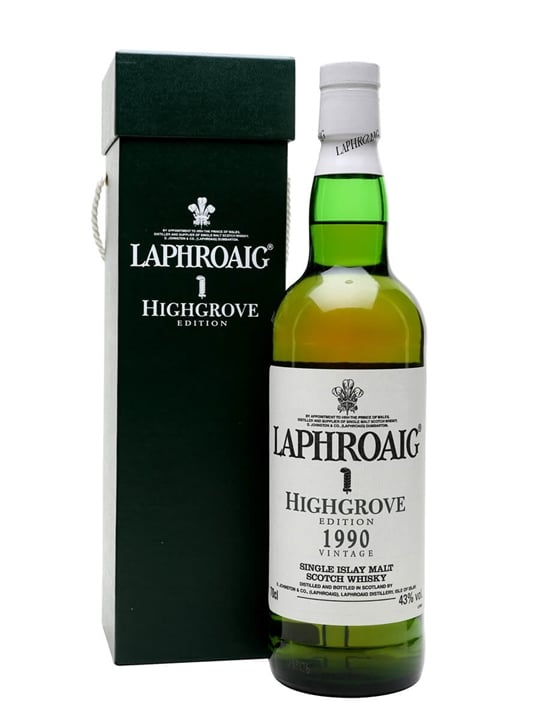
Laphroaig 'Highgrove', 14-year old, 43%. Islay, Scotland.
Exclusive bottling for Prince Charles' Highgrove shop, all profits go to HRH's charity foundation. Ex-bourbon cask matured. Assumed chill filtered and added colouring. Photo above for approximate reference only.

Colour: Gold. Added colouring in my opinion. 

Nose: Very soft & quite subtle for a Laphroaig. Sweet, ripe tropical fruit, rich caramel, some citrus & a nice minerality, like wet stone pavers. Hints of seaweed and dry, earthy peat.

Texture: Light-medium weight, warming & rich. No sign of any alcohol whatsoever, very soft. 

Taste: Tropical fruit again, more rich caramel, and some more dry & earthy peat, more prominent here but still quite subtle. A little soft chilli spice in there too. Slightly drier here than it was on the nose.

Finish: Medium. Drying spices, then light fruit and more wet stones, and the peat comes back towards the end. Quite a light finish, but enjoyable. 

Score: 3.5 out of 5.

Notes: Not your typical Laphroaig at all, much softer and more gentle than you may expect. Softer even than the standard 15-year old official bottling, and surprisingly different to it as well. In fact I think I prefer this expression, although it's been a while since I tasted the 15yo. The Highgrove is very, very good quality, there are no off notes or harshness, and there's no sign of any alcohol, which could get a little dangerous considering just how drinkable this one is. Very nice! I'd love to try the more recent Highgrove bottlings as well, they seem to be a couple of years younger and have gone up in strength to 46%, so they'd be very interesting!

But wait, the title says 'two incredibly rare Laphroaigs', so we're not done yet! 

This next bottling is essentially even rarer than the previous, because this sample came from a single bottle of a single cask of Laphroaig, which had not even been selected for bottling at the time. So at the moment the only way of getting yourself a dram from this cask would be getting yourself to the distillery, and then trying to bribe your way to disturbing this exact still-sleeping first-fill bourbon cask. And good luck with that! Dan really does have a dream job. Obviously there's no photo of this bottling, but we do have all the juicy details to hand. It was bottled at a cask strength of approximately 57%, at 13 years of age, without chill filtration or added colouring, and was matured in a single first-fill ex-bourbon cask from Maker's Mark. Wowsers!


Laphroaig single cask, 13-year old, 57% approx. Islay, Scotland.
Matured in a first-fill Maker's Mark bourbon cask. Definitely non-chill filtered (not filtered at all I suspect, which is very cool) and natural colour. 

Colour: Paler, lighter gold, and even some charred barrel bits! How awesome is that! 

Nose: Fruity again, but under-ripe this time. A lot of bourbon cask character, with toasted oak, sweet caramel, and even a little leather. Salted butter, a little wet soil, but no sign of any peat or smoke. A little alcoholic nip as well, but only slight.

Texture: Medium-heavy weight, lovely natural spirit. No heat at all, rich & velvety.

Taste: Starts soft & sweet, then a slow-motion explosion of dry, spicy, ashy peat. Then soft & sweet again. Some sweetened grapefruit, a good pinch of black pepper, and some strong mint. 

Finish: Medium length. Peat comes back again, then sweet caramel and oaky vanilla, more pepper and grapefruit, but it's dried now. Then something reminiscent of a mild blue cheese coated in black pepper. Weird I know, but I like it! The ashy, slightly spicy peat comes back again towards the end. 

Score: 3.5 out of 5.

Notes: Very good of course, as you'd expect from Laphroaig. A lot of bourbon character on the nose, and certainly a sheep in wolf's clothing between the nose and palate, as is the case with a lot of Laphroaigs. Some unusual notes on the palate too, not in a bad way, but rather in a very interesting way! Very drinkable again, but with more punch and definitely more recognisable Laphroaig-y notes that we all (well, most of us) know & love.

I don't think I could choose between these two very different and very interesting whiskies. One is the perfect everyday drinker, very gentle but still engaging, while the other is softly spoken and inviting, but likes to remind you it's the boss every now and then. So if such a thing were even possible, which of course it isn't, I'd have to get one of each. I'm certainly very lucky to have tried them at all.   

Mr. Dan Woolley, I really cannot thank you enough for sharing these precious Laphroaig's with me (and the others over the years), I think I owe you a dram or two! Thanks very much mate. See you next time!

Cheers!   

Sunday, 9 October 2016

Hyde Irish Whiskey Review!

For quite a while now, the only Irish whiskey that interested me was the only peated Irish whiskey, Connemara. Mainly because I personally found most other Irish whiskeys I had tried to be, frankly, a little boring. Triple-distilled, watered down to 40% and chill filtered, and purposely designed to be lighter in flavour and texture than your average Scotch, they didn't really float my boat. But that is beginning to change, because despite being un-peated, what we have here are some very interesting drams!
Hyde Irish Whiskey is a relatively new brand to the Australian market, which is owned by relatively new company Hibernia Distillers, based in South-West Ireland. Current owners Alan and Conor Hyde have their own distillery in the works, but until that is up & running their whiskey is sourced from Cooley Distillery, located North of Dublin, matured in Cork located in South-West Ireland, and bottled under the Hyde label. That second-last part is important, because the climate in Cork is warmer and wetter than the rest of Ireland, which effects the maturing whiskey. 

There are currently five Hyde expressions available, three single malts and two single grain whiskeys, 'single' of course meaning that they were made at a single distillery and are not blended. All expressions carry an age statement, are triple-distilled (as is the norm for Irish whiskeys) and are bottled at 46%, without chill filtration. What's also interesting here is the cask types used for maturation. While all expressions are initially matured in ex-bourbon casks, four of the five are then finished in either sherry, rum or burgundy casks before bottling. This is still quite an uncommon practice in Irish whiskey, where cask finishings have not yet taken hold to the same extent as they have in Scotland.

Thanks to Hyde's Australian importer Wonderland Drinks, I'll be taking a closer look at four Hyde expressions today. Two single malt whiskeys, one of which is finished in Oloroso sherry casks, and the other in Caribbean dark rum casks, and two single grain whiskeys, one of which is finished in French Pinot Noir casks, and the other is fully matured in heavily-charred ex-bourbon casks. See, told you these were interesting drams! It's important to note that while the grain whiskeys are labelled 'The Aras Cask', and the malt whiskeys and labelled 'President's Cask' (a tribute to Douglas Hyde, Ireland's first president), these are not single cask bottlings, although they are all limited releases.

These 'Aras Cask' Hydes will be my first single (un-blended) grain whiskeys / whiskies, so let's take a quick closer look at how grain whiskey / whisky is produced compared to its malty cousin. The most commonly used grains are corn and un-malted barley, but there can also be some malted barley, rye and/or wheat involved in various quantities depending on the desired recipe, also known as the mash bill. Distilleries' mash bills are usually a closely guarded secret, but in Hyde's case their grain whiskies are distilled from corn and un-malted barley, and are triple-distilled in a Coffey still. A what? Well grain whiskies aren't often distilled in traditional pot stills, but rather in column stills, a.k.a Coffey (named after the inventor, and nothing to do with coffee!) or continuous stills, so named because they don't need to be emptied and cleaned between runs / batches, which are therefore more time- and cost-efficient, and result in a lighter flavoured, higher strength, and 'purer' spirit than is produced pot stills. So on that note, let's start with Hyde's single grain Irish whiskeys!

First cab off the rank is Hyde's 'The Aras Cask No.3', a 6-year old single grain whiskey matured in a heavily-charred ex-bourbon cask, bottled at 46% and non-chill filtered. Distilled from corn & un-malted barley in a Coffey still. Very sweet & light on the nose, with some cotton candy, vanilla pods, rubbing alcohol. With extra time that changes to acetone, and some more caramel notes emerge. On the palate it's very sweet again, with some sweetened shredded coconut and simple syrup, and something reminiscent of sake (rice wine), and a short & light finish with more vanilla and caramel. This one is just too sweet for my tastes to be honest, with a little too much raw alcohol, but I could see it working well in a cocktail, or perhaps being more suited to a white spirit-drinker.

Next up we have Hyde's 'The Aras Cask No.5',  a 6-year old single grain whiskey matured in ex-bourbon casks and finished in ex-Pinot Noir red wine casks from Burgundy, France, again bottled at 46% and non-chill filtered. Distilled from corn & un-malted barley in a Coffey still. Still light and sweet on the nose, but with some oak and red fruit presence calming it down a little. Considerably less rubbing alcohol present with this one as well. On the palate, it's less sweet again, more syrupy, and less alcohol again with a little fruit coming through, and a short and thin finish with a little of that sake-like taste winding things up. The wine casks have definitely added some complexity here, and have also calmed things down a bit.

Now we're on to Hyde's single malt Irish whiskeys! Let's start with 'President's Cask No.4', a 6-year old single malt matured in ex-bourbon casks and finished in ex-Caribbean dark rum casks, again bottled at 46% and non-chill filtered. Distilled from 100% Irish malted barley. On the nose this one is richer & warmer than the previous expressions, with some palm sugar, lemon juice, toffee and tropical fruit. A little alcohol prickle here too. Still quite sweet on the palate, but again in a richer, fuller and more mellow way. Some nice malt character here, with some brown sugar and tropical fruit. A short finish again, but with quite a bit of raw alcoholic heat as well. When that subsides, there's more of that palm sugar sweetness and a little spice. This expression is more up my alley, but I can't help but feel it could've used a little more maturation. There was a 10-year old version of this expression, but I believe it's largely sold out and hard to find.

And finally, the flagship of the range, the award-winning 'President's Cask No.1', a 10-year old single malt, matured in ex-bourbon casks before a 9-month finishing in ex-Spanish Oloroso sherry hogsheads, bottled at 46% and non-chill filtered. Distilled from 100% Irish malted barley. The nose is more familiar and quite comforting, slightly richer again and with no alcohol prickle this time. I'm finding quite a strong aniseed note here, not licorice but actual aniseed, plus a creamy fruity-ness, some dusty fruit and a nice cereal-like malt character. On the palate there's more creamy vanilla, some fruit and honeyed malt. A longer and richer finish here as well, with a little oak, spice and creamy vanilla. My pick of the four expressions tasted, and nicely matured with no rough edges or raw alcohol.

Overall, these are definitely eye-opening drams which certainly highlight the different effects that cask finishing can have on maturing whisky / whiskey. The 10-year old single malt is certainly my favourite of the four, with a more familiar, richer and more mature profile, but all are interesting and engaging whiskeys in their own right, which are well worth trying for yourself! I look forward to seeing what Hyde come up with in the future, particularly once their own distillery is up & running. In the meantime, since Cooley distillery currently produce the world's only peated Irish whiskey, I'm hoping to see some peated Irish whiskey with an exotic cask finishing, it'd certainly add to the experience and would practically sell itself! Fingers crossed. Thanks again to Scott from Wonderland Drinks for the samples.

Cheers! 

Monday, 3 October 2016

Rosebank 15 yo (Single Malts of Scotland) Whisky Review!

Rosebank has been closed for nearly a quarter of a century, and although it has never enjoyed the cult status of a Port Ellen or Brora, its whisky is still highly prized.

Rosebank Distillery was located in the Scottish Lowlands, in the town of Falkirk. It was founded in 1840 on the banks of the Forth & Clyde canal, and was named after the roses which grew along the banks. Rosebank was rather unusual in that it produced triple-distilled Scotch whisky, where (in very basic terms) what would normally be considered new-make spirit in most distilleries, having been distilled twice, is then distilled a third time, resulting in a 'purer' spirit and obviously a higher alcohol content.

This practice is far more common in Irish whiskey, but there are currently only two active Scotch distilleries that are regularly producing fully triple-distilled whisky; Auchentoshan in the Lowlands, and Springbank in Campbelltown (under their Hazelburn brand), although Benriach has also dabbled in triple-distillation with certain limited bottlings in the recent past. Generally, triple-distilled whisky is lighter in flavour and texture, and in my opinion usually less characterful thanks to the removal of those 'impurities'. Rosebank does (or rather did) regain some of this character through the use of worm tub condensers, giving back some of that texture and flavour.  

The distillery was closed in 1993, despite being very well-regarded. Due to the expense required to modernise its waste processes to bring them in-line with EU standards at the time, then-owners United Distillers (now part of Diageo) decided to mothball the Lowland distillery in favour of Glenkinchie, with its far larger production capacity and easier logistics. The distillery buildings were sold to British Waterways in 2002, and while there have been a number of efforts to revive it, none have been successful thus far. The remaining stock is now owned by Diageo, and is released as part of the annual 'special releases', although the pricing is generally more reasonable compared to the other 'dead' distilleries.

There are a few independent bottlings around, which are of course becoming much rarer as the years go by. So I'm lucky to be able to taste one of those, thanks to a generous fellow whisky nerd. This bottling is from the bottler Single Malts of Scotland, owned by Speciality Drinks, the company behind The Whisky Exchange store, and the Port Askaig and Elements of Islay brands. This particular bottling is a relatively young 15 year old, which was matured in an ex-bourbon cask before being bottled at 46%, without added colouring or chill filtration. So this should make for a pretty good introduction to Rosebank!
(don't worry, it isn't clear! This is the empty bottle that the sample came from)
Rosebank 15 year old, Single Malts of Scotland, 46%. Falkirk, Scotland.
Matured in a single ex-bourbon cask. Distilled July 1991, bottled March 2007 by Speciality Drinks under their Single Malts of Scotland brand. Non-chill filtered, natural colour. Cask 2902, 284 bottles.

Colour: Pale gold.

Nose: Interesting! Not overly light or overly sweet like I expected. Still floral and sweet, but also fruity and spicy. Acetone, toasted spices, baked green apple, peaches, a little raspberry. There is some grain character here with the acetone but I wouldn't say it's malted barley that comes through.

Texture: Not bad at all, medium weight. Syrupy with a little heat, but not too much.

Taste: Sweet, honeyed and fruity.More malt character here, but still not a lot. Quite a bit of raw spirit as well, plus that lightly floral sweetness.

Finish: Medium-length, but quite one-dimensional. Still quite spirit-y to start with, then the fruit comes back, particularly the apple, but it's oxidised now. A little dry oak here as well.

Score: 2.5 out of 5.

Notes: Quite interesting, and not quite what I expected. But in a good way! Although I imagine at 40% and chill filtered it might have scored lower, I was really expecting not to like this one at all. I'm yet to try a Hazelburn, but so far this would have to be one of the best triple-distilled whiskies I've tasted. The nose in particular was very enjoyable, despite that acetone / raw spirit note, although the palate wasn't quite 'up my alley' and the finish fell over a little bit. Definitely not an active cask here either in my opinion. Nonetheless, I'm lucky to have even tried a Rosebank, especially one so well presented. So a big thanks to my anonymous benefactor for the sample of this one.

So, if you're lucky enough to come across a Rosebank in a bar or you find a dusty bottle somewhere with a reasonable price, don't discount it straight away, it could pleasantly surprise you.

Cheers!          

Sunday, 25 September 2016

Bakery Hill Peated Cask Strength Whisky Review!

This stuff would probably be my favourite official bottling (i.e. not a Heartwood) of Australian whisky. Cask strength, single cask, peated, non-chill filtered and natural colour, and good value for money. Great stuff.

Situated in Bayswater, Victoria on the outskirts of Melbourne, Bakery Hill Distillery has been operating since the late 90's, and first released their whisky in 2004. Proprietor David Baker, a food scientist by trade, has taken a fastidious, technical and traditional approach to production, using a UK-designed and built copper pot still and spirit safe, and bottling at natural colour and without chill filtration. The distillery is a bit of an underdog these days, with Starward / New World taking the spotlight in Melbourne, and Tasmania dominating the Australian whisky scene, so Bakery Hill is relatively quiet in comparison and largely flies under the radar. But it shouldn't, the whisky is good and is deserving of its place on the shelves.

Bakery Hill currently produce five expressions, being 'Classic Malt', 'Double Wood', and 'Peated Malt', which are all bottled at 46%, plus cask strength versions of the Classic and Peated. They use Australian malted barley for all un-peated expressions, but unfortunately the environmental laws in the state of Victoria prohibit the burning of peat, or rather the release of peat smoke into the atmosphere. David also had trouble sourcing peated Australian malt in the relatively small quantities required, so the peated malt is imported from commercial maltsters in New Zealand.

All expressions are matured in re-sized ex-Jack Daniels American oak casks, with the Double Wood receiving an extra finishing in French oak. The fresh casks are sent to a local cooperage for re-sizing down to 100-litres, which David believes to be the ideal size for maturing whisky as efficiently as possible in Melbourne's unpredictable climate, widely known for it's dramatic mood swings. While none of the expressions carry an age statement, thanks to that indecisive climate the whisky matures considerably faster than it would in Scotland, so in this case an age statement would largely be irrelevant anyway.

I'm yet to try any of the other Bakery Hill expressions, but I've tasted this Peated Cask Strength a few times, and it's truly world-class in my opinion. There is some variation between releases of course, being single cask releases, but all are around 60% ABV, and as stated above are matured in those re-sized Jack Daniels casks. It's also relatively well-priced, selling for around $160-170 domestically, for a 500ml bottle. That may sound expensive compared to your favourite Scotch, but compared to the prices commanded by other Australian whiskies at similar strengths it's very reasonable.

Bakery Hill Peated Cask Strength, NAS, 59.9%. Melbourne, Australia.
Matured in re-sized 100-litre Jack Daniels cask. Non-chill filtered, natural colour.

Colour: Yellow gold.

Nose: Fresh & zesty, lots of barley character and sweet tropical fruit. Almost Bruichladdich-esque, which is a pretty big compliment I'd say! The peat is very light, lurking in the background, just a slight hint adding depth. Creamy vanilla frosting on a lightly burnt sponge cake. Some peppery oak and cola syrup.

Texture: Medium weight, nice oily, creamy feel. No heat either.

Taste: There's the peat. Thick & chunky charred peat, some slightly bitter oak, more creamy vanilla. A lot of bourbon influence here, sweet caramel, peppery toasted oak.

Finish: Surprisingly short, but it does fade in and out for a little while. Burnt caramel and pepper, wood embers. Dries out leaving some oaky bourbon and malted barley.

Score: 3 out of 5.

Notes: Really enjoyed the nose on this one, found it surprisingly complex and very enjoyable. Nice on the palate as well, but fell off a little on the finish. I'm not a big fan of bitterness or even of bourbon really so that's probably down to personal taste. But then, isn't everything!

This bottling wasn't as peaty as I remember from my previous encounters with this whisky, but that could be my memory as well as batch variation, so it's hard to say if there have been changes, or if it's just the natural variance between each cask. The beauty of single cask releases there, no two are ever identical!

All that aside, this is still one very impressive Aussie underdog of a whisky. Highly deserving of a bigger following in my opinion, and of a higher place on the world whisky stage. If you haven't yet sampled Bakery Hill's wares, go for it!

Cheers.     

Big thanks to Craig from The Whisky Company (formerly Nippy Sweetie Whiskies) for the sample!

Sunday, 18 September 2016

Glenfarclas 30 Year Old Whisky Review!

A seriously old and now very expensive sherried whisky which recently had a massive price increase in Australia. It's way outside of my price range these days, but I was lucky enough to receive a sample from a generous mate who picked up a bottle for an absolute steal (and prior to the increase).

Actually, I should clarify that even after the recent price increase, this is still not unreasonably priced for a 30-year old single malt when compared to similarly-aged official bottlings from the competition. Both of the Glenfarclas whiskies I've previously reviewed, the '105' and the Whisky & Wisdom single cask bottling, were quite young and were bottled at cask strength. So this one is basically the polar opposite, at 30 years of age and 43% ABV.

Glenfarclas is now somewhat of an enigma for me. I really enjoyed the previously mentioned Whisky & Wisdom bottling, in fact it really redeemed the distillery for me, but that was an exclusive single cask personally selected by Whisky & Wisdom, so it can't really be used as a reference point for the distillery's normal offerings, and we'll leave it out of today's proceedings. And thus far, the other official bottlings that I've tried have disappointed me. I like the distillery on paper, I like that they're still family owned, that all of their stills are direct-fired, that they mature in traditional dunnage warehouses, and that they don't add any colouring. But the whiskies I've tried so far just haven't lived up to my personal expectations, particularly when compared to competing sherried whiskies from other distilleries. So far, anyway!

We know Glenfarclas mature their regular official bottlings in sherry casks, either ex-Oloroso or ex-Fino sherry, and either in 500-litre sherry butts or 250-litre hogsheads. But the 'core' bottlings very rarely tell you which type of cask was used, or whether they were first-fill or refill casks. But being a 30-year old whisky it's highly unlikely that any first-fill casks were involved, as they would likely have overwhelmed the spirit completely over those three decades of maturation. As mentioned above Glenfarclas don't add any artificial colouring to their whiskies, but unfortunately I can't find any mention of chill filtration, so we'll have to assume it has been chill filtered given the bottling strength. Regardless, this is one of the oldest whiskies I've had the privilege of tasting, which is pretty special. So let's get to it!
Glenfarclas 30-year old, 43%. Speyside, Scotland.
Matured in sherry casks, either ex-Oloroso or ex-Fino sherry. Chill filtered, natural colour. 

Colour: Bronze

Nose: Soft and quite complex. Strong furniture polish, nutty oak, stewed stone fruit & musty berries. Sweetened strawberry sauce, some resin. Some beef stock and fresh mushrooms. All good so far!

Texture: Light & quite clean. Definitely chill filtered, in my opinion, and it suffers for it.  

Taste: Hmm. More beef stock & mushroom, light caramel. Slightly bitter oak & tannins. Some raw spirit with a little prune juice, and something resembling struck matches. Thinking this is probably sulphur, I'm not normally sensitive to it at all but I'm finding it quite prominent here. 

Finish: Short-medium length. Big handful of pepper, and something vegetal. Root vegetables that have started to go bad. More struck matches, and some spirit-y heat, which is surprising for the age and strength. 

Score: 2.5 out of 5.

Notes: A bit of a disappointment really. I really enjoyed the nose, it had great promise, but it was let down by the palate and finish. There were some notes in there which I found very off-putting, which didn't appear on the nose but were quite strong on the palate. Naturally there will be batch variation with these older bottlings, and I don't have a batch code for this sample, but there's no way this one is worth the current asking prices. Which by the way are a massive $750 AUD at the time of writing. Ouch,  

Luckily the mate who generously provided this sample didn't have to pay anywhere near that, or I suspect he would've been seriously disappointed. But to be honest even at the discounted price I'm not sure it's worth it. For something so old and so expensive it just hasn't lived up to its end of the deal, and it's another mark in the negatives for Glenfarclas from me. But like I said, there will be batch variation, and I have seen some favourable reviews of this one, so there's still hope. 

Cheers!

Sunday, 11 September 2016

Heartwood Beagle 3 Whisky Review!

Another one that almost got away! An older release from the king of Tasmanian whisky, and I was lucky enough to finally get my hands on a bottle long after it had sold out.

I first tasted this glorious liquid over a year ago, sitting in Mr. Heartwood's Hobart office on a cold & windy Tuesday morning. Beagle 3 was one of the stand-outs of the incredible line-up, but my wife had her heart set on another expression (Convict Resurrection - reviewed here, along with more information about Heartwood), and I just couldn't leave without a bottle of The Revelation. I should've tried harder back then to stretch the budget and grab a Beagle 3 as well, but I talked myself out of it. That was a mistake, because it had made a dinosaur-sized impression on me, and left a dinosaur-shaped hole in my heart!

Back to the present, and my wife managed to find a bottle of Beagle 3 at an online whisky store late last year, for a reasonable price, and bought it for me as a birthday present. I was very tempted to open it immediately and devour the contents (responsibly, of course!), but held off instead under the notion of it being irreplaceable. That was true at the time, and it's now true again, but in the meantime Mr. Heartwood made the (probably very difficult) decision to part with a few 'archived' bottles that he didn't have the space for. And luckily, after another stupid moment of hesitation from myself (are you beginning to sense a theme here?), I was able to procure a second bottle of Beagle 3. And this one did not stay sealed for long!

Beagle 3 was the third expression in Heartwood's Beagle series of vatted / blended malt whiskies (a blend of different single malts, no grain whisky), named after the HMS Beagle which carried naturalist and revolutionary-evolutionary Charles Darwin. The first Beagle release arrived in August 2013, with the second following a year later, and both were blended from seven different casks of Tasmanian Single Malt. Beagle 3 came along in May 2015, and was blended from nine different casks: 4 from Tasmania Distillery (Sullivan's Cove) and 5 from Lark distillery, including ex-bourbon, ex-port, ex-sherry, and ex-pinot noir casks, and peated whisky (from Lark) made up 18% of the recipe.

As is always the case with Heartwood (but unusually for a blended / vatted malt) it was bottled at cask strength, a brontosaurus-like 68.4% in this case. And as always there's no added colouring or nasty chill filtration to be found. 220 bottles were released, and that was over 15 months ago, so it's basically impossible to find these days. To force himself to be different each time, Mr. Duckett actually destroys the recipes for the Beagles after they've been bottled. So there really won't be another like this again. And this probably goes without saying, but (spoiler alert) if you're lucky enough to come across a bottle and you're a Heartwood fan, I suggest you grab it immediately!


Heartwood Beagle 3, NAS, 68.4%. Tasmania, Australia. 
Blended / Vatted Malt from 9 different casks, 4 from Tasmania Distillery (Sullivan's Cove) and 5 from Lark Distillery. Non-chill filtered, natural colour. 220 bottles released May 2015.

Colour: Deep, dark polished copper.

Nose: Rich & intense. Thick fruit syrup. Boozy raisins, buttery heavily-toasted oak, mint, orange-scented furniture polish, slightly dusty cream-caramel chews and wood spices. Golden syrup over baked stone fruit. I could nose this beauty for days! 

Texture: Um, it's a Heartwood! Massive & intense, mountains of flavour. There's a little initial heat of course, but it's not a rough burning heat, and it passes quickly. 

Taste: Massive again. Spicy & charred oak with extra spice. More rich fruit syrup and raisins, some burnt caramel and warm orange oil. Spiced milk chocolate, and some leather. 

Finish: Medium length. Lightly torched juicy raisins. Some dried chilli flakes, a little mint and buttered almost-burnt fried bread. Becomes soft quite quickly, and the stone fruit comes back, but it's dried now.

Score: 4.5 out of 5. 

Notes: Just awesome. Massive amounts of flavour. Big, powerful and boisterous. But also very complex and dynamic, it's constantly changing, and it's just delicious! It takes me straight back to Tim's office on that cold Tuesday morning in Hobart. And it didn't seem as cold afterwards, funny that...

I'd say this is probably my favourite Heartwood from those I've tried so far, which also makes it my favourite Australian whisky so far. These certainly aren't beginner's whiskies, but with a little time, small sips and experience, they pay off in spades. And I was very lucky to be able to grab that second bottle. After all, only 220 bottles were ever released, and it was released 18 months ago, so this is one rare whisky!  

There is a Beagle 4 release in the works, but it's sounding like it won't be ready for quite some time, and it won't be bottled until it's ready. Naturally it'll be quite different to all that have come before it, and no doubt it'll be well worth the wait. Viva la Heartwood, viva!    

Cheers!

Sunday, 4 September 2016

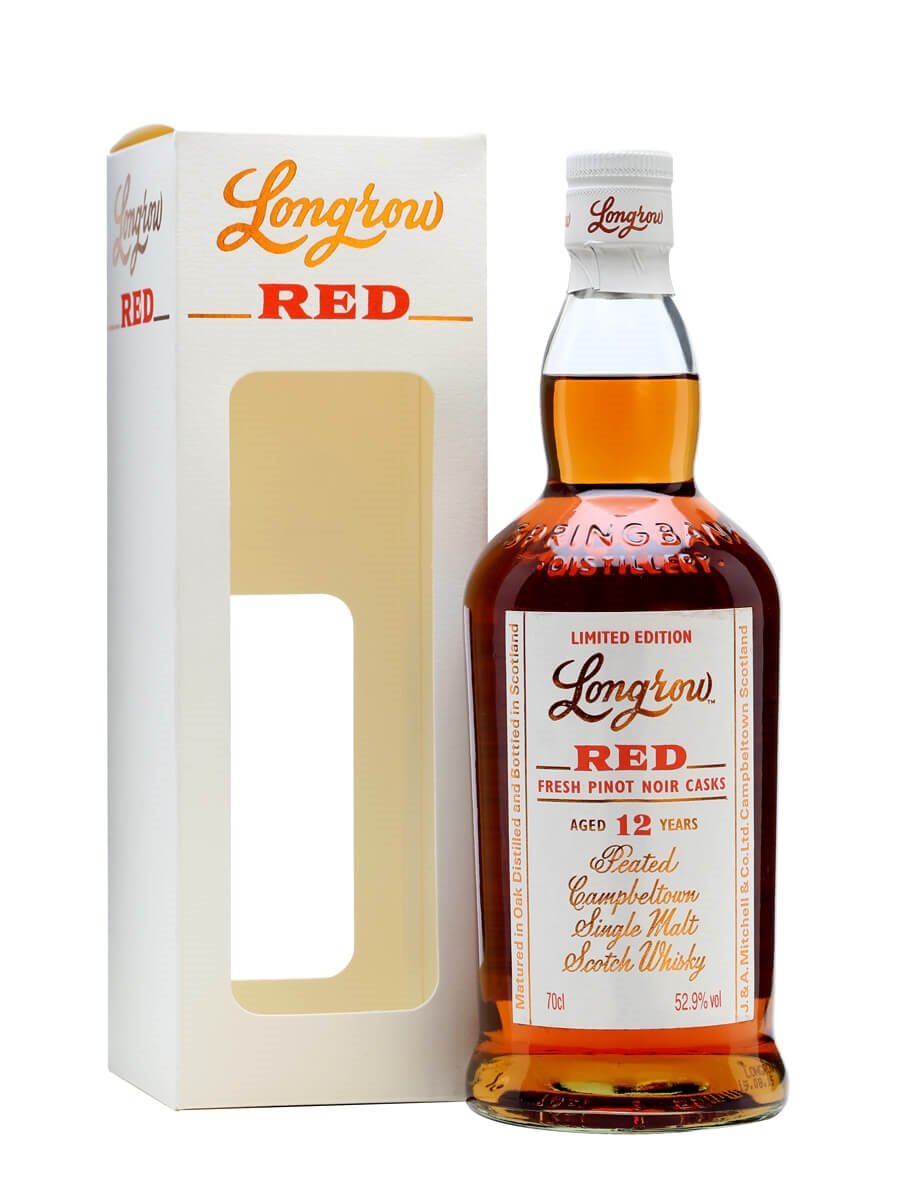
Longrow Red Pinot Noir Cask Whisky Review!

I've had the pleasure of tasting two of the four expressions in Longrow's 'Red' series, and they've been excellent. Thanks to a sample swap, this will be my third. But will it follow suit?

Longrow is the double-distilled, heavily peated spirit produced at Springbank distillery. Their 'Red' series is/was a line of whiskies which were either finished or fully matured in red wine casks. All are around 11 years old, bottled at cask strength, non-chill filtered and naturally coloured. The two I've tasted were finished in Australian Shiraz and Cabernet Sauvignon casks respectively, while the third expression was fully matured in a Port cask, which I'm yet to try but apparently is excellent. 

This fourth and apparently final release in the series has been matured for 11 years in ex-bourbon casks, and finished for another year in first-fill ex-Pinot Noir casks, sourced from New Zealand. Which means this one a is a year older than the previous releases, and also means it has spent the least amount of time in wine casks. It was bottled at a cask strength of 52.9%, and like all Springbank whiskies is non-chill filtered and naturally coloured.

On a slightly sour note, I wish Springbank would put a little more effort into some of their packaging. I know they're an independent distillery and they probably aren't overly concerned with such things, but less expensive Springbank expressions have fully enclosed boxes, so why shouldn't these? You may think I'm just being shallow, and that it doesn't matter, but I'm not talking about aesthetics here. When you have a box with a big hole in the front (which is also pretty flimsy as a result), and the bottle inside is exposed and is made from clear glass, there's absolutely no protection from sunlight, which can adversely affect the whisky itself over time, as well as the label. And quite a few bottlings from Springbank use this same box design / style. Yes whisky should be stored out of direct sunlight anyway, but this isn't always possible, so I'd rather a fully-enclosed box. Anyway, end rant. 

Personally, I've had a couple of red wine-finished whiskies which I've really enjoyed and a few which I haven't; at least not to the same extent. I'm not a big red wine fan in general, which probably has something to do with it. But seeing as this one has had a relatively short finish in the pinot casks, and is heavily peated, and based on my experiences with the previous Longrow Reds, I'm not too worried. Let's give it a shot...
Longrow 'Red' Pinot Noir Cask Finish, 12 years old, 52.9%. Campbeltown, Scotland.
Matured for 11 years in ex-bourbon casks, finished for 1 year in first-fill ex-pinot noir casks, sourced from New Zealand. Non-chill filtered, natural colour, cask strength. 9000 bottles, released 2015.

Colour: Amber.

Nose: Surprisingly malty, plus red fruits and spice, as you'd expect. Strawberry and red apple, some malty golden syrup, hint of that trademark Longrow peat, earthy & dirty. Sweet and musty red grapes, a little acetone. 

Texture: Medium-weight, bold and warming. Not harsh or rough though. 

Taste: More red apple and red berry sauce, spicy oak, buttery pastry, like Danish pastries. Still surprisingly malty, plus a big pinch of pepper and a little of that acetone. Not getting any peat here really, maybe a little burnt matches. 

Finish: Falls over a little here, unfortunately. Decent medium-length, but quite soft. The pepper and acetone sticks around for a little while, along with more of the red apple, and strawberries, but served in custard this time. The earthy peat does return down the track, and hangs on 'til the end. 

Score: 3 out of 5.

Notes: Not unpleasant, but not really doing it for me. Not on the level of the Cab Sauv release in my opinion, and I'd assume not as good as the Port cask either, judging by other reviews, so a little disappointing. Nonetheless, it's definitely something different, something a little unusual and quite interesting, as you'd expect from Springbank, those wonderful folks in Campbeltown aren't at all afraid of being different. More power to them!  

To date, my favourite Longrow is definitely the Rundlets & Kilderkins, which was matured in the namesake smaller casks and was seriously good. Plenty of that earthy, dirty peat in that one, which was toned down considerably in this Pinot Noir finished expression. What I would've loved to see in the 'Red' series is a fully Oloroso sherry-matured Longrow, or perhaps even a PX finish. But hey, every release in the series sold out in short order, so who am I to make that call. 

Cheers! 

MacBeth Ben Nevis 28-Year Old "Ross" Whisky Review!

The first of Elixir Distillers' MacBeth series of independent bottlings that I've tried, a 28-Year Old Ben Nevis distilled in 1993. ...