Sunday, 27 May 2018

Longrow Rundlets & Kilderkins Whisky Review!

As much as I love their whisky, I'm not a particularly big fan of Springbank's packaging. Aside from using the coolest 'S' in the business as their logo, the rest of the design & presentation is usually a little lacking compared to their more flashy rivals. But then that's also part of their charm! That all changed with the Rundlets & Kilderkins series though, and this one might just be the prettiest Springbank bottle yet! Of course, packaging & presentation doesn't appear anywhere on the list of requirements for making good whisky, but it doesn't hurt. And with the beautiful gleaming metal badge/label on these Rundlets & Kilderkins (R&K for short) bottlings, I can overlook those flimsy open-faced outer boxes! It also helps that they're cask strength bottlings of Springbank's whisky, of course...

So let's answer the obvious question: just what the hell are "rundlets" and "kilderkins"? They're small casks! While the 125-litre quarter casks are generally the smallest casks used by most large whisky distilleries, these are considerably smaller. According to a couple of sources, a rundlet (traditionally used to mature wine) is around 68-litres in capacity, while a kilderkin (mostly used to mature beer) is around 82-litres in capacity. So they're both significantly smaller than your average 200-litre ex-bourbon cask, which means they're giving much more cask and wood influence to the maturing spirit than the full-sized versions would in the same period of time. The rundlet & kilderkin casks used by Springbank in these releases were re-coopered down from full-sized casks, but I can't find any concrete information about those cask's previous contents.

There were three releases in the 'Rundlets & Kilderkins' series, all bottled at cask strength. The lightly peated and 2.5-times distilled Springbank release was the first, bottled in early 2012 at just over 10 years of age and limited to 9,000 bottles, which is now impossible to find outside of auctions (at exorbitant prices). And it's reported to be excellent. Next came the heavily peated and double-distilled Longrow release that I'm reviewing today, bottled in early 2013 at just over 11 years of age, and again limited to 9,000 bottles. It's now also very difficult to find outside of those aforementioned auctions. The third release, which as you can probably guess was under the un-peated and triple-distilled Hazelburn banner, was released in 2014 at just over 10 years of age, and was limited to 12,000 bottles. That one is a little easier to find, at least in Australia, probably because of the larger release, and the smaller following that Hazelburn commands compared to its stable-mates. 

While they're all relatively young whiskies, they do punch well above their weight thanks to the increased wood contact from those smaller casks. Looking at Laphroaig's quarter cask bottling for example, which is only finished in the 125-litre casks for around seven months, that whisky has a totally different character to the standard 10-year old, with more sweetness, vanilla and oaky flavours all coming from that short finishing in the smaller casks, so full-term maturation in casks that are smaller again will make a massive difference to the finished whisky. The Longrow that I'm reviewing here was bottled at a cask strength of 51.7% at the end of those 11 years, and like all single malts from Springbank, is naturally coloured and non-chill filtered. Let's get stuck in!

Longrow Rundlets & Kilderkins, 11 years old, 51.7%. Campbeltown, Scotland.
Springbank Distillery, heavily peated. Fully matured in re-coopered small rundlet and kilderkin casks, approx. 68-litres and 80-litres respectively. 9000 bottles, non-chill filtered and naturally coloured.

Colour: Amber. 

Nose: Yummy! Opening up slowly but very nicely. Sweet honeyed lemon peel, a little earthy peat and that tasty Campbeltown "funk", like damp, dank dunnage warehouses, fresh mushrooms and grassy damp farmyards. Love it. Some sweet, ripe, musty white grapes too. Lightly waxy sweet pineapple and sour stone fruit. Salted natural licorice & earthy salted caramel comes out with more time. 

Texture: Medium weight, farmyard-funky & spicy. A little heat as well, but not unpleasant at all. 

Taste: A big whack of earthy, dirty peat, much more prominent here than it was on the nose. Subsides to a big handful of wood spices and peppery oak, then some more sweet grape and more of that grassy farmyard note. A little chocolate as well. 

Finish: Medium length. Still peaty & spicy, cinnamon & nutmeg especially, and there's still plenty of that grassy farmyard note. More of that salted natural licorice from the nose, but it's more prominent here. Stewed stone fruits with a spiced toffee sauce, then wood smoke comes along to wrap things up.

Score: 3.5 out of 5. 

Notes: A lovely whisky, although it's quite the spice bomb! It reminds me a little of Ardbeg Kelpie committee release in that way actually, but not as confronting. Loving that strong licorice note in this Longrow, plus that dirty, earthy, musty peat and the sweet grape, all mixed in with the Campbeltown farmyards. The small casks have definitely done their job here, but they've also left behind a big whack of spice that I don't recall getting in a Springbank or Longrow before. I certainly don't remember encountering it in the Hazelburn Rundlets & Kilderkins, but that's to be expected since they're completely different whiskies. I'd love to know what type of casks they re-coopered into the smaller rundlet & kilderkin casks for this one, since I'm not entirely convinced they were your typical ex-bourbon casks!

Other than this one, my favourite Longrows so far are still the "Red" series. I haven't tried the Port cask or the recent Malbec versions yet, but the Cabernet and Shiraz versions were very good. And I'm not just saying that because they used Australian wine casks! While we're talking about Longrow & Campbeltown, I should give this little gem a shout out:


What we have here is a Campbeltown blended malt from Cadenhead's, the oldest independent bottler in Scotland, who are owned by J&A Mitchell, who also own Springbank and Glengyle (Kilkerran) distilleries. Cadenhead's have a shop on the Royal Mile in Edinburgh (among others), and in this amazing whisky shop you'll find a few casks up against the wall. They're separated by region, with one for each of the major Scotch whisky regions, and you can hand bottle your own blended malt, at cask strength, right there in the shop! The kicker though is the price. I (stupidly) chose a 200ml bottle thanks to a shortage of luggage space, and it cost me a ridiculously low sum of 14 pounds! For a 58.7% ABV blended malt (no grain whisky here), that reportedly contains mostly Longrow whisky. Either way, it's bloody delicious, and a serious bargain! I'll be saving some more space in my luggage for a bigger version on the next trip, because it really is that good. If you're headed to Edinburgh or Campbeltown, I highly recommend you stop in at Cadenheads and grab a bottle! 

Cheers!

Sunday, 20 May 2018

Heartwood Darkest Before Dawn Whisky Review!

More Tasmanian whisky magic from the mad alchemist Mr. H, the man behind Tasmanian independent bottler Heartwood. Yes please!


Fear of missing out (FOMO) is a big motivator in the whisky enthusiast's world. We see new "limited releases" and "special editions" from our favourite distilleries & producers, and we need them in our hands immediately. And when one of your favourite producers only releases 200-300 bottles (or less) of each bottling, that fear becomes much more urgent. Such a low volume producer with such a cult following can't really keep up with demand, and all recent Heartwood releases have sold out within days. Luckily I didn't miss out on this particular release, but I've missed out on plenty since, and believe me, that pain is real. Especially after eventually tasting those missed bottlings! The man himself is well aware of this demand though, and is counteracting it with his other venture Tasmanian Independent Bottlers (TIB). There have been a few TIB whiskies released so far, at lower prices and lower strengths (46-49% to date), for pricing and approach-ability reasons, than Heartwood bottlings.

What's seriously impressive is that Mr. H has stuck to his guns through all of this increased demand and attention, and even through offers to buy the business (let's just hope that never happens, it could never, and would never be the same). All Heartwood releases have been bottled at their natural cask strength, totally unadulterated with no chill filtration or added colouring, and with plenty of information printed right there on the label. Where possible anyway, since some of those releases have had very complicated upbringings. He also doesn't shy away from sharing his whisky's plights on social media, and is completely open and honest about the struggles that he & his whiskies go through before they're ready to wear the Heartwood label. For example, the whisky that I'm reviewing tonight was initially "a little recalcitrant", in Mr. H's own words. It was brought into line by being locked in the "hot box" for a couple of weeks after decanting, and being repeatedly & savagely beaten with a large paddle. Having seen both the paddle and hot box (which is a much warmer room of the Heartwood bond store building) in action during this incredible visit, I can only imagine that the whiskies being subjected to this... encouragement... are soon in a hurry to shape-up and toe the line! More info on the story behind Heartwood & Mr. H can be found here and here in the write-ups from my previous visits to the Heartwood inner sanctum, which were almost... spiritual... experiences!

On the menu tonight is Heartwood Darkest Before Dawn. This is a single cask bottling that was distilled at Lark Distillery in May 2009 using only their very-lightly peated malt, peated to around 7 ppm using Tasmanian highland peat, which is very light itself, with re-wet barley that had already been malted for "just a touch" of smoke as Bill Lark says. The new make spirit was then filled into an Oloroso sherry cask, where it spent approximately 8.5 years making itself at home, before being bottled at a cask strength of 64% ABV in November 2017, without any of that chill filtration or added colouring nonsense. Cask number LD559 yielded 242 bottles, and sold out in a matter of days. The sample for this review came from a very generous fellow whisky lover, and I now owe him one serious sample!

Heartwood Darkest Before Dawn, 8 years old, 64%. Tasmania, Australia.
Distilled at Lark Distillery May 2009, very lightly peated, matured in a single first-fill Oloroso sherry cask, cask number LD559. Bottled November 2017. Non-chill filtered, natural colour. 242 bottles.

Colour: Dark red amber / dark rust.

Nose: Sweet & fruity, and delicious. Dark, buttery & nutty toasted oak, cough drops, raspberry jam and some scorched eucalyptus bark. Some plum jam as well, and roasted nuts - maybe chestnuts? Something a little cheesy as well, in a good way, like a sweet cream cheese. Yep, mixed berry cheesecake actually, including the crumb. Wow, that's a new one!

Texture: Massive. Medium weight, and a little fire-y (it's 64%, remember), but packed with flavour.

Taste: Big & spicy, a little hot on entry, and a little astringent. Dryer than the nose as well. Some dried & blow-torched raspberries, more dark toasted oak with a little ginger. Some mild coffee syrup and sweet cream.

Finish: Medium-long length. Dry, oaky and hot initially, with more burnt eucalyptus. Then becoming sweeter with more raspberry & plum jams, some ginger and a little wood spice, coffee grounds and more cough drops. A little buttery pastry and more sweet cream towards the end.

Score: 4 out of 5.

Notes: Very tasty stuff, as always from Heartwood. The nose is absolutely fantastic on this one, and it's definitely the highlight of the experience for me. It's complex and very interesting, which is impressive when you remember that this is an eight year old whisky at a massive strength. The spirit has really stood up well against that sherry cask too, which is yet another testament to Mr. H's skill. The palate is also delicious here, but for me at least it doesn't quite live up to the fantastic nose. It's definitely a little hot too, but again, for an eight year old whisky at 64% ABV (higher than the filling strength of most new make spirit!), that's to be expected, and it would be far more so from plenty of other producers.

Darkest Before Dawn still has that burnt eucalyptus note that I find in most of the good Lark whiskies at high strength, but that very nice berry cheesecake note is a new one for me! Very interesting, and challenging, as every Heartwood should be, and usually is. Yummy. I'm an unashamed Heartwood fan boy of course, but if you like your drams to be high strength and full of flavour, you'll have to get your hands on a dram of one of these! Not a bottle mind you, just a dram. That way there might be a few more bottles left for the rest of us...

Cheers!

Sunday, 13 May 2018

Octomore 8.3 Whisky Review!

There's a new victor in Bruichladdich's ppm arms race! We've entered a whole new realm of peating levels here, and I don't think this one will be beaten any time soon.


In case you've been living under a rock for the last nine or so years, Octomore is Bruichladdich's super-heavily peated whisky, which completely dominates the upper echelon of the world's peatiest whiskies. In fact the only real challenger was Ardbeg's now-departed Supernova series, which measured in at a relatively low "over 100 ppm" (parts per million phenols), but was still a peaty beast of a dram, although the latter two releases were significantly softer thanks to a lower bottling strength, higher age and the addition of more sherry casks in the vattings. Octomore on the other hand has smashed it out of the park on numerous occasions, from the 169 ppm 5.1, to the 208 ppm 7.1 & 7.2, and the mighty previous king, the magnificent 6.3 Islay Barley which weighed in at a whopping 258 ppm. But this new 8.3 release, part of the "Masterclass Edition" 8-series which was released in 2017, has turned it up to 11 and taken the crown for itself, with no plans to relinquish the title. The Islay barley for this bottling weighed in at an almost-beyond belief 309 ppm! For a bit of reference here, Ardbeg's regular malt measures up at 55 ppm, and Caol Ila & Lagavulin's at 35 ppm. But don't think that this Octomore tastes 6-times as peaty as those, because it's not that simple!

It's important to remember that the ppm numbers don't tell the whole story. Far from it, in fact. It's a handy marketing tool, and it's basically the only objective scale that we have for quantifying how peaty a whisky is without tasting it (which then becomes subjective), but it can be a little misunderstood. Not by the industry or the distilleries of course, but by a size-able portion of their customers. For starters, the ppm (parts per million) level of phenolic compounds is measured on the malted barley, which then has to go through milling, mashing, fermentation, distillation and maturation before it can be bottled as whisky. As a very rough guide, most younger peated whiskies lose around 60-70% of their peat influence between the initial measurement of the barley and the bottled liquid. But that final figure and the level of peat influence in the final product can vary depending on a huge number of factors, from where the peat itself was sourced to the size & shape of the stills, and the cut points during distillation, and many, many others. Those factors are why Octomore and other heavily-peated drams often don't taste as vastly different as the numbers might lead you to believe. In the case of most Octomores, largely thanks to Bruichladdich's careful & slow production, tall stills and excellent cask management these are surprisingly mature and disarming whiskies that drink well beyond their (generally) 5 years of maturation. But rest assured, they're certainly very peaty, and this new king is not shy!


The 8-series Octomores have been a bit of a departure from the norm, in that three of the four bottlings are 8-years old, and they've all had rather complicated upbringings as far as cask maturation goes. In the case of 8.3, the casks used for maturation (not finishing) were a combination of 56% American oak ex-bourbon casks, and 44% European oak ex-red wine casks, from the Pauillac, Ventoux, Rhone and Burgundy regions of France. It was distilled in 2011 from barley harvested the year prior at James Brown's Octomore farm, down the road from Bruichladdich. That barley was then malted at Bairds in Inverness, which resulted in that incredible figure of 309 ppm. The whisky was then bottled at 5-years of age at a strength of 61.2%, of course is non-chill filtered and naturally coloured like all Bruichladdich, with a total of 18,000 bottles released. One more departure is that this is the first _.3 Octomore to ditch the white outer tin and toe the line with the rest of the series, which is a little strange, but they've kept the beautiful frosted glass bottle that is exclusive to the _.3 Octomores and the magnificent OBA, so we can forgive them for that.

The 8-series Octomores are just starting to officially appear in Australia now, with more on the way, but I was lucky enough to grab a bottle from the distillery (and I should have grabbed two) during my pilgrimage last year, and I'll be lining up for more when they finally arrive! The sample for this review came from a generous fellow whisky nerd who also picked up a bottle from the distillery last year. This is going to be epic...

Octomore 8.3, 5-years old, 61.2%. Bruichladdich, Islay, Scotland.
Distilled 2011 from Islay barley grown on Octomore farm in 2010, peated to 309 ppm. Fully matured (not finished) in 56% ex-bourbon casks and 44% ex-French red wine casks. Non-chill filtered, naturally coloured, 18,000 bottles.

Colour: Gold.

Nose: Sweet, creamy and herbal. Lightly medicinal as well. Smoky salted toffee, a surprisingly subtle dry, earthy peat, some fatty smoked bacon and a couple of newly opened bandages. Sweet vanilla cream, drying seaweed, and subtle sweet stone fruits. Apricot, plum and a little cherry jam. A surprisingly soft nose for the age and ABV, like many Octomores!

Texture: Wonderful. Medium weight, creamy, sweet and densely peaty. No spirit heat whatsoever.

Taste: Lovely. A big explosion of bitter, crumbly, earthy and spicy peat, with a lovely creamy and fruity sweetness behind. More sweet vanilla cream, some spicy, ashy and herbal smoke, a little rock salt, and more sweet stone fruit jam.

Finish: Long, and immense. Actually make that very, very long. Massively peaty, spicy and creamy initially, the peat tapers a little but lasts for eons, and it's still lightly bitter, earthy, crumbly and spicy. There's salty sea breezes, more freshly opened bandages, some herbal and leathery smoke, and that lovely Bruichladdich lactic dairy note comes out of hiding, with a little farmyard-y barley note alongside, and that stone fruit comes out again further on along with a nice ashy smoke. Delicious.

Score: 4.5 out of 5.

Notes: Outstanding. Wonderful. Delicious. What a dram. I'm not really sure if it's noticeably peatier than the previous title holder (Octomore 6.3), but that light bitterness in the peat is new, so maybe it is. And I love it! There's plenty of character to it as well, those stone fruit jammy notes, stemming from the wine casks I'd say, and that sweet vanilla cream really work well alongside that massive peaty-ness. Those wine casks do seem to have dampened Bruichladdich's sour lactic farmyard-y calling-card a little, but they're still there, as is the barley in the finish, which is pretty amazing for such a hugely peated whisky. It's nicely balanced and surprisingly (relatively) light for such a peaty beast. The magic of Bruichladdich right there! Absolutely love it.

There's plenty of complexity going on underneath and alongside that peaty explosion on the palate, and the softness and sweetness on the nose is disarming and quite charming, it doesn't give the game away before the whisky has had the chance to do its thing on the palate. Another outstanding Islay barley Octomore. I'm ranking it very slightly under the mighty 6.3 for my favourite Octomore to date, but it's a close thing. Folks, if you're an Octomore fan, this is a must buy. It won't be cheap of course, but you're going to want one.

Cheers!

Sunday, 6 May 2018

Bowmore 12 Year Old (Older Bottling) Whisky Review!

Modern Bowmore 12-year old is a pleasant enough light-to-medium peated dram, but I have the rare chance to try an older version, bottled around 2006. This'll be interesting!

While Bowmore's core range of official bottlings these days tend to be a middle-of-the-road take on Islay malt, the older bottlings were known to be lighter and very fruity whiskies that still have a very large following from collectors and high-roller buyers. The famous Black Bowmore from 1993, for example, now commands astronomical prices and is becoming very difficult to find, and the same goes for the follow-up versions. But Bowmores from around the same era, particularly those bottled in the mid-late 1990s through to the early 2000s, were notorious for something less appealing: FWP. That's not a technical distillation technique or an old-school malting process, it's actually a tasting note, coined by some American malt fans. It stands for "French Whore Perfume"!

FWP refers to the strong floral lavender / violet notes that can be found in many Bowmores that were distilled towards the late 1980s to early 1990s. I've only encountered something akin to this in an older bottle of Bowmore 18, and it was certainly off-putting, reminiscent of cheap strongly floral soap, but it was not undrinkable, but that may have been a mild case. The flavour has also been likened to the English confectionery Parma Violets, which I've also had the misfortune of tasting. Not good! There's nothing wrong with floral notes in a whisky, nor mildly-soapy notes, but the combination of strong notes of both can be unpleasant to some (most) tasters.

Obviously the vast majority of Bowmores that we come across today will be free of this unpleasantness, since the problem seems to have been solved in the bottled product towards the early 2000s. I've only experienced it the once, and even then I can't be certain because it's such a subjective thing, which makes it quite hard to judge. What we can be sure of is that Bowmore do make some excellent whiskies, particularly at cask strength like the Tempest (Dorus Mor for those in the U.S.) and Devil's Cask series, and of course the hand-filled bottlings available at the distillery (I've been lucky enough to review one here), and the 15-year old 'Darkest' is a great beginner's introduction to peated & sherried whiskies.

So why am I talking about the apparent problems in some of the older bottlings? Because I have a sample from an older bottling to review! Specifically a Bowmore 12-year old that was bottled around 2006 according to the owner's research, which means it was distilled around 1994. So it could possibly still have a little of those lavender floral notes, but it's unlikely to have any of the overwhelming FWP notes that have unfortunately put some people off Bowmore. Bowmore's core bottlings from this era, which ran from the early 90s to the early-mid 2000s, are known as "screen print label" bottlings after their pretty labels. I can't find any major differences in production processes or methods between then and now, but the key difference here is that this older version of the 12-year old was bottled at 43%, whereas the modern / current version of the 12-year old is down to 40% ABV. That will certainly make a difference, although both bottlings have added colouring and are chill filtered. Let's go back in time...

Bowmore 12-year old, old bottling, 43%. Islay, Scotland.
Bottled circa 2006, known as "screen print label" bottling. Chill filtered, added colouring.

Colour: Amber. There's still some E150a, but it does seem lighter than the modern version.

Nose: Light & soft, a little closed off at first but relaxes with some warmth. Coal dust / chimney soot, some dusty stewed fruits with some lighter tropical fruit in the mix, and a little of the dried sweetened grapefruit that I get from some ex-bourbon Bowmores, but it comes & goes in this case. There's a very light floral soapy-ness (but that could be partly mental as well), a little earth and a metallic note with more time in the glass.

Texture: Light weight, lightly oily. A touch of heat, but not unpleasant by any means.

Taste: Light & sweet, more of that coal dust / chimney soot, and more of that lovely sweet dried grapefruit. This does remind me of a (very) toned down Bowmore Tempest actually. There's a little metallic bitterness further on, plus some apple and a light floral sweetness.

Finish: Short. Spicy and quite astringent to start with, then some dried citrus, more metallic bitterness and a little cocoa powder. Oxidised (browned) red apples and some dusty cinnamon powder, and a little gristy malt at the end.

Score: 3 out of 5.

Notes: It's quite a light and subtle dram this, maybe even fragile, and it's certainly less peaty and less barley-forward than I find the modern Bowmore 12 to be. The copper / metallic bitterness is toned down as well, which is nice. It'd make for a pleasant summer's day dram, with enough slightly unusual notes to keep things interesting. I definitely do prefer this older bottling to the current Bowmore 12. It's less peaty, but also sweeter and much more fruity, without the copper flavour that I find in the modern version. In fact it reminds me of a (very) toned down Tempest (Dorus Mor in the USA) 10-year old expression, which is cask strength, and is a very different whisky from the current 12 year old.

There's no question that the extra 3% ABV has helped hide a few off-notes and turn the volume up a little, although it doesn't seem to have helped the texture or the finish too much. Perhaps there was also a higher portion of the floor-malted barley going into these older bottlings as well? Or, my guess is that there might have been a few more first-fill ex-bourbon casks in the mix in those days, when distilleries had far less pressure on their output than they do know, and single malts weren't as prevalent. But that's only a guess. It's certainly one to try if you come across a bottle somewhere.

Cheers!

Sunday, 29 April 2018

Cotswolds Single Malt Whisky Review!

My first English whisky! There aren't that many to choose from yet, but there are actually six distilleries with more on the way, but this particular young newcomer is quite exciting!


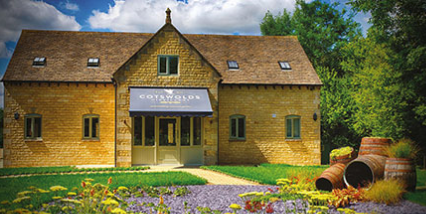
The Cotswolds is a scenic grassland region in southern central England, and Cotswolds Distillery is in the north-east of the region near the town of Stourton, around two hours drive north-west of London. The distillery was established in 2013 by former banker Daniel Szor, who decided that he'd had enough of finance and wanted to produce something more physical. While staying in the area he noticed that there was an abundance of good quality barley in the region, which when combined with the scenery and a couple of attractive but run-down vacant stone buildings gave Szor the idea to start a distillery. He also enlisted the help of former-Bowmore manager Harry Cockburn and the late Dr. Jim Swan, who was also instrumental in the development of Kavalan Distillery in Taiwan and Penderyn Distillery in Wales, among others.

Like many young distilleries Cotswolds also produces gin and a few other products, but in late 2017 they released their first single malt whisky, preceded by a few small releases of "in progress" bottlings. The inaugural release of 4000 bottles was well received, with a couple of subsequent batches released since. So far all bottlings have followed a similar recipe, and that recipe is quite a different one. There certainly seem to be shadows of Springbank and Bruichladdich in the distillery mindset, who are keeping things as local as possible. The barley is sourced from local farms and is malted by nearby Warminster Maltings, which interestingly only uses traditional floor malting methods, rather than the modern and more efficient drum or Saladin box methods used by most commercial maltings facilities. So far all batches have been distilled from Odyssey barley, which tends to be favoured more by brewers than distillers (who mostly use Optic or Concerto). You'll find the name of the farm responsible for the barley printed on the whisky's label and packaging, which is a very nice touch.


Once at the distillery the malted barley is milled, mashed and fermented for over 90 hours in eight small steel washbacks. That 90 hour fermentation is considerably longer than most, and is thought to be crucial to the light, sweet, fruity flavour of the wash. That wash is then double-distilled in a pair of small copper pot stills that were built & installed by famous Scottish coppersmiths Forysth's, with downward-angled lyne arms, and the spirit cuts are quite narrow to help achieve the desired light & fruity character. Once distilled the new make is filled into a variety of casks, mostly first-fill ex-bourbon barrels and shaved, toasted & re-charred (STR) red wine barriques (hogsheads). That STR process is essentially another term for rejuvenated, but rather than being used on tired old casks to squeeze more life out of them, in this case it's first-fill casks that are undergoing the procedure. This maturation technique was a favourite of the late Dr. Swan, who also put this into practice at Kavalan Distillery, and it seems to give a lot of cask influence quite quickly, and also change the character of that influence. There is one 200-cask warehouse on site at the distillery, while the majority of casks are matured in a commercial storage facility in Liverpool in England's north-west. All single malts are bottled at 46% ABV and are non-chill filtered and naturally coloured, plus the filters used for the barrier filtration are unusually coarse to preserve more of the natural texture. The bottlings don't carry an exact age statement, but all so far have been between three (the minimum age) and four years old.

On that note, I've noticed something a bit concerning lately that I'd like to address, which is people (including some inside the industry) referring to non-age statement (NAS) whiskies as simply "non-aged". While I'm sure this is just a shortening for convenience's sake, it's inevitable that some whisky novices, and basically anyone not familiar with the three year (or less, depending on the country) minimum maturation period, are going to assume that to mean that those whiskies haven't been aged at all. And I've already witnessed this happening. There's enough confusion and misinformation in the whisky world already, so let's try to stop this one before it gets too far!

Getting back on track, the Cotswolds Single Malt bottling we're looking at today is from Batch 01/2018, but it's still only three years of age, and was distilled from Odyssey barley grown on Barrington Park farm in the Cotswolds. It was matured in 30% first-fill ex-bourbon barrels and 70% shaved, toasted & re-charred (see above) red wine hogsheads. Like all releases it was bottled at 46%, without chill filtration or added colouring. Batch 01/2018 consisted of 7,150 bottles, which I believe is the largest batch to date, but it's still small by most distilleries' standards. The bottle for this review was generously supplied by Cotswolds Distillery's national brand ambassador for Australia, Steve Magarry. So let's see how it goes!

Cotswolds Single Malt, NAS, 46%. Stourton, England. 
Batch 01/2018 (not pictured), Odyssey barley, 7150 bottles. Approx. 3 years of age, matured in 30% ex-bourbon barrels & 70% shaved, toasted & re-charred red wine hogsheads. Non-chill filtered, natural colour.

Colour: Gold.

Nose: Soft for such a young whisky, with a little vanilla, a little minerality, dusty honeyed malt and some wine tannins. Some fresh ginger, spiced pears, black pepper and caramelised oak. 

Texture: Light-medium weight, lightly oily. A little heat, but not too much for the age and strength. 

Taste: Big spicy and lightly bitter tannins, both oak & wine tannins. A little dry honey, more dusty malt, and a little creamy vanilla. More fresh ginger & black pepper as well, and a hint of bitter orange peel. 

Finish: Short. More caramelised oak & more of those tannins. Light spent coffee grounds, a pinch of cinnamon & hint of aniseed. Then the fruit returns with honeyed pears behind some bitter dark chocolate. 

Score: 3 out of 5. 

Notes: For what is essentially a work-in-progress bottling, there's more character here than plenty of older whiskies can offer. It's also an impressively drinkable whisky for just 3 years of age, with plenty of flavours to find inside without anything too outlandish or overwhelming. To be honest, I'm not sure if I like the assertive tannins that are presumably coming from those shaved, toasted & re-charred red wine barrels. But they're not quite the heavy, bitter tannins that I find in heavy red wines, they're rather more a combination of lighter wine tannins & oak tannins, which I'd say is a result of the re-charring. I've experienced these STR barrels before, in Kavalan whisky, but those tannins were quite different to these tannins, and obviously they're very different whiskies. Although I'm not a red wine fan by any stretch of the imagination, so if you are then it's probably best to take all that with a grain of salt.

That said, I do like the rest of this whisky. The finish is a little short and perhaps a little light, but again for a 3-year old un-peated whisky that's nothing surprising and can't really be considered a negative. This Cotswolds single malt certainly is different to the norm, which is always refreshing, and I can't wait to see what the distillery comes up with in the future. They clearly know what they're doing, and they're also doing things differently to most, which should be commended. Stock of this bottling is finally expected to arrive in Australia in May after a very long wait, and it sounds like it will be reasonably priced and quite widely available. The anticipation is high for this one, and it's well worth tracking down a dram.

Thanks to Steve for the sample bottle, much appreciated mate. It will be shared & enjoyed!

Cheers!

Sunday, 22 April 2018

Ardbeg Grooves Committee Release Whisky Review!

Well, Ardbeg & Moet Australia have really come through for us again! Not only were we lucky enough to get an allocation of the committee release of "Grooves", but we were also spared the website issues and subsequent postponement that European buyers endured.


Of course, the allocation of the committee release sold out very quickly, and I believe it has also sold out around the world. Like previous committee releases the system used here in Australia worked very well. Registrations were done online, followed up by a confirmation email, and then a phone call to confirm the order and collect payment, with dispatch commencing a week later. While doing it this way is obviously more work for the staff and more expense for the company, it actually works. So it's well worth it!

This year's Ardbeg "day" or Feis Ile (Islay festival) release, Ardbeg Grooves is a very exciting expression. While the strength is similar to 2017's Kelpie Committee Release (reviewed here along with the previous four Ardbeg "day" releases), and yes there's no age statement, I just can't understand why there's such a level of hate and misery in some sectors of the whisky community when it comes to these bottlings. Some releases are better than others of course, as is the case with all distilleries, and I must admit that I wasn't a huge fan of either version of last year's Kelpie. But in my opinion the fact that Ardbeg's releases are by far the easiest to get hold of, and are often the most reasonably priced, both in the committee and regular release versions, more than makes up for any perceived shortcomings. Sure there's no age statement, and yes there's a slightly contrived marketing spin, but those aren't exactly new or unfamiliar things. There are hundreds of fantastic "NAS" whiskies out there from dozens of different distilleries, and there have been for years now. None of that is going to change on a substantial scale any time soon, so I think it's high time that some of the "haters" just accepted it and judged the whiskies on their aroma & taste instead.

And let's not forget the upside to these Ardbeg releases. There seem to be two trains of thought when it comes to Feis Ile releases. Most distilleries produce a relatively tiny amount of whisky for their commemorative bottlings, which usually means both high prices and very slim chances of getting your hands on one. Think about it, when was the last time a Bowmore, Caol Ila or Bruichladdich (for example, I'm not singling anyone out!) Feis Ile bottling made it to another country, without being on-sold for massive profit at secondary auction? They don't! Only Laphroaig and Ardbeg's releases are actually able to be purchased by those who aren't on Islay or based in continental Europe, which I think is a great way to celebrate the festival in a wider circle. If they were to instead release a single cask with a retail price well in the hundreds of pounds, then only a few would get their hands on a bottle, and they'd also get a lot of bottle flippers, speculating collectors and ravenous (bordering on greedy) retailers 'investing' and turning a profit. But with Ardbeg there is always plenty of stock (particularly of the regular version), the prices are reasonable, and the whisky is always something different from the norm. I'm sure we'd all love a single refill ex-bourbon cask Ardbeg with an age statement in the teens, but if that were the case, how many of us would actually get to taste the stuff? Ardbeg's contemporary Feis Ile releases are meant to be enjoyed by as many of their masses of fans as possible, and having plenty of reasonably priced whisky that is widely available is certainly the best way to accomplish that.

Anyway, enough of all that. I mentioned above that this years' release is an exciting expression. That's because this is the first Ardbeg release to include some whisky that was matured (Ardbeg don't do finishing, remember) in red wine casks! Not only that, but those wine casks were also heavily charred to produce deep grooves in the surface of the wood, giving more surface area for the spirit to interact with. Those grooves are also how this whisky's name was derived, along with the "groovy" 1960s-inspired marketing angle. There are rumours that those casks were procured from Jack Daniels' owner Brown-Forman, who previously did a similar thing with Jack Daniels Sinatra Select, although they used virgin oak in that case. Now I'm only speculating here, but Brown-Forman also own a Californian vineyard that produces Pinot Noir, so perhaps that's where the wine casks were sourced? Or alternatively, perhaps Moet-Hennessy sourced the casks themselves and sent them to Brown-Forman's cooperage for re-charring, since they had already used the same charring method? It's a little strange that we haven't been told anything about the origin or provenance of the red wine casks themselves, since Ardbeg's mad scientist Dr. Bill Lumsden doesn't usually shy away from providing detailed information on the casks or elaborating on the exact origins of the wood, so I'm not sure what the reasoning is here. Perhaps more details will come to light when the regular version is released around the world on Ardbeg day in June. In any case, it'll be very interesting to see how those re-charred wine casks have gotten along with Ardbeg's peaty-yet-relatively light spirit (which is largely thanks to the purifier on their spirit still), and the regular ex-bourbon cask Ardbeg that it was married with prior to bottling.

The committee release version of Grooves that we're looking at today (from my own personal bottle) is bottled at 51.6% ABV, and is non-chill filtered and naturally coloured, since Ardbeg don't add any E150a spirit caramel to any of their expressions. While part of this whisky was matured (not finished) in those heavily charred red wine casks, as with most Ardbeg releases the majority has been matured in first- and second-fill ex-bourbon casks. Not that there's anything wrong with that! Like all modern Ardbeg committee releases there's no outer box supplied with this one, and the packaging and labelling is relatively basic. But the extra ABV, and let's be honest, also the relative rarity, more than make up for that. The regular release of Grooves will be bottled at 46%, again without chill filtration or added colouring, and will come in a pretty box. But it will also be more expensive than the committee release, at least until the latter starts appearing on the auction circuit. Let's get to it!

Ardbeg Grooves Committee Release, NAS, 51.6%. Islay, Scotland.
Partly matured (not finished) in ex-red wine casks, heavily charred to produce grooves in the surface. Majority matured in ex-bourbon casks, first- & second-fill. Non-chill filtered, natural colour.

Colour: Copper.

Nose: Lovely. Sweet, spicy and coastal. Smoky chewy toffee, toasted sweet vanilla, paprika & cinnamon. Creme brulee, some tar, brine and caramel popcorn. Hints of grilled fish in the background with a few drops of lime juice.

Texture: Medium weight, oily, spicy and smoky. No heat at all.

Taste: Much drier here than on the nose. A little minerality, a lovely dry, crumbly peat and some delicious smoked spices. Cinnamon, ginger, black pepper & aniseed. Smoked honey, toasted vanilla again and some singed (lightly burnt) herbs. Delicious.

Finish: Long length, warming. More of the tar & brine from the nose, and that smoky toffee, plus some blow-torched citrus rind. Dry wood smoke and more of those tasty smoked spices. More aniseed coming out and a couple of cloves here too. Then more caramel popcorn, toasted sweet vanilla, and a little lime juice. Some golden orchard fruit and a lovely sandy, salty peat further down the rabbit hole.

Score: 4 out of 5.

Notes: Tasty, tasty stuff! I'd actually go so far as to call this a "return to form" compared to the last few Ardbeg special releases (although the Dark Cove committee release was great too). And by that I mean it's more identifiable as Ardbeg, and the quality is beyond question. It doesn't have the massive hit of hot spices that Kelpie did (which almost spoiled the experience for me), nor the big almost too-sweet fruit of Dark Cove, and I love that the classic Ardbeg tar & citrus notes are still there. But it's still a different whisky from the norm, and let's remember that that's exactly what we should want from these special releases! I'm really loving those smoked spice notes in the Grooves, they're not dominant and they work really well with the whole package, adding a new part of the experience. An expertly concocted and also nicely balanced whisky here.

I struggled to score this one, in fact it was nearly a 4.5 score, which only reminds me (again) that I should have gone with a 10-point system. But, Grooves committee release is now officially my equal-favourite Ardbeg "day" release, sharing the title with 2013's Ardbog, despite them being two rather different whiskies. If you missed out on this one, well, I'm sorry to tell you that you're probably going to regret it. I'm sure the "regular" 46% version that will be released in late May will be good too, but I think Ardbeg have already nailed it with this one. Groovy baby, very groovy!

Cheers!

Sunday, 15 April 2018

An evening with Octomore!

I was lucky enough to tag along to the recent sneak-peek of the Octomore 8-series in Brisbane, expertly presented by Mark Hickey from Spirits Platform, Bruichladdich's Australian importers. Although most of the series was released in Europe around six months ago, they've still not landed here, but they're finally getting closer. That's often the price we peat-hungry Australians pay for living on the other side of the planet!


One major advantage to this delay was that all three general releases, being 8.1, 8.3 and 8.4 of the Masterclass Series will be available at the same time, rather than being staggered releases like they were in Europe and from the distillery itself. Octomore 8.2 is travel retail / duty free exclusive, like 6.2 & 7.2 before it. On second thoughts, that's really more of a disadvantage, financially speaking! This should help keep prices down a little too, since they're all being shipped together, but local pricing hasn't been confirmed as yet. Each of the three expressions are quite different from any previous Octomores, with both the core 8.1 and the 'virgin oak' 8.4 being eight years of age (most Octomores are 5-years old), and the 8.3 Islay Barley not only measuring in at a whopping 309 ppm on the malt, but also being part-matured (not finished or ACEd in 'laddie speak) in French red wine casks. To my knowledge, and to Bruichladdich's knowledge, that's the highest phenolic figure ever recorded. Oh yes! I have a complete review of this beguiling beastie on its own coming soon, so I'll just give a quick first impression for now, and focus more on Octomore 8.1 and 8.4 for the purposes of this write-up.

Mark took us through the history of Bruichladdich Distillery first, starting with the story behind the Harvey brothers in 1881, through to the resurrection at the hands of Mark Reynier, Duncan McGillivray and the legendary Jim McEwan. Mark also covered the philosophy behind the modern Bruichladdich, and it should be noted that it has not changed under Remy Cointreau ownership, in that they really do believe in the people, the ingredients and the terroir (sense of place / locality). They are also very progressive, constantly trying different things and breaking new ground, and going against the grain. He also explained that Bruichladdich don't use any Islay peat in their malting process, which makes sense as all malting is carried out by Bairds in Inverness. Even the Islay barley is shipped to the east coast to be malted, then shipped back to Islay for milling & mashing. Instead the peat used is sourced from the Caithness area (66%) in the north of Scotland, and the Aberdeenshire area (34%) towards the east coast of Scotland. We were actually joined by the CEO of Remy Cointreau on the night, plus their head of the Asia Pacific region and it was predominantly a trade tasting (meaning bar managers & experienced bartenders) so the pressure was really on for Mark, but he handled it excellently where most of us would've been sweating bullets!


We were actually the first to officially taste these whiskies in Australia, but I have to say "officially" there because one or two parallel importers brought in a few bottles months ago, so quite a few punters have already tasted the goods. But they of course were sold at an inflated price, whereas it sounds like the official pricing will actually be very reasonable. Which is great news!

First up of course was Octomore 8.1. As mentioned above, this release is 8-years old, with all previous '_.1' releases being 5-years old. It was distilled from Scottish barley that was peated to 167 ppm, and was fully matured in first-fill American oak ex-bourbon casks. But this is the Masterclass series of Octomore, so we get even more information than usual: we actually know which distilleries those ex-bourbon casks came from! In this case they were sourced from Buffalo Trace, Jack Daniels, Heaven Hill, Clearmont Springs and Four Roses. The barley for this bottling was all Scottish, and was peated to 167 ppm by Bairds in Inverness, after being harvested in 2007. It was bottled at 59.3% ABV, and a substantial 42,000 bottles were released.


Octomore 8.1 is a sweet, refined and surprisingly soft dram. Those further three years of maturation have certainly made a difference here, and you'd never guess it weighed in at 59.3% in strength. The nose had that wonderful Bruichladdich sour lactic note (termed 'baby vomit' by some, but us 'laddie lovers can't get enough!), plus creamy vanilla and a little oak, and subtle smoke. And there was plenty of barley character evident despite the peating level and active maturation. The palate was creamy, lightly citrus-y and soft, with the peat coming on in the finish along with light spices, plenty of wood smoke and a floral sweetness. As much as I love the young beastliness of the younger _.1 Octomores, this is a very interesting take which (at least if my memory serves me) is even softer than the recent 10-year old second release. This makes it a very easy drinking dram, I might even go so far as calling this a "session-able" Octomore!


Now it was time for the highly anticipated newly crowned champion of the ppm wars. Octomore 8.3 is back to the "normal" 5-years of age, to capture as much of that massive peat influence as possible, and it was distilled from Islay barley from James Brown's Octomore farm that was peated to an unprecedented 309 ppm. I don't think that astronomically high number will be beaten any time soon! 8.3 was matured in 56% ex-bourbon casks, and 44% French red wine casks from four different regions. This young Ileach was bottled at 61.2%, which might be down a little from the previous Islay barley Octomores (6.3 & 7.3,), but isn't exactly shy. There were 18,000 bottles of 8.3 released, and it's largely sold out in Europe, so this will be a very hot commodity when it lands in Australia. But as the kids say these days, "the hype is real". This Octomore, like all Octomores of course, does not disappoint.

The nose on this one is lovely, with plenty of smoky toffee, light grassy notes and smoked meat, and some sweeter lactic notes, and once again you wouldn't guess the strength, although our glasses had been breathing for quite a while (while covered). The palate is absolutely fantastic! I'll save the rest of my notes for the separate review that is coming soon, but I'll just leave it at this: this just might be my favourite Octomore of all-time!


And finally, the most recent and final release of the series, the partly-virgin oak matured Octomore 8.4. I loved 7.4, which was the first _.4 bottling, which had quite a complicated upbringing. This new version has a little less virgin oak maturation than its predecessor, but it's still had a complicated upbringing. 20% of this whisky was fully matured in virgin American oak casks, with the other 80% initially being matured in ex-bourbon casks, before being transferred to the French oak casks that were previously used for Octomore 7.4. Which essentially makes them refill French oak ex-Octomore casks. 8.4 was distilled from Scottish barley that was peated to 170 ppm, and aged for 8 years before being bottled at 58.7%. There were only 12,000 bottles released, and like the 8.3 I'd say this one won't last long.

Octomore 8.4 was more intense on the nose than the previous two drams, with lots of vanilla and a little coconut, light fruit and a subtle vegetal peaty note on the nose. On the palate it's very creamy and buttery, again with lots of vanilla, charred stone fruit plus a little spice and charred BBQ meats. The finish was more of the same with more BBQ meats, sweeter fruitiness and more buttery vanilla. I haven't tasted the previous 7.4 release for quite a while, but from what I recall I'd find it hard to pick a winner between the two. They're both excellent quality, like all Octomores of course, and they're also very different from each other. I guess you'd just have to have both, naturally! 8.4 was actually still maturing while I was on Islay in September last year, and I gave a few casks a reassuring pat during the warehouse tasting at the distillery. So it's pretty special to now be tasting the resulting whisky!


All said & done, my personal pick of the night was - no surprises here really - 8.3. The Islay barley Octomores really are amazing whiskies, and they're nowhere near as intimidating as the high figures and low ages may lead you to believe. But as expected all three of these whiskies are delicious, and they're all unlike any previous Octomores. Stock of all three expressions is due to land in Australia in June, and I'd say the (likely small) allocations of 8.3 & 8.4 won't last long at all. As I mentioned above pricing hasn't been confirmed yet since the ship is still on the water, but from the rumours I hear it sounds like they're going to be pretty reasonable considering the level of demand there is for this liquid, and considering what you're getting inside those slender bottles. I'll see you at the front of the line on release day!

A big thanks to Mark Hickey, Spirits Platform, Bruichladdich and Remy Cointreau for having me on the night. I can't wait to take an even closer look when the stock arrives in Australia. Although my wallet may not be as excited about it as I am...

Cheers!

SMWS 53.509 14 Year Old Caol Ila Whisky Review!

A rich & tarry 14-year old single cask Caol Ila (Distillery #53) from the Scotch Malt Whisky Society, selected by their Australian branc...