Showing posts sorted by date for query ardbeg dark cove. Sort by relevance Show all posts

Sunday, 29 March 2026

Ardbeg 10 Cask Strength Whisky Review!

The first cask strength Ardbeg 10 Year Old Since 2008's Renaissance! Are the distillery's corporate overlords finally listening to Ardbeg fans? Maybe they've eased off on the Zoom meetings and let the distillery team take the reins for once! 


The Ardbeg that many of us thought would never happen. The first Ardbeg in many years that the purists will approve of, and a reasonably priced one at that. No gimmicks, no marketing rubbish, no cask finishing or messing with the formula. No dilution, and no shenanigans. A straight-shooting, no-nonsense, cask strength 10-year old Ardbeg. This is exactly what distillery fans have been begging for for over a decade now. Did the marketing department finally run out of ideas for their limited releases? After publishing whisky "graphic novels", dressing-up the distillery staff for social media, and encouraging gambling by endorsing cryptocurrency, all while lowering ABVs and raising prices, the cynic in me would say it's possible. But the Ardbeg supporter in me says that they've finally listened to their fans and have given us what we've been asking for. Or maybe both of my personalities are wrong and they actually saw the current downturn coming before most, realising they had to cut the bullshit and give us a good whisky at a decent price or they'd be continue to be left behind. Regardless of the reasons, they've done it, and it's here! Ardbeg 10-year old at natural cask strength. The cask strength version is matured in ex-bourbon casks, presumably a mix of both refill and first-fill like the standard 10-year old at 46%, but with an interesting point of difference; some of those casks were filled at a higher strength than usual. While Ardbeg typically dilute their new make spirit to 63.5% ABV before filling it into casks, the standard filling strength in the industry, this time they didn't dilute the new make at all, filling into cask at 71% ABV. This changes the interaction between the spirit and the wood, resulting in a slightly different flavour profile at the end of maturation, but it also means a higher than usual ABV at the end of maturation, all other things being equal. In this case after 10-years the whisky weighed in at 61.7% ABV, which is very high for an Ardbeg official bottling - the highest ABV I can recall tasting was the 2010 Supernova which was 60.1%, and that's over 15-years ago now! Some of their single casks do get higher, but their price tags mean they don't count here. Hopefully it goes without saying that a higher strength doesn't automatically make a whisky better, in fact some are too hot, too harsh, and too aggressive without dilution. And given the undiluted filling strength in this one, that was a cause for slight concern...

Overall, cask strength Islay single malts are easy to find. There are a myriad of options out there. But if you discount independent bottlings and focus purely on official bottlings, that changes things. And if you want reasonably priced examples that are relatively easy to obtain, which crosses the high-end "luxury goods" releases and most of the festival bottlings & distillery exclusives off the list, the options are surprisingly few. Laphroaig have been releasing their 10 Year Old Cask Strength for many years, even the numbered batches - which "only" started in 2009 - are now up to batch 17, although the "10CS" wasn't officially imported into Australia until relatively recently. Kilchoman sporadically release a Machir Bay Cask Strength based on their main core range single malt, generally every couple of years. Bunnahabhain added a cask strength version of their 12-year old back in 2022, which is now on its third batch. But who else? Bowmore is a definite no - you'll be lucky to find anything bottled above 43% ABV in their core range. Bruichladdich then? Surprisingly no. While you could argue that the Octomore bottlings are close enough, they don't meet our reasonable price criteria since they start at $250 AUD for a 5-year old whisky released in large quantities. Ardnahoe have released a cask strength expression and it is reasonably priced overseas, but there is no official importer for Ardnahoe in Australia so we can't call that easy to obtain. Diageo won't give us anything above 43% ABV in their official bottlings of Caol Ila, unless you spring for one of their annual special releases or travel to the distillery itself, but neither option meets the reasonable price criteria these days. The same goes for Lagavulin, with the sole exception being the 8-year old at 48% ABV which became the Islay fans Lagavulin of choice after Diageo went insane with the pricing of the venerable 16-year old. So from nine active malt whisky distilleries on Islay (not including the recently reopened Port Ellen, which will never be reasonably priced) there are three cask strength official bottlings that are regularly/readily available in Australia at a reasonable price. Laphroaig 10 Cask Strength, Bunnahabhain 12 Cask Strength, and Kilchoman Machir Bay Cask Strength. That's it. Thank god for the independent bottlers...

But now, finally, there's an argument that an official bottling of Ardbeg should be added to the list. It's not a definite addition yet because so far this is a one-off, although we're all hoping it won't stay that way. So let's call it a temporary addition to the list, for now. Either way I'd started to think it would never happen, so even a one-off is still a win. A cask strength Ardbeg 10! Ex-bourbon casks, natural cask strength of 61.7% ABV, no added colouring and non-chill filtered. Even better, it was $155 here in Australia, and it sold out very quickly, i.e. in less than a day - which has not been the case with any special release Ardbegs for quite some time. Let's get to it!


Ardbeg 10yo Cask Strength, 2026 Committee Release, 61.7%. Islay, Scotland.


Colour: Medium gold. 

Nose: Big & bold, rich & oily, very peaty! Big dry earthy peat, hot tar, ashy smoke, charcoal, and hot embers. Drying seaweed, sea salt, over-salted caramel fudge, salted limes, and creamy vanilla wafer biscuits. Burning leafy herbs, and dark chocolate biscuits. Slight touches of aniseed, clean fresh earth (dirt), dried lemon peel, and salt-laden driftwood. 

Texture: Heavy weight. Rich, oily, creamy, peaty. Very little heat for the high ABV, drinks more like a mid-50% whisky!

Taste: Powerfully peaty, salty, sweet, creamy. Big dry earthy peatiness, big pinch of sea salt, BBQ-charred tinned pineapple, creamy vanilla wafer biscuits, and salted caramel fudge. Burning leafy herbs, drying seaweed, salted lime, dark chocolate malt biscuits again. Slight touches of plum BBQ sauce & aniseed in the background. 

Finish: Very long length. Never-ending peatiness. Hot tar & embers, sea salt, seaweed, driftwood, salted lime, and burning leafy herbs. Dark chocolate biscuits, BBQ-charred tinned pineapple, creamy vanilla, and more salted caramel fudge. Touches of plum BBQ sauce and dried lemon peel underneath the peat & tar. 

Score: 4.5 out of 5. 

Notes: Absolutely delicious, and without doubt my favourite new Ardbeg official bottling in a long time - probably since Ardbog in 2013, or at least since Dark Cove in 2016. This cask strength Ardbeg 10 has a massive peaty punch that doesn't quit, but with the classic Ardbeg sweetness, saltiness, and creaminess, that we all love. It may not be the most complex whisky out there, and you're going to need to love peat & smoke, but this cask strength Ardbeg 10 is ticking a lot of boxes. This is pure unadulterated essence of Ardbeg, and pure essence of Islay. We've asked, pleaded, and begged, and after years of misses and ridiculous marketing, they've finally delivered. And at an extremely reasonable price no less, lower than many of us expected. We can't really ask for anything more!

Almost unbeatable for value for money here in 2026, especially in Australia. A cask strength Islay with an age statement, a high ABV, and a natural & spirit-driven presentation is becoming harder to find under $200 AUD these days, let alone under $160. Laphroaig 10 Cask Strength wasn't available here by official channels for over a decade, until it reappeared last year, but it sits around the $180-200 mark on our shelves. The ABV is generally lower as well, around the 58%-mark depending on the batch, which obviously doesn't mean anything regarding quality or enjoyment, but it does mean that Beam Suntory are paying less alcohol excise / tax. Ardbeg are going to win back a lot of fans with this one, while gaining some new ones. The future is looking brighter for this distillery now - let's just hope they keep it up!

Cheers!

Sunday, 23 November 2025

Ardbeg Day 2012 Whisky Review!

The inaugural 'Ardbeg Day' release, the one that started it all over 13-years ago. The rarest of the Ardbeg Day bunch, the only one without a silly marketing story, and the one that everyone forgets about!


This wasn't the first Ardbeg Feis Ile release, there were single cask Feis Ile bottlings released for each festival around a decade or so prior, the first being released in 2002, and we shouldn't forget the legendary "El Diablo" PX cask release of 1,200 bottles from 2011. But this 2012 'Ardbeg Day' release was the first to be branded as an 'Ardbeg Day' bottling rather than a Feis Ile release, and it was the first of these to be distributed outside Islay during the festival rather than an actual distillery exclusive. Which is something they've done every year since, albeit now in larger quantities with higher prices, and with lower bottling strengths. This 2012 Ardbeg Day bottling, with 12,000 bottles released at a cask strength of 56.7% ABV, retailed for just £65 (roughly $130 AUD). It was followed by 2013's delicious "Ardbog" bottling (the only Ardbeg Day bottling with an age statement), 2014's lightly peated and diluted (not cask strength) Auriverdes, and 2015's Perpetuum, which celebrated the distillery's 200th anniversary. From 2015's "Perpetuum" until 2023's "Heavy Vapours" there were two versions of each Ardbeg Day bottling, a higher strength version 'Committee Release' bottling sold without a box, and a more numerous boxed release at a lower strength - generally 46% ABV. For 2024 & 2025 there has only been one version of the Ardbeg Day bottling, the 46% ABV one, the latest of which is priced at $200 and is still readily available on the shelves and sites - as are many of the recent releases. The highlights of the Ardbeg Day releases over those ten-ish years were, in my opinion, the Dark Cove Committee Release from 2016, and... err... that's probably it. Maybe an honourable mention for 2020's Blaaack Committee Release and 2021's Scorch Committee Release, I suppose. Some of the others have been enjoyable of course, but others have ranged from average, to downright disappointing. 

In more recent years Ardbeg have also released other limited edition whiskies in addition to the Ardbeg Day bottling, such as the very lacklustre Fermutation, the pretty good BizzareBQ, the very good 8 Year Old For Discussion, and the solid Eureka release from early 2025 - if you ask me those latter three have been the sweet spots of the Ardbeg line-up over the last few years, easily beating each year's Feis Ile / Ardbeg Day release, which have been steadily dropping in both quality and value for money. On the other end of the pricing scale there have also been older releases like the five different batches of 19-year old Traigh Bhan, the 21 Year Old, the 25-year old, and the three releases in the 'Twenty Something' series, plus a few others that were less notable - including a ridiculous cryptocurrency / NFT bottling that you couldn't buy with real money. Great idea there, coked-up marketing executives at LVMH... While these shenanigans were going on and the supporting marketing rubbish was getting all the attention, Ardbeg's core range of the Ten Year Old, Uigeadail, and Corryvreckan, have been quietly doing their thing, while easily surpassing the majority of the distillery's special releases in terms of quality and value for money. Unfortunately both Uigeadail (first released in 2003) and Corryvreckan (first released in 2009) have jumped up significantly in terms of pricing over the last few years, and batch quality has been up & down, but both are still bottled at the same high strengths of 54.2% and 57.1% respectively, while Ardbeg 10 (first released in current guise in 2000) remains one of the best bang-for-buck Islay single malts on the market. Unfortunately the extremely undercooked 5-year old Wee Beastie has since also joined the permanent line-up, which initially made us all concerned about the future of the flagship 10-year old, but so far, so good! 

All three of those original core range releases were already well-established when this Ardbeg Day bottling hit the airwaves in early 2012, with the major claim being that it was finished in ex-Uigeadail sherry casks. Supposedly this bottling is comprised of two different styles & vintages of ex-bourbon matured Ardbeg that were married together and finished in refill Oloroso sherry casks that were previously used for the sherry component of Uigeadail. The back label states that the finishing period was only six months, and while it's worth noting that some of the earlier vintages of Uigeadail used older ex-sherry casks, it's unlikely that this was still the case in the early 2010s. However, Uigeadail in this era was an excellent whisky until there seemed to be a change in style around 2014 - to a younger whisky with less sherry influence. With no age statement on this Ardbeg Day bottling - 2013's Ardbog is still the only Ardbeg Day release to have an age statement - it's hard to gauge ages, but based on taste I'm going to guess that this whisky is mostly on the young side, probably around 8-years. But there's nothing wrong with that when the right casks are used, like the 8-year old "For Discussion" has proven. 12,000 bottles of Ardbeg Day were released at a cask strength of 56.7% ABV, and it is non-chill filtered and natural colour. Let's get stuck in!


Ardbeg Day 2012, NAS, 56.7% ABV. Islay, Scotland.
Inaugural Ardbeg Day release, June 2012. Finished for six-months in refill sherry casks, rumoured to be ex-Uigeadail casks. Non-chill filtered, natural colour.

Colour: Bright gold. 

Nose: Rich, peaty, creamy. Big muddy peat, very salty (sea salt flakes), ground aniseed, salted limes, and some dried herbs. Plus a couple of honey-eucalyptus / honey-menthol cough drops. Dark chocolate with lime zest, sweet seaweed, black pepper, and jalapeno (smoked green chilli) flakes with more time. 

Texture: Medium-heavy weight. Oily, creamy, peaty, sweet, salty. No heat at all. 

Taste: Big oily entry, creamy vanilla, , brown sugar caramel, and sweet fruits in syrup. Then big sharp peat comes through, muddy & chunky, followed by a big pinch of sea salt, some seaweed, and dark chocolate. And those honey-eucalyptus cough drops, plus a slight touch of burnt bacon. A couple of dried currants, raisins, and coffee grounds around the edges heading into the finish. 

Finish: Long length. Still sweet, syrupy & peaty, a creamy & ashy peat smoke now with seaweed, brown sugar caramel, jalapeno flakes, and some warm powdered ginger. The currants, raisins, and coffee grounds come through, along with some herbal honey, lime marmalade (far superior to the orange stuff), and some dark chocolate. Touches of burnt bacon and ashy peat smoke to finish things off. 

Score: 4.5 out of 5. 

Notes: Delicious whisky, and a delicious Ardbeg. One of the best Ardbegs that I've had in quite a while, in fact. That sweetness, peatiness, saltiness, and creaminess - plus the lime and dark chocolate notes, point this out as a great "classic" Ardbeg, from before they started trying to fix what was never broken. I've read some reviews over the years that pegged this dram as hot & rough, but they mustn't have let it breathe properly - I'm not getting any of that, and this bottle has only had a few drams out of it after opening about a month ago. The short sherry cask finish does make itself known, but they were refill sherry casks, so the balance is pretty much spot-on in this Ardbeg Day bottling. I'd say they've just added some extra sweetness, some more fruitiness, and a few of those "darker" notes that show up around the edges. Plenty of flavour, plenty of character, and good balance. It's whiskies like this that put Ardbeg on the map for us Islay whisky fans back then, and, well... Sadly, they don't seem to make 'em like they used to. 

Please, Ardbeg, just give us a cask strength 10-year old. No playing with the recipe, no excessive marketing, no graphic novels bullshit, and no cryptocurrency ridiculousness. Just a cask strength ex-bourbon Ardbeg 10-year old. Don't muck with it, just skip the dilution down to 46% and give us the eau naturel version, and we'll all love you for it. You've let the independent bottlers have all the fun for a long time now, it's high time that your official bottlings got back in on the action. Rumour is that Laphroaig are dropping their 10-year old Cask Strength because their corporate overlords don't think it sells well enough, so it's time for Ardbeg to take up the mantle and give the fans what they want. Pretty please Dr. Bill, if you're reading this; you can do it, we believe in you! **EDIT: It looks like this might actually be happening! Labels are circulating online for a potential 10 Year Old Cask Strength committee release next year!**

Cheers!

Sunday, 18 February 2024

Ardbeg BizarreBQ Whisky Review!

Finally getting around to reviewing Ardbeg's lower-priced limited release from mid-2023! Funnily enough - like most of their special releases from 2023 - it's still readily available at RRP over six months later. Times have clearly changed for Islay's loudest distillery...


I'm roughly six-months behind the curve with this review. Ardbeg BizarreBQ has already received positive feedback from many, but then fell off the radar very quickly. Having already tried it a couple of times thanks to friends, and since it's still widely available at the original RRP - here in Australia, at least - I think it deserves more attention. So here we are! This isn't an Ardbeg Day / Feis Ile (Islay Festival) release, but it's not a core range bottling either, it's just a limited release. Ardbeg have really ramped up the special and/or limited releases in the last few years, with the words "special" and "limited" no longer holding the water that they once did. BizarreBQ is a limited release, but we don't know how many bottles there are in that release, and even now it doesn't seem to be particularly scarce, six months down the track. But that certainly doesn't mean it's not a good whisky. With global economic changes and the post-pandemic shift in drinking habits, the vast majority of limited release & mid-range Scotch whisky isn't flying off the shelf like it once did. I've singled out Scotch there, but that also applies to Australian whisky. In fact it applies to almost everything that is not Japanese whisky! Thanks to many naïve consumers that umbrella term still covers the stuff that isn't really Japanese and also the stuff that isn't really whisky, but it's really the proper stuff from the likes of Nikka and Suntory, and some smaller operations, that continues to skyrocket in price. Whether single malt or blended. End rant, let's get back on track!

But before we do that, I was recently treated to a dram of Ardbeg Renaissance that was released back in 2008, the first 10-year old Ardbeg that was distilled under Glenmorangie ownership since they purchased the distillery in 1997. Renaissance was the final instalment of the four-part "Peaty Path to Maturity" series, which were all fully matured in ex-bourbon casks, were bottled at cask strength, and had both vintages and ages clearly stated. Shared between three whisky-loving mates who had all been major Ardbeg fans until a few years ago, this very special dram invoked the same reaction from all three of us; "Oh how the mighty have fallen". Well, in all honesty we may have used some more colourful language, but words to that effect! An Ardbeg with decent age, quality casks, fully natural presentation including actual cask strength, and no ridiculous marketing bullshit. The time-proven Ardbeg recipe that would fall apart around a decade later when the marketing department took too much acid and decided that distillery fans needed at least five limited and/or "committee" releases every year, each with a higher price tag and a lower ABV than its predecessor. Meat pies, web comics about some sort of secret agent - no I haven't read any of it and frankly I'd rather drink Wee Beastie, which is really saying something - and myriad limited releases which had interesting unique selling points on paper, but ended up being major disappointments. Ardcore comes to mind in particular there. That's not to say there haven't been some tasty whiskies among the increasing numbers of releases from Ardbeg - the decent but overpriced 13-year old "Harpy's Tale" for example, and the 19-year Traigh Bhan which is sadly very overpriced and has been since the second batch was released in 2020 - by my reckoning the Australian pricing has increased by $100 with each new batch, all with identical specifications. They're now trying to retail Batch 4 for a ridiculous $499 AUD, and surprise, surprise; it's not moving. Even the distillery's long-standing core range NAS releases Uigeadail and Corryvreckan have jumped in pricing to a point beyond most people's comfort levels. 

There has been one recent exception to this trend, though; Ardbeg 8-year old "For Discussion" which was released back in 2021 for a very reasonable price. If you ask me, this has been the new benchmark in quality & value for an Ardbeg official bottling ever since. As far as quality vs. price I'd peg it as the pick of Ardbeg's "committee releases" since Dark Cove was released back in 2016, possibly challenged by the higher ABV committee versions of 2018's Grooves and 2021's Scorch. 8-Year Old For Discussion is a permanent release so it's still widely available, and has actually become more affordable in the years since it's release - current pricing on the Ardbeg Committee Australia website is just $115 AUD with a branded tumbler glass. That's an absolute steal, only $20 above the local pricing for the standard 10-year old. BizarreBQ might just be another exception to the Ardbeg trend at a similar strength and a similar price point to the 8-year old, but it's quite a different whisky. That benchmark 8-year old bottling was fully matured in refill sherry casks, which is quite unusual for Ardbeg. BizarreBQ is even more unusual, being matured in three different cask types: "double charred oak" (which I take to mean refill ex-bourbon hogsheads that have been re-charred), Pedro Ximinez sweet sherry casks, and experimental "BBQ charred" casks which were apparently charred over a brazier. Beyond that, Ardbeg is being very cagey with the details on this one. We don't know the proportions of these different cask components, and we don't know how long the whisky spent in any of them, nor do we know the overall age. We don't know if these cask types were used for finishing or if they were fully matured separately and then married together, which was standard operating procedure for Ardbeg until only a few years ago. The BBQ link is a marketing exercise "collaboration" between Ardbeg and an American BBQ chef who goes by "DJ BBQ". That collaboration only began in 2020, which leads me to believe that at least those BBQ charred casks were only used as a finish, if not the other cask types as well. Which isn't necessarily a bad thing, by any means, but it would be nice to know. 

The chosen ABV for this one is 50.9%, which is not cask strength - when did we last see an official bottling of Ardbeg that was actually stated to be cask strength? Or even one that was at a believable cask strength? If you discount the stupidly expensive single cask official bottlings, if I recall correctly that would be Ardbog from 2013? Corryvreckan and Uigeadail are bottled at consistent batch strengths, although they're certainly high enough for anyone. The Ardbeg Day / Feis Ile releases seem to be dropping in ABV every year, in opposition to their pricing and in some cases also their quality. BizarreBQ is very reasonably priced though, at $145 AUD, and as mentioned it's still readily available. The real question is; is BizarreBQ worth the extra $30 over the current AU pricing for the 8-year old? Let's find out, shall we? 

Ardbeg BizarreBQ, NAS, 50.9%. Islay, Scotland.
Matured/finished in "double charred oak" casks, (presumably re-charred ex-bourbon hogsheads), PX sherry casks, and "BBQ charred" casks which were charred over a brazier. Non-chill filtered, assumed natural colour. 

Colour: Copper. 

Nose: Sweet, smoky, coastal. Tangy sweet & sour sauce, drying salt-laden seaweed, and a thick & spicy fruity BBQ sauce. Warm ashy wood smoke, lemon juice, and smoked pork ribs. Blowtorched herbs (rosemary & thyme), touch of grilled stone fruit & caramelised pineapple. 

Texture: Medium weight. Oily, sweet & spicy, warming & smoky. No heat at all. 

Taste: More wood smoke, thick & ashy, and more spices - smoked paprika. Big squeeze of fresh lemon juice. Touch of sweet shellfish (BBQ'd again) and those smoked pork ribs again. Some charred wood (hickory?), more grilled stone fruit & caramelised pineapple in brown sugar. That sweet & spicy BBQ sauce again, plus a few whole black peppercorns. 

Finish: Medium length. Soft earthy peat, more lemon juice, touch of aniseed. Hickory wood, touch of black cherry in the background. Blowtorched herbs & black peppercorns. BBQ sauce and grilled stone fruit to finish. 

Score: 4 out of 5. 

Notes: Extra tasting / nosing note just for the Aussies: BBQ Shapes, but from before they changed the recipe and ruined them. This Ardbeg is really quite delicious, and it's a nice departure from their usual flavour profile without going too far like most of the recent "experimental" Ardbeg day releases. While they're very tight-lipped about the details on those "BBQ charred casks", the BBQ notes are there in spades. That's within the usual peated whisky wheelhouse at least (particularly in some Port Charlottes and also some mainland peated malts), and BizarreBQ doesn't feel undercooked (pun intended) like most of those special releases from the last few years. In fact I'd say this is on par with the 8-year old For Discussion, and that both of these semi-limited but still widely-available releases are better than any of the Ardbeg Day bottlings since Dark Cove Committee Release back in 2016. Both are also significantly cheaper and represent far greater value for money, if you ask me. Good stuff! 

More of these please Ardbeg, and less of the marketing bullshit - web comics very much included. 

Cheers!

Sunday, 7 August 2022

Ardbeg Ardcore Committee Release Whisky Review!

Heavily roasted / chocolate malt in an Ardbeg? Consider my curiosity piqued. Although the official tasting note / marketing snippet from Dr. Bill Lumsden, "like biting a spiky ball", which is not exactly tantalising!


As much as I still love the distillery, Ardbeg's special releases have always been hit & miss. Actually, let's say they've always been a rollercoaster ride. To be fair, for a long time the highs were quite high with the likes of Ardbog, Dark Cove CR, Grooves CR , while the lows like Auriverdes, Kelpie and Drum weren't really that low in the wider whisky world scheme of things. But since those earlier days the waters have been muddied by the regular addition of more & more special releases in addition to the "Day" / Feis Ile bottlings, and the pricing on those has sky-rocketed in comparison. Take Arrrdbeg and the recent Fermutation for example, which were both lacklustre whiskies with greedy price tags. Then the distillery redeemed itself with the 8-year old "For Discussion", which was both great quality and great value for money, and is still readily available. On the other hand we've seen three batches of the 19-year old Traigh Bhan hit the shelves, where while the quality is great the local pricing has increased by $100 AUD each time, for an identical specification - the third batch is now $500! Like I said, a rollercoaster ride. For the distillery's relatively small output of around 1.25-million litres of spirit per year - although that recently climbed to over 2.4-million litres with the new still house - and considering the constant & significant demand for the core range offerings in the 10-year old, Uigeadail and Corryvreckan, Ardbeg does manage to release a huge amount of different limited releases. And most don't seem to be very "limited". Let's not forget that they continue to release two different versions of their Feis Ile / Ardbeg Day releases every year, and have done since 2015, with the higher strength un-packaged & modestly labelled Committee Release soon followed by larger amounts of the 46% ABV standard version with its more elaborate labelling & packaging. In Australia at least, the stock of both does seem to be hanging around longer & longer with each year that ticks over. I can't say if that's down to larger amounts of bottles in the releases or just a larger local allocation of stock, but I suspect it's also because many whisky enthusiasts have a bit of Ardbeg fatigue these days. Then again, any losses there have probably been taken up by the increased number of flippers, speculators & investors that the pandemic has spawned, and Ardbeg is always near the top of their lists!

Personally, I'm still falling victim to some of these releases, so I can't knock the distillery team for doing their jobs well. The production seem to find/design a unique selling point each time that is both appealing to the long-term Ardbeg fans and the novices, and even some of the cynics. The distillery's corporate marketing team then run wild after taking their daily dose of LSD, resulting in stories about sea monsters, hippies, dragons, and punks, and other totally unnecessary crap that has nothing to do with the whisky itself. The real USP with these Ardbegs is usually just a case of throwing some different casks in the vatting, or occasionally they play with the spirit itself instead. With this 2022 Ardbeg Day release "Ardcore", they've played with the spirit again, but this time with the barley itself. I'm sure most of us are familiar with Glenmorangie's very successful Signet expression, which uses roasted malt a.k.a "chocolate malt" as an unknown portion of its mash bill. That roasted malt is similar to what a brewer would use to make a porter or a stout, and it gives Signet chocolate & coffee flavours in the spirit itself. Glenmorangie is Ardbeg's sister distillery, with the same "mad scientist" Dr. Bill Lumsden overlooking "whisky creation" at both sites, so it was almost inevitable that Ardbeg would do something similar one day. And that's essentially what we have here, an Ardbeg that was "created with roasted black malt", which is even more heavily roasted than the chocolate malt used in Signet. Much like Signet, we don't officially know exactly how much of the malted barley was roasted - although according to Distillery Manager Colin Gordon via YouTube, that proportion was 25%. It's virtually impossible to use 100% heavily roasted malt in a mash bill since it creates problems with milling and mashing, and particularly with fermentation - after being kilned the black malt is extremely dry, and there's much less fermentable sugar available for the yeast to feast on, so it has to be mixed in with regular malted barley for the sake of proper fermentation and a decent yield. Also according to Colin Gordon the remaining 75% of the malted barley used in Ardcore had a lower peating level than Ardbeg's standard 55 ppm specification, and I'm only speculating here, but that could also mean that it didn't come from Ardbeg's usual source, Port Ellen Maltings. 

As is often the case with these limited release Ardbegs, we don't know what type of cask/s Ardcore was matured in, or how long it has been left to mature in those casks. Presumably it's all ex-bourbon casks, and I suspect most (if not all) of those were refill. I also suspect it's quite a young whisky, based on smell & taste, and also the colour, which is paler than the 10. I'm guessing we're looking at less than 8-years here. And maybe that's why Ardcore is being described as "the most hardcore Ardbeg ever". We're looking at the Committee Release version of Ardcore here, which was bottled at 50.1% (but not cask strength), is non-chill filtered and natural colour. Local pricing on the Committee Release was reasonable at $225 AUD, while the standard version at 46% is less reasonable at around $230 AUD - and it's still readily available. Let's find out just how spiky this ball is!


Ardbeg Ardcore Committee Release, NAS, 50.1%. Islay, Scotland.
Ardbeg Day release 2022. Distilled from 25% heavily roasted black malt, 75% malt peated to less than Ardbeg's usual 55 ppm. Unknown cask type/s but presumably refill ex-bourbon. Non-chill filtered, natural colour.

Colour: Very pale gold. White wine. 

Nose: Definitely very young, sweet and quite raw. Settles & opens up with extra breathing time, but it's still very young & raw. Dark cocoa powder, new plastic tupperware, milky caramel espresso (i.e. with a shot of caramel syrup added), glue, aniseed & charcoal briquettes. Burnt rubber, hot tar, new bandaids & hot smoky peanut oil. Some green banana, smoked pear and lemon rind around the edges.   

Texture: Light-medium weight. Oily & juicy entry but it thins out & fades very quickly. A slight heat but not harsh, and fades quickly. 

Taste: More caramel espresso, but no milk this time. Charcoal & tar again, plastic, new rubber and a touch of aniseed. Soot & ash, smoked pear, and a touch of salted bitter lemon. Hot smoky peanut oil and a touch of toffee stout in the background. 

Finish: Short length. Aniseed & caramel espresso, but with milk again this time. Turns creamy with a little vanilla, unripe pineapple, rubber pencil eraser and hot peanut oil. Tar, bitter charcoal & lemon rind. 

Score: 3 out of 5, but not miles away from a 3.5. 

Notes: So we haven't been entirely punked with the Ardcore Committee Release, but it was close. Thankfully it did open up with extra breathing time, but there are definitely shades of the very lacklustre Wee Beastie here. That plasticky sweetness and the pear notes seem to show the youth and immaturity, which are also present in that 5-year old example. Thankfully Ardcore does have more character than Wee Beastie, but I don't think it's much older. I understand why Ardbeg would want to fill this into mostly (if not all) refill bourbon casks and to bottle it young, since they want that black malt to show through as much as possible, which means keeping the spirit front & centre in the finished product. Personally I would've preferred a few slightly older first fill bourbon casks be thrown into the mix, which would've helped give it some more weight & depth, and a longer finish, in my amateur opinion. Even if they were casks of "regular" Ardbeg mixed in with the 25% black malt spirit. That used to be the standard procedure with these special releases, they'd be vattings of "regular" bourbon cask Ardbeg married with whatever cask that year's point of difference was. But the distillery seems to have moved away from that practice now, even giving us a cask finish at one point (Ardbeg Drum) - which has historically never been the case with Ardbeg, they were always marriages / vattings of separately matured casks, even in the core range.

Still, Ardcore Committee Release is a pleasant experience, more so than Wee Beastie if you ask me, and that black malt does show through with the extra caramel, aniseed & rubber notes. There's certainly a noticeably lower peat influence compared to regular Ardbeg, which makes sense given the lower peating level of the malt used for the 75% peated malt, in addition to the 25% unpeated black malt in the mash bill. It's certainly not my favourite Ardbeg Day / Feis bottling, and as usual, the biggest enemy of any limited release Ardbeg is the Ardbeg core range. That's fine at the original retail pricing on the committee release since they're aren't too far apart, but I wouldn't be paying more than that on the secondary market given the difference in quality. Despite the swings in quality & flavour over the years, Uigeadail and Corryvreckan are still forces to be reckoned with when you need an Ardbeg fix. And frankly I'd take a dram of either of them, or the 10-year old, over this Ardcore. 

Cheers!

Sunday, 3 April 2022

Old Master Spirits 51-year old Cognac Review!

Something new for Peated Perfection - my first cognac review! But we're setting the bar quite high with a forthcoming 51-year old cognac from 1970, followed by a sold out 36-year old cognac from 1984! 


Cognac! I've tried some of the standard, entry-level big brands, and also some older, but heavily-coloured and artificially flavoured spirits (more on that later) that have left me wondering what all the fuss is about. But when it comes to properly & naturally presented, quality cognac, armagnac or brandy, I've only had two encounters to date. But I enjoyed those, and now I'm about to dive much deeper with two new cognac experiences, thanks to a newcomer in the Australian spirits industry - Old Master Spirits. Old Master Spirits is a new importer and independent bottler based in Melbourne that is focussed on importing quality cognac, whisky & rum, and is run by two hardcore whisky & spirits lovers; Deni Kay and his brother in law David. Their first batch of releases arrived in late 2021, consisting of a 63-year old single cask cognac, a 36-year old single cask cognac, and a Spanish PX sherry that had been used to season both an American oak ex-bourbon cask and a European oak ex-port cask prior to bottling. That first release is entirely sold out of course, in fact it sold out completely in around 5-minutes, but the second batch of releases is not far away! Due to arrive in the first week of May (2022), Old Master Spirits is bringing us another single cask cognac, this time a 51-year old. And it's this 51-year old that we're looking at in this review, followed by a little teaser of the 36-year old cognac from the first batch of releases, just for posterity's sake! 

First, a quick rundown on cognac. In the very, very simplest of terms, cognac is a brandy (fruit spirit) or eau-de-vie that is distilled from grapes which can only be made in the Cognac appellation (region) in south-western France. The Cognac region is an "appellation d'origine controlee" or AOC, a legally protected production region, and it has held this status since 1909. Much like the similar protected status of champagne, sherry, and port, brandy made outside of this region cannot be sold as cognac. Essentially, all cognac is brandy, but not all brandy is cognac. Cognac can only be made from a small number of white grape varieties, mostly the Ugni Blanc variety, which after a fermentation period of 2-3 weeks produces a dry & highly acidic white wine that is not suitable for consumption. The wine must then be double-distilled in copper pot stills, and the resulting spirit must be aged in French oak barrels for a minimum of two years before it can legally be labelled as cognac. Diving a little deeper, distillation takes place in Alembic stills, also referred to as brandy stills, which are often direct-fired over a gas flame, with onion-shaped heads and very narrow necks for high reflux, then running into worm tub condensers. Slight digression here - Sullivan's Cove actually make their Tasmanian single malt whisky in a brandy still, including a worm tub condenser which is a very rare thing in the Australian whisky industry, more so since Lark replaced theirs with a modern shell & tube condenser. 

The "brandy still" / Alembic still at Sullivan's Cove

Most new spirit / eau de vie ("water of life") is initially matured in 300-350-litre casks, and if ageing for long periods it is then transferred into older 500-litre casks that are often on their third- or fourth-fill. Which brings us to a few interesting points of discussion. The vast majority of cognac is blended, with each brand often combining spirits from hundreds of different vineyards taken from some or all of the six different growing areas of the region that are known as "Crus" ("growths" in English) - the most highly lauded Cru is "Grande Champagne" region, which is not related to the sparkling wine of the same name. There are around 270 different cognac producers, known as cognac houses, in the AOC, and it's very common for larger companies to trade casks between producers and between companies in order to keep their blended product as consistent as possible. So finding an unblended Cognac from one producer, let alone a single cask bottling like these two examples, is a very rare thing, and it's really only the territory of independent bottlers - much like it was in whisky in the past. Interestingly, provided the spirit met that legal minimum of two years maturation in French oak, cognac can be transferred to inert glass vessels known as demijohns to continue ageing without any further input from wood, and to essentially store the spirit until it's ready for bottling or blending. These inert vessels also prevent the alcohol evaporating and thus avoids the strength dropping below the minimum ABV of 40%. Old Master Spirits' cognacs have not been stored in glass vessels as part of their maturation, they were taken straight from the wood - so unlike many cognacs out there, their age statements do reflect the actual amount of time that they spent in casks, rather than their total storage time regardless of the type of vessel. 

Unfortunately, there's also a darker side (pun not intended) to the cognac industry that we need to discuss: additives. In Scotch whisky, as we know, plain caramel colouring is the only permitted additive. But in cognac, producers can add not only caramel colouring, but also sugar, and a wood extract known as "boise" which is made from boiling wood chips and reducing the liquid down over heat. The vast majority of commercially produced cognac on the market contains all three of these permitted additives, including even the older, mega-expensive "luxury" cognacs made by the biggest names in the industry. And yes, most cognacs are also chill filtered for the same aesthetic reasons as the whiskies that are put through this unnecessary step in the bottling process. The two cognacs from Old Master Spirits that we're looking at today do not contain any of these additives - no added colour, sugar, or wood flavouring - and they are non-chill filtered. These cognacs are bottled "au naturel", just as any spirits aficionado would want them! 


On to the reviews! First up, the upcoming 51-year old cognac that is landing soon as Old Master Spirit's second release. Now, I know what you're thinking. A 51-year old single cask cognac must be prohibitively expensive, right? I mean, that's over half a century of maturation, and a similarly aged single malt whisky sells for tens of thousands of dollars - for example, Glenfiddich 50-year old is circa AUD$40,000! Well, cognac is a very different thing, and it doesn't tend to suffer from the same levels of "exclusive" and "luxury" marketing angles as whisky does at these advanced ages, nor the huge profit margins and high demand that go along with those angles. This 51-year old single cask cognac, distilled in 1970, is going to retail for just $365 AUD in a 500ml bottle. That bottle size is a more common practice in cognac, and isn't an issue if you ask me since it allows more people to purchase a bottle, and at a lower price. Even with that bottle size taken into account, aiming the same funds at malt whisky would get you as little as the likes of an 18-year old Macallan (at 43%) or the latest batch of 19-year old Ardbeg. Old, quality cognac certainly looks to be something of a bargain! 

This 51-year old - denoted on the label by the A.51, as in age - Old Master Spirits cognac was distilled in 1970 - denoted on the label by the V.70, as in vintage - by Mr. Jean Michel Tribot at Maison Tribot, the cognac house that has been skilfully illustrated on the bottle's label. Maison Tribot is located in the Grande Champagne Cru, considered to be the premier Cru in the Cognac appellation, the best of the best. This single cask cognac was sourced by Domaine Pasquet for Old Master Spirits, after spending a whopping 51-years of maturation in a French oak cask, and it was the oldest cask in the Tribot family's traditional stone-walled cellar. This cognac has been slowly reduced from cask strength over a period of months to the Old Master team's desired strength of 50.3% ABV, and as mentioned above it is non-chill filtered, natural colour, and additive free. This 51-year old cognac will be released in the first week of May 2022, and subscribers to Old Master's mailing list will get early access - sign up here. There are only 120 bottles available, so don't delay. Let's see how it tastes!


Colour: Amber gold. 

Nose: Immediately smells mature. Not quite "old" as in tired, boring or one dimensional though, but rounded and mellow, relaxed and inviting. It's lively though with dried & fresh stone fruit - I'd say fresh peach and dried apricot, maybe a touch of nectarine. Pineapple in behind that too. Dried herbs and a touch of mint, soft wood spices, roasted nuts with some brown sugar. Soft old leather comes out with more time. 

Texture: Medium weight. Lightly spicy & softly oaky. No heat whatsoever.

Taste: Stone fruit again, but more tropical fruit here. Pineapple, touch of white grape. Strong dark tea without milk (lightly bitter). Touch of charred wood and more brown sugar. Dried herbs coming through leading into the finish. 

Finish: Medium length. Earthy & spicy (wood spices), touch of cured meats and more roasted nuts. Lightly astringent with ground ginger and cinnamon spice warmth. Touch of mild (light roast) coffee grounds and creamy milk chocolate in the background. 

Score: 4 out of 5 (bearing in mind my limited cognac/brandy experience). 

Notes: Lovely soft, mature & rounded spirit with a lively, bright fruitiness that belies its age, and a nicely balanced wood influence with only milder tannins - e.g. those tea and coffee ground notes. I would not have guessed it had spent a whopping 51-years in French oak - which is handled with care in whisky circles for its spicy, tannic assertiveness - and clearly the wood influence has been carefully managed over that massive period of time. No doubt helped by that dark & cool stone cellar that this cask slumbered in for over half a century. Certainly not as sweet as I was expecting either, which is a good thing! That's no doubt helped by the natural presentation in this Old Master Spirits bottling, with no added sugar, colouring or wood flavouring. 

Those bright tropical fruit notes were a surprise also, and that's not something I remember finding in any of the cognac or brandy that I've tasted previously. I'd assume that's coming from a combination of the (very) advanced age and the careful management of the wood - much like in whisky, it seems that refill casks are often where the magic happens! This 51-year old is by far the finest cognac or brandy that I've ever come across, and it was a real treat. Don't miss this one when it lands! 


With that, on to cognac number two! This sample is from Old Master's first batch of releases, and is completely sold out. This is a 36-year old single cask cognac that just happened to be distilled in my "birth year", which is not something that happens every day! This 36-year old was distilled in 1984 -  again denoted on the label by the V. and A. figures, for vintage and age - by Mr. Claude Hillare in the Grande Champagne Cru in the Cognac appellation, and it was bottled in March 2021 at its natural cask strength of 53.8% ABV. Again, this cognac has been fully matured in French oak prior to bottling, no glass demijohns, and it is non-chill filtered, natural colour and additive free. So significantly younger than the forthcoming 51-year old, but 36-years of maturation is still very, very old for any aged spirit. This should make for a great comparison!


Colour: Copper. 

Nose: Richer & bolder. Fresh cinnamon scrolls / buns with butter icing, strawberry syrup and dark tea leaves. Touch of dried orange peel and leather. Raspberry bubble gum around the edges, but without the artificial sweetness. Floral & minty further in as well. 

Texture: Medium weight. Buttery & warm, richer, more oaky & spicy. No heat again. 

Taste: Strawberry gum, dark tea leaves, spearmint. Baked sweet bananas with a touch of brown sugar (almost banoffee). Oak spices, more fresh cinnamon buns / scrolls. Dried orange peel & leather again. Spearmint again around the edges heading into the finish. 

Finish: Long length. Touch of bitter herbs and more strawberry gum, strong dark tea and leather. Orange peel again but it's sweeter this time. Buttery cinnamon scrolls/buns again but with a few currants thrown in.

Notes: 3.5 out of 5 (again, bearing in mind my limited cognac & brandy experience). 

Overall Notes: Deeper, richer and more "up-front" than the 51-year old, this one jumps straight out of the glass in comparison. There's more wood influence and less complexity, and less balance. Bear in mind though that I've just recently tasted a 51-year old cognac, so this 36-year old had some big shoes to fill! Prior to this review I had expected to prefer this younger example, since I often prefer younger spirits for their vibrancy - not that it's a spring chicken at 36-years of age, and I should know seeing that it was distilled in my birth year! But that's proven not to be the case, although that's more of a credit to the previous 51-year old cognac rather than a critique of this 36-year old. 

Thanks to Deni & David from Old Master Sprits for the samples for these reviews, and for bringing these tasty cognacs to Australia at very reasonable prices. I also have to add that the level of professional communication and the passion shown by Deni is something that many large corporations should be striving for!

Cheers!

Monday, 6 December 2021

Ardbeg 8 Year Old For Discussion Whisky Review!

A new Ardbeg named "For Discussion"? Well OK then, if you insist!


An affordable, age statement Ardbeg at a decent strength is always difficult to resist. But I was a little deterred by 2020's Wee Beastie, the 5-year old Ardbeg which some seem to love but I personally found disappointing. Sure, it's OK for the price point overall. But it's the same price as Ardbeg 10-year old, or at least it is here in Australia, and the Ten is still one of the best value core range single malts on the market. Despite being the same strength the Ten offers vastly more depth and complexity than Wee Beastie, and is also one of the more consistent whiskies out there when it comes to the level of quality that it offers. I can see what they were going for with the 5-year old of course; a younger, more spirit-led and smokier expression, and the same approach has worked brilliantly for the likes of Lagavulin 8 vs. 16, but in my opinion Wee Beastie missed the mark, and I suspect just hadn't spent enough time in casks, or at least in the right casks. Other Islay distilleries such as Kilchoman and Bruichladdich are consistently putting out whiskies at similar ages that absolutely eclipse the 5-year old Ardbeg in every category, albeit at slightly higher prices, but then both are made by significantly smaller distilleries. Whiskies of these young ages can be outstanding drams, but it's always important to remember that age is just a number, and that number doesn't necessarily equate to maturity or quality. There are a huge number of variables involved, from the spirit itself to the casks used and just about everything in between, so there's no rule to be broken here. But it's a fact that good quality casks, whether first-fill or refill, play a huge role in the final character and depth of a young whisky, regardless of which distillery produced them. 

Despite all that, when this 8-year old Ardbeg "For Discussion" I was instantly excited to get my hands on a bottle. European reviews seemed mixed, and it was a lengthy wait before stock arrived in Australia - lengthier than usual thanks to COVID, of course. But an age statement Ardbeg bottled at just over 50% ABV, especially one that hits the Australian market at a surprisingly reasonable price - circa $120 AUD, which is quite incredible really - was always going to find it's way through my door. Not only was it sold direct to Ardbeg committee members through Moet Hennessy Australia, it was also released to some retailers, so there certainly seems to be a good amount of stock available locally. There are also semi-official murmurings and snippets (including one from Bill Lumsden himself) that this Ardbeg was fully matured in ex-sherry casks, although I'd say all or at least most of them would've been refill casks - but that's no bad thing, not at all. If true that's an interesting point of difference here, because the flagship 10-year old is fully matured in first-fill and refill ex-bourbon casks, and the last age statement 8-year old Ardbeg that was released, the delicious third "Path to Peaty Maturity" bottling titled "Almost There", was fully matured in first-fill ex-bourbon casks. Well actually Almost There didn't have an exact age statement, but it had a year of distillation of 1998 and a year of bottling of 2007, making it a minimum age of 8-years old. There have been a few sherry cask influenced Ardbegs released over the years, such as the venerable but variable Uigeadail, and 2016's Dark Cove, and most of the more recent releases including Wee Beastie and An Oa have reportedly had some sherry casks in the mix - although you'll struggle to find any real sherry influence in either of those. But an Ardbeg that has been fully- and wholly-matured in ex-sherry casks is quite the rare thing, particularly in the form of an official bottling. So this is quite the interesting proposition!

I know I mention this almost every time I review a limited release Ardbeg that comes to Australia, but credit must again be given to Moet Hennessy Australia for releasing this limited bottling at an extremely reasonable price, and for bringing it to the ever-thirsty Australian Ardbeg fans in decent numbers. They could quite easily have charged a significantly higher price (like they do for their older whiskies - the third batch of the 19-year old Traigh Bhan is now $420 AUD), but instead they've kept it at a level where it is affordable for the average whisky enthusiast. Which means more of these bottles will be opened, shared and enjoyed - just as a whisky named "For Discussion" should be! That name by the way harkens back to the early days of the Ardbeg Committee and the plain-labelled committee releases from the early 2000s that are now the stuff of legend, and of course command legendary prices if they do appear for resale. Bottlings such as Very Young, Young Uigeadail a.k.a. "The Oogling", and the pre-release / advance release of Alligator that were far more limited than the more contemporary committee releases and were actually exclusive to the committee's members. The text on the labelling of this new 8-year old, giving only basic tasting notes and little information written in the style of meeting minutes, also harkens back to those early days of the Committee where the booklets were sent out and were written like meeting minutes - they also came with a temporary tattoo, which was actually pretty cool and made for some great pranks! So, an 8-year old Ardbeg, semi-officially matured in ex-sherry casks, bottled at 50.8% ABV - so not cask strength, but definitely nothing to sneeze at. It's also naturally coloured and non-chill filtered, as is the case with all Ardbeg single malts, although sadly the former point is no longer printed on the packaging like it used to be. That's enough discussion, it's time for a dram!


Ardbeg 8-Year Old "For Discussion", 50.8%. Islay, Scotland.
Semi-officially stated to be fully matured in ex-sherry casks, presumably refill. Non-chill filtered, natural colour. 

Colour: Pale gold. I'd say one shade darker than the 10yo. 

Nose: Lovely. Fatty & salty smoked bacon, dark chocolate, thick tar, touches of fresh oily fish and spent coffee grounds. Sweet vanilla cream with thick salted caramel and a touch of grilled banana - so make that banoffee pie, but much lighter on the banana than they usually are. Lovely fresh touches of aniseed, gristy (floury) malt, warm sea salt and dried pineapple. 

Texture: Medium weight. Fatty and slightly creamy. Sweet and peaty, well balanced. Very slight heat, very pleasant.

Taste: Sweet, salty & nicely peaty. More salty & fatty smoked bacon but it's verging on burnt this time. Black pepper, thick tar, and that sweet vanilla cream. Salted caramel, ashy peat smoke, dried banana & pineapple around the edges. Lovely smoky, gristy malt and aniseed freshness again, with lightly bitter dark chocolate. 

Finish: Medium-long length. Fatty smoked bacon again, more black pepper, and lovely smoked ham baked with a little honey & orange. Light ashy peat smoke, aniseed again and a slight vegetal / herbal touch. 

Score: 4 out of 5. 

Notes: Delicious Ardbeg! After my slight disappointment with the 5-year old Wee Beastie I wasn't quite sure what to expect here, but this 8-year old is on an entirely different level if you ask me. There's far more depth, more character and a better balance here than its younger core range cousin. For discussion is a winner! There isn't a huge overt sherry influence to be found, but again that's no bad thing - and the smell & taste has me believing the semi-official semi-rumours that it was matured in refill sherry casks. The bacon and ham notes in this whisky already had me convinced, but there's also a shade of Uigeadail here that could be hinting at the source of some of those refill sherry casks. That's our speculation, mind you! The 8-year old is also not as "bright" in style as I would expect from an ex-bourbon cask Ardbeg. They also tend to be quite fruity and less pungent than this 8-year old. 

But that's all guesswork really, at the end of the day what actually matters is the smell & taste of the whisky itself, and there's plenty of both to be found in this dram. This is a great example of a younger whisky that is fresh & lively on one hand, and also mature & characterful on the other. Ardbeg 8 "For Discussion" was an absolute bargain at the original retail pricing, even here in Australia - which is not something we can say very often these days. Let's hope that low pricing and also the good amount of stock means that this whisky is opened & enjoyed and then discussed at length, rather than being flipped on auction sites or collecting dust (like the 19-year old will be at its new price). Let's also hope that this 8-year old Ardbeg isn't a one-off! Well done to Ardbeg & Moet Hennessy Australia. Highly recommended.

Cheers!

Sunday, 24 May 2020

Ardbeg Blaaack Committee Release Whisky Review!

Yes, it's finally here... And it's almost Ardbeg Day, so let's not waste any time!


Ardbeg Day is less than a week away now (May 30), and while there won't be any major physical events or festivals happening anywhere due to some idiot taking an Ozzy Osbourne impression too far, it still seems like a good occasion (excuse) to enjoy some Ardbeg. The distillery will be doing some virtual tastings and other events online, but that's as close as we'll get for 2020, which also happens to be the 20th anniversary of the Ardbeg Committee. The Ardbeg Committee was formed on New Year's Day in 2000, when these fan club-types of groups - a cynic might call them mailing lists or loyalty programs - were far less common. In fact you'll now be hard-pressed to find a mainstream distillery that doesn't have some sort of member's "inner circle". Ardbeg have done a good job of it though, back in the earlier years you'd receive a booklet on joining that contained the tongue-in-cheek rules & regulations of the committee, plus good information on some of the distillery quirks, and tasting notes on the core range of whiskies, and even a temporary Ardbeg tattoo! And although it's not really the case these days, the early Committee Release bottlings were much more limited in numbers, were actually limited to committee members, and were very difficult to source otherwise. Still, it's a shame that the 20th year of this international assembly of Ardbeg-heads will largely go uncelebrated - at least in any large format. But that doesn't mean that they've pulled their punches on this year's Ardbeg Day special release!

Ardbeg & team have never shied away from experimentation and breaking new ground. And Ardbeg Blaaack is the first Ardbeg release to be fully-matured in wine casks - 2018's Ardbeg Grooves was a mix/marriage/vatting of charred wine casks & ex-bourbon casks. This time they've gone a little further afield - to New Zealand, in fact, about as far from Islay as you can get, where they sourced Pinot Noir red wine casks. The name of this release is both a nod to the grapes that said wine was made from - 'Noir' being French for 'Black' - and also the fact that New Zealand has more than it's fair share of sheep, hence the 'Blaaack'. The glass bottle itself is also black, which I believe is the first time that contemporary Ardbeg has strayed from the usual green - or the occasional clear - bottle for an official release. Pinot Noir is a dry red wine that is prevalent in the Burgundy region of southern France, but is now produced all over the world - although mainly in cooler climates like South Australia, Tasmania and southern New Zealand. It's considered a medium-bodied wine that is lighter in colour and tannins than the heavier red wines like Shiraz / Syrah and Cabernet Sauvignon. The use of ex-Pinot Noir casks is commonplace in Australia, and does seem to be slowly on the rise in Scotch whisky, with Springbank's Burgundy cask and a couple of the Longrow Red bottlings being the more visible examples to date. While Australian whisky drinkers have come to expect a dark colour and aggressive cask influence when dealing with wine casks, it's a little different in Scotland, since unlike the vast majority of Australian distilleries they're using full-sized (225-250 litre) casks and also enjoy a cooler and more stable climate, which along with other factors contributes to slower, steadier and more balanced maturation. So this Ardbeg is far from black in colour, in fact it's visually not too dissimilar from Uigeadail or Corryvreckan, and while certainly present the wine cask influence is not dominant or aggressive - and this whisky is all the better for it, if you ask me.

Ardbeg's special releases always receive their fair share of hate, usually from the 'old guard', and the 'Day' releases often take the lion's share of that negativity. Yes, there are no age statements, the marketing is heavy and can border on annoying, and the bottling strengths are consistently getting lower with each new expression - even in the committee releases. In fact the standard versions of the Ardbeg Day bottlings seem to have settled on 46% ABV, while the committee releases are now in the low-50s - 50.7%, in this case. There's nothing wrong with that in terms of flavour of course, and I understand the economics - lower strength equals more bottles and lower excise & duties - but you could certainly argue that we're now getting less for our money with each year that passes, while the pricing continues to rise. That said, the Committee Releases are still very reasonably priced, in fact they're often priced the same as the standard version at its lower bottling strength - but you do get a box with that one. If you're lucky enough to live in a country where these Committee Releases are made available at all, and are quick enough to beat the resellers & flippers to nab your bottle before they sell out, then you're getting a good deal. Thankfully Australia is one of these lucky countries, and Moet Hennessy Australia do a commendable job of bringing these special releases to the waiting hordes of local Ardbeg fans, unlike many other Scottish distilleries who don't bother at all. As usual the Committee Release of Blaaack sold out very quickly, although there are now listings on plenty of reseller and flipper websites, while the standard version with full packaging & box and lower bottling strength will be released on Ardbeg Day.

So, Ardbeg Blaaack Committee Release, fully matured in ex-New Zealand Pinot Noir casks, is bottled at 50.7%, is non-chill filtered, and as far as I'm aware is naturally coloured - there's no obvious fake tan here, and if I recall correctly Ardbeg do not add & have never added E150a artificial colouring to their single malts, but it's not stated on the packaging. As with every year of these Ardbegs there's no information on the number of bottles in the release, of either this committee release or the standard version. Time for a dram!


Ardbeg Blaaack Committee Release, NAS, 50.7%. Islay, Scotland.
Ardbeg Day 2020 release. Fully matured in ex-New Zealand Pinot Noir wine casks. Non-chill filtered, presumed natural colour.

Colour: Amber.

Nose: Tar, aniseed & red fruits - dried raspberry, black cherry & blackberry jam. Soft warm wood smoke, rich vanilla ice cream and fresh sea salt. Drying kelp, black pepper & hessian sacking (unused bung cloth) with a little earthy peat. More time adds some sandalwood and liquorice.

Texture: Medium weight. Simultaneously rich & creamy and dirty & peaty. No heat at all.

Taste: Creamy rich vanilla ice cream, with a cherry & blackberry swirl, with a few flakes of sea salt. Delicious. Some dried red chilli, warm fresh tar and a drying ashy & spicy peat - much more present here than it was on the nose. A touch of dark chocolate mousse as well.

Finish: Long length. The peat & tar come first, plus the dried red chilli and some black pepper. It's a dirty, ashy & spicy peat here, before it fades and the dram becomes cleaner with that cherry & blackberry ice cream, some liquorice and soft wood smoke. But the tar & spicy peat are the players here.

Score: 4 out of 5.

Notes: It may not be the most complex or peaty/smoky Ardbeg ever, but it's a delicious dram nonetheless. If memory serves it's also the most berry & cherry-forward Ardbeg that I've tasted to date, which is unusual but does make sense given those wine casks are a first. The Ardbeg backbone is still there though, at least on the palate - with the dirty peat, wood smoke and tar never far away - which is a good thing. On the nose they're a little more restrained, but they're still there, although it's a brighter, fruitier Ardbeg overall. Which makes for a refreshing change really - if all of the special releases followed the same script as the core range, what would be the point? The distillery comes up with something different, which can't be easy considering it was actually in the works years prior. And this one is certainly different, but without going as far afield as some of the previous releases.

As far as rankings with the other Ardbeg Day releases, I'd have to put Blaaack somewhere around the middle. For my tastes it can't match the beauty of the Ardbog and the original Ardbeg Day bottling, and is slightly behind Grooves, but equal with Dark Cove. Which also means that it wipes the floor with Drum, Kelpie, Perpetuum and Auriverdes in my book. It's good, and it's certainly worth picking up - at close to the original pricing. As for the 46% version that lands next week, we'll have to wait and see - but based on this Committee Release, I look forward to trying it! Here's to Ardbeg day!

Cheers!

Sunday, 24 March 2019

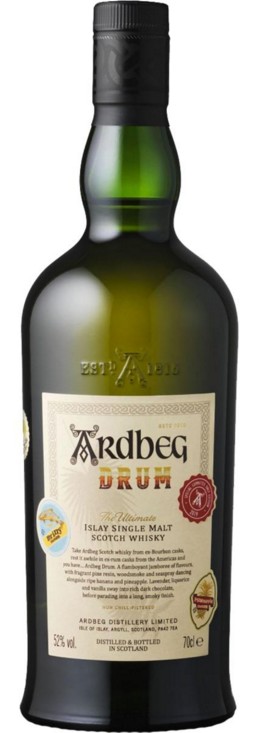
Ardbeg Drum Committee Release Whisky Review!

Ardbeg's first rum cask finish? And at 52%? Take my money!


Ardbeg Drum is 2019's special bottling for Ardbeg Day, the annual world-wide event marking Ardbeg's Feis Ile celebrations on Islay, which in 2019 won't take place until the first of June. But as has been the case for the last few years, members of the Ardbeg Committee are treated to an special version of these whiskies a few months prior to the general release. The Committee Release bottlings are presented with more understated labelling, are not packaged in outer boxes, and are bottled at higher strength than the general release versions (which have been getting consistently lower in strength each year, before settling at 46%). I would say these are the purist's versions, since along with the higher ABV the packaging isn't anywhere near as glitzy as that of the regular versions. Each year Ardbeg give their fans something different, and these whiskies are often either a first for Ardbeg or a first for Islay whisky in general, from last year's Grooves that was partly-matured in heavily charred red wine casks, to 2017's Kelpie that was partly-matured in virgin Russian oak casks, among others. Of the seven 'Ardbeg Day' whiskies we've seen so far, 2013's Ardbog is still my pick of the lot, followed by the 2012 Ardbeg Day bottling, 2018's Grooves Committee Release and 2016's Dark Cove Committee Release. But this year's bottling promises to be very different from its predecessors, thanks to one fact in particular...

This year's release is Ardbeg's first official bottling that has been finished in rum casks. Actually it's even more unusual because Ardbeg do not typically use cask finishes at all. Cask finishing, also known as secondary maturation, extra maturation, double maturation or additional cask enhancement is the practice of taking a maturing cask of whisky and re-filling it into a different type of cask for a relatively short period of time before bottling. Ardbeg tend to follow the full-term maturation route, where casks are filled and matured separately (usually for different lengths of time) before marrying (combining) them together for bottling. If we take 2013's Ardbog as an example, it was a marriage / vatting of ex-bourbon casks and ex-Manzanilla sherry casks, all aged for at least 10 years. The vast majority of Ardbeg's releases, including their core range of An Oa, 10-year old, Uigeadail and Corryvreckan, are matured in this way. It's a different approach that is far less common than the typical 6-12 month cask finish that we've seen from almost every distillery at some point. But for whatever reason Ardbeg went with a cask finish for this release. In their words, the whisky was "rested a while" in the ex-rum casks, which unfortunately is typically vague, so I would assume the finishing period was relatively short. Regardless, it's definitely had a pronounced effect.

That aside, the main point of difference here is of course those rum casks. Unfortunately we don't know a lot about them, only that they came from the Americas. I'll be the first to admit that I'm not a rum expert by any means, but based purely on taste and appearance I'd say they held a fairly light rum, sweet & tropical, or at least certainly not a dark rum. This sort of ambiguity is commonplace when it comes to rum casks in the whisky world, and it's still a rare thing to find a whisky that has spent time in rum casks. A few more details would be nice, and we may see that happen as rum casks become more widely used. As sherry casks become more expensive and demand continues to outstrip supply, to a much greater extent than the wine itself could hope for, we're already seeing more unusual cask types find their way into the mix along with other unusual and less "traditional" cask types. Rum casks can work very well with whisky, particularly peated whisky in my experience to date, and I've thoroughly enjoyed the rum cask-finished Kilchoman and refill-rum cask-matured Springbank that I've tasted previously. So there's absolutely no reason to think they won't work very well with Ardbeg's peaty & sweet Islay spirit. It's also nice to see the late former Ardbeg distillery manager Hamish Scott get a mention in the marketing materials for this release, ostensibly because he also worked at a Guyanan rum distillery before coming to Ardbeg, but whatever the reason it's nice to see him getting credit where it's due. During his tenure Scott was almost solely responsible for the debut appearance of Ardbeg as a single malt, and his wife Rhona now runs a fantastic B&B in Port Ellen, right on the harbour.

Australian Ardbeg fans have been very lucky over the last few years, with the local distributor selling limited quantities of the Committee Release bottlings directly to the waiting hordes, and at very reasonable prices. Each year the prices rise a little (like they do with almost everything) but it's important to remember that despite being such a small market and being so isolated we're getting access to Ardbeg bottlings that many countries do not. And they're actually always priced lower than the general release versions that follow them, when they could be priced significantly higher and would still sell out. Ardbeg Drum Committee Release's Australian allocation sold out in around six hours, despite being limited to two bottles per person, and those lucky (and organised) enough to get their hands on a bottle or two received their prize around a week later. It was priced at a reasonable $155 AUD plus shipping, and as always it'll now be on various reseller websites for at least double that. Based on that I'd expect the regular version of Drum to be priced at around $190-200 when it finally hits the shelves in June. This review is from my personal bottle, which was cracked on the day it arrived and has been open for around two weeks now. As with almost every year details are very scarce, all we know about Ardbeg Drum Committee Release is that is has been mostly matured in ex-bourbon casks and then finished in some sort of rum casks, bottled at 52% ABV, is non-chill filtered and naturally coloured. Time for a dram of Drum!


Ardbeg Drum Committee Release, NAS, 52%. Islay, Scotland.
Matured in ex-bourbon casks, finished in un-named rum casks. Non-chill filtered, natural colour. 

Colour: Pale-ish gold. A shade darker than the 10-year old. 

Nose: Sweet & very tarry straight away, plus some pine resin around the edges. Loads of ripe bananas, sweet herbs, sea salt & freshly shucked oyster shells. Tarry ropes, a little smoked chocolate, spiced & caramelised pineapple, some sweet herbs and vanilla cake batter. Fresh but under-baked banana muffins & some white pepper further in.  

Texture: Light-medium weight, syrupy sweet and peppery. Very slight touch of heat, in a pleasant way. 

Taste: Sweet and syrupy, with more caramelised pineapple, and a lovely dry, earthy, ashy peat with some black pepper following behind. Slightly astringent with that pepper and some pine resin, then more sweet herbs and a little simple (sugar) syrup (rum funk, if you will). Vanilla cake batter again. 

Finish: Medium length, but surprisingly light. Some chilli salt, more tar and more black pepper. A touch of licorice straps, dark loose leaf tea, more banana muffins, milk chocolate and wood spices. Sugar syrup, vanilla essence and black pepper wind things up.

Score: 3.5 out of 5. Not far off a 4, though. 

Notes: A tough one to score, this. It's noticeably lighter in the peat department compared to regular Ardbeg, and the sweetness has really been amped up, but there's a good volume of flavour on offer. Maybe that's why they decided on a cask finish? Regardless the rum influence is obvious, giving this Ardbeg a tropical, syrupy & herbal character that is admittedly unusual, but very enjoyable. Like most Ardbeg Day releases Drum is a departure from the norm, but it's a very pleasant dram that is easy drinking and fun, and it would go down well on a summers day even at 52% ABV. Which is not something that many Ardbegs could claim. 

I would rank Ardbeg Drum Committee Release behind Ardbog, and roughly on-par with the Committee Releases of Grooves and Dark Cove. You'll have to be a fan of sweet and tropical flavours and slightly lighter peat influence though, like quite a few of the previous "Day" releases if you go in expecting a typically Ardbeg experience you probably won't find what you're looking for. 

No doubt Ardbeg Drum will get the usual negative reaction from the anti-NAS and seemingly anti-Ardbeg "old guard", amongst the usual cries of it being overpriced. Granted this is not a traditional Ardbeg, but what would be the point of releasing the same whisky every year? Ardbeg, like Laphroaig to a lesser extent, go for a more accessible and unexpected release to commemorate their Feis Ile celebrations than the majority of distilleries, which means their international fans can enjoy the special bottlings just as much as the lucky few on Islay can. And more power to them. As for us Ardbeg fans on the other side of the planet, we need to be keep some perspective of what we're getting here. Special treatment like this is normally only seen in the United States with their massive population, ridiculous buying power and far lower duty and tax levels. We don't get looked after like this by any other Islay distillery, and very few distilleries at all, so let's be appreciative that Ardbeg continue to value their small but loyal Australian following. May it never end!

Cheers!

Hellyers Road Richly Peated 9 Year Old Whisky Review!

A new heavily peated ex-bourbon cask release from Tasmania's Hellyers Road Distillery! Might as well take a quick look at the specifics ...