Sunday, 31 March 2019

Longrow 14 Sherry Cask Whisky Review!

A properly dirty, earthy and funky Longrow from the hallowed grounds of Campbeltown's Springbank. Yes please.


Longrow is Springbank Distillery's double-distilled and heavily peated whisky, which only accounts for around 10% of their annual production. The distillery's namesake lightly peated & 2.5-times distilled Springbank whisky makes up 80% of their output, while the un-peated and triple-distilled Hazelburn takes up the remaining 10%. The double-distillation used in the Longrow spirit means that this whisky has skipped Springbank's third still altogether, and is only run through the distillery's direct-fired wash still and the worm tub condenser-equipped first spirit still, which normally operates as the intermediate low wines still. The spirit cuts for Longrow are taken considerably later in the run than those of the other styles, resulting in a dirtier and often lightly sulphurous whisky - which is no bad thing! Depending on conditions the floor-malted barley used for Longrow is dried for up to 48 hours over peat fires, resulting in roughly 50-55 ppm phenols in the barley. But despite that figure it doesn't usually show itself in the typical heavily peated fashion, it tends to present as more of a deep earthy note with gentle peat smoke around the edges. So Islay fans who're looking for a massive peat blast could be disappointed when they first try a Longrow, but it's not all about the peat in this whisky, and as always it's not all about the numbers. As with everything Springbank produce the volume of flavour, complexity and character on offer here is outstanding, particularly when served at cask strength as is the case with this bottling. 

Before we get into this whisky, let's take a quick look at sulphur. Sulphur gets a bad rap from quite a few whisky lovers (and some famous reviewers) who seem to be particularly sensitive to it, while on the other hand there are plenty who may not detect it at all, which results in it being a controversial subject. Personally I seem to be somewhere on the mid-to-lower side, and I have only come across a handful of whiskies where I found the type and level of sulphur notes to be wholly unpleasant, and in only one case actually intolerable. In some whiskies it adds character and depth, while in some it can ruin the entire experience. Sulphur in whisky tends to come from two sources, either during production as a by-product of  fermentation, and during cask maturation, particularly when looking at sherry and wine casks. The former is a natural result of the fermentation process and depends on a number of different factors such as barley variety, yeast type, and fermentation times and temperatures. It can either be stripped from the spirit through reactions with the copper during distillation, whether by reflux in the stills themselves (depending on their design and fill level) and also lower distillation temperatures and slower distillation, and/or through the use of shell & tube condensers. It is possible for a spirit run to be sulphur tainted in error through a too-fast distillation run or tired equipment, but if sulphur does remain in the spirit itself after distillation that is usually intentional and/or traditional for that distillery, and in most cases will 'only' result in a meaty, pungent or vegetal note in that distillery's whisky. A good example of that would be Craigellachie, where the remaining low levels of sulphur notes add to the whisky's character and become the distillery's calling card. That type of sulphur will progressively decrease during maturation, particularly when using first-fill or charred casks, through the natural extractive part of that process, and also the angel's share. Small amounts of sulphur is sometimes also mixed in with peat when kilning malted barley, particularly with heavily peated barley, to prevent the formation of nitrosamines in the malt, but this is generally treated or at least reduced by resting the kilned barley for a week or two prior to milling.

Where properly nasty sulphur issues and complete contamination will usually occur is in sherry and wine casks themselves. The main source was the burning of sulphur candles in empty casks to treat or prevent cask spoilage during storage or transport through bacterial contamination, which usually took place shortly before re-filling. When treated to excess the cask would become contaminated with sulphur, resulting in burnt rubber or vulcanised rubber notes, strong rotting vegetable notes or in the worst case scenario, actual rotten egg notes in the whisky (or other liquid, including wine) that went into that cask. If left unchecked that contamination would then carry through to subsequent fillings of the same cask, potentially affecting a large amount of liquid over a long time. This practice has drastically reduced in modern times, partly due to the requirement that sherry be bottled in Spain that was introduced in the 1980s which resulted in fewer casks being shipped overseas. Tainted or spoiled casks are usually identified and removed by the winery, cask broker, cooperage or distillery before they're filled, but occasionally a small number can slip through the cracks and potentially go on to ruin an entire batch of whisky, years or even decades later. In my opinion that is most definitely not the case with this Longrow, the meaty, rubbery and funky notes are meant to be there, adding to the whisky's character and certainly not ruining anything. 

This limited release 14-year old Longrow promises to be very characterful and extra funky, even for a Campbeltown whisky, because it has been fully matured in refill (likely second-fill) Oloroso sherry casks. It's all too easy to get caught up in the allure of first-fill casks as a whisky nerd, but second-fill or refill casks can also be outstanding, since without the full power of the cask's previous contents to resist the spirit itself can still assert itself, generally resulting in more distillery character showing through. Being a Longrow fan I was very excited about this release when it was first released in Britain back in mid-2018, and despite a reasonable release size of 9,000 bottles world-wide it sold out very quickly, to the point where it was impossible to find a bottle on my second pilgrimage to Scotland, which included a visit to Campbeltown itself, only two months later. Although it took more than six months to get here a small quantity has finally arrived on Australian shores, and it is still readily available at the time of writing at around $200 AUD. I was lucky enough to procure a sample from a generous fellow whisky geek, so I can share the love with yourselves. Longrow 14-year old Sherry Cask Matured was distilled in September 2003, matured in refill Oloroso sherry casks and bottled in July 2018 at a cask strength of 57.8% ABV, with 9,000 bottles released. And being a Springbank it is of course non-chill filtered and naturally coloured. Bring on the funk!      

Longrow 14-year old Sherry Cask Matured, 57.8%. Campbeltown, Scotland.
Heavily peated & double-distilled at Springbank Distillery. Distilled September 2003, matured in refill Oloroso sherry casks, bottled July 2018 at cask strength. Non-chill filtered, natural colour. 9,000 bottles. 

Colour: Bronze. 

Nose: Earthy, dank and meaty. Loads of dark chocolate, some dates, a little rubber, salted buttery biscuits (shortbread?). Very musty dark red grapes, old cooking grease, and rancio notes - beef stock cubes, cured pork (salami) and fresh mushrooms, and a little nutty warm oak. A little spearmint and red apple around the edges as it breathes. 

Texture: Warm, rich & earthy. Medium weight with a tiny flash of heat, notably little for the ABV. 

Taste: Richly sherried, earthy and funky. More dark chocolate but in mousse form now, plus cola lollies, salted roasted nuts (chestnuts?), a little rubber and more nutty & rancio dry sherry notes. Cured pork, a few under-ripe cherries and buttered brown mushrooms. 

Finish: Long length. More cola lollies and salted roasted nuts, a touch of fizzy earthy peat, dark chocolate mousse again and those musty red grapes. Plus a little smoked paprika, more cured pork, a splash of lemonade soft drink that has gone flat, and salted butter. 

Score: 4 out of 5. 

Notes: Well this Longrow is definitely not a beginner's whisky by any means. And as you can probably tell from those tasting notes it's certainly not going to be for everyone. But the sheer volume & complexity of flavour on offer here is fantastic! There's a lovely deep, dark, dank feel to it that is very different, but very enjoyable for fans of the style. It's not quite funky in the typical oily, dirty, farmyard-y Springbank fashion, but it's funky in a meaty, rancio way that does remind me of a very dark, musty, dry Oloroso sherry which has oxidised slightly. But there's also so much more to it, you couldn't really lump this Longrow in with any of the regular sherry bombs. It's just a funky beast of a whisky! 

If you're a fan of sherried Mortlach, Edradour, or Ben Nevis you'll probably find this to your liking, but with some extra-dirty funk thrown in. Despite being a peathead I must admit I would normally reach for a Springbank whisky over a Longrow, but presented with a Longrow like this there would be a far more difficult decision to make. In fact I would say this is my favourite Longrow single malt to date, narrowly beating the old Rundlets & Kilderkins bottling. Great stuff!

Cheers!

Sunday, 24 March 2019

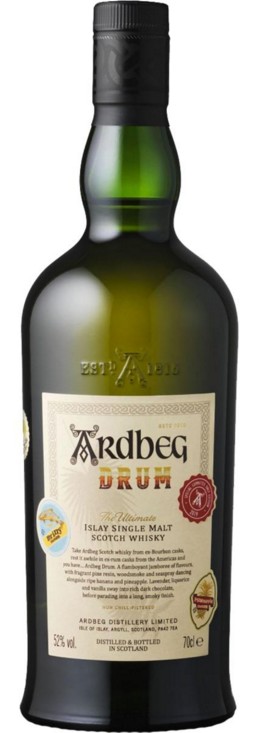
Ardbeg Drum Committee Release Whisky Review!

Ardbeg's first rum cask finish? And at 52%? Take my money!


Ardbeg Drum is 2019's special bottling for Ardbeg Day, the annual world-wide event marking Ardbeg's Feis Ile celebrations on Islay, which in 2019 won't take place until the first of June. But as has been the case for the last few years, members of the Ardbeg Committee are treated to an special version of these whiskies a few months prior to the general release. The Committee Release bottlings are presented with more understated labelling, are not packaged in outer boxes, and are bottled at higher strength than the general release versions (which have been getting consistently lower in strength each year, before settling at 46%). I would say these are the purist's versions, since along with the higher ABV the packaging isn't anywhere near as glitzy as that of the regular versions. Each year Ardbeg give their fans something different, and these whiskies are often either a first for Ardbeg or a first for Islay whisky in general, from last year's Grooves that was partly-matured in heavily charred red wine casks, to 2017's Kelpie that was partly-matured in virgin Russian oak casks, among others. Of the seven 'Ardbeg Day' whiskies we've seen so far, 2013's Ardbog is still my pick of the lot, followed by the 2012 Ardbeg Day bottling, 2018's Grooves Committee Release and 2016's Dark Cove Committee Release. But this year's bottling promises to be very different from its predecessors, thanks to one fact in particular...

This year's release is Ardbeg's first official bottling that has been finished in rum casks. Actually it's even more unusual because Ardbeg do not typically use cask finishes at all. Cask finishing, also known as secondary maturation, extra maturation, double maturation or additional cask enhancement is the practice of taking a maturing cask of whisky and re-filling it into a different type of cask for a relatively short period of time before bottling. Ardbeg tend to follow the full-term maturation route, where casks are filled and matured separately (usually for different lengths of time) before marrying (combining) them together for bottling. If we take 2013's Ardbog as an example, it was a marriage / vatting of ex-bourbon casks and ex-Manzanilla sherry casks, all aged for at least 10 years. The vast majority of Ardbeg's releases, including their core range of An Oa, 10-year old, Uigeadail and Corryvreckan, are matured in this way. It's a different approach that is far less common than the typical 6-12 month cask finish that we've seen from almost every distillery at some point. But for whatever reason Ardbeg went with a cask finish for this release. In their words, the whisky was "rested a while" in the ex-rum casks, which unfortunately is typically vague, so I would assume the finishing period was relatively short. Regardless, it's definitely had a pronounced effect.

That aside, the main point of difference here is of course those rum casks. Unfortunately we don't know a lot about them, only that they came from the Americas. I'll be the first to admit that I'm not a rum expert by any means, but based purely on taste and appearance I'd say they held a fairly light rum, sweet & tropical, or at least certainly not a dark rum. This sort of ambiguity is commonplace when it comes to rum casks in the whisky world, and it's still a rare thing to find a whisky that has spent time in rum casks. A few more details would be nice, and we may see that happen as rum casks become more widely used. As sherry casks become more expensive and demand continues to outstrip supply, to a much greater extent than the wine itself could hope for, we're already seeing more unusual cask types find their way into the mix along with other unusual and less "traditional" cask types. Rum casks can work very well with whisky, particularly peated whisky in my experience to date, and I've thoroughly enjoyed the rum cask-finished Kilchoman and refill-rum cask-matured Springbank that I've tasted previously. So there's absolutely no reason to think they won't work very well with Ardbeg's peaty & sweet Islay spirit. It's also nice to see the late former Ardbeg distillery manager Hamish Scott get a mention in the marketing materials for this release, ostensibly because he also worked at a Guyanan rum distillery before coming to Ardbeg, but whatever the reason it's nice to see him getting credit where it's due. During his tenure Scott was almost solely responsible for the debut appearance of Ardbeg as a single malt, and his wife Rhona now runs a fantastic B&B in Port Ellen, right on the harbour.

Australian Ardbeg fans have been very lucky over the last few years, with the local distributor selling limited quantities of the Committee Release bottlings directly to the waiting hordes, and at very reasonable prices. Each year the prices rise a little (like they do with almost everything) but it's important to remember that despite being such a small market and being so isolated we're getting access to Ardbeg bottlings that many countries do not. And they're actually always priced lower than the general release versions that follow them, when they could be priced significantly higher and would still sell out. Ardbeg Drum Committee Release's Australian allocation sold out in around six hours, despite being limited to two bottles per person, and those lucky (and organised) enough to get their hands on a bottle or two received their prize around a week later. It was priced at a reasonable $155 AUD plus shipping, and as always it'll now be on various reseller websites for at least double that. Based on that I'd expect the regular version of Drum to be priced at around $190-200 when it finally hits the shelves in June. This review is from my personal bottle, which was cracked on the day it arrived and has been open for around two weeks now. As with almost every year details are very scarce, all we know about Ardbeg Drum Committee Release is that is has been mostly matured in ex-bourbon casks and then finished in some sort of rum casks, bottled at 52% ABV, is non-chill filtered and naturally coloured. Time for a dram of Drum!


Ardbeg Drum Committee Release, NAS, 52%. Islay, Scotland.
Matured in ex-bourbon casks, finished in un-named rum casks. Non-chill filtered, natural colour. 

Colour: Pale-ish gold. A shade darker than the 10-year old. 

Nose: Sweet & very tarry straight away, plus some pine resin around the edges. Loads of ripe bananas, sweet herbs, sea salt & freshly shucked oyster shells. Tarry ropes, a little smoked chocolate, spiced & caramelised pineapple, some sweet herbs and vanilla cake batter. Fresh but under-baked banana muffins & some white pepper further in.  

Texture: Light-medium weight, syrupy sweet and peppery. Very slight touch of heat, in a pleasant way. 

Taste: Sweet and syrupy, with more caramelised pineapple, and a lovely dry, earthy, ashy peat with some black pepper following behind. Slightly astringent with that pepper and some pine resin, then more sweet herbs and a little simple (sugar) syrup (rum funk, if you will). Vanilla cake batter again. 

Finish: Medium length, but surprisingly light. Some chilli salt, more tar and more black pepper. A touch of licorice straps, dark loose leaf tea, more banana muffins, milk chocolate and wood spices. Sugar syrup, vanilla essence and black pepper wind things up.

Score: 3.5 out of 5. Not far off a 4, though. 

Notes: A tough one to score, this. It's noticeably lighter in the peat department compared to regular Ardbeg, and the sweetness has really been amped up, but there's a good volume of flavour on offer. Maybe that's why they decided on a cask finish? Regardless the rum influence is obvious, giving this Ardbeg a tropical, syrupy & herbal character that is admittedly unusual, but very enjoyable. Like most Ardbeg Day releases Drum is a departure from the norm, but it's a very pleasant dram that is easy drinking and fun, and it would go down well on a summers day even at 52% ABV. Which is not something that many Ardbegs could claim. 

I would rank Ardbeg Drum Committee Release behind Ardbog, and roughly on-par with the Committee Releases of Grooves and Dark Cove. You'll have to be a fan of sweet and tropical flavours and slightly lighter peat influence though, like quite a few of the previous "Day" releases if you go in expecting a typically Ardbeg experience you probably won't find what you're looking for. 

No doubt Ardbeg Drum will get the usual negative reaction from the anti-NAS and seemingly anti-Ardbeg "old guard", amongst the usual cries of it being overpriced. Granted this is not a traditional Ardbeg, but what would be the point of releasing the same whisky every year? Ardbeg, like Laphroaig to a lesser extent, go for a more accessible and unexpected release to commemorate their Feis Ile celebrations than the majority of distilleries, which means their international fans can enjoy the special bottlings just as much as the lucky few on Islay can. And more power to them. As for us Ardbeg fans on the other side of the planet, we need to be keep some perspective of what we're getting here. Special treatment like this is normally only seen in the United States with their massive population, ridiculous buying power and far lower duty and tax levels. We don't get looked after like this by any other Islay distillery, and very few distilleries at all, so let's be appreciative that Ardbeg continue to value their small but loyal Australian following. May it never end!

Cheers!

Sunday, 17 March 2019

Port Charlotte MRC01 Whisky Review!

A new Port Charlotte release that is very exciting! And it's cask strength Port Charlotte, so it's already following a winning recipe...


Port Charlotte is Bruichladdich's heavily peated whisky, named after the village of Port Charlotte down the road from Bruichladdich, as a homage to the Loch Indaal Distillery that closed in 1929. Weighing in at 40 ppm on the malt, Port Charlotte sits between the distillery's unpeated Bruichladdich whisky and the super-heavily peated Octomore whiskies. But don't panic, there's still plenty of smoke to be found here. The Port Charlotte "brand" has undergone something of a refresh in the last year or so, re-launching during the 2018 Feis Ile celebrations with new expressions, a new bottle and label design, and a renewed spotlight on this often (wrongly) overlooked whisky. Since then we have seen a new permanent addition to the Port Charlotte range, the 10-year old, and a new 2011-vintage Islay Barley expression (both reviewed here) in the new packaging. Both of those great whiskies now include wine casks in their recipes / vattings, and are very reasonably priced, and although I preferred the Islay Barley expression when first introduced to them, I now have trouble picking a winner between the two. And now we have a brand new and very exciting addition to the range, a cask strength expression that has spent time in French red wine casks!

My level of anticipation is very high for this one. Even higher than it always is for each whisky that Bruichladdich release, in fact, because the seed had already been planted by a very special cask that was sitting in that cold, damp warehouse at Bruichladdich during my first pilgrimage to the Hebridean paradise of Islay. The entire experience at that warehouse tasting was phenomenal, but despite being a huge Octomore fan, on that occasion it was the Port Charlotte cask that really blew me away. It was a fully-matured Bordeaux red wine cask, at 12-years of age and 57% ABV, and it was one of the whisky highlights of that entire pilgrimage to Scotland. This whisky is a little different, and of course it's not really fair to compare it to a single cask that was specially selected for the warehouse tastings at the distillery, but (spoiler alert) it's a fantastic dram. Port Charlotte MRC01 is a 7-year old whisky that was distilled in 2010 from Scottish barley peated to 40 ppm at Bairds Maltings in Inverness, and was matured in 50% first-fill bourbon casks and 50% second-fill French wine casks for six years, before being married together and finished (or additional cask enhanced - ACEd -  in 'laddie speak) for a further year in first-fill red wine casks from the Bordeaux region of southern France. It was bottled at a strength of 59.2% ABV, and of course is non-chill filtered and naturally coloured.

Given the name (or codename) of this bottling, the astute wine buffs have probably already guessed where those finishing casks came from. Unfortunately Bruichladdich aren't allowed to say anything more than "the left bank of the Bordeaux region", which is home to over 200 producers of many different types of wine. These acronyms are going to be the standard for Port Charlotte going forward, and they've already been used to great success in bottlings like the travel-exclusive CC01 (cognac cask), and the more recent of the distillery exclusive Valinch bottlings. In this case we can reasonably deduce that those casks came from a particularly famous producer in the Paulliac appellation that can be traced back to the 18th century. These casks would certainly not have come cheap!

This is the first general release (i.e. not travel- or distillery- exclusive) high strength bottling of Port Charlotte in quite a while. At least it is if you don't consider Bruichladdich's current standard bottling strength of 50% ABV to be high enough! If memory serves the last was the extremely limited (6,000 bottles) PC10 cask strength bottling from 2011, which I don't believe ever made it to Australia, and which is not to be confused with the 'regular' bottlings of 10-year old Port Charlotte - of which there have now been three different versions. MRC01 is not yet available in Australia, but it's on the way, and at a series of recent tastings hosted by the magnificent Chloe Wood, Bruichladdich's Asia Pacific Brand Ambassador, and Mark Hickey of Australian distributor Spirits Platform, a lucky few were given the chance to pre-order a bottle or two before they arrive in April. And yes, I'm already on the list! There's no official figure on the number of bottles in this release, but sadly only a very small quantity are going to make the lengthy voyage to Australia. After a fantastic tasting in Brisbane at the end of Chloe's extremely busy tour, where the MRC01 was the stand-out whisky of an already excellent line-up, I was lucky enough to secure a little extra sample for this review. So let's get to it!

Port Charlotte MRC01 2010, 59.2% cask strength. Islay, Scotland.
Distilled in 2010 from Scottish barley peated to 40 ppm, matured in 50% first-fill ex-bourbon & 50% second-fill ex-French wine casks for 6 years, married & finished for 1 year in Bordeaux wine casks. Natural colour, non-chill filtered.

Colour: Amber.

Nose: Lovely. Fruity, softly spicy & smoky. Charred BBQ smoked meats, warm charcoal briquettes, a flash of salted lemon, drying kelp and warm asphalt. Dried cherries and grilled peaches, and a little brown sugar. Time brings out more spicy wood smoke (mesquite?) and hints of gristy malt in the background.

Texture: Lovely again. Medium-heavy weight, lightly oily. Remarkably mellow for 7 years of age and over 59% ABV.

Taste: Sweet fruity entry, with more cherry and peach, plus some plum and a little nectarine now. And they're all caramelised & lightly charred from the grill. Then a gorgeous wave of that thick sweet & spicy BBQ wood smoke, with a little drying wood ash. Some thick butter & brown sugar caramel underneath.

Finish: Medium-long length. That sweet & spicy wood smoke carries through, with some grilled salted lemon, and all of that grilled stone fruit again, but with the brown sugar caramel served alongside for dessert. There's a little medicinal edge coming through the smoke to finish, like a freshly unsealed but older bandage.

Score: 4.5 out of 5.

Notes: Picture a wood-fired BBQ full of charred smoked meat and caramelised stone fruit with a few squirts of lemon over the top, and let that soak in. That's where this whisky takes you. And it's absolutely fantastic! This is no massive Islay peat bomb, but the volume, complexity and balance of flavour on offer here is really remarkable. Especially considering the age and ABV. But rest assured, there's still plenty of smoke to be found in this Port Charlotte, and it's a delicious sweet and spicy wood smoke that has worked perfectly with those French wine casks. This is a great example of what Port Charlotte is all about. It stands apart from all of the other Islays, it's approachable and enticing, and it's capable of absolute magic!

It's looking like MRC01 will be quite reasonably priced as well, so if you get the chance to grab one of these, I suggest you do so immediately. This is an excellent example of what this versatile and yes, progressive, Islay distillery does. Hats off to Bruichladdich, you've nailed it again!

Cheers!

Sunday, 10 March 2019

Bruichladdich Rocks Whisky Review!

Yes, Bruichladdich does rock! But this is actually a long-discontinued expression that was distilled not long after the distillery's resurrection, and was available from 2007-2013. Exciting stuff!


Much has been said of Bruichladdich's rescue at the hands of Mark Reynier, Simon Coughlin and Jim McEwan (and others) back in 2001, who resuscitated the distillery after a six-year sleep. Plenty of equipment & building repairs were required following the neglect that the site had suffered at the hands of it's previous owners over that time, but there's now no doubt that it was all worth it. The distillery is unquestionably a powerhouse these days, and thanks to the recent purchase by Remy Cointreau there's no sign of that changing in the future. In fact the new owners are investing in expansion, and I get the feeling that the new backing will allow the distillery to move forward on plenty of projects that have been in the pipeline or on the sideline for a long time. Case in point is the recent announcement that Bruichladdich now has its own farm set aside for growing their own barley on Islay, meaning that once the planned floor maltings are built they'll be the second Islay distillery to grow, malt and mill their own barley, and then mash, ferment, distill, mature and bottle their spirit on-site. Very exciting times ahead!

I've only tried a couple of the un-peated Bruichladdich bottlings from this earlier era (not including the peated Port Charlotte and super-heavily peated Octomore), and they are few and far between these days. The older bottlings that are currently available such as the Black Art series were all distilled prior to the 1995 closure, and are understandably getting very expensive now. On the other hand the contemporary young Bruichladdich whiskies are of consistently excellent quality, and are essentially what the distillery is now known for. Bright, fresh, and delicious un-peated malt-forward drams with loads of character and loads of maturity for their age. The earlier young bottlings were a little different in style, and were arguably less focused on barley and - in 'laddie speak - "uber-provenance" than they currently are, and in my admittedly limited experience they were also less consistent. But the living legend Jim McEwan of course was - and still is - a master of his craft, and without his input Bruichladdich would have been very different to what it is today. So getting the chance to try any of his early work at Bruichladdich is always very special!

The expression that we're looking at today, 'Rocks', was part of a series of three bottlings that were inspired by the distillery's surroundings. The other two in the series were 'Waves', referring to Loch Indaal over the road from the distillery and the Atlantic Ocean that feeds it, and 'Peat', which shouldn't need any further explanation! What's more interesting here is that all three of these releases were peated, and peated to different levels, and as you'd expect Waves and Rocks were only very lightly peated. Waves was finished (ACE'd, in 'laddie speak) in Madeira casks, Peat was fully-matured in bourbon casks but was a mix of Bruichladdich, Port Charlotte and Octomore spirit, and Rocks was finished in French Syrah red wine casks. Rocks was the least peated of the three, and was also the last to be discontinued back in 2013. The name of this expression refers to the Rhinns of Islay, the rocky area on the western side of the island that is home to the distillery and it's water source. Rocks is an NAS vatting of 6-9 year old casks, married together and finished in those Syrah casks for around 9 months, and is bottled at 46% ABV which was then the standard bottling strength (it's now 50%). Since it's a Bruichladdich it is of course non-chill filtered and naturally coloured. There are a few murmurings on the 'net that this single malt was designed to be served on the rocks (with ice), but I can't find anything official on that anywhere, nor on the packaging, so I don't think that's the case. Either way, just neat for me thanks!

Bruichladdich Rocks, NAS, 46%. Islay, Scotland.
Very lightly peated, vatting of 6-9 year old ex-bourbon casks finished in Syrah red wine casks for around 9 months. Non-chill filtered, natural colour.

Colour: Gold.

Nose: Fresh, fruity & peppery, not as bright, sweet or clean as more modern Bruichladdichs, but that could be down to those wine casks doing their thing. It has a little yeasty funk to it as well, not the usual 'laddie lactic note. Light wine tannins, acidic pear drops, and a mild red grape must. A nice sweet vanilla bean paste and some fresh lemon juice coming through with more time.

Texture: Medium weight, lightly astringent & drying, a touch of peppery heat on entry but pleasant.

Taste: Peppery wine tannins, a little semi-sweet honey & citrus, dry mild chilli spice, like Szechuan peppercorns. More of that yeasty funk which is different but enjoyable. Light salty tang as well, reminds me of iodised table salt.

Finish: Medium length. Those spicy dry peppercorns follow through but the fruit then takes over, a nice mix of green / under-ripe tropical fruit, those acidic pear drops and that red grape must. The salt comes through again too but with more power, like a salt lick, which turns to a drying & lightly astringent minerality as it tapers off.

Score: 3 out of 5.

Notes: Interesting stuff! An enjoyable dram that reminds me a little of the old WMD II 'yellow submarine' bottling that I first tried a while ago. It's more musty and funky than we now think of with Bruichladdich, but that wine cask finish, or ACE for Additional Cask Enhancement in 'laddie speak, is probably responsible for some of that difference. That's not a criticism by any means mind you, it's just different, which is never a bad thing!

Those wine casks have definitely had an effect, perhaps adding more complexity, but they haven't overtaken the spirit and it all works quite well together. That saltiness is very enjoyable too, in fact this is probably the saltiest Bruichladdich bottling that I've come across to date, and I like how it turns into an ozone-y minerality on the finish - definitely evoking the rocks & the Rhinns that the whisky was named after! If you're a 'laddie fan and you stumble across a bottle of this long-discontinued expression, it's definitely worth picking up for near its original price. But I wouldn't spend up big on a bottle of Rocks when the current range of young Bruichladdichs is just so damn good...

Cheers!

Sunday, 24 February 2019

Puni Nero Whisky Review!

An Italian whisky! This is a first for me, and something tells me it's going to be an interesting one...


Puni Distillery is the only whisky distillery in Italy, located near the Swiss border in the Italian alpine region in the far north of the country, around four hour's drive north-east of Milan. This family-owned distillery is named after the nearby Puni River, and is housed in the very modern cube-shaped building pictured above (no whitewashed stone here!), which was built in 2010 with production commencing in 2012. But there seem to be a few points of difference in the whisky itself that are a little different from the norm. Puni's whisky is made from a mix of malted barley, malted rye and malted wheat. Yes, rye and wheat can also be malted, but the addition of these two other grains (whether malted or 'green') make this a grain whisky, not a malt whisky, by the Scottish regulations. Italy is not in Scotland of course, and the European Union whisky regulations only state that whisky must be "made from malted cereal grains, with or without whole grains of other cereals" which is very vague, and there is no provision for terms like single malt, malt whisky or grain whisky in their definitions. Puni have chosen to call their product "Italian Malt Whisky", which is obviously fine by the EU definitions, and all of the grain used has been malted, so it does make sense.

The majority of the EU whisky definitions do match those of the Scotch Whisky Association, including the minimum 3 year age and 40% ABV bottling strength, the maximum 94.8% ABV distillation strength and 700-litre cask size, and E150a caramel colouring being the only permitted additive. But those casks are only required to be "wooden", oak is not specified like it is in Scotland and the United States. Many countries around the world have ambiguities like this - and often more - in their definitions and regulations, including Australia & Japan. But many of the quality international producers do choose to follow the Scotch whisky regulations, and it'd be nice to get everyone on a more even playing field, wouldn't it? There's no questioning the massive effect that the use of different grains make to a whisky, with spirits predominantly distilled from rye, wheat, corn and barley being markedly different from one another. I must admit the use of different wood types for whisky maturation would be an interesting thing to explore, and a few "new world" distilleries have started doing just that. But there are already hundreds of different oak species out there, so there's already plenty of room for more exploration and experimentation in that area than seems to be happening at the moment.

Back to the subject at hand. Two of those three different malted grains, the rye and wheat, are sourced locally from northern Italy, while the barley is apparently imported from nearby Austria. The local South Tyrol region was actually part of Austria prior to World War II, to the point where the majority of the population have Austrian names and speak a mix of Italian and Austrian. Aside from the grains used production at Puni is otherwise traditional, being mashed on-site, using wooden washbacks for fermentation and being double distilled in Scottish-built copper pot stills that were built & installed by Forsyths in Speyside. Puni use a number of different cask types for maturation, from virgin oak and ex-bourbon to Marsala and Pinot wine, to PX sherry and refill ex-Islay whisky casks, and some of those casks are actually matured underground in re-purposed WWII-era bunkers. The distillery also benefits from the wide variances in the local climate, from warm temperatures in the mid-twenties in summer to below freezing in winter, which helps give the maturating casks a hurry-up.

The Puni expression we're looking at today is Nero (Italian for "black"), which refers to this whisky being matured in casks that previously held Pinot Nero red wine, which is the Italian term for Pinot Noir, sourced from local wineries. This expression did win the World Whiskies Award for best Italian single malt in 2017, but let's remember that there is only one Italian whisky distillery, and by the most widely-accepted definition of the term this isn't exactly single malt, so let's not get too caught up in that. This sort of situation does highlight the frivolity of some of these international whisky awards, particularly when they're very effective marketing exercises for the entrants and subsequently the awards themselves. Puni Nero is an age-stated (which should be commended) 3-year old whisky bottled at 43% ABV, and is non-chill filtered and naturally coloured. This is the 2016 bottling which is still readily available in Australia for around $140 AUD, with only 3000 bottles released. Let's give it a go...

Puni Nero, 3-years old, 43%. Glorenza, Italy. 
Distilled from malted barley, malted rye & malted wheat. Matured in local ex-Pinot Nero (Italian Pinot Noir) casks. 2016 release, 3,000 bottles. Non-chill filtered, natural colour.

Colour: Amber.

Nose: Light & fruity, quite wine (grape) forward to start with. Musty, gamy red grapes, a little mint, some dry herbal honey and light toasted oak. Touch of coconut around the edges. Spicy grain and dark chocolate with more breathing time.

Texture: Light-medium weight, but lightly flavoured. Slight touch of heat on the back end.

Taste: Spicy, quite rye forward here. Toasted grain and a little yeasty rye bread. More gamy and musty red grapes, but much lighter here than it was on the nose. A little powdery dark chocolate as well.

Finish: Short & light. Flashes of coconut and chocolate again, but the rye spices are still the main player. Fades quite quickly with a little musty grape and a touch of prickly heat on the tongue.

Score: 2.5 out of 5.

Notes: A pleasant drop, night and light and fruity, with a refreshing spice to it. And that's coming from someone who doesn't exactly love grain whisky in most cases. I wonder what proportion of each grain were used in this one? This Puni would make for a good summer's day dram I'd say, and it'll be to the liking of fans of spicy red wines as well. It's a little unfamiliar to the malt drinker, but that's not a criticism. Variety is the spice of life, after all.

Overall it's a good showing from a young and very "new world" distillery, and it's well worth a shot when you're looking for something a little lighter and a little refreshing.

Cheers!

Sunday, 17 February 2019

Tobermory Bordeaux Cask 2008 Whisky Review!

A hand-filled 200ml cask sample, exclusively sold from the distillery shop. So it may not be easy to find, but it's well worth the trip...


The Isle of Mull is a short 30-minute ferry ride from the town of Oban on Scotland's west coast, itself a 3.5-hour drive from Edinburgh. Don't believe Google or your Sat Nav on that trip either, driving in the Highlands is not as easy as it looks on a map! Particularly if you leave your departure a little late and end up spending the latter third of the trip driving in darkness and heavy rain like I did. But it's a beautiful part of the world, and there's plenty to see on the way, particularly if you travel north via Falkirk and Stirling, and you could also take a detour to Glen Coe which looks absolutely incredible. Mull itself is quite large, larger than Islay to the south, and the ferry from Oban doesn't stop at the island's main town of Tobermory, only at Craignure which is around 40 minute's drive away. The attractive little town of Tobermory itself has plenty to offer as well, but let's be honest here, we're mainly interested in the fact that it's home to Mull's only distillery!

Tobermory Distillery sits on the right-hand side of the islands main road as you enter the namesake town, which is an area named Ledaig (pronounced "leh-chaig"), facing the main harbour and its iconic multi-coloured buildings. The distillery was actually named Ledaig up until 1979, and had a tumultuous past until it was purchased by Burn Stewart Distillers in 1993, now owned by South African company Distell. The distillery has just returned to production after a two year shut down for major upgrades to the "visitor experience" and major maintenance which included completely replacing their four stills and four wooden washbacks. My visit last year was in the midst of that shut down, but they were still open for tours and sales and have been releasing new limited edition bottlings from their existing stocks, including a few distillery exclusive bottlings that are well worth a look if you're over that way. Tobermory and sister distilleries Bunnahabhain and Deanston seem to be well aware of the value of rewarding their visitors with interesting expressions of their whiskies, and those whiskies are often quite reasonably priced, which is great to see.

I usually prefer Tobermory's peated bottlings, which are bottled as Ledaig, over the unpeated Tobermory whisky. Particularly at cask strength when it's spent some time in a sherry cask. But during my visit to the distillery I was particularly impressed with two Tobermory whiskies, a 17-year old Madeira finish bottling, and the very interesting 200ml cask sample that we're looking at here. During my visit there was a choice of two of these hand-filled cask strength bottlings, an excellent 14-year old Oloroso sherry-matured Ledaig, and this Bordeaux wine-matured Tobermory. They were selling for 30- and 25-pounds respectively, which may sound expensive for nondescript 200ml bottles, but considering the rarity, exclusivity and quality of these whiskies it's not unreasonable. As good as the full-sized offerings were, particularly that Madeira finish, it was these two hand-filled offerings that promptly stole my attention and took my money. And as usual, I already know that I should've bought two. The Tobermory example that we're looking at today is a 10-year old whisky, distilled in 2008, that has been fully matured in a single red wine cask from the Bordeaux region of Southern France. Unfortunately there's no information on oak type, cask number or number of bottles, in fact these little beauties seem to have a similar approach to Cadenheads' cask samples a.k.a 'cage bottles' in that there're absolutely no frills to be seen! This one was bottled at an impressive cask strength of 62% ABV, and is non-chill filtered and naturally coloured since Tobermory and her sister distilleries don't muck around with that sort of thing anymore. Let's get to it!

(apologies for the photo)
Tobermory 2008 Bordeaux cask, 10-year old, 62%. Isle of Mull, Scotland.
Distillery exclusive hand-filled 200ml cask sample, fully matured in a single Bordeaux red wine cask. Non-chill filtered, natural colour.

Colour: Deep bronze with a few tiny bits of barrel char as a bonus. Awesome!

Nose: Takes a while to relax and open up, but it's well worth the wait. Loads of sweet stewed fruit and berries: strawberry, green (under-ripe) pineapple, guava, raspberry and a little plum. Mild roasted nuts, sweet buttery pastry and golden syrup, like a warm pecan pie. A touch of brine with more time, plus black pepper and juicy charred oak. Fantastic.

Texture: Medium weight, warming and a little astringent with a touch of heat (it's 62%, remember!).

Taste: Lots of fruit again, but considerably less sweet than it was on the nose. More black pepper and a touch of light bitterness, like burnt toffee. Some light tannins as well, but in an enjoyable way (and I'm usually not a fan). A hint of plain (natural-flavour) bubblegum, more pineapple and stewed red berries.

Finish: Long. Very peppery here, and astringent again with a slight zing of chilli thrown in. Some more tannins and a hint of spent coffee grounds, more pastry and burnt toffee. The fruit returns further on, particularly that tasty pineapple note which is now more syrupy.

Score: 3.5 out of 5.

Notes: The nose is just fantastic on this one, once it opens up anyway, and when it does there's so much to explore! The palate is great as well with plenty of complexity, but the finish is a little disappointing after what came before it. It's a little too peppery and drying there, although not in a harsh or rough way, and not only from the high ABV. That pineapple note in this dram is really enjoyable, going from sour under-ripe fruit to naturally flavoured sweet syrup, like you'd find in a high-end ice block / popsicle. The wine cask has definitely had an effect as well, but rather than overwhelm anything else (although the pepper wasn't shy) it's well integrative and has added loads of depth to the whole experience.

A really enjoyable whisky that is just held back by the finish, and it's totally different to any Tobermory I've tasted before, which makes for the ideal distillery exclusive bottling. If you do manage to come across this one, it's well worth a go. And it's a great liquid souvenir from the little Isle of Mull over on the other side of the planet.

Cheers!

Sunday, 10 February 2019

Octomore 8.1 Whisky Review!

Since the final bottling of the Octomore 9-series was just released overseas, it's about time I reviewed 8.1 from the previous series. And it just happens to be one of my favourite _.1 Octomores to date!


Those 9-series bottlings will still be at least a few months away from Australian shores, but all is not lost for Aussie Octomore fans, there are still plenty of the excellent 8-series "Masterclass" bottlings around. Including quite a few of the ridiculously good 309ppm 8.3 Islay Barley (reviewed here)! Which is a real surprise to me, I would've thought that glorious whisky would have flown off the shelves in the blink of an eye! If you're still after one of those I suggest you move quickly, and don't be afraid to shop around. From one Octomore fan to another it's not one you're going to want to miss.

That said, you're probably not going to want to miss this one either, because Octomore 8.1 is my second-favourite _.1 release to date, bettered only by the beastly and long-departed 5.1. 8.1 is still readily available from a number of Australian sellers at reasonable prices, although at $200-210 it's more expensive than previous _.1 releases have been. But that's understandable when you consider that it's 8-years old, as are the travel exclusive wine-matured 8.2 and partly-virgin oak matured 8.4 in the series, whereas the vast majority of other Octomore releases are 5-years old. Older Octomores can be utterly fantastic, with the incredible OBA and 2016's 10-year old Second Release being great examples. That extra age has definitely made a big difference to these 8-series whiskies, they're quite refined and disarming for Octomores, and even at their high strengths and peat levels all are remarkably easy to drink (but so is the 5-year old 8.3). Speaking of peat levels, with the exception of the aforementioned 8.3 the 8-series is 'down' to 167 ppm, which in reality is still a very high number. But as we've covered before that figure doesn't tell the full story since that measurement comes from the malted barley itself which is then milled, mashed, fermented, distilled and matured for years prior to bottling. Bruichladdich's tall stills, slow distillation and narrow spirit cuts will also have a huge effect on the finished product, as will the extra three years that Octomore 8.1 has spent in first-fill casks. So this probably isn't going to be the big beastie that you'd expect if you're only looking at the numbers.

While the more adventurous releases in each series always get more attention, the ex-bourbon cask-only _.1 Octomores are always the purest and clearest way to explore the Octomore spirit itself, since there are no fancy exotic cask influences getting in the way. They're always the lowest priced and most accessible bottling in each series, so they're ideal for newly reborn peat-heads to dip their toes in the (very peaty) water before jumping in head first. And this one is the ideal example of that. Octomore 8.1 was distilled in 2008 from Scottish barley, peated to 167 ppm at Bairds Maltings in Inverness, and spent eight years in first-fill bourbon casks from five different bourbon distilleries: Clermont Springs, Buffalo Trace, Jack Daniels, Four Roses and Heaven Hill. It was bottled at 59.3% ABV without any chill filtration or added colouring, since Bruichladdich don't go anywhere near that nonsense. And we certainly love them for it!

Octomore 8.1, 8-years old, 59.3%. Bruichladdich Distillery, Islay, Scotland.
Distilled from Scottish barley peated to 167 ppm, aged in first-fill ex-bourbon casks. Non-chill filtered, natural colour. 42,000 bottles.

Colour: Full gold.

Nose: Sweet, salty and slightly muddy. A big pile of drying kelp on a stony beach, with some chilled vanilla custard, a little sweetened lemon juice and black pepper. Distant bonfire smoke, and a little salt-washed driftwood. A floral sweetness and lovely dry, earthy peat with more breathing time.

Texture: Lovely. Medium weight, oily and peaty. Slight heat on the back, but in a pleasant way.

Taste: Sweet on entry like a stone fruit syrup, and some vanilla paste before the big earthy, muddy peat comes to the fore. A pinch of dry chilli flakes, a drop of floral honey and black pepper, and some vanilla fudge behind the peat.

Finish: Long. The muddy earthy peat carries through, as does the chilli flakes and black pepper. Then the peat dries out, with some smoked sea salt and a little ginger alongside. Some vanilla custard and more stone fruit syrup, and some drying ashy smoke and wet stone behind the sweetness.

Score: 4 out of 5.

Notes: Very, very good! It may not be the most "out there" or exotic Octomore around, but there's absolutely no shortage of character or flavour and it's very good at what it does. It's very Islay, with some extra earthy peat of course, and it's surprisingly refined and alluring for an Octomore. And there are no off-notes to speak of, it's just pure peat & sweet Islay sexy-ness from start to finish!

This would definitely make for a good introductory Octomore, but any established Islay fan is going to love it as well. Yours truly included. Definitely my second favourite _.1 to date, since that beastly 5.1 holds a special place in my heart as the Octomore that got me hooked on Octomore (talk about jumping into the deep end!). But the extra three years on this 8.1 has worked wonders if you ask me, and I'd say this is actually an Octomore that you can keep going back to, it's not going to wipe out your senses for the rest of the night. Maybe even a "session-able" Octomore! Well done Bruichladdich, as always.

Cheers!

Hellyers Road Richly Peated 9 Year Old Whisky Review!

A new heavily peated ex-bourbon cask release from Tasmania's Hellyers Road Distillery! Might as well take a quick look at the specifics ...