I've been sitting on some interesting samples for quite a while now, but it's time to get them out of the way. *Sigh*, what a chore!
Old Pulteney (pronounced pult-knee) distillery is located in Wick, on the North Eastern coast of Scotland, and is the most Northerly distillery on the Scottish mainland. Wick is an old fishing town, and both it and the distillery were initally only accessible by sea. The fishing industry has since disappeared, but the distillery embraces this maritime history and character, naming itself 'the genuine maritime malt', and featuring a herring-fishing boat on their label.
I haven't found a great deal of that character in the 12yo, which is the only Old Pulteney I've tasted so far, falling short of the influence you'd expect in an Islay or Talisker (at least for now: most of Talisker's whisky is now matured on the mainland). In fact I found the 12yo to be very mild and basically uninteresting to my taste buds. This particular expression here, however, promises to be quite different.
The 1990 vintage was released in 2013, and being matured in Wick for that 23 years, we can expect a fair bit more maritime influence in this one. Oh, and this bottling has been matured in refill ex-bourbon and ex-sherry casks, which previously matured an un-named heavily-peated whisky, believed to be an Islay malt. It's also been bottled at 46%, and without chill filtration or added colouring. Interesting...
The practice of maturing a normally un-peated malt in casks which previously matured a heavily-peated one is becoming a little more common, usually adding a mild peaty & smoky depth to the whisky. The new spirit itself has not been peated, of course, so there's no change to the production process, and any influence comes from the residual contents of the casks. Let's see how it goes...
Old Pulteney 1990 vintage, 23 years old, 46%, Wick, Scotland.
Bottled in 2013. Aged in refill ex-bourbon and ex-sherry casks which previously held un-named heavily-peated whisky. Non-chill filtered, natural colour.
Colour: Gold
Nose: Quite fruity, salted honey (Is that a thing? That should be a thing!), a decent bit of earthy peat adds another dimension. Stone fruit & light lemon oil, a little floral as well. The maritime influence is there, a nice, lightly salty, coastal breeze.
Texture: Light to medium. Not a great deal of mouth-feel.
Taste: Spicy, dry peat. More stone fruit and a light sweetness. A little heat, as well. I wasn't expected this level of peat influence, it's very enjoyable. Not much else happening here though.
Finish: Quite long, drying with peat & salt, spice, and a hint of biscuit-y malt. Dried fruits, malt and brine comes out towards the end.
Score: 3 out of 5.
Notes: A surprisingly peaty and spicy malt, those refill casks had a lot left to give. Not a great deal happening on the palate though, but the nose is lovely, and the finish is decent. While my experience with Old Pulteney is limited, I can't help but wonder if the casks have overpowered the spirit?
This 1990 vintage release of Old Pulteney actually won the top prize at the Edinburgh Fringe Festival in 2014, and was part of my Fringe Festival tasting pack from Nippy Sweetie Whiskies. I wouldn't score it that high, in fact the Kilchoman Small Batch would have won it for me (so far). Nonetheless, the Old Pulteney can still be found overseas for around the $250 mark, although I wouldn't count on finding a bottle hiding in your local.
Very impressed with the influence of those ex-heavily peated casks though! An interesting technique, let's hope we see more of it.
Cheers!
Sunday, 10 May 2015
Monday, 4 May 2015
Laphroaig Cairdeas 2014 Whisky Review!
But first, it's Peated Perfection's first birthday! A big thanks to all of you for your support, I hope you've enjoyed the blog so far, and I'm looking forward to the future! Now stop getting emotional, and let's have a whisky.
It was tempting to review something very rare, and very special, to mark the occasion. But instead I've gone for something which is relatively easy to get (for the time being), still quite special, and priced quite reasonably. It was also released in 2014, so it seems quite fitting.
Laphroaig's Cairdeas ('friendship' in Gaelic, and pronounced 'car-chiss') range are released each year during 'Feis Ile', the annual Islay festival, both online for Friend's of Laphroaig, and at the distillery. The first release was back in 2008, but over the last couple of years, the Cairdeas releases have appeared in retail stores around the world. In Australia we haven't seen many, in fact I believe this is only the second (after 2012's 'Origins'). This 2014 release appeared suddenly, out of nowhere and without announcement, on the shelves of a major retailer. It can now also be found at a couple of smaller online stores, at a slightly lower price no less.
This release has been finished in Amontillado sherry casks, and although the bottle does not carry an age statement, it is believed to be aged around 9 years. It spent 8 of those years in first-fill bourbon casks, and around another year in the aforementioned Amontillado sherry casks. It was then bottled at 51.4%, although there is no mention on the label as to whether this was cask strength or not. Likewise there's no mention of chill filtration or added colouring, and while, since tasting it, I don't believe it to be highly chill filtered or coloured, we can't be sure.
Regardless, this is a young, sherry-finished Laphroaig bottled at higher-than-usual strength. Yes please.
Laphroaig Cairdeas 2014, NAS, 51.4%, Islay, Scotland.
Aged in first-fill bourbon casks for around 8 years, and finished in Amontillado sherry casks for around 1 year. No mention of chill filtration or added colouring, but if present, not extensive.
Colour: Bright yellow gold.
Nose: Oh yeah, concentrated essence of Laphroaig straight away. Intense peat, salt, fresh nikko / marker pen (that's new-and I dig it!), iodine, singed rubber erasers, and a slightly milky, caramel sweetness. Slightly nutty as well. Very nice.
Texture: Thick & weighty, slightly milky.
Taste: Nice big whack of peat, slightly sweet and medicinal peat. Some salt and more of that fresh marker pen (which I enjoy, but some may not). Charcoal and rubber. Assorted burnt things, slightly carbolic. Very burnt sugar/toffee that has stuck to the pan and won't budge. Quite well balanced and dynamic, very interesting.
Finish: A bit of chilli heat here, but pleasant and passes quickly. Peat is still there, with salted nuts (hard to pin down- walnut maybe?), a little smoke and wood embers. Medium-long, and delicious.
Score: 4 out of 5.
Notes: Quite a different laphroaig, with some very interesting notes to it. I like it, but I can see some people, even Laphroaig fans, not being that taken by it. Certainly night & day to the 15yo, although you'd expect that. The Amontillado sherry cask has given a result that is nothing like the Oloroso sherry finished Triple Wood, or the Pedro Ximinez finished PX.
The Cairdeas '14 is also very good value at the moment, at Nippy Sweetie Whiskies it's currently going for $160, which is downright cheap for a 50%+ Laphroaig with fancy cask finishing. On that note, I understand that Laphroaig will be doing away with the cask finished Cairdeas bottling's soon, and switching to a limited annual release of the 15yo. So get this one while you still can!
Laphroaig are also celebrating their 200th anniversary this year, along with Ardbeg, and are planning some very interesting releases to commemorate the occasion. Including the temporary return of the Laphroaig 15 Year Old, which should start appearing on shelves in June. Let's hope the 2015 Cairdeas, if there is one, makes it to Australia...
Cheers!
Sunday, 26 April 2015
Kavalan Solist Vinho Barrique Whisky Review!
Awards have an undeniable effect on the whisky world. These days, the results of the major whisky awards make international news, as well as flooding social media and forums. Famous whisky critic Jim Murray's last 'whisky of the year' award went to Yamazaki Sherry Cask from Japan, and the world's media instantly took this to mean that Scotch whisky had lost it's edge and was in trouble.
The Kavalan 'Solist' series are all NAS, cask strength, single cask, single malt whiskies. Obviously this means there are batch variations, most easily identified by the cask number and different alcoholic strength. The sample I'm reviewing today (purchased here) is a slightly older release, being 56.1% ABV rather than the apparent 58.4% of the recently awarded release, although it's difficult to confirm which batch / cask was actually awarded.
Obviously that's not true, but the award and media attention had a massive effect on the pricing and availability of not only the Yamazaki Sherry Cask, but all Japanese whisky in general. To the point where it is difficult to find, and very expensive to buy, in it's native country, where spirits are generally quite cheap.
It's important to remember that this award is one person's opinion, albeit a very experienced one. I'm sure it's good whisky, I can't say I've tasted it, but it's not going to be the best in the world for everyone's tastes and preferences. Besides, Japanese whisky has long been a worthy rival to Scotch, this isn't really anything new. Other awards are judged by a panel of experts or industry personalities, which gives a more balanced result, but this still does not guarantee you'll agree with their opinion. So while an award may indicate a good whisky, or one to look out for, take the results with a grain of salt.
Nonetheless, whiskies from other parts of the globe, commonly known as 'world whisky', are certainly gaining traction and recognition amongst whisky folk. But if you had asked a whisky enthusiast to name their favourite world whisky only a few months ago, chances are very few would have named Taiwanese Kavalan whisky as the winner. And yet, after their Kavalan 'Solist Vinho Barrique' single cask, single malt won 'World's best single malt whisky' at the World Whiskies Awards, Kavalan (meaning 'flat-land people') has been thrust into the limelight, and is becoming more widely sought after.
The name 'Vinho Barrique' refers to a wine 'barrique' cask, with a capacity of 225 litres (for reference, a typical American bourbon cask is 195 litres in capacity). The casks were used to mature both white and red wine, before being internally shaved, toasted, charred, and filled with whisky. There is no age statement, but Kavalan whiskies are thought to be matured for around two years prior to bottling, which is very young, although we need to consider the climate factor, Taiwan gets some very high temperatures and humidity.
Enough of all that, let's drink some Taiwanese whisky!
Kavalan Solist Vinho Barrique, NAS, 56.1%, Taiwan.
Single cask, cask number W090220011. Cask strength, non-chill filtered, natural colour.
Colour: Dark amber
Nose: OK, colour me impressed! Super sweet, jammy and thick. Sweet, fruity wine. Oak tannins, and a little wooden spice and pepper. A lot of intensity, and yet quite balanced. Reminds me of a dessert wine or fruit liqueur which has been hitting the gym. Extra fruit, oak and spice. Becomes less sweet with time in the glass, taking on a little sourness.
Texture: Syrupy, but also quite clean.
Taste: Quite hot and a little harsh, but plenty of syrupy sweetness and a lot of oak- tannins and wood spice. Mixed fruit conserve. Reminiscent of Bruichladdich's Black Art 3, with a little extra heat and tannins, but slightly rough around the edges. Note that the Black Art is 23 years old, and the Kavalan is 2-3 years old, so that's really a compliment!
Finish: Dried fruits now, becoming much less sweet, heading towards bitterness, but still jammy. Not a long one though, short-to-medium in fact.
Score: 3.5 out of 5.
Notes: The nose on this is incredible, and the taste is enjoyable, but the finish and slight harshness kills it slightly. A very interesting whisky though, very impressive for it's age, and definitely one to try. And from such a young distillery, this is one to watch.
I'm looking forward to trying the sherry cask Solist release soon, and the fino release is highly regarded as well. Nippy Sweetie Whiskies are doing a taster pack containing all the notable Kavalan whiskies, at a very reasonable price. With prices creeping up on the full bottles, that's a good way to go if you're curious.
On another note, my next review will mark the 1 year anniversary of Peated Perfection! It's come quite a long way already, and I have a fitting review lined up to mark the occasion. Until then...
Cheers!
Sunday, 19 April 2015
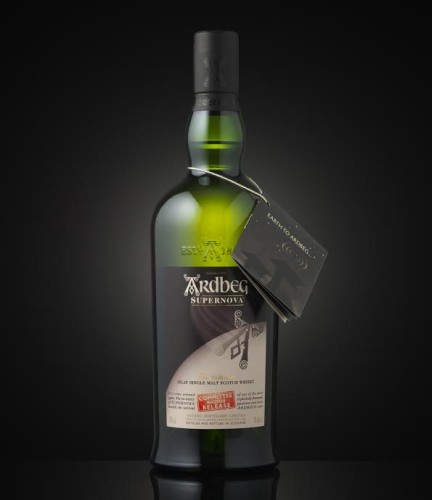
Ardbeg Supernova 2014 Whisky Review!
The one that (almost) got away!
Back in mid-2014, Ardbeg released a new 2014 bottling of their super-heavily-peated Supernova line, in Europe and the US. Skip to October/November 2014, when Australia finally received their allocation. The hype had died down, some reviews were glowing, some were mixed. It went on sale for AUD$240, on the Moet-Hennessy website. Expensive, NAS, and down to 55% (previous Supernova's were considerably higher), but with some sherry cask influence (the other releases were ex-bourbon cask only). Only a few lucky Australian bloggers had tasted it. I hesitated, I wasn't sure. And within a few days, it had completely sold out. Maybe it just wasn't meant to be, or maybe I had dodged a financial bullet...
Skip to New Year's Eve 2014, at Cobbler, and there it is. Ardbeg Supernova 2014, on the list of whiskies we were to taste as part of their NYE package. It was an awesome night, and there were a few whiskies enjoyed either side of the Supernova, so I can't be sure, but at the time I was very impressed with it. Come morning, it was the most memorable dram of the night (only beating the 25yo Laphroaig because it was new, mind you), and I was kicking myself for not buying a bottle a couple of months earlier. I accepted defeat and moved on.
However, thanks to a fellow Dram Full member with his finger on the pulse(thanks Zoltan), I received word that a large chain store was getting some 2014 Supernova in the near future. A couple of months later, I received my bottle. It had now cost me $300, but based on my hazy NYE memories, and the fact that it was very unlikely any stores/suppliers in Australia would be getting any more stock, I took the plunge. Given the increase in rarity (and price), however, I haven't opened my bottle yet. Or maybe I'm worried it won't be as good as my hazy memory says it was...
It was meant to be a 'committee release', meaning it was exclusive to the Ardbeg distillery's shop, and online purchase by members of the Ardbeg committee. This also means it doesn't come in a box, which sucks a little. Not one to store near a window, then. Regardless, it ended up being available to everyone in other parts of the world, in stores and on-line. It sold out very fast in official channels, as do all Ardbeg limited releases.
So, this review comes to you courtesy of Craig at Nippy Sweetie Whiskies, who generously threw a sample of the 'nova in with my last order. Slainte Craig!
There's been plenty said about the Ardbeg 'space experiment', and I mentioned it here in my review of the 2010 Supernova, so I won't go into that. It essentially has nothing to do with this release anyway. It will probably have some impact on Ardbeg's of the future, we'll have to wait and see. Anyway, a new Supernova release doesn't need any further marketing, in my opinion. Particularly one involving some sherry casks. It's exciting enough on it's own!
Ardbeg Supernova 2014, NAS, 55%, Islay, Scotland.
Limited 'committee' release, around 100ppm, ex-bourbon and ex-sherry cask matured.
(tasted neat and with a drop of water)
Colour: Pale straw, much lighter than Uigeadail, so probably not a great deal of sherry matured whisky in here.
Nose: Trademark Ardbeg, but with a little extra depth, spice and heat. Salty sea air and fresh seaweed, sharp, slightly sour peat. A hint of spicy oak and salted caramelised butter. A little waxy and medicinal, with some typical Ardbeg sweetness. A little nippy on the nose, but also surprisingly light, not as bold and aggressive as I'd expect from a Supernova. Water brings out some more smoke, but that's about it.
Texture: Big and warming, slightly buttery. Becomes quite creamy with water.
Taste: There's the smoke and peat! Initially quite sweet, then a big wave of peat and a dash of salt. Warming spice and oak. A little heat, but not as pronounced as on the nose. Water cancels the heat and brings much more smoke, and a big dollop of cream. Again, not as aggressive as I'd expect. Interesting...
Finish: Medium length, but softens considerably, and quite quickly. Wood spice, maybe some milk chocolate? A little burnt butter. Peat and sweet oak, slightly saline.
Score: 3.5 out of 5.
Notes: I wouldn't say I'm disappointed, but my mind isn't quite blown. Not as big & bold as the 2010 (I had to check, just to be safe!). Obviously it's 5% down on strength, which is the most likely culprit. But maybe that slight sherry influence has softened it down, or perhaps there's some older stock in this one?
I'm a huge fan of Ardbeg Uigeadail, particularly the slightly older batches, and I prefer those to this Supernova. If they had left the strength a little higher, and injected a bit more sherry influence, this could've become a suped-up (pun-intended) Uigeadail, and that would have been awesome. Maybe that's what they were going for, and missed the mark, or maybe they were trying to tame the Supernova beast a little, and were successful? Who knows.
That said, it's still a very enjoyable Ardbeg. It's a different beast to the earlier Supernova's, and the 'core range', but is that so bad? It's still a very peaty whisky, with plenty to offer, and a different take on the straight ex-bourbon cask peat monster. Was it worth the $300 for my bottle? Probably not. The original release price of $240 was more reasonable, but still a little high. Also, you'd think they could put it in a damn box for that sort of money!
Nonetheless, it's one worth tasting if you can find one (or if you've already added one to your collection). I was very disappointed with the Auriverdes, last year's Ardbeg day bottling, and this 2014 Supernova, being the next new release Ardbeg I've tasted, is infinitely better than that, in every way. I regret buying the Auriverdes at all, to be honest, but I get no such feelings with this Supernova.
Speaking of Ardbeg day, the next one is coming up, on the 30th of May, celebrating their 200th anniversary. The commemorative release has already been announced, it's named Perpetuum (Latin for continuous, as in perpetual motion), as is the current distillery-only bottling, but they are different whiskies, so far as I can determine. Head to your local Ardbeg embassy on the day to try and/or buy it. See you there!
Cheers.
Sunday, 12 April 2015
Amrut Peated Cask Strength Whisky Review!
From a 52yo Scotch Whisky, to a young (NAS) Indian Whisky!
Situated in Bangalore, India, Amrut is a relatively new player in Australia (debuting in 2009), but the company has actually been producing alcohol since 1948. Diversifying into malt whisky in the 1980's, they began producing a blended malt, made from un-malted and malted barley, and molasses, and blended with sugar cane alcohol. A little different from Scotch whisky, then!
They began producing single malt whisky in the early 2000's, launching in Europe in 2004, and after a difficult start are now widely recognised as a serious player in the whisky world. Amrut whiskies are NAS whiskies, and are of course young by Scotch standards, they are generally thought to be matured for 6 years and under. However, the climate and conditions in India (and other hotter and more humid climates, including Australia) results in the spirit maturing much faster than it would in Europe. Incidentally, these conditions also mean that the amount of liquid lost to evaporation during maturation ('the angel's share') is considerably higher than it would be in cooler climates. It's also worth noting that more water is lost to evaporation in these hotter climates, whereas in Scotland more alcohol is lost to the angel's share.
This Amrut 'peated cask strength' release is one I've wanted to try for some time, and although the peated barley is sourced from Scotland (there aren't many peat bogs in India!), it was distilled and matured in India, in oak casks. I grabbed a sample from SM Whisky, for quite a reasonable price. It's young, at around 4 years, it's peated to around 25ppm, and it's high strength at 62.8%. Sounding a bit like an Indian take on Kilchoman, perhaps? I doubt it, but let's find out!
Amrut Peated Cask Strength, NAS, 62.8%, Bangalore, India.
Limited release, distilled from Scottish peated malted barley. Matured in oak casks for around 4 years.
(tasted neat)
Colour: Yellow gold
Nose: Are you sure this isn't an Islay? Very reminiscent of a slightly weird Ardbeg on the nose. So much so that I briefly considered the sample I had was mislabelled. But no, that's not the case. The peat is definitely from Islay though. Spicy & hot on the nose, the peat is medicinal and slightly sour, and quite dominant. Some leafy herbs, and salted butter.
Texture: Very aggressive and a little rough. Hot & spicy syrup.
Taste: Salted caramel, then a massive wave of chilli heat (think habanero), then backs off a bit to let the peat come through a little. Very spicy, and slightly oaky, as in bitterness rather than sweetness. Quite savoury actually. Certainly not an Ardbeg! Tried adding a little water to see what it would do, and it didn't do much.
Finish: Still spicy! Very long, but not much happening. The spices dominate the peat influence. Salted butter and more spice now, hot & savoury curry spices.
Score: 3 out of 5.
Notes: It's very interesting, but it just doesn't do it for me. Seems to be trying too hard to be an Islay whisky, and falls short. Compared to, for example, an Octomore, bottled at similar age and strength, there is no comparison! But that speaks more to the quality of the distillation and maturation of the Octomore, than it does to the failings of this Amrut.
I'd still recommend trying it if you're curious, there are plenty of bottles out there, and it's priced quite reasonably. But don't expect a great deal of complexity or balance here. It's interesting to taste such a spicy whisky, I just wish there was more to it. The alcohol heat will also turn many people away, this one isn't for amateurs! If you think you're getting a cold, this Amrut Peated Cask Strength will clear it right up. Unfortunately the distillation in particular seems quite rough and rushed on this one. I'd be curious to try the 46% version, just to see how much calmer it is.
There are definitely better Amrut's out there. I have no hesitation in recommending the 'fusion' bottling, which is distilled from a mix of Scottish and Indian malted barley, with a little peat influence. It's also the most widely awarded Amrut, as it happens. Keep an eye out for that one at a whisky show or bar, it's well worth tasting (and buying).
Amrut seem to be getting into a little experimentation as well, there are port- and sherry-cask matured Amrut's, and they've recently released a new whisky called 'Naarangi', which is the Hindi word for 'Orange'. Yes, a whisky with a lot of orange influence.
Adding oranges to the maturing whisky would be against the rules, and it couldn't be called malt whisky if they did, so Amrut came up with a very clever method to get around that. They've matured this 'Naarangi' whisky in casks which previously contained a concoction of Oloroso sherry and orange peel. Very clever, and very innovative. I don't think I'll be buying that one though...
Cheers!
Saturday, 4 April 2015
Macallan 1946 52 year old whisky & masterclass review!
I recently had the incredible privilege of attending a Macallan whisky masterclass, presented by Dan Woolley, Beam Suntory brand ambassador. Our venue for the evening was Malt Dining, in their awesome cellar, pictured below. Surrounded by ageing wine, polished wood and sparkling glassware, and presented with a chef-designed three-course menu to pair with the evening's whiskies. Not a bad night already, however...
...This masterclass also happened to include a taste of a very, very special Macallan. Distilled in 1946, matured for a massive 52 years in refill sherry casks, and bottled in 1998. Oh, and it's valued at around $30,000-40,000 a bottle!!!
Just let that sink in for a moment. The last bottle of this whisky to sell was sold at auction in Hong Kong, and it sold for approximately $40,000 Australian Dollars. That is an absolutely massive amount of money, more than enough for a good, brand new car, or a house deposit. You may think that is because of the rarity, after all it was bottled over 17 years ago, but even when released, a bottle would cost over $5,000, in 1997 money. Yep, this is one special whisky. And I'm lucky to be able to say it is, by a huge margin, the most expensive, the rarest, and the oldest, whisky that I have ever seen, and tasted. And, in all probability, that I will ever taste.
In fact, the Macallan whisky below, in it's fancy decanter, contains some 1946 vintage, and is one of the most expensive whiskies every sold. It sold for an absolutely insane $460,000 US, back in 2010. Luxurious is a slight understatement.
1946 was a interesting year. The entire world was still recuperating following the end of World War II, the massive physical, psychological and financial damage of that long-lived conflict was still very much in effect. The whisky industry was also recovering after shut-downs, financial hardship and staff issues, and they also had trouble sourcing one very important (to some distilleries at least) component of production: Coal.
So Macallan used an alternative, which had been used in whisky making for hundreds of years prior. Yes, I'm talking about our beloved peat! Macallan had of course used peat when they began officially producing whisky in 1824. But as coal became readily accessible during the late 19th century, they turned to it as a more efficient fuel. Indeed after the late 1940's they went back to using coal alone, and peat has not been used in the production of Macallan whisky since. This little factoid makes this era of Macallan whisky extremely rare, extremely collectable, and extremely expensive. Yep, pretty exciting!
While this stunning whisky was always going to be the star of the show, we also received some fantastic gourmet food from Malt's chef, designed to pair with three whiskies from Macallan's 1824 series. Our host from Malt Dining presented us with an entree of seared foie gras (duck or goose liver) paired with Macallan Amber, a main of rabbit two ways paired with Macallan Sienna, and a dessert of poached pears paired with Macallan Ruby, and all mixed in with Dan's amazing whisky knowledge, straight off-the-cuff. That is one fantastic line-up!
On the night we had the 1946 show-stopper at the beginning of the evening, before our palate's had been thoroughly exercised. I was really thankful for this, as I would not want to taint this experience with anything! In fact I nearly declined the arrival cocktail, but my lovely wife and I had just negotiated rainy Friday night traffic, and I couldn't turn it away. However, I'm going to make you wait 'til the end to read about the '46, because I can, and no scrolling or skimming! I'm watching you...
Macallan Amber, NAS, 40%. American White Oak, refill ex-sherry cask.
Bronze in colour, light and fruity with green apple, vanilla and honey on the nose. More honey sweetness on the palate, some dry sherry and stone fruit. Short, drying finish with a little heat. Paired with our excellent melt-in-the-mouth foie gras entree, earthy and creamy.
Macallan Sienna, NAS, 43%. Mix of American and European Oak, refill ex-sherry casks.
Polished copper in colour, generous red fruits on the nose, a hint of candied orange, marzipan and oak. More orange on the palate, spiced fruits. More body and complexity than the amber, and less heat on the finish, which had some toffee and bitter oak notes. Paired with our main of rabbit two ways, being saddles stuffed with prunes, and confit leg croquet. Outstanding quality of meat, super tender, slightly game-y and earthy. Delicious.
Macallan Ruby, NAS, 43%. European Oak, first fill ex-sherry cask.
A great example of the influence of first-fill compared to that of refill casks. Rust red in colour, more rich and concentrated on the nose, with juicy berries and sweet stone fruit. More intense on the palate, lovely dry Oloroso sherry, slightly nutty on the longer finish. Definitely the star of the 1824 range. Paired with our dessert of pears poached in maple syrup and star anise, with warm dark chocolate sauce and hazelnut marscapone. Absolutely delicious, and not too heavy, a lovely end to the evening. My compliments to the chef! And now, our main event of the evening...
Macallan 1946, 52 years old, bottled in 1998. 40%, marriage of 5 refill ex-sherry casks.
Massively expensive, super rare and super collectable. How many bottles of this whisky are there in the world, and of those, how many have been opened and tasted? Not many.
Colour: Golden syrup.
Nose: Sticky toffee pudding, with spiced caramel sauce. Lemon oil, a little apple, stone fruit and brown sugar. A tiny hint of subtle, earthy-ness from the peat, which has done well to survive 52 years in the cask!
Palate: Super syrupy, oaky, and incredibly soft and gentle. Complex and engaging. Someone lock me in a room with a decent pour of this, and come back in a few hours. Sweet honey, a little red fruits, and a tiny hint of musty smoke.
Finish: Long and quite subtle. Light spices especially cinnamon and white pepper. Slightly herbal and earthy. I was nosing the (sadly) almost empty glass throughout the evening, and it got surprisingly earthy and musty.
Score: 4 out of 5, adjusted for price.
Notes: A fantastic whisky, and an absolutely once-in-a-lifetime dram, but it's certainly not worth the sort of money it's going for among the collectors. As with all malts that become serious collectors items, the people who might possibly open and taste the whisky are priced out of the market. And are any of these 'super-luxury' malts really worth the sort of money being asked?
That being said, as a drinker's / connoisseur's dram, this is pretty hard to beat. It's nearly impossible to be completely objective when looking at numbers like these, but I would still class this as a bucket list dram. It was a massive honour to taste a whisky such as this, and I'm very appreciative.
The sheer rarity of this whisky, and the fact that we were in a cellar, surrounded by wood, stone, glass and ageing wine, while eating absolutely stellar food, paired with the 1824 series whiskies, made for one absolutely stellar evening.
In fact, while walking towards Malt Dining I heard a bagpiper start up, on a rainy autumn evening, and nearly broke into a run! That is the kind of introduction you want for a whisky masterclass of the calibre, and should be imitated more often.
As usual, our guide for the evening, handled the event perfectly. Deftly mixing knowledge, experience, passion and humour while managing to keep another audience, with varied experiences and expectations, engaged and entertained. I have to wonder, where would the whisky 'scene' in Brisbane be, without this guy? Certainly not where it is now, and probably not where it's headed either.
A big thanks to Dan Woolley, Malt Dining, Malt Traders and The Macallan / Beam Suntory for putting this event together, it was thoroughly enjoyed and appreciated. If you haven't yet checked out Malt Dining in Brisbane, add it to your list. Especially if there's a piper in attendance, and a 52 year old whisky on offer...
Until next time, cheers!
Sunday, 29 March 2015
Laphroaig 15 Whisky Review!
When a particular whisky is discontinued, for whatever reason, there is often a rush to grab all the remaining stock before it's gone forever. Whether they be genuinely concerned enthusiasts, or speculating investors, these folks are determined to get their hands on the next 'hard to find' whisky while they can.
One of the more well-known of these discontinued whiskies, in recent years, would have to be Laphroaig 15 year old. It was discontinued around 2010 after a 30 year career, and was kind-of replaced by the (very good) 18 year old bottling. But they are rather different malts, and the 15 was very widely loved.
So the 15 became very hard to find, and therefore very expensive. Asking prices of over $400 were common, putting it out of reach of most buyers who would actually be drinking the stuff. The speculating investors were doing their best Monty Burns impressions.
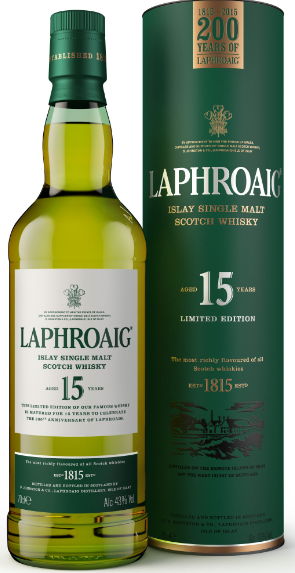
Now, in 2015, Laphroaig distillery is turning 200 years old, as is Ardbeg, having both officially opened in 1815. There is much anticipation and speculation as to how these two brilliant distilleries are going to celebrate this huge milestone, but we have one of these mysteries solved right here. Laphroaig is bringing back the 15 year old! Made in the same way as the original, where particular casks of whisky with particular qualities are hand-picked to become 15 year old Laphroaig.
Unfortunately though, it's here for a good time, not a long time. It's only a limited release. There was an initial 'drop' of 2,500 bottles, made available to Friends of Laphroaig, earlier this year, which is, of course, long gone. All is not lost, however, as there is also a public release of around 70,000 bottles, some of which is due to hit Australian shores in June this year. A fitting celebration for the distilleries 200th anniversary, and probably a bit disappointing for those investors. Oh well!
I've been lucky enough to receive a sample of this new/old expression of Laphroaig, and am lucky enough to be the first in Australia to review it. I've not had the opportunity to taste the original version, so rather than getting bogged down in whether it's the same or not, I'm instead coming into this as a 15 year old virgin. Wait, that doesn't sound right...
Laphroaig 15yo, 2015 release, 43%. Islay, Scotland.
200th anniversary release, ex-bourbon cask. Chill filtered, albeit not too extensively, and light added caramel colourant (both assumed).
Colour: Amber gold.
Nose: Salted butter, fresh seaweed, and grapefruit. Laphroaig signature peat is there, but softer than usual and far less medicinal. Hints of almond nuttiness, and sweet oak.
Texture: Light, slightly oily.
Taste: Peat and rich smoke, but herbal peat rather than medicinal. Sea salt and pepper, and hints of tobacco. Something sour and slightly bitter, dried grapefruit, tamarind? Not as sweet as the nose, more dry and slightly bitter.
Finish: Soft and light, but also quite long. Salted caramel and butter. Light peat and smoke clinging to life, and holding on for quite some time. Becomes more dry and mouth watering towards the end.
Score: 4 out of 5.
Notes: Fits quite well in between the 10 year old and 18 year old, which makes sense! Not as medicinal and confronting (to the novice) as the 10yo, which I think is the idea. Indeed it is marketed as more refined and more mellow, as was the original version, and I would say this is very accurate. It is softer and more refined, less sweet and more dry, more approachable. But still with enough delicious peat, smoke and salt to stamp it as Laphroaig. Which is just how we like it!
The 18yo by the way is soon to be 'phased out' by 2016. The 15, on the other hand, is apparently going to become the annual Friends of Laphroaig release, instead of the current Cairdeas (Gaelic for friendship) bottlings for Feis Ile, the annual Islay festival.
You may have picked up on the 18yo being phased out, and the 15yo being a limited release. And you may be worried about what that leaves on the shelves. Don't panic though, while these two expressions may be on their way out, there are more on the way. Laphroaig are not sitting on their hands, by any means. It's looking to be a busy year for them!
Keep an eye out for Laphroaig 15yo in June in Australia, and keep an eye out for Beam Suntory brand ambassador, Dan Woolley, manning the Laphroaig stand at Whisky Live this year. He'll be debuting the 15yo at each show around the country.
Speaking of which, a big thanks to Dan, and Laphroaig, for this sample, taken from the first bottle in the country. It's an honour to be tasting this whisky before release, and it's sure to be a hit. Get it while you can!
Cheers!
Subscribe to:
Posts (Atom)
Hellyers Road 23 Year Old Whisky Review!
The oldest Hellyers Road official bottling to date... A 23-year old single cask release following their 20-, 21-, and 22-year old single cas...
-
Ah, Talisker, the medium-to-lightly peated whisky from the Isle of Skye. Their 10-year old was the first peated single malt I ever tasted, a...
-
A reasonably priced & accessible cask strength single malt from Campbeltown's middle child; Glen Scotia. The distillery's follow...
-
A liquid souvenir from the trip to Japan last year, which included a visit to Yamazaki! Peated, 48% ABV and non-chill filtered, and a reason...