Sunday, 20 November 2022

Ardbeg Hypernova Whisky Review!

Take the idea behind Ardbeg Supernova, add some extra peat and an extra dash of hype, and you get Ardbeg Hypernova!


Just when we thought Ardbeg's Supernova had conceded the phenolic ppm cold war to Bruichladdich's Octomore, the south coast Islay giant has launched a late counterattack with a 170+ ppm single malt, aptly dubbed Hypernova due to the amount of internet hype that its announcement generated. No, not really! A hypernova is an astronomy term for a particularly large & energetic star explosion, a.k.a. supernova, which if you'll recall was the name for Ardbeg's sporadic releases of super-heavily peated whiskies that debuted in 2009. The 2009 and 2010 releases were distilled from barley peated to "over 100 ppm", and both but particularly the 2009 were excellent whiskies. The next Supernova was released in 2014, and another in 2015, then most recently in 2019. Crucially, those three latter releases were a mix of the "over 100 ppm" spirit and casks of regular 55 ppm Ardbeg spirit that were "found to be particularly peaty". While that fact alone does not make them inferior to their predecessors, in my opinion the quality of those three releases was not on par with the first two Supernovae, they were much more tame and less complex, and you could certainly argue that they were less authentic compared to the original two. Thankfully, that doesn't appear to be the case with Hypernova, as far as I can tell it's wholly distilled from barley that was peated to over 170 ppm phenols. Supposedly those last three Supernovae also had some older casks thrown in and also had a slightly higher proportion of sherry casks in the vattings, although you'd be hard-pressed to find evidence of either point on the nose or palate. The ABV was also getting consistently lower with each release, following a similar pattern to the Ardbeg Day bottlings. To strengthen that authenticity argument, Ardbeg's marketing department kept that 55/100 ppm fact very quiet, deciding instead to sprout some bullshit about a space experiment which had nothing whatsoever to do with the whisky. Yep, that sounds just like Ardbeg's marketing department to me! Punks, pirates, hippies, dragons, cryptocurrency, and now comic books & meat pies. I love you Ardbeg, but where will it end!?! 

That said, Ardbeg's usually ridiculous level of marketing has been toned down for Hypernova, they've only given the ppm figure and tasting notes, there's no highly imaginative story this time, the "artistic license" has been restrained. But while I'm being cynical about marketing, let's talk about the whole ppm thing. Firstly, those three letters mean "parts per million", a measurement which can apply to just about anything but is mainly used in chemistry. When a whisky distiller or brand talks about ppm, they're generally talking about the level of phenolic compounds or phenols that were measured in their malted barley. Not the new make spirit and certainly not the mature whisky, but the freshly-malted barley itself; the grain, the base ingredient. Most smoke and/or peat aromas & flavours are members of the phenolic family, but there are many, many others, all included in your shiny little ppm figure. More importantly, since that measurement is taken from the malted barley itself, said barley then goes through milling, mashing, fermentation, distillation, and maturation, before coming out the other end as whisky. The general rule of thumb that most peated whisky distillers agree on is that up to 60% of phenolic content will be lost during the production stages prior to maturation. Obviously that loss varies massively depending on your grist settings, fermentation times, distillation speeds, the size, shape and design of your stills, your spirit cut points, the type of cask/s you're using, how long you're ageing for, and the type- and location of your warehouse/s, among many other factors. It's important to remember that despite Ardbeg being an overtly peaty whisky, it's actually relatively light compared to some others, despite using a higher ppm barley than most. That's down to a couple of factors that we can point to; chiefly the relatively long fermentation times used and the design of their stills, including the purifiers on the spirit stills (more information on both points here). But there are also many other factors that we can't point to; the alchemistic, mysterious, unquantifiable & unpredictable ones that make whisky so fascinating. So yes, this is going to be a peaty whisky, that's really all these phenolic ppm figures tell you. But I'll tell you right now, it's not going to taste three-times as peaty as Ardbeg 10, or five-times as peaty as Lagavulin 12. Even if it was, our senses wouldn't be able to detect it. Sure, ppm figures are a nice thing to know, but they're now more of a marketing weapon than anything else. 

Which brings me to the most obvious comparison that most people will make here, Bruichladdich's Octomore. Sure, both Octomore and Hypernova are super-heavily peated Islay single malts, but there's much more to the story. Bruichladdich have turned ppm figures into marketing gold over the years, but if anyone has compared a 5-year old _.1 Octomore, particularly one from the 9-series onwards, with a Laphroaig 10 Cask Strength or a Lagavulin 12, you'll already know that those ppm figures are of no help whatsoever when it comes to inter-distillery comparisons. Keeping it brief, Octomore barley is smoked with mainland peat in Inverness (yes, even the Islay Barley variants), which instantly rules out any direct comparison with the likes of Lagavulin or Laphroaig which use Islay peat. Then you need to consider Bruichladdich's long fermentation times, their tall stills with narrow necks, and their high & narrow cut points. Then you need to consider the casks used, which in the _.1 Octomores are all first-fill bourbon barrels, which have plenty of input over the short maturation periods. Sadly & predictably we have no age information or cask information on Ardbeg Hypernova, but it's obviously going to be young for maximum peatiness, and there will have been some/mostly/entirely refill casks in the vatting for the same reason. Or at least partly for the same reason. What we do know, and what I had guessed from the start, is that like Octomore the barley used for Hypernova was peated on the mainland. As far as peat levels that basically rules out direct comparisons with the Ardbeg core range, which uses peated malt sourced from Port Ellen Maltings, who use Islay peat to smoke their malted barley. Quick digression, that situation could change soon given the restrictions that owners Diageo recently put on Port Ellen Maltings' supply to external customers, which is likely to impact all non-Diageo Islay distilleries aside from Bruichladdich, plus more distilleries further afield. But that's a scary thought for another day!

One more slight point of cynicism before we get into the review - pricing. Given Ardbeg's roller coaster (pun intended) of a limited release track record over the last five years or so, and despite being a self-confessed peat-head and Ardbeg fan, I was dubious about Hypernova from the word go. To the point where I purposely didn't buy one, something that would've been unthinkable a few years ago. And I'm sure many other Ardbeg fans are in the same boat. While price wasn't the only factor in that decision, it was the final decider. Here in Australia the asking price on launch, untested and with nothing but the official tasting notes and ppm figure to go on, was $370 AUD. It could've been even higher of course, Octomore _.2 and _.3 releases are now hitting over the $300 mark on these shores - and let's not forget that most of those are 5-year old whiskies. I'm probably being naïve now, but I can't ignore the fact that those same dollars spent on one Hypernova could buy three - yes, three - bottles of the delicious Ardbeg 8-year old 'For Discussion' which is still readily available, is probably a similar age to (or older than) Hypernova, and is bottled at almost exactly the same strength. My Hypernova decision could've been reversed if there had been some external reviews available prior to release, and/or more transparency from the distillery on casks & ages. But that's not realistically how special releases from Ardbeg or other popular distilleries work these days. If you don't buy a bottle on release, or prior to release in many cases, then you miss out. So there's no need for a brand to put in extra effort in order to sell their new product. Some might say that this situation gives the brands some extra wiggle room when it comes to quality...

So, no cask information, no age information, not cask strength, but a decent ABV at 51.0%. It'll be young, of course, to retain maximum peatiness. Malted barley peated to 170+ ppm phenols, non-chill filtered and natural colour, an unknown number of bottles, and a hefty but not stratospheric price. The sample for this review came my way in a sample swap from a generous fellow whisky lover, there was no PR firm involved. Let's find out if I'll regret my decision...


Ardbeg Hypernova, NAS, 51.0%. Islay, Scotland.
Peated to 170+ ppm phenols on the malted barley. No age or cask information available, but presumed refill bourbon barrels and sub-10-years. Non-chill filtered, natural colour. 

Colour: Very pale gold. 

Nose: Definitely very young & completely new make driven. Definitely peaty as well, but more measured than you might expect. New plastic, warm tar, and big chunky, earthy peat. Touches of brine, dried lemon, and seaweed. Hot bitumen, clean rubber, and dried green chilli flakes. Really quite industrial. Flashes of burnt bacon, green pears, and damp sand in behind.  

Texture: Medium-heavy weight. Young, industrial, peaty, mildly briny. Slight touch of heat but well integrated. 

Taste: Big sweet & malty spirit, touch of pear again, with those plastic & tar/bitumen notes as well. The big chunky, earthy peat slowly surges in, plus some burnt bacon, aniseed & sweet lemon. Make that lemon balm actually (slightly waxy). Brine around the edges. 

Finish: Medium-long length. More plasticky & tarry/bitumen notes, more aniseed & lemon balm. Spent ink cartridges. Burnt bacon & dried green chilli flakes again. Touch of white pepper. Gristy, malty spirit and warm ashy smoke to finish. 

Score: 3.5 out of 5. Not miles away from a 4, though. 
 
Notes: A very youthful new make spirit Ardbeg here. There are flashes of both 'Still Young' (yay!) and 'Wee Beastie' (boo!) to it, but thankfully it's far more mature than the 5-year old beastie. This is still an immature whisky though, make no mistake. Maybe "more integrated" is a better way of putting it than "more mature". Both Hypernova and Wee Beastie have plenty of plastic notes & pear notes to them, but the Hypernova is a far better whisky in my opinion with much more to offer (ignoring the massive price difference). 

As expected, Hypernova is not as insanely peaty & smoky as the marketing team would lead you to believe, while the peat is impossible to miss it actually builds over time and doesn't overshadow everything else. There's also a nice gristy maltiness to the spirit, which is why it reminds me slightly of 'Still Young', but with the industrial & plasticky notes added to this one. Frankly, I'm enjoying this new Hypernova more than I thought I would. Some have made comparisons with mezcal, and I definitely agree. That does happen with some young Islays, and it's a fairly divisive style that might require patience. But I'm a fan, as are many others. 

While I don't quite regret skipping this purchase, and it's absolutely too expensive, I'm glad to have tried it and I'd definitely do so again. Which is not something you'll hear me say about Wee Beastie, Ardcore, Fermutation, or some of the other recent releases. 

For those who skipped all of the above writing and only came for the score, you probably want two questions answered before you close your browser. Fine, here you go: Is it peatier than Octomore? Yes, but only some Octomores, and in a different way. Is it better than Octomore? No, because there's no direct comparison between the two. See above if you want to know more!

Cheers!

Sunday, 13 November 2022

SMWS 115.22 AnCnoc 28 Year Old Whisky Review!

An SMWS bottling of a 28-year old single cask, cask strength AnCnoc single malt from Speyside's Knockdhu Distillery. 


The AnCnoc brand of single malt is produced by Knockdhu Distillery, with owners Inver House wanting to avoid any possible (and already unlikely) confusion with Diageo's Knockando Distillery that is relatively close-by. Speyside distillery Knockdhu was built in 1983 by Diageo-predecessor DCL in 1893 and is located around 25-miles south-east of Elgin near Keith. Like many DCL/SMD distilleries Knockdhu was closed during the low-point of 1983, and in 1988 was sold to Inver House Distillers, with production resuming in 1989. That company is now owned by a Thai corporation, and boasts a very respectable portfolio of Scotch whisky distilleries including Balblair, Pulteney, Speyburn and Balmenach distilleries, in addition to Knockdhu - pronounced "nock-doo", and meaning "Black Hill" in Gaelic, named after a local landmark. The distillery's single malt was first released under the name Knockdhu, but was renamed to AnCnoc (pronounced "an-ock" and meaning "The Hill") in 1994, and to add to the confusion it's labelled as a Highland single malt rather than a Speyside one. Which is fine, the Speyside whisky region is in the Highlands geographically, and it probably does help the brand stand out from its many neighbours. 

As far as production goes the distillerys most interesting point would be the worm tub condensers that are fitted to both pot stills, but with the two separate condenser pipes/worms actually sharing one cooling tub, which is very unusual and would likely give a slower condensation than individual tubs due to the added warmth - provided both stills were running simultaneously. The distillery also produces a heavily peated spirit, first distilled in 2003, which initially bucked the trend by measuring & declaring the phenolic content of the whisky itself rather than that of the malted barley like almost every other whisky brand. Unfortunately this has since been reversed since it caused confusion with consumers and probably ended up costing the brand sales in the race for ever-higher ppm figures, which is really more about marketing than anything else. I still think that change is a bit of a shame, but I can understand their reasoning since your average buyer is not going to read the fine print, and is unlikely to understand / care about the difference between the two measurements anyway. A similar thing happened with the vintage releases from Balblair and Glenrothes rather than age statements, with both brands eventually reverting to regular age statements to avoid confusion amongst the punters. 

The AnCnoc that we're looking at here is an independent bottling from the Scotch Malt Whisky Society, a.k.a. SMWS or "the Society", and is part of their "Premium Bottling" range - essentially this means it's an older whisky with a black label rather than their usual white, and also comes packaged in a cardboard box. These are not as rare and/or as old as their "Vaults Collection" range of bottlings, which have a different label again and are packaged in a rather nice wooden box. The pricing for these is generally quite high, between $500 and $1,500, with most 25-year old or older bottlings now sitting around the $900 mark. I must admit though that while I've only tried a few examples to date, quality has been very high in those cases. This SMWS single cask AnCnoc, code 115.22 (meaning the 22nd cask the SMWS has bottled from distillery 115, which is Knockdhu) was released in Australia in October 2021, and the pricing was actually quite reasonable for a 28-year old single cask at $595. This bottling was distilled in June 1992 and bottled in mid-2021, and was fully matured in a refill ex-bourbon barrel prior to being bottled at a cask strength of 49.6%. The cask only yielded 148 bottles, and it is of course non-chill filtered and natural colour, as with all SMWS malt whiskies. Given the distillery's closure it's quite rare to find an old example of Knockdhu, and the oldest official bottling that has been seen to date, a 35-year old bottled at only 41% ABV, is priced at a whopping $1,600 AUD. So $600-ish is actually cheap in comparison, particularly for a sort-of-similar age and at cask strength, although that price would certainly jump up if it was being released today. The sample for this review came from a generous fellow whisky nerd. Let's see how it goes!


SMWS 115.22, 28-year old AnCnoc, 49.6% ABV. Speyside, Scotland.
"Shimmering Beauty of Butterfly Wings", distilled June 1992, matured in a single refill ex-bourbon cask, bottled mid-2021 at cask strength. 148 bottles, released October 2021 in Australia.

Colour: Pale gold. 

Nose: Nice dry, malty, spicy old dram. Malt biscuits, musty old books, antique wooden furniture. Slightly yeasty, think sourdough starter, plus a little desiccated coconut & fresh green apple. With more time green banana dusted with icing sugar, and white pepper. 

Texture: Medium weight. Rich & oily, malty & spicy. No heat at all. 

Taste: Oily, malty, spicy entry. Slightly sweeter here. Roasted almonds, malt biscuits, white pepper, touch of vanilla fudge, and a little sweet tropical fruit. That musty old book & dusty antique furniture again (yes, we're on the palate here), and that touch of icing sugar again. 

Finish: Medium length. White pepper again, more desiccated coconut & vanilla fudge, malt biscuits, and yeasty sourdough bread. Roasted almonds, soft old leather & drying wood spices. Spent malt (draff) and browning (oxidising) green apple to finish. 

Score: 4 out of 5. 

Notes: Lovely old school Speyside malt. There's quite a bit of wood influence, the cask hasn't been lazy, but it's not been forceful either. I'd say there's clearly been a nice slow-paced maturation where the cask has been left alone to do its thing. This AnCnoc does drink slightly above its strength, but not in an aggressive or harsh way by any means, just in a more expressive, more accessible way in terms of flavour - which is what you want in a 28-year old whisky. Having tried a 22-year old AnCnoc official bottling from a similar era (i.e. bottled a few years earlier than this one) this SMWS single cask is much more expressive, much more "old school" and really quite charming. A great example of a patiently aged Speysider that doesn't do anything unexpected, but isn't lacking in any department. Again, exactly what you want in a 28-year old whisky. 

It'd certainly be nice to go back to mid-2021 whisky pricing!

Cheers!

Sunday, 6 November 2022

Highwayman 2.7 & 3.3 Whisky Reviews!

Two recent releases from Dan Woolley's Highwayman Australian Single Malt Whisky; Batch 2.7, an unpeated red wine cask, and the latest release Batch 3.3, a peated red wine cask that was finished in a refill ex-bourbon cask. 


Since these are Highwayman whiskies, before you ask, Batch 2.7 sold out in early October through the Australian Whisky Appreciation Society (AWAS), and Batch 3.3 was released on Halloween just this week, with only a small amount available from the Highwayman HQ / cellar door in Byron Bay (pictured above, open by appointment only). Essentially with these tiny batches if you're not smashing your browser's refresh button on the Highwayman website at the time of release, you've missed your chance. Dan isn't silly though, he's now holding back small amounts of each release for the cellar door as a reward for those who book in for one of his masterclasses and make the trek to Byron Bay in Northern NSW, roughly 2.5-hours south of Brisbane. Or alternatively, for those who attend one of his excellent events at the cellar door, which are really not to be missed! The most recent was held in August and was dubbed "Winter Whisky Fest", featuring multiple one hour-long masterclasses held by Dan, followed by a hefty serving of three different spit-roasted BBQ meats and an absolutely epic pecan tart made with ex-Highwayman barrel-aged honey. There was also an exclusive single cask release to mark the occasion, hand-filled straight from the cask on the spot, and also the release of a local hot sauce that had been barrel-aged in an ex-Highwayman whisky cask. As you can see, Dan certainly knows what he's doing with these events and collaborations, I've never seen anything like this in the Australian whisky industry outside of larger events like Tasmanian Whisky Week down south. In fact these events are more like what you'd expect to see at an Islay distillery's Feis Ile day, albeit on a much, much smaller scale! Events like this, and the time & effort he puts into them, is what made Dan stand out during his long tenure as the National Brand Ambassador for Beam Suntory, and he's now putting the same time & effort into his own whisky! 

Speaking of which, there's another event coming up on Saturday the 3rd of December (2022). This "Summer Mash-Up" event will see multiple masterclass sessions featuring three different Highwayman whiskies paired with three different sliders (miniature burgers) from a local gourmet burger producer. But that's not all, attendees will also receive a tailor-made chocolate paired with a tawny (Australian port) fortified wine that was aged in an ex-Highwayman whisky cask, and there'll also be Highwayman highballs (whisky & soda) and "peated coladas" (I'll report back on that one!) available from the bar. But even that's not all! There's actually a "hot wing challenge" contest to close out the festivities on the day, which should make for great fun! Grab your tickets here for this awesome event, it's limited to fifty people in total, ten per session, and is very reasonably priced at $69 per head. To give some perspective on pricing for those further afield, that is a similar price to what many whisky bars in Australia will charge for a single dram of Highwayman whisky - which is a subject for another day - while here you're getting three drams paired with three sliders during a bespoke masterclass led by the man behind the whisky, plus chocolate & fortified wine for dessert. Quite the bargain really! Needless to say these events are not massive money-making marketing exercises for Highwayman, they're just fun events, designed to get people down to the cellar door, and to get some Highwayman whisky in their glasses. I'm sure we'll be seeing more of these in the future!

For a quick recap, Highwayman is Dan Woolley's single malt whisky brand. While the first ten releases were distilled elsewhere and matured & bottled in Byron Bay, most releases since then (as declared on the labels) have been distilled at the Restall family's Lord Byron Distillery. Lord Byron primarily make rum as their own product, but their distillery plays host to Dan's own mash tun, fermenters, and his own copper pot still which previously lived at Tasmania's Adams Distillery. Dan's production equipment is only used for malt whisky, made entirely separately to Lord Byron's other products. This is part of what separates this arrangement from your typical contract distilling / non-distilling producer (NDP) operation, not to mention the fact that Dan himself is helping to make the whisky, with some help from the Lord Byron team. Essentially he's utilising Lord Byron's production license, distillery premises and staff to brew his wash and distill his spirit, which is then filled into his own casks. Once filled the casks are transported to the Highwayman bond store / warehouse and cellar door, although more accurately they're rolled there - the Highwayman bond store and cellar door is around five-metres away from Lord Byron Distillery, literally separated by a wall. So the Highwayman spirit, after being mashed and fermented on site at the distillery in Byron Bay (sadly not a legal requirement for Australian single malt whisky), is distilled in Dan's own equipment right next door to the warehouse where it's matured, and when ready it's bottled on site. Hardly your typical contract distilling/NDP operation, and a far cry from most independent bottlers.

On to the whiskies at hand, starting with the unpeated Highwayman Batch 2.7. This one has been aged for 2-years & 8-months in a 100-litre French oak ex-red wine cask that was put through a "super-heavy charring" process (beyond level four / 'alligator' char) at Seppeltsfield Cooperage in South Australia. Being unpeated Lord Byron Distillery spirit means that this whisky was made from NSW-grown malted barley, and was mashed, fermented, distilled, matured and bottled in Byron Bay. Total yield from that 100-litre cask was just 130 x 500ml bottles at 55% ABV - those are some thirsty angels! As mentioned above this one was sold through the Australian Whisky Appreciation Society (AWAS) website in September/October, whereas most releases are sold directly through the Highwayman site.


Highwayman Batch 2.7, NAS (See Below), 55% ABV. Byron Bay, Australia.
Unpeated spirit from Lord Byron Distillery, aged 2-years & 8-months in a 100-litre "super-heavy charred" French oak red wine cask. 130 x 500ml bottles. 

Colour: Rust red. 

Nose: Dry (savoury) with toasted oak, roasted nuts (walnut & almond) & dried stone fruit (apricot). Touch of fresh earthy & mushroom savouriness. Black cherry jam on lightly burnt toast. Dark chocolate, red grape skins (mild tannins), cinnamon stick, and a little ginger. 

Texture: Heavy weight. Syrupy in texture but dry & savoury in flavour. Very slight heat on the back palate. 

Taste: Savoury with more toasted oak, roasted nuts, and dried stone fruit - apricot again. Ginger, cinnamon stick, and dark chocolate. Soft & mild tannins (red grape skins), and black cherry jam. 

Finish: Short-medium length. More black cherry & apricot, slightly burnt toast & roasted nuts - walnut & almond again, plus hazelnut here. Touch of astringency showing through now with more grape skins & soft ginger. 

Score: 3 out of 5. 

Notes: The wine & wood influence is certainly throwing its weight around, but it's kept in check by that charring process, keeping any excessive sweetness in check. Probably helped by the larger (in comparison with some Australian brands) cask as well. I'm sure red wine lovers would adore this dram, but it's not heavy enough to put everyone else off. Really quite easy drinking as well.  

Co-owner Louis keeps a close eye on Dan in the tasting room.

And next up, the latest release, Highwayman Batch 3.3. This one is a peated whisky (denoted by the black & red label), distilled from 75% peated Scottish barley and 25% unpeated NSW barley, which again was mashed, fermented, distilled and matured in Byron Bay. Ageing this time was over 2-years in another 100-litre French oak ex-red wine cask that was "super heavily charred", but this batch was then transferred into a 200-litre American oak ex-bourbon cask for a further 7-months. So initial maturation was in a smaller 100-litre red wine cask, prior to finishing in a full-size 200-litre ex-bourbon cask, which is essentially the reverse of the typical finishing / secondary-maturation process. This isn't Dan's first use of full-size / larger format casks and there are more on the way, but it's great to see them being used more in Australian whisky, particularly the ex-bourbon variety. Let's hope the dark (pun intended) days of the Australian industry's 20-litre wood monsters are numbered! Yield this time was 150 x 500ml bottles, mostly sold out directly through Dan's website this week, but with a few stragglers still available from the Highwayman bond store / cellar door in Byron Bay. 


Highwayman Batch 3.3, NAS (see below), 55% ABV. Byron Bay, Australia.
Peated spirit from Lord Byron Distillery, mix of 25% unpeated NSW barley and 75% peated Scottish barley. Aged over 2-years in a 100-litre "super-heavy charred" French oak red wine cask, finished for 7-months in a 200-litre ex-bourbon cask. 150 x 500ml bottles. 

Colour: Bronze. 

Nose: Fresh & lively with a fizzy / effervescent peatiness and a good pinch of sea salt. Coke bottle lollies (cola cubes to the Brits), fried mushrooms with melted salted butter. Pine needles, pumpernickel bread (dry & dark), and burnt orange peel. Soft warming smoke wafting underneath. 

Texture: Medium-heavy weight. Heavier than the nose suggested, with that fresh & fizzy peatiness. Savoury & buttery. Very slight heat. 

Taste: Big wave of ashy smoke & hot embers, more coke bottle lollies, some vanilla essence, and caramel fudge. Soft wine tannins, blackberry jam. Earthy & spicy peat underneath adding more savoury elements. 

Finish: Medium-long length. Grape must, earthy & fizzy peat, touch of treacle, and mild chilli salt. Touch of oily smoked fish in the background, i.e. hot-smoked salmon. Burnt orange peel, and even a touch of amaro (bitter herbal liqueur found in negroni cocktails), plus a touch of that dry pumpernickel bread again. 

Score: 3.5 out of 5. 

Notes: More complexity, more character, and a better balance of wine influence - no doubt thanks to that full-size ex-bourbon cask finishing period, and also the addition of a good whack of peat, which is adding more depth and adding more savouriness. Some very interesting notes in there too to keep the synapses firing!

Overall Notes: It's probably no surprise to anyone, but the peated release is more to my taste, although both are very enjoyable, good quality drams. Dan has always said that his unpeated releases will be big, cask-forward whiskies, driven by the wood & the previous contents, while his peated releases will be more balanced between cask and spirit. And that's exactly what we have here. That said, I've had plenty of Australian whiskies that were far more cask-driven than the unpeated Batch 2.7, and plenty that were entirely one-dimensional. Which is not what you're going to get with any Highwayman whisky! 

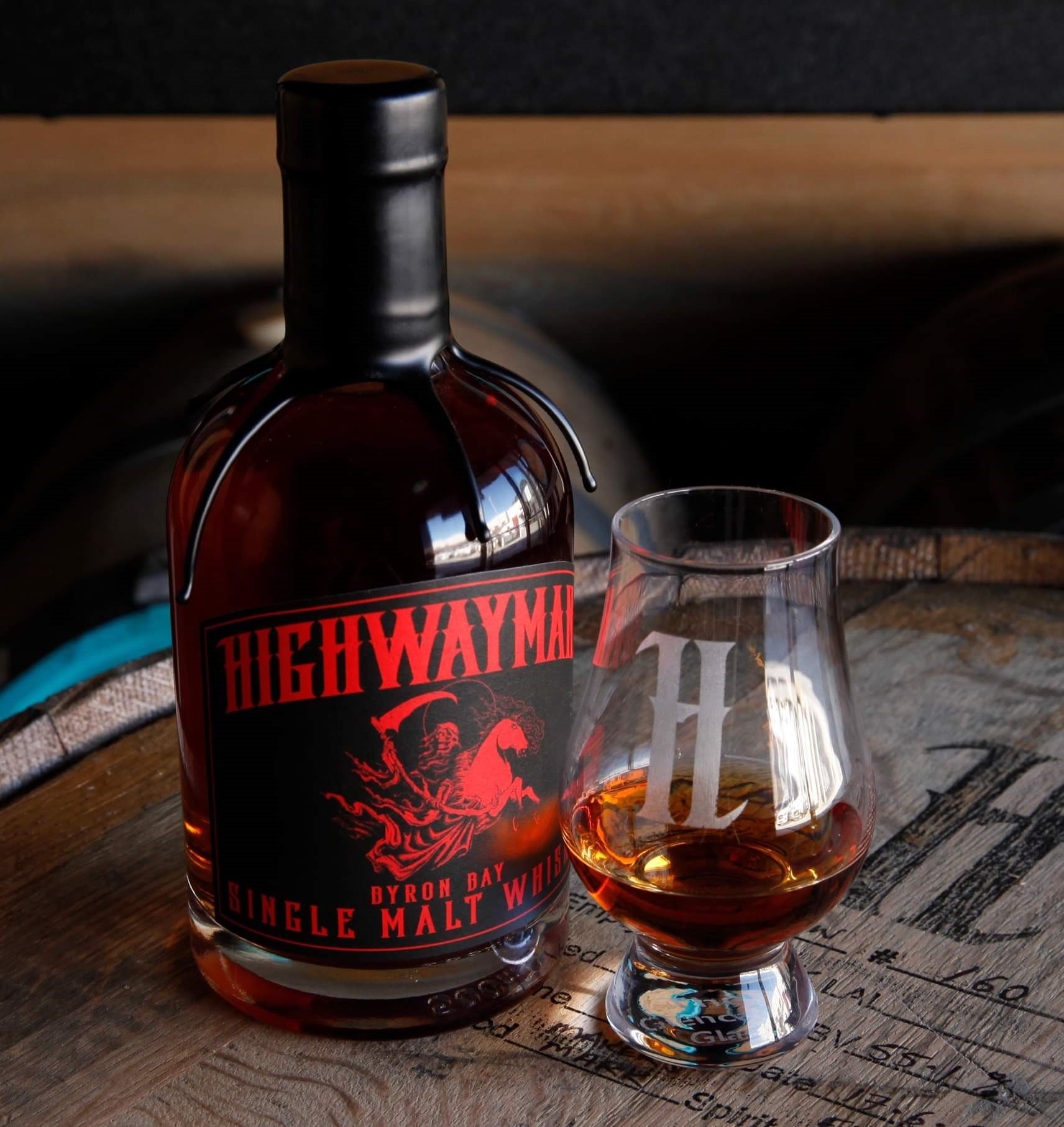
Thanks to Dan Woolley for the samples for this review, and also for the bottle images. I hope to see some locals down at his Summer Mash event next month, and those further afield will just have to put Highwayman on their list when they're travelling down under!

Cheers!

Sunday, 16 October 2022

Port Charlotte Valinch SHC01 Whisky Review!

A sherry cask-matured Port Charlotte Valinch that I brought back from Islay as a souvenir in late-2018. So you probably won't find a bottle, unless you scour the secondary auction sites. Why am I reviewing it, then? For the same reason that I review most older and/or rarer bottlings when I get the opportunity: because they're outstanding!


Sherry cask matured Port Charlotte is surprisingly difficult to find. The same applies to the distillery's unpeated Bruichladdich spirit, and even more so their super-heavily peated Octomore spirit. Bruichladdich distillery just doesn't use a lot of sherry casks these days, they much prefer wine casks, or other more exotic / uncommon types of fortified wine. And that's largely been the case since the re-opening back in 2001, with a few notable exceptions from the earlier years of "PC" bottlings, although most of those were vattings of both ex-bourbon and ex-sherry casks. Maybe the distillery saw the sherry cask shortage coming? More likely they saw a then-untapped resource in wine casks, the use of which they essentially pioneered in Scotch whisky, at least on any major scale. The Bruichladdich team has mentioned that they were not willing to settle for the short-term "sherry seasoned" casks that are relied on by many others, where the cask has been filled with sherry solely for the purpose of being emptied and sold on to the whisky industry. This means that if you do find a sherry cask matured Bruichladdich, Port Charlotte or Octomore, particularly if it's a more-recent official bottling, it'll likely be from an ex-solera cask that has been used to actually mature sherry at a Bodega / sherry house. Which usually (but not always) means it will be American oak rather than European oak, and that it may have held sherry for quite a long time, so the wine has drawn a lot of the wood influence out of the cask, and in turn the cask has soaked up more of the wine. These ex-solera sherry casks will often have a more savoury, dirty, "funky" or "rancio" flavour profile than a sherry-seasoned cask, generally with less wood tannins. These casks are also much rarer than the sherry seasoned casks, and are more expensive as a result.

If you do find a sherry cask Bruichladdich it'll most likely be an expensive limited release, something like a Feis Ile bottling e.g. Octomore Event Horizon, or an older travel exclusive e.g. Bruichladdich 1990/25, or perhaps one of the distillery exclusive "Valinch" bottlings. These hand-filled 500ml bottles are only sold from the distillery shop on Islay, for a very reasonable price, and the level of quality tends to be high. They're usually single cask bottlings, specifically selected by the production team - often Adam Hannett himself - to be sent to the 'laddie shop for thirsty pilgrims to purchase as a souvenir. And that's exactly where this particular Valinch bottle came from, hand-filled by yours truly. This whisky was one of the liquid highlights of my most recent trip to Islay, back in late-2018 (feels more like a decade ago now, though!), despite it having some very serious competition. There are usually two casks available in the shop at any given time, a cask of unpeated Bruichladdich, and a cask of heavily peated (40 ppm) Port Charlotte. The Bruichladdich cask at the time was an enjoyable teenaged ex-bourbon cask, but this Port Charlotte stood head & shoulders above the rest, even having just come from the distillery's famous warehouse tasting which includes three very generous drams - a Bruichladdich, a Port Charlotte and an Octomore - taken straight from the cask. I often take quite a while to make purchasing decisions when surrounded by limited release whiskies, particularly when faced with limited luggage space and a limited budget. But even after trying a few other examples in the 'laddie shop, there was no way this sherry cask-matured Port Charlotte wasn't coming home with me. This is absolutely one of the best examples of sherry cask matured Islay whisky that I've experienced to date.

Despite many peat-heads wishing otherwise, peated spirit and sherry casks don't always get along. Particularly in fully-matured first-fill form, one component tends to dominate the other; either the peat will be dominated by the sherry cask and the whisky loses character as a result, even with heavily peated Islay whiskies. Or on the flipside, the sherry can be dominated by the spirit and the cask influence is barely detectable, particularly if the whisky was only given a short finishing period in said cask. It seems to take very careful cask management, i.e. the right spirit from the right distillery going into the right cask for the right period of time, to pull it off successfully - and those are only the few variables that can be controlled. This is also why refill sherry casks are seen more often with peated whisky; even if the cask's first use was relatively short, the spirit will have more of a fighting chance if it's already been used for maturation. The size of the cask is also important of course, which can be offset by longer maturation. While it isn't explicitly stated, in the case of Port Charlotte Valinch SHC:01 - Bruichladdich shorthand for Sherry Cask 01 - this cask was probably a 600-ish litre puncheon, because the yield for this cask was a whopping 1,134 x 500ml bottles. Said cask was filled in October 2006, matured for 11-years in first-fill sherry cask #2134, and bottled in late 2018 at a hefty cask strength of 62.9% ABV. Obviously being a Bruichladdich product it is non-chill filtered and natural colour. This was also one of the first Port Charlotte Valinch bottlings released in the current packaging, with the stumpy green "smoke grenade" bottles and the plain white labels. The idea with this distinctive packaging was to give Port Charlotte its time in the spotlight, to make it stand out from the pack. It's definitely worked! Let's get to it.


Port Charlotte Valinch SHC:01, 11-years old, 62.9%. Islay, Scotland.
Distilled October 2006, fully matured in first-fill sherry puncheon #2134, bottled late 2018. Non-chill filtered, natural colour, 1,134 x 500ml bottles. 

Colour: Dark bronze. 

Nose: Massively rich & intense. A mountain of salted caramel dark chocolate, burnt seaweed, orange rind, sweet & spicy BBQ'd stone fruit, and sea salt flakes. Salted pork crackling (a.k.a. pork rinds / scratchings), earthy peat, dried shiitake mushrooms, and marmite (salty yeast extract spread). Huge!

Texture: Medium-heavy weight. Massive again, but not aggressive or overbearing. And only a slight touch of heat, well integrated. 

Taste: Sweet & rich BBQ'd stone fruit, think sweet & spicy BBQ sauce with apricot, plum, nectarine, and a touch of peach). Burnt currants, more marmite spread, and loads of salted caramel dark chocolate again. Dried orange slices, earthy peat. Singed raisins, and date syrup underneath. 

Finish: Very long length. Touch of salted BBQ pork, more dark chocolate, singed raisins & burnt currants. Blow-torched orange rind, more shiitake mushrooms and burnt seaweed. Earthy peat comes through with some thick wood smoke, a little smoked vanilla, and more sweet & spicy BBQ sauce. 

Score: 4.5 out of 5. But we're very, very close to a 5. 

Notes: What an absolute stunner. This may just be my all-time favourite first-fill sherry cask Islay whisky. The balance between peat and sherry is just about spot on, despite this obviously being a very active (and very tight) cask. Likewise the balance between sweet, funk & smoke. Like I said above, peat and sherry don't always get along, particularly first-fill and fully-matured sherry. So I can certainly see why this cask of Port Charlotte was chosen as a distillery exclusive Valinch bottling. This is an extremely rich, dark, salty, funky dram, and I have no complaints whatsoever. Bruichladdich really knocked it out of the park with this one!

Am I showing a slight bias by scoring my own "liquid souvenir" so highly? Well, maybe, but this review game is always a subjective thing anyway. These might be fighting words, but only Islay can pull off a magical dram like this. I'd offer to share it with you all, but I've shared quite a bit of it already, and to paraphrase an Aussie classic the rest "is going straight to the pool room". Needless to say, if you do get a chance to try Port Charlotte SHC:01, jump on it with both feet. 

Cheers!

Sunday, 9 October 2022

Laphroaig 10 Cask Strength Batch 14 Whisky Review!

Laphroaig seem to be pumping out these batches at an ever-increasing rate lately, and it's getting hard to keep up. In fact they're already up to Batch 15 now, so we'd better hurry!


It may get lost in the noise made by other limited releases and "sexier" independent bottlings from the same distillery, and it's never gotten as much attention as the more 'experimental' Cairdeas bottlings from the same distillery. But mark my words people; ignore Laphroaig 10 Cask Strength at your peril! Pricing has barely changed in the last few years, currently sitting at just under 60 Euros on the distillery's website, and it can be found for under $100 USD in America, both of which are an absolute steal. Since this whisky is not imported into Australia by the local distributor (CCA), that doesn't include shipping, which can be 40 Euros depending on your location, and also local handling fees & customs charges. If you're in metro Australia I'd guesstimate a landed total of around $180 AUD once everyone has had their slice of the pie. Yes, there are cheaper cask strength whiskies out there that you don't need to import yourself, and yes, that's relatively expensive for a 10-year old whisky. But this is cask strength Laphroaig, which makes it one of the most Islay of all the Islays. And that's significantly cheaper than most of the equivalent independent bottlings from this distillery, including the "mystery" bottlings that don't explicitly name the distillery. Some retailers do parallel import "Laph 10 CS" into Australia, but you're looking at a minimum of $250 AUD once they've add their mark-ups, which is too steep for this dram in my opinion. So you're better off importing it yourself straight from the distillery, which in reality is just as easy as buying from a local retailer, it just takes much longer to come from Europe - seems to be around a month, in fact!

The recipe is a simple one really, you just take your standard 10-year old expression and skip the dilution and the chill filtration. Sounds easy, doesn't it? It's a shame that many distilleries can't be bothered doing the same! While many release their flagship bottlings at 46%, 50% or at least 43% these days, the differences between the standard bottling and the cask strength version are much more pronounced here. In fact you may struggle to grasp that they were even from the same distillery! That's because Laphroaig bottles their regular core range 10-year old at the legal minimum strength of 40% ABV (unless you're in the US where it's 43%), and it's heavily chill filtered and loaded with E150a artificial colouring. Laphroaig is far from the only offender there, but it's still a massive shame and a huge missed opportunity that they aren't getting with the times. The only positive here is that they do release the cask strength version where many distilleries don't, and we can't forget that Laphroaig 10-year old is the highest selling and most recognised Islay single malt in the world. Still, a 46% version would be great to see, even at a higher price - ignoring the fact that the 40%-er is already more expensive than many of its competitors, most of which are bottled at a higher ABV. Let's not forget that the only two Islay distilleries who still insist on bottling their flagship single malts at the legal minimum of 40% ABV, being Laphroaig and Bowmore, are owned by the same company, Beam Suntory. The other seven Islay distilleries, from the two large Diageo-owned down to the small privately-owned Kilchoman, bottle their single malt at 43% and above, with quite a few going for 46% and above across their entire single malt ranges. Food for thought, isn't it?

Along with the likes of Lagavulin 12-year old, cask strength versions of Kilchoman's Machir Bay, and - provided you get a good batch at a good price - Ardbeg's Corryvreckan and Uigeadail, Laphroaig 10 Cask Strength is one of the best "bang for your buck" official bottlings of Islay single malt out there. Yes there's some batch variation with these Laphroaigs, but that applies to just about every whisky on the market, including those others listed above. Some batches are better than others, but I'm yet to taste a "bad" one, or one that I haven't enjoyed. We aren't told how many bottles are released in each batch, but they don't seem to sell out in any hurry, even after the Europeans and Americans get their allocations. For example, Batch 14 that I'm reviewing today was actually bottled in June 2021, released later that year, and is still available on the distillery's website, along with quite a few other retailers. Batch 13 was bottled in January 2021, while the latest Batch 15 was bottled in December 2021 but was only "pre-released" on the website in the last month or so but has started popping up at other British retailers. While there used to be one batch released per year, the releases seem to be all over the place now. Maybe the disastrous worldwide logistics situation has something to do with that, I'm not sure. But they also don't seem to be selling out as quickly as they have in the past, quite possibly because there are too many batches being released in quick succession. Anyway, let's take a closer look at Batch Laphroaig 10 Cask Strength Batch 14. ABV this time is 58.6%, and it's non-chill filtered and bottled in June 2021, but released in late '21 and still widely available in some markets - albeit by private or parallel import if you're in Australia and the other countries that are unfairly deprived of these monsters. Let's dive in!


Laphroaig 10 Year Old Cask Strength, Batch 014, 58.6%. Islay, Scotland.
Matured in ex-bourbon barrels, bottled June 2021 (released late '21), non-chill filtered. Colouring unknown.

Colour: Copper. Colouring could go either way I think, but maybe less than the core range 10yo. 

Nose: Rich, sweet, mega-coastal and peaty. Quite nippy as well. Big oily, muddy, sweet peat, with burning rosemary, and damp moss. Hot ashes, rock pools, and chilli salt. Vanilla cream, toffee fudge & sweet oak. Touches of aniseed, wasabi paste & fried green banana underneath. Black pepper & sweet lemon zest with more time. 

Texture: Medium-heavy weight. Rich, sweet, oily, peaty & medicinal. Touch of heat but milder than the nose suggested.  

Taste: Big aggressive entry with vanilla pod, chilli salt, burnt rosemary, and that big muddy, oily, dank peatiness. Toffee fudge, brown butter & sweet lemon zest underneath, plus a hint of sweet fruit. Iodine and hot cinnamon. 

Finish: Very long length. Black pepper & chilli salt alongside that oily, muddy, dank peat. Hot ashes again, then iodine & disinfectant, with a couple of bandaids thrown in for good measure. Thick oily peat & sweet vanilla powering through to the end. 

Score: 4 out of 5. 

Notes: It's more aggressive than I remember the other recent batches being, although I'm yet to take a close (read: uninhibited) look at batch 13. But this is still a massive flavour-packed Islay monster, one of the big dogs that refuses to shy away from any fight. If you've tried this year's Cairdeas release, 'Warehouse 1", which is very soft & relatively subtle, this is the absolute polar opposite. Huge peatiness & sweetness, with the trademark fudge & disinfectant. That always sounds like an odd combination, and it certainly won't be to everyone's tastes, but if you're an Islay lover it doesn't get much better. In the rankings I'd put this batch 14 above batch 8, and roughly on par with 9, 10 and 12 overall, but not on the level of batch 11. Batches 6 & 7 are still my picks of the numbered batches to date, but we're getting a bit far back there (7-8 years!) for any fair comparisons. 

For the price level, if you're lucky enough to get it for close to the distillery's RRP, Laphroaig 10 Cask Strength is almost impossible to beat. If not for the local customs charges in Australia you'd be paying roughly the same as the local pricing for the standard 10-year old at 40% ABV, and as I said above you'll struggle to pick the two as products of the same distillery. I've already said it many times and I'm sure the result (or lack of) will be the same this time, but I'm going to say it again. Please, CCA & Beam Suntory, bring some of this beast to Australia! 

Cheers!

Monday, 3 October 2022

Lagavulin Feis Ile 2015 Whisky Review!

Another blast from the recent past, and one that I've never tasted. It's a 24-year old cask strength Lagavulin, bottled for the Islay Festival seven years ago. They don't often make 'em like this anymore!


Despite being relatively large releases of 3,000-6,000 bottles, Lagavulin's cask strength Feis Ile bottlings have historically been one of the more difficult to get a hold of out of the eight (now nine and soon to be ten) Islay distilleries. That's because they were one of the few brands who did not sell them on their website or through other retailers, meaning you had to actually go to the distillery shop on Islay to get your hands on a bottle. This also meant that the stock would last for a reasonable amount of time, so if you weren't lucky enough to be there during the annual Islay Festival in May/June but were within a month or two, then you still had a chance of nabbing one as a liquid souvenir. The same applied to the annual Lagavulin Jazz Festival bottlings (2017 reviewed here) later in the year, typically held in September each year. The same also applied to the other Diageo distillery on the island, Caol Ila, and through 2017-2019 both also had distillery only bottlings available from their shops (2017 Caol Ila release reviewed here), all bottled at cask strength. Note my use of past tense thus far in this piece, because like almost everything else, the pandemic has changed that situation. Like most of the Islay distilleries from 2020 onwards, both the Feis Ile and Jazz Festival bottlings of Lagavulin have been available directly from their website, which is perfectly understandable since the distillery was closed to visitors for much of the pandemic; as was the entire island at times. Since the two Diageo distilleries have re-opened to visitors they've been holding back stock of these limited bottlings for their shops, which is a good thing, but thus far they're also still available on Diageo's website, provided you have a shipping address in the British Isles. Whether this will continue in future I can't say, but for me it does take away some of the allure of these releases. Despite my location on the other side of the planet and having had the privilege of visiting Islay only twice thus far, I think these special whiskies and the distilleries are better served by being a reward for visitors to the island. But there are plenty of people who haven't visited or can't visit Islay at all, so giving them the chance to purchase one of these bottlings is a good thing, disregarding the fact that it also makes it easier for the flippers and "investors" to send these whiskies straight to the auction sites...

The Islay Festival / Feis Ile returned in 2022 following a three-year hiatus, while the next Islay Jazz Festival hasn't been confirmed yet. Obviously both last occurred in 2019 in a very different world, so hopefully the Jazz Festival does also kick in again and things can get back to normal, in that regard at least. I haven't visited Islay during Feis Ile myself, and to be honest the idea doesn't really appeal to me - a large part of the magic of Islay is it being a small, calm, remote, quiet island, where you can relax and soak up the scenery and the atmosphere. Forgive me but I'm going to have to quote the Australian classic 'The Castle' (no, not Dunyvaig) here with both "it's the vibe of it" and also "how's the serenity"... During the festival however the island is much more chaotic, being chock full of tourists - quite literally, since all accommodation, flights, ferries, rental cars and taxis tend to be completely booked out a year or more in advance. I'm sure the special distillery events and the festival bottlings would be adequate compensation for those possible inconveniences, but personally I'd rather enjoy the quieter side of Islay since I can't exactly turn around and go again a month later. Having said that my first visit to Islay was actually during the Jazz Festival back in 2017, which seemed much more manageable, but then it's not on the scale of the Islay Festival. Lagavulin is essentially the only distillery that partakes in the activities for this one, and it was previously known as the Lagavulin Jazz Festival. They're also the only distillery that releases a special bottling on this occasion - and those bottlings are not to be missed. That all makes it much more sedate compared to Feis Ile, with the added bonus of there being plenty of live music around the island for those few days. Provided you're a jazz fan, at least!

Back in 2015 the Islay Festival would've been particularly busy, since both Ardbeg and Laphroaig were celebrating their 200th anniversaries at the time, with massive celebratory events and special tastings taking place to suit. Lagavulin celebrated their 200th birthday the following year in 2016, but they didn't phone it in with their release in 2015 either. Their Feis Ile bottling was a 24-year old, with 3,500 bottles released at a cask strength of 59.9%, very high for the age. Both the Feis Ile and Jazz Festival bottlings are usually hand selected by the legendary Iain McArthur, the Islay native who has worked in the whisky industry for over 50-years - actually starting out at Port Ellen Distillery prior to its closure. Iain also runs the phenomenal warehouse tastings at Lagavulin, where samples are drawn straight from casks in front of you in one of the distillery's dunnage warehouses. Those tastings are a bucket list experience for any fans of Islay whisky, and are not to be missed. For this 2015 Feis Ile bottling the casks selected were "triple matured", meaning the whisky was initially matured in American oak hogsheads (meaning ex-bourbon casks), then Pedro Ximinez sherry butts, and then "oak puncheons", which I'd take to mean refill puncheons. It's certainly worth mentioning that at 23-24 years of age this is still the oldest bottling that Lagavulin has ever released as a Feis Ile or Jazz Festival bottling. Most of the limited release Lagavulins, at least those with age statements and/or vintages, are around 13-19 years old, while oddities like the 37-year old and 2021's 26-year old Special Release are insanely expensive, and older examples of Lagavulin have exploded in value on the secondary market over the last few years. But let's not compare today's primary or secondary whisky pricing to 7-years ago or we'll all end up in tears! This review is a snapshot into the recent past, only for posterity's sake. Let's see what it tastes like!


Lagavulin Feis Ile 2015, 1991-2015, 59.9%. Islay, Scotland.
Distilled 1991, "triple matured" in American oak hogsheads, PX sherry butts, and (presumably refill) oak puncheons, bottled 2015. Non-chill filtered, natural colour. 3,500 bottles.

Colour: Gold. 

Nose: Sweet, rich & peaty. Loads of salted caramel, masses of drying seaweed, and a little clean soil. Further in a big oily, dank peatiness, sea salt, and a touch of dried lemon. Orange zest, raisins, white pepper and a touch of herbal honey. More time brings out fried bacon and pine forest. 

Texture: Heavy weight. Rich, oily & dense. Sweet & peaty, fatty too. Warming, but no harsh heat at all.

Taste: Big oily, peaty arrival that builds into black pepper, thick & oily peat smoke, and salted caramel. Seaweed, orange zest, and raisins again, and soft oak. Bacon again but it's overcooked now, dry & crispy. Brine and a little oily boot polish around the edges. 

Finish: Medium-long length. More salted caramel, seaweed, overcooked bacon and raisins. Sea salt, orange rind (not just the zest here). Touch of grapefruit, printer toner, and a little sweet oak. 

Score: 4.5 out of 5. 

Notes: Monster old Lagavulin! This Feis Ile bottling really has everything an Islay lover could want in a Lagavulin, with some extra raisins and oak thrown in for good measure. It does hide it's advanced age at times, particularly with that big peat influence, but it's important to note that the distillery used a higher peating level in the past before switching to 35 ppm in the mid-1990s, which could be partly responsible for that. But then it's also mostly refill casks, and the 60% ABV probably helps with that too, not to mention the sheer volume of flavour that is in this dram. Whatever the reason, it's definitely working for me! There is a noticeable cask influence, which is a rare thing for a Lagavulin really, particularly in the 12-year old where the level of cask influence is almost undetectable - in a good way! In this 24-year old I'm thinking that the raisin, orange and of course the oak notes are probably down to the PX sherry casks in the mix, but it's all relatively subtle, this is no sherry and/or oak bomb. That's all kept in check by that beautifully powerful & peaty spirit! Based on smell & taste I'm guessing that all of the casks involved were refill casks, which is certainly good thing with any Lagavulin, but even more so with one this old. 

This is a brilliantly put-together dram, with character for days and masses of flavour.  An older, but no less peaty, blast from the (recent) past! What a treat! Big thanks to the generous owner for the sample that made this review possible. Special stuff!

Cheers!

Sunday, 25 September 2022

Old Master Spirits 1972 Armagnac Review!

Yes, they've done it again! This new release is almost a decade older, with a negligible price difference. Although it's not quite that simple this time. Read on!


Old Master Spirits' previous release was their first Armagnac bottling, a 1982 vintage Bas Armagnac. Now just over a month later they've followed it up with a 1972 vintage Bas Armagnac, albeit with one crucial point of difference. This forthcoming release was distilled in 1972 and bottled in 2022, but the age statement is 39-years, not 49-years. And that's not a mathematical error, Deni and David have done this on purpose! This single cask armagnac was transferred from a French oak cask to a glass "dame-jeanne" (a.k.a. a demijohn - pictured below in its wicker basket) just over a decade prior to being bottled. This is a very common practice in brandy production, where unlike in Scotch whisky this glass storage period is legally considered to be part of the maturation time and is almost always included in a cognac or armagnac's age statement. The ideas behind transferring the spirit from a cask or casks to these large inert glass vessels are obviously to stop any further wood influence, but also to essentially stop evaporation due to the volume of liquid and/or the ABV dropping during maturation. Given a decade in glass that storage period will have still made a difference to this spirit, primarily with the amount of oxygen present in the vessel. It's hard to tell from the below image, but these dame-jeannes are rarely more than half-full, and are closed with a regular cork & piece of hessian, so while they don't breathe like a wooden cask they're not completely sealed. In the interests of transparency the team at Old Master Spirits have decided not to include this glass storage period in their age statement with this release, just like it wouldn't be included in a Scotch whisky. So the 39-year age statement here refers to the length of time that this armagnac spent in it's single French oak cask, despite it being bottled roughly a decade later. Obviously a 49-year age statement would've made this bottling easier to sell, and they also could've chosen to remove the age statement altogether and just printed a vintage & year of bottling on the label for the same effect. But they've chosen to go with transparency, just as you'd expect from this small, quality-driven operation.


I've covered the basics of armagnac and it's production in the recent review of Old Master's previous release (see here), and that of it's cousin cognac back in April (see here). So I won't repeat that in this review, suffice to say that this latest bottling from Old Master is also from the Bas Armagnac AOC, the largest and most common region in armagnac production, and is again bottled at natural cask strength, non-chill filtered, and without any added colouring, sugar, or boise (wood flavouring), all of which are permitted in armagnac production. So this armagnac has been bottled 'au naturel', just the way it should be! This armagnac is also from the same producer as the previous release, Chateau Bordeneuve a.k.a. Baron de Sigognac, named after their most prolific cellar master. The Chateau is roughly halfway between Bordeaux and Toulouse in the south-west of France, with every step in production carried out on site from harvesting the grapes through to distillation, maturation and bottling. The grape varieties in this latest release are different to the previous bottling, with this one being made from Baco and Ugni Blanc grapes. Distillation was again a single run through this family owned armagnac house's traditional armagnac still, with it's short column and tightly-packed worm tub condenser, far removed from a modern continuous / coffey / column still.

This 1972 vintage single cask Bas Armagnac has been bottled un-diluted at a natural strength of exactly 46% ABV, with a tiny yield of 151 x 500ml bottles, following 39-years of maturation in French oak and 10-years of storage in glass. With such a low yield we can see why Chateau Bordeneuve chose to transfer this precious liquid into glass - otherwise it might've evaporated completely! With the age of this spirit and such a low number of bottles you'd be forgiven if you expected the pricing to be on the expensive side. But that's not how Old Master Spirits operates - this 1972 vintage single cask armagnac is going to retail at just $299 AUD. It's safe to say that a single malt whisky of this age could sell for ten-times that amount, so this is a serious bargain for such a rarity. Much like the last armagnac release, I would not expect it to last long at all. Sign up to Old Master's mailing list here , and keep an eye on your inbox - this armagnac will be released on the 20th of October. It'll also make for an interesting comparison with the 1982 bottling - in fact, since I'm so generous, I'm going to do just that after reviewing this latest edition on its own! Why not?


Colour: Dark bronze. 

Nose: Sweet, rich & floral. Quite fresh & lively for such an old spirit! Creamy Russian caramel fudge (made with golden syrup & condensed milk, and actually a British invention rather than Russian!), raisins & dried currants, touch of dried apricot, and a drop of orange oil. Dried leafy herbs, a touch of boot polish, and warm oak.

Texture: Medium-heavy weight. Creamy, rich & very soft. No heat whatsoever. 

Taste: Juicy oak, floral spirit again with more raisins, dried currants and creamy Russian caramel fudge (again, that's British and not Russian!). More dried leafy herbs, and a surprising drop of rich vanilla bean ice cream in the background. 

Finish: Medium length. Dried apricots & currants, and a touch of that orange oil again. Some treacle, and warm baking spices. Something a little rum-like in the background too, i.e. an aged Caribbean rum. 

Score: 4 out of 5, but closer to a 4.5 (again, bearing in mind my limited armagnac experience).  

Notes: Another delicious bottling from Deni & David! Which shouldn't come as a surprise. What does come as a surprise though is how light on its feet this armagnac is for something that has spent nearly four decades in French oak and then a decade in glass. I wouldn't quite call it a delicate spirit, but it's certainly no heavy wood monster. Like almost any aged spirit only the best casks would be allowed to age for this long, while keeping an eye on the levels of wood influence and tannins, and also the evaporation. Being able to store your spirit in inert glass vessels is certainly a big advantage there, and kudos again to Deni & David for choosing to leave that extra decade out of the age statement with this bottling. Very delicious stuff this, no doubt helped by being presented properly and at a very reasonable price. 

In comparison to the previous O.M.S. armagnac bottling, the 1982 vintage, this older sibling is lighter, sweeter & more floral, less wood-driven and more complex. It's important to remember that both spent the same amount of time maturing in oak, although the subsequent 10-years in glass could've helped this 1972 vintage in that regard. In all honesty, between the two I would go for the 1972 vintage, disregarding any other factors. But there's no denying that $299 AUD is a seriously good deal for any spirit of this age, distilled nearly half a century ago, let alone when it's a single cask armagnac of this quality. Highly recommended for any brandy fan!

Thanks once again to Deni from Old Master Spirits for the sample for this review, and for bringing this delicious armagnac to Australia at such a reasonable price. I can't wait to see what they come up with next!

Cheers!

Hellyers Road 23 Year Old Whisky Review!

The oldest Hellyers Road official bottling to date... A 23-year old single cask release following their 20-, 21-, and 22-year old single cas...